


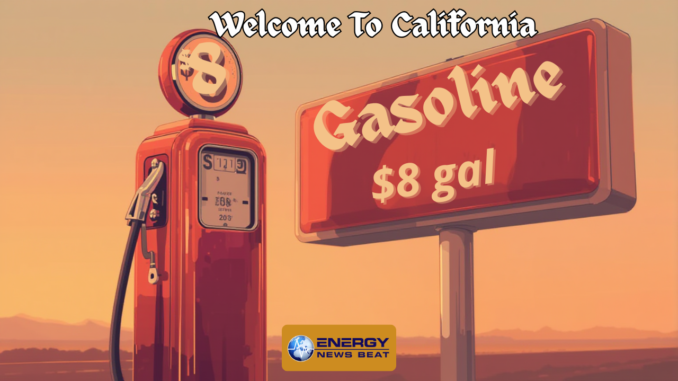
As we approach the end of 2025, California drivers are already grappling with some of the highest fuel prices in the nation, averaging around $4.34 per gallon for regular gasoline.
But experts warn that this is just the beginning of a self-inflicted energy crunch. With refinery closures on the horizon, stringent environmental regulations, and a push toward Net Zero policies, gas prices could surge past $5 per gallon in 2026, potentially climbing to $8 or even $10 for both gasoline and diesel. If any minor disruption in the system occurs, these prices could spike. We have already seen Jet Fuel imported from India, and an estimated 70% of crude oil is already being imported to California.
This looming crisis isn’t confined to the Golden State; it’s spilling over into neighboring regions like Oregon and Washington, threatening broader economic fallout and even national security implications for the United States.
The Brewing Crisis in California: Refineries Shuttering Amid Regulatory Overreach
California’s fuel woes stem from a combination of refinery closures and an increasingly burdensome regulatory environment. Two major refineries are set to close soon: Phillips 66’s Los Angeles-area facility by the end of December 2025, and Valero’s Benicia refinery later in 2026.
These shutdowns will remove about 17.5% of the state’s refining capacity, exacerbating an already tight supply.
A recent analysis from USC and UC Berkeley predicts that by August 2026, when the full effects hit, gas prices could rise by $1.21 per gallon if no additional disruptions occur.
More alarmingly, some forecasts suggest prices could escalate to $8.43 per gallon by the end of 2026, a staggering 75% increase from current levels.
The root cause? California’s aggressive climate policies and regulatory hurdles are driving oil and gas companies away. Refiners cite prohibitive compliance costs, unique fuel blend requirements, and environmental mandates as key factors in their decisions to exit.
For instance, new climate rules enacted in late 2024 could add 47 cents per gallon to gasoline and 59 cents to diesel as early as 2025.
No new refineries have been built in the state in decades, and with companies fleeing, California is increasingly reliant on imports, leaving it vulnerable to global supply shocks.
Lawmakers and industry leaders describe this as a “self-inflicted energy crisis,” with Governor Gavin Newsom’s policies accelerating the decline.
Spillover Effects: How the Crisis Expands to Oregon and Washington
California doesn’t exist in a vacuum; many Western states rely on its refined fuels. Oregon and Washington, which import significant portions of their gasoline and diesel from California refineries, are poised to feel the pinch.
These states are also pursuing ambitious Net Zero energy policies, mirroring California’s push toward 100% clean electricity by 2040 (Oregon) and 2045 (Washington), which include electrification mandates and emissions reductions.
A report from the Discovery Institute highlights how these policies could impose “crippling costs” on residents, driving up energy prices across the board.
In Washington, the situation is particularly dire. Phillips 66 recently announced the closure of its Ferndale refinery, which produces 105,000 barrels per day and supplies fuel to both Washington and Oregon.
This move, influenced by regional regulatory pressures and market shifts, could force a shift to full imports, potentially tripling prices to $8-$10 per gallon in affected areas.
Oregon’s governor has expressed concern over the ripple effects, as the state’s clean fuel standards are already projected to raise gas prices by up to 4 cents per gallon in 2025.
Combined with California’s shortages, this could lead to widespread fuel scarcity and higher costs for transportation, agriculture, and heating in the Pacific Northwest.
A Looming National Security Risk
Beyond regional economics, California’s fuel crisis poses a significant threat to U.S. national security. The state lacks inbound pipelines for crude oil, gasoline, or aviation fuels, making it heavily dependent on tanker shipments—many from foreign sources.
With refinery closures, this reliance will intensify, exposing the West Coast to geopolitical disruptions, such as conflicts in oil-producing regions or shipping route blockages.
Republican lawmakers, including Congressman Vince Fong, warn that fuel shortages could impair military readiness, as California hosts key bases and relies on steady supplies for operations.
The broader U.S. energy landscape is at stake as well. California’s policies are reducing domestic production, forcing greater imports, and weakening energy independence.
Neighboring states like Nevada and Arizona, which also draw from California supplies, could face similar vulnerabilities, creating a domino effect that undermines national resilience.
Experts argue this “war on energy” prioritizes ideology over security, potentially leaving the country exposed in a volatile global market.
Consumer Impacts: Pain at the Pump and Beyond in 2026
For consumers, the forecast is grim. By 2026, California drivers could face gas prices exceeding $5 per gallon routinely, with spikes to $8 or more during shortages.
Diesel, critical for trucking and agriculture, might hit $10, threatening food supply chains and raising grocery costs.
In Oregon and Washington, similar hikes could add cents to dollars per gallon, compounded by local taxes and clean energy mandates.
Long-term, the outlook worsens. With no new investments in oil and gas due to regulatory hostility—companies are approving thousands of new wells but many are choosing to leave—supply will dwindle further.
This could lead to persistent inflation, job losses in energy sectors, and higher costs for everything from commuting to heating homes.
Low-income households and rural communities will be hit hardest, as alternatives like electric vehicles remain unaffordable for many.
By 2030, if trends continue, the West Coast could see a full-blown energy shortfall, amplifying economic disparities.
The Bottom Line
In summary, California’s drive toward Net Zero is accelerating a fuel crisis that’s not just local; it’s a regional and national headache. Without policy reversals, consumers across the West face a future of skyrocketing prices, supply instability, and heightened risks. As one expert put it, this is “slouching towards a self-inflicted energy crisis” that demands urgent attention.
Sources: forbes.com, m.economictimes.com, fox5sandiego.com, foxbusiness.com, ktvz.com, tricityregionalchamber.com, energynewsbeat.co



Be the first to comment