



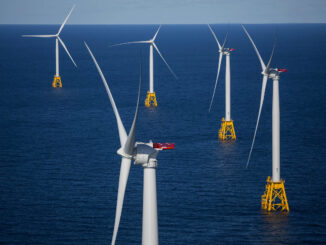
In a move that underscores California’s ongoing push for global climate partnerships amid domestic political tensions, Governor Gavin Newsom signed a Memorandum of Understanding (MOU) with U.K. Energy Secretary Ed Miliband on February 16, 2026, aimed at deepening cooperation on clean energy technologies. The agreement, signed in London, builds on decades of transatlantic collaboration and focuses on areas like offshore wind, low-carbon hydrogen, energy storage, and carbon capture.
It also seeks to enhance investment flows, boost research ties, and promote skilled jobs in both regions.
However, the deal quickly drew sharp criticism from President Donald Trump, who labeled it “inappropriate” and warned the U.K. against partnering with Newsom.
Trump’s remarks, made in an interview with Politico, pulled no punches. “The U.K.’s got enough trouble without getting involved with Gavin Newscum,” he said, employing his signature nickname for the governor. “Gavin is a loser. Everything he’s touched turns to garbage. His state has gone to hell, and his environmental work is a disaster.” He added, “The worst thing that the UK can do is get involved in Gavin. If they did to the UK what he did to California, this will not be a very successful venture.”
These comments echo Trump’s long-standing skepticism toward wind power and green initiatives, viewing them as economic drags rather than opportunities.
At the heart of the partnership is a significant financial commitment from U.K.-based Octopus Energy, one of Europe’s leading renewable investors. During Newsom’s visit to Octopus’s London headquarters, the company announced nearly $1 billion in investments targeting California’s clean tech sector. This includes backing two carbon removal firms focused on grassland restoration and reforestation, acquiring a solar-plus-battery project to harness the state’s solar resources, and supporting heat battery innovations.
Octopus aims to leverage California’s tech ecosystem to fuel its global expansion, with the investments part of a broader $2 billion pledge to the U.S. energy transition by 2030.
Octopus Energy, valued at around $8 billion following recent funding rounds, has been aggressively expanding despite reporting financial losses.
In its latest annual results for the year ending April 2025, the company posted a pretax loss of £260 million (about $350 million), attributed to heavy spending on growth initiatives like its Kraken AI platform and international ventures.
Revenues grew 10% to £13.7 billion, but the firm swung back to losses after two profitable years, raising questions about the sustainability of its rapid scaling.
Critics might point to this as a red flag, especially given Octopus’s reliance on investor funding—led by entities like U.S.-based D1 Capital Partners—to fuel its ambitions. While no outright financial scandals have emerged, the company’s debt-free balance sheet and management of £6.8 billion in assets suggest it’s betting big on future returns from renewables, rather than facing insolvency risks.
For Californians, the deal could mean tangible benefits in the form of job creation and innovation in clean energy. Octopus’ investments are slated to support local projects in carbon sequestration and solar storage, potentially adding to the state’s 290,000 clean energy jobs and helping meet ambitious net-zero goals.
Proponents argue it will lower energy costs long-term by reducing reliance on volatile fossil fuels and enhancing grid resilience against extreme weather. Miliband hailed the pact as a way to “cut bills, create jobs, and tackle the climate crisis,” while Newsom emphasized California’s role as a “stable climate leader” attracting global capital.
Yet, skepticism abounds, particularly in light of California’s dire fiscal straits. The state is grappling with a projected $18 billion budget deficit for the upcoming fiscal year, potentially swelling to $35 billion annually by 2027-28 due to rising spending on social services and sluggish revenue growth.
Critics, including Trump, link this to Newsom’s management, pointing to chronic deficits totaling $125 billion over recent years from overreliance on volatile income taxes and mandatory spending commitments.
While the Octopus infusion represents incoming capital—directly funding California-based companies and projects—it won’t single-handedly bail out the state’s finances. At best, it could stimulate economic activity and tax revenues in the clean tech sector, but detractors argue such deals distract from addressing core issues like housing affordability, homelessness, and infrastructure decay that have pushed California toward “boom-and-bust” cycles.
The partnership sidesteps federal oversight under Trump, who has prioritized fossil fuels and rolled back environmental regulations. By aligning with like-minded international players, California positions itself as a counterweight to Washington, but this could exacerbate tensions if federal funding cuts or tariffs further strain the state’s economy.
As Newsom eyes a potential 2028 presidential run, deals like this bolster his green credentials but invite scrutiny over whether they deliver real relief for cash-strapped Californians or merely add to the state’s mounting debts. We are reaching out to Katy Grimes, Editor-in-Chief of the California Globe, to schedule her to cover this and other California corruption issues.
In the end, while the U.K.-California pact promises innovation and investment, its success hinges on execution amid political headwinds. For a state teetering on the edge of deeper deficits, any influx of foreign capital is welcome—but it may not be enough to silence critics like Trump or reverse years of fiscal mismanagement.
Get your CEO on the podcast: https://sandstoneassetmgmt.com/media/
Is oil and gas right for your portfolio? https://sandstoneassetmgmt.com/invest-in-oil-and-gas/
Can The Highest Energy Cost State Cut a Deal with The Highest Energy Cost Country to Cut Energy Prices? – It makes no sense.



Be the first to comment