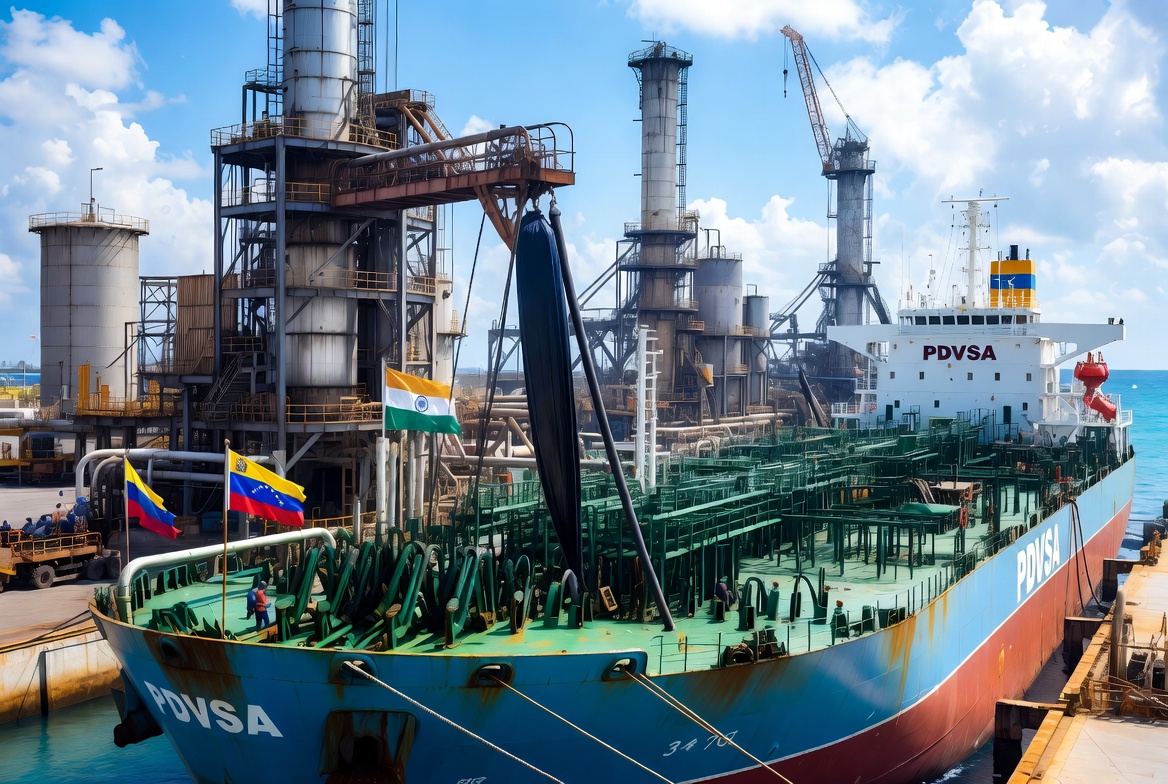
New Delhi’s push for energy security took a major step forward on June 4, 2026, when Indian Prime Minister Narendra Modi met with Venezuela’s acting President Delcy Rodríguez. The high-level talks focused on expanding bilateral cooperation in energy, trade, investment, and renewables, with crude oil at the center of discussions.
India is aggressively diversifying its crude supply sources amid disruptions in traditional flows (including recent issues in West Asia). Venezuelan heavy crude—long discounted and well-suited to Indian complex refiners like Reliance Industries—has emerged as a key opportunity. Rodríguez’s five-day visit (June 3–7) included meetings with energy executives in Mumbai, signaling concrete commercial interest.
What This Means for Venezuelan Oil Exports
Venezuela sits atop the world’s largest proven oil reserves (~303 billion barrels), but years of sanctions, underinvestment, and infrastructure decay have kept output and exports far below potential. Recent easing of U.S. restrictions has allowed a rebound.
Recent Export Volumes (Last 5 Years)
Venezuelan crude oil exports have gradually recovered as sanctions were partially lifted and Chevron’s operations expanded:2021: ~263,000 bpd
2022: ~442,000 bpd
2023: ~621,000 bpd
2024: ~806,000 bpd
2025: ~700,000 bpd (annual average)
By May 2026, exports reached 1.25 million bpd—the highest in years—driven by increased shipments to the U.S., India, and Europe.
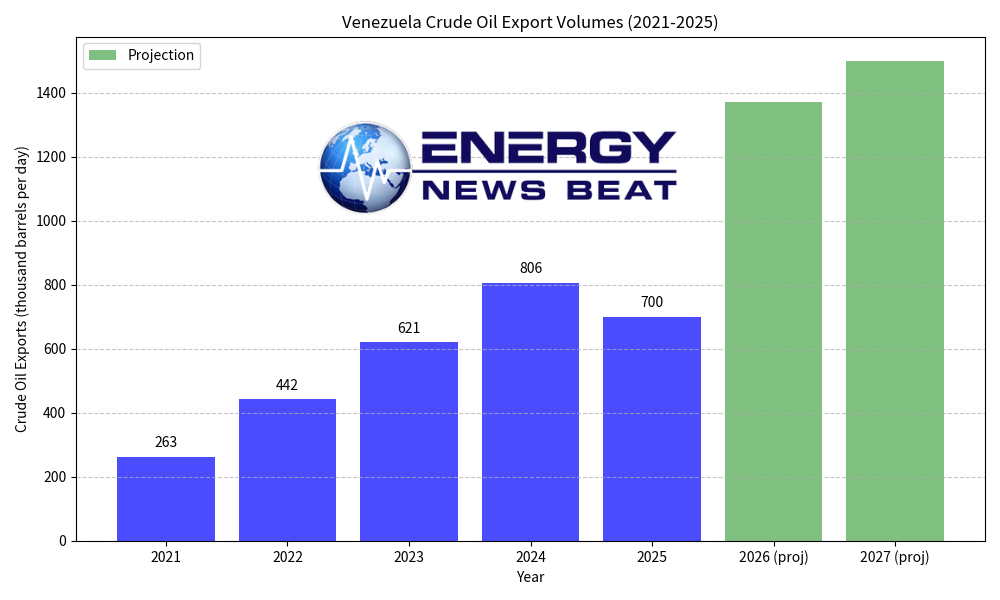
Potential Growth Projections Oil ministry target: 1.37 million bpd output by end-2026 (implying similar export levels).
Trading Economics models: Production trending toward 1.5 million bpd in 2027 and 2.0 million bpd by 2028 with sustained investment.
Medium-term upside (2027–2030): Heavy-sour output could exceed 1 million bpd under a stable investment framework and full foreign participation.
India’s ramp-up is already material. In May 2026, India imported ~417,000–427,000 bpd from Venezuela—making it the country’s second- or third-largest supplier and nearly double April volumes. Venezuelan crude now fills gaps left by other suppliers, and deeper ties could lock in 400,000–500,000+ bpd of steady Indian offtake.
This diversification away from China (historically 75–80% of Venezuelan exports) would boost revenues, stabilize cash flow for PDVSA, and provide the market signal needed for upstream investment. At current prices, even an additional 200,000–300,000 bpd to India could add hundreds of millions in annual export revenue.
Boost for Chevron and Other International Oil Companies
Chevron is the clear near-term winner. The U.S. major is already Venezuela’s largest private producer (~250,000 bpd via joint ventures with PDVSA). Recent developments include:An April 2026 asset swap that increased Chevron’s stake in the Petroindependencia JV to 49% and added development rights in the Orinoco Belt.
Ongoing U.S. government talks (accelerated in early 2026) to expand its license, allowing higher exports to its own refineries and third-party sales.
CEO states that production could rise 50% within 18–24 months with approvals.
Stronger Indian demand creates a ready buyer for incremental volumes, reducing reliance on U.S.-only routing and improving economics.
Other majors are also positioned for expansion. U.S. general licenses issued in early 2026 have reopened the door for BP, Eni, Shell, Repsol, and others to resume or expand operations. ExxonMobil is reportedly nearing a re-entry deal after nearly two decades. With India as a committed long-term customer for heavy crude, these companies gain confidence to invest billions in rehabilitation of fields, infrastructure, and new drilling—potentially unlocking the 1.5–2 million bpd production levels many analysts see as achievable within 3–5 years.
Outlook
The Rodríguez-Modi meeting is more than diplomacy—it’s a market signal. India’s refiners need reliable heavy crude; Venezuela needs buyers and investors. Together, they could accelerate Venezuela’s oil renaissance while giving India a strategic hedge against supply shocks.
Expect follow-on commercial deals in the coming months: term contracts, investment MOUs, and possibly joint ventures in refining or petrochemicals. For Chevron and peers, the combination of U.S. license expansions and new Asian demand could finally translate Venezuela’s vast reserves into sustained production growth.
- Bloomberg: “India Seeks Deeper Venezuela Oil Ties After Rodríguez and Modi Meet” (June 4, 2026) – https://www.bloomberg.com/news/articles/2026-06-04/india-seeks-deeper-venezuela-oil-ties-after-rodriguez-modi-meet
- Reuters: Venezuela’s oil exports rose to 1.25 million bpd in May (June 1, 2026) – https://www.reuters.com/business/energy/venezuelas-oil-exports-rose-125-million-bpd-may-shipping-data-shows-2026-06-01/
- CEIC Data: Venezuela Crude Oil Exports (yearly series)
- EIA & AA reports on historical export volumes (2021–2024)
- Trading Economics: Venezuela Crude Oil Production & Projections
- Additional context from Reuters, Bloomberg, and industry briefings on the Rodríguez visit and Chevron license expansions (June 2026)
All data is current as of June 4, 2026. Projections are based on company/official guidance and subject to political and investment developments. Energy News Beat will continue monitoring this fast-moving story.