David Blackmon, Dr. Tammy Nemeth and Stu Turley have way too much fun today.
1. Canadian Pipeline Proposals
The hosts discuss two major pipeline initiatives:
- Trans Mountain Pipeline expansion: A third pipeline is being added to the existing route with government and private partnerships, including undisclosed Indigenous partners. It’s facing environmental litigation over port dredging.
- Northern Shield Energy Corridor: A proposed all-Canadian energy route through Ontario and Alberta to bypass the Great Lakes and eliminate reliance on Michigan’s Line 5, which has been controversial with the U.S.
- Canada is considering two new pipelines but is hindered by NGOs fighting for climate rights. Canada’s energy sector is seeing renewed momentum with proposals for two major new oil pipelines aimed at expanding export capacity, enhancing domestic energy security, and reducing reliance on U.S. markets. The projects—the West Coast Oil Pipeline and the Northern Shield Energy Corridor—have secured significant political support from federal and provincial governments.
- However, they face potential delays and challenges from environmental NGOs, Indigenous groups, and climate advocates who argue that new fossil fuel infrastructure undermines climate goals, environmental protections, and rights-based claims related to a healthy environment and intergenerational equity.
- The West Coast Oil PipelineAlberta, in partnership with the federal government, is advancing a new crude oil pipeline to Canada’s west coast with a proposed capacity of 1 million barrels per day (bbl/d). The route largely follows the existing Trans Mountain corridor from the Edmonton/Bruderheim area in Alberta through British Columbia to a terminal in the Vancouver area (such as Roberts Bank), while fully respecting the Oil Tanker Moratorium Act.
Key details:
- Proponents and structure: The Government of Alberta is the formal proponent (having invested C$14 million in early planning). Partners include the Government of Canada, Trans Mountain Corporation (leading development), and Pembina Pipeline Corporation (private sector expertise and investment). The project includes equal government stakes and a meaningful equity stake reserved for Indigenous Peoples.
- Timeline and process: An Implementation Agreement was reached in May 2026. The proposal was referred to the federal Major Projects Office (MPO) in July 2026 for potential listing as a project of national interest (expected by October 2026). Consultations with British Columbia, Indigenous communities, and others are underway. Construction timelines remain aspirational, with past similar projects facing multi-year delays.
- Broader context: Linked to the Pathways Project, one of the world’s largest carbon capture and storage (CCS) initiatives targeting 16 million tonnes of annual emissions reductions. The goal is to unlock global markets (especially Asia), create tens of thousands of jobs, generate billions in revenues, and support Canada’s energy exports.
- The second major proposal is the Northern Shield Energy Corridor, a cross-Canada crude oil pipeline from Hardisty, Alberta, to Sarnia, Ontario (with potential extensions to tidewater ports such as Churchill, Manitoba). Announced on July 6, 2026, by Premiers Doug Ford (Ontario), Danielle Smith (Alberta), and Scott Moe (Saskatchewan), it represents a domestic “energy corridor” concept.
news.ontario.ca
Key details:Capacity: Initially ~500,000 bbl/d, expandable to up to 800,000 bbl/d.
Route: Approximately 3,300 km east-west through Alberta, Saskatchewan, Manitoba, and Ontario, connecting to existing refining infrastructure in Sarnia and exploring port access for broader exports.
- Whether these projects reach completion will depend on effective consultation, robust environmental safeguards, and the ability to balance competing priorities. Energy News Beat will continue monitoring developments closely.
2. North Sea Oil & Gas Development
Discussion of the Jackdaw field project by Shell and Equinor, which is ready to produce oil and natural gas by October but faces opposition from environmental groups and the Green Party in the UK, despite providing 5-8% of UK energy needs.
3. UK Political Leadership Changes
Commentary on the upcoming UK leadership transition and concerns about new leaders being more extreme than current PM Keir Starmer, with implications for energy policy.
4. Energy Policy & the Green New Deal
Extensive critique of:
- The $10.4 trillion spent on wind and solar globally for only 3% energy gains
- The proposed Green New Deal’s 90 trillion dollar price tag and impractical goals
- How nuclear power could have been a more efficient alternative
5. Grid Reliability & Power Outages
- New York and New Jersey experienced targeted blackouts due to insufficient spare capacity after closing reliable power plants
- Discussion of how net-zero policies have reduced grid margins from 17% to 9%
- Texas ERCOT’s 180 gigawatts of nameplate capacity vs. actual dispatchable capacity issues
6. Wind & Solar Infrastructure Problems
Major concerns about:
- Lack of decommissioning regulations: No requirements for removing turbine towers or foundations
- Land reclamation liabilities: $89 billion unfunded liability in the U.S.
- Solar panel durability: Only 3-year lifespan in Texas; less than 1% recycling rate in the U.S.
- Environmental hypocrisy: Wind farms killing birds and insects but not opposed by environmental groups
7. Endangered Species Act Reform
The Department of Interior finalized a rule limiting the “diminishing habitat” expansion of the ESA, which had been used to obstruct development projects unnecessarily.
8. Iran & Middle East Tensions
Discussion of renewed hostilities in the Persian Gulf and implications for oil markets, particularly affecting Qatar’s LNG exports and European energy security.
9. Environmental Movement Hypocrisy
Critique of how environmental organizations selectively apply environmental protections—opposing nuclear and fossil fuels while ignoring damage from wind and solar installations to wildlife and habitats.
The overall theme is skepticism about net-zero energy policies and their unintended consequences, with emphasis on the need for reliable baseload power and proper environmental accountability.
Full Ad Free for our Substack Subscribers.

A fresh wave of progressive Democrats, including self-described democratic socialists, is poised to reshape the Democratic Party’s approach to climate and energy policy. Fresh off primary victories that unseated moderate incumbents in safe blue districts, these lawmakers aim to revive and expand the Green New Deal (GND) to address the explosive energy demands of artificial intelligence and data centers.
According to reporting from E&E News by POLITICO, these “insurgent” candidates—backed by groups like the Sunrise Movement—view the original 2019 GND resolution (sponsored by Rep. Alexandria Ocasio-Cortez and Sen. Ed Markey) as merely “a floor now, not a ceiling.” They seek to integrate AI-related challenges, including massive electricity consumption by data centers, into a broader climate and economic agenda.
Key Proposals from the New Progressives
Prominent among the newcomers is Melat Kiros, a 29-year-old attorney and democratic socialist who defeated longtime Rep. Diana DeGette in Colorado’s 1st District primary. Kiros has explicitly linked AI to climate policy, stating: “The missing component of AI, and how that all factors into all of our legislation, specifically when it comes to the climate, that we need to be focused on.” She added that the connection between AI and climate “is going to propel us toward being able to pass some really meaningful climate legislation.”
Other progressive victors include Brad Lander (New York), Darializa Avila Chevalier (New York), and Adam Hamawy (New Jersey). Many support a federal moratorium on new AI data center construction until stronger labor, environmental, and community safeguards are in place.
The Sunrise Movement, a key GND champion, frames data centers and AI job displacement as new frontiers the GND must tackle, alongside its traditional calls for a green jobs guarantee and decarbonization. As one spokesperson noted, these issues “were not present when the Green New Deal was first launched.”
Democratic Socialist of America (DSA) influence is evident: Kiros is openly backed by the DSA and Sen. Bernie Sanders, and DSA chapters have advocated socialist alternatives to data center development, including public ownership, rejection of corporate models, and mandates for 100% renewable energy with community benefits agreements.
How This Complicates Net Zero Policies and Raises Consumer Costs
While proponents present these ideas as forward-looking climate action, they risk complicating realistic pathways to Net Zero emissions while driving up costs for everyday Americans.
AI data centers represent one of the fastest-growing sources of electricity demand. Projections show hyperscale facilities could consume power equivalent to millions of homes, with national cumulative electricity costs from data centers potentially exceeding $500 billion by 2035 and approaching $1 trillion by 2050 under various scenarios.
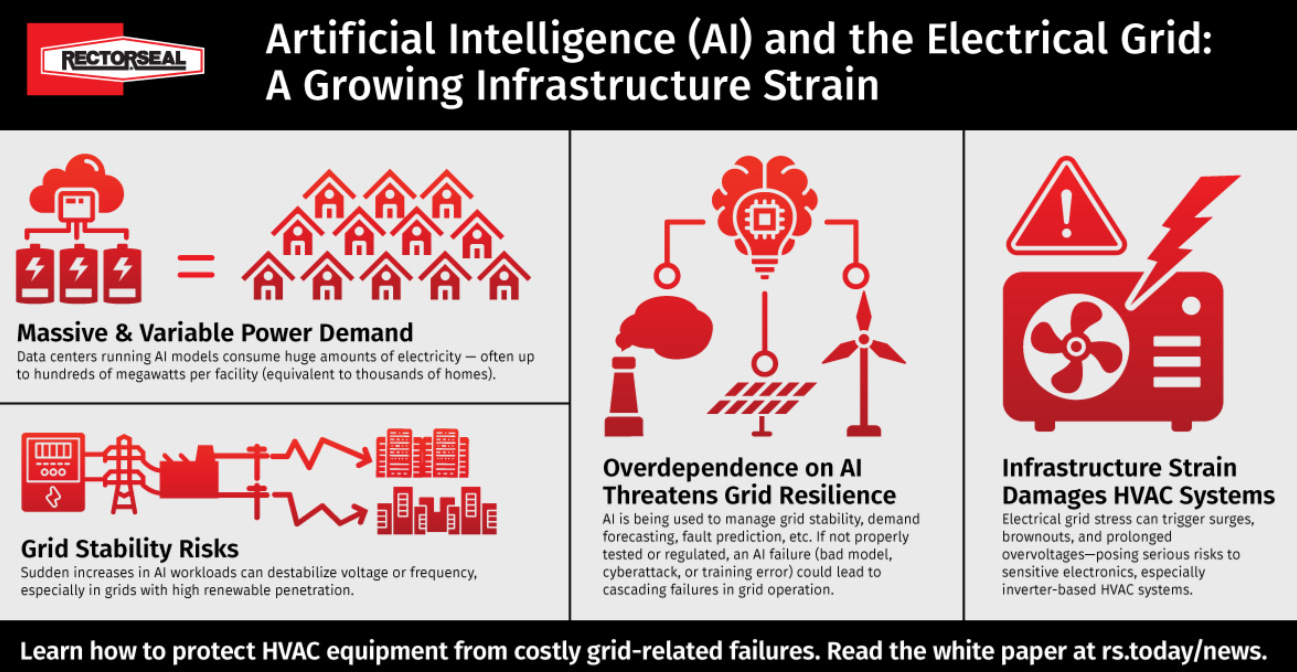
Progressives’ preferred tools—renewables-only mandates, data center moratoria, and resistance to “extractive capitalism”—clash with the need for reliable, dispatchable power. Data centers require constant, high-quality electricity; intermittent renewables often necessitate expensive backups, overbuilding, new transmission lines, and grid upgrades. These costs are frequently socialized onto ratepayers.
Evidence of rising bills is already mounting:
Utilities requested more than $29 billion in rate increases in the first half of 2025 alone—double the prior year’s requests—partly to accommodate surging demand.
In data-center-heavy regions like Virginia, electricity prices have spiked dramatically.
Studies project that data center and crypto mining growth could raise average U.S. electricity generation costs by 8% nationally (and up to 25% in some markets) by 2030, alongside higher emissions if not managed carefully.
Specific utilities (e.g., Dominion) have warned of residential bills potentially doubling in the coming years due to infrastructure needs.
Socialist-leaning approaches add another layer of complication. Calls for public ownership of digital infrastructure or strict corporate welfare rejection often translate into higher taxes, subsidies, or regulatory burdens that ultimately flow to consumers and slow deployment of the very clean firm power (advanced nuclear, efficient natural gas with carbon capture where viable) needed to meet AI-driven demand without blackouts or skyrocketing rates.
Net Zero targets already face headwinds from intermittency and transmission bottlenecks. Layering on GND-style expansions, moratoria, and anti-corporate restrictions risks prioritizing ideology over engineering and economics—potentially delaying emissions reductions while making energy less affordable and reliable.
Voters: Not All Energy Policies Are Created Equal
As new progressive and socialist-leaning voices gain influence in the Democratic Party, the stakes for energy policy could not be higher. AI is transforming the economy, but powering it affordably and cleanly requires pragmatic, all-of-the-above strategies—not recycled 2019 frameworks stretched to fit 2026 realities.
Consumers are already feeling the pinch through higher utility bills. Policies that block needed infrastructure, mandate uneconomic renewables without adequate firm backup, or impose heavy regulatory overlays will likely amplify those costs while slowing technological progress.
Be careful who you vote for.
Energy abundance, grid reliability, and consumer affordability are not automatic outcomes of “green” branding. Different approaches produce vastly different results for households and businesses. Pragmatic policies that embrace innovation across nuclear, natural gas, renewables, and demand-side solutions tend to deliver lower costs and faster decarbonization than ideologically rigid ones.
The coming Congress will test whether Democrats double down on an expanded GND vision or pivot toward realistic energy abundance. The difference will show up directly in Americans’ monthly bills and the nation’s competitive edge in the AI era.
Appendix: Sources and Links
- Primary Article: Timothy Cama, “Progressives look to revamp the Green New Deal for the AI era,” E&E News by POLITICO, July 10, 2026. https://www.eenews.net/articles/progressives-look-to-revamp-the-green-new-deal-for-the-ai-era/
eenews.net
- Kiros Profile: “Who Is Melat Kiros, the Democratic Socialist Who Won Colorado’s Primary?” Time, June 30, 2026. https://time.com/article/2026/06/30/melat-kiros-democratic-socialist-colorado-congressional-race/
- DSA and Data Centers: “The Cloud is Material: The Threats and Costs of Data Centers,” Washington Socialist (DSA), Jan. 22, 2026. https://washingtonsocialist.mdcdsa.org/ws-articles/26-01-md-data-centers
- Data Center Cost Impacts:
- Union of Concerned Scientists blog on data center electricity costs (Jan. 2026).
- EESI: “Data Center Power Demands Are Contributing to Higher Energy Bills” (Feb. 2026).
- Carnegie Mellon University Open Energy Outlook: Data center growth impacts on costs and emissions (2026 projections).
- Additional Context: Various reports on utility rate requests, Dominion Energy projections, and Consumer Reports coverage of AI data center bill impacts (2025–2026).
All information drawn from publicly available reporting as of July 2026. Energy News Beat Channel encourages readers to review primary sources and evaluate policies based on real-world outcomes for affordability and reliability.
Check out for Stu Turley on The Energy News Beat Substack:

For David Blackmon

For Tammy Nemeth

For Irina Slav