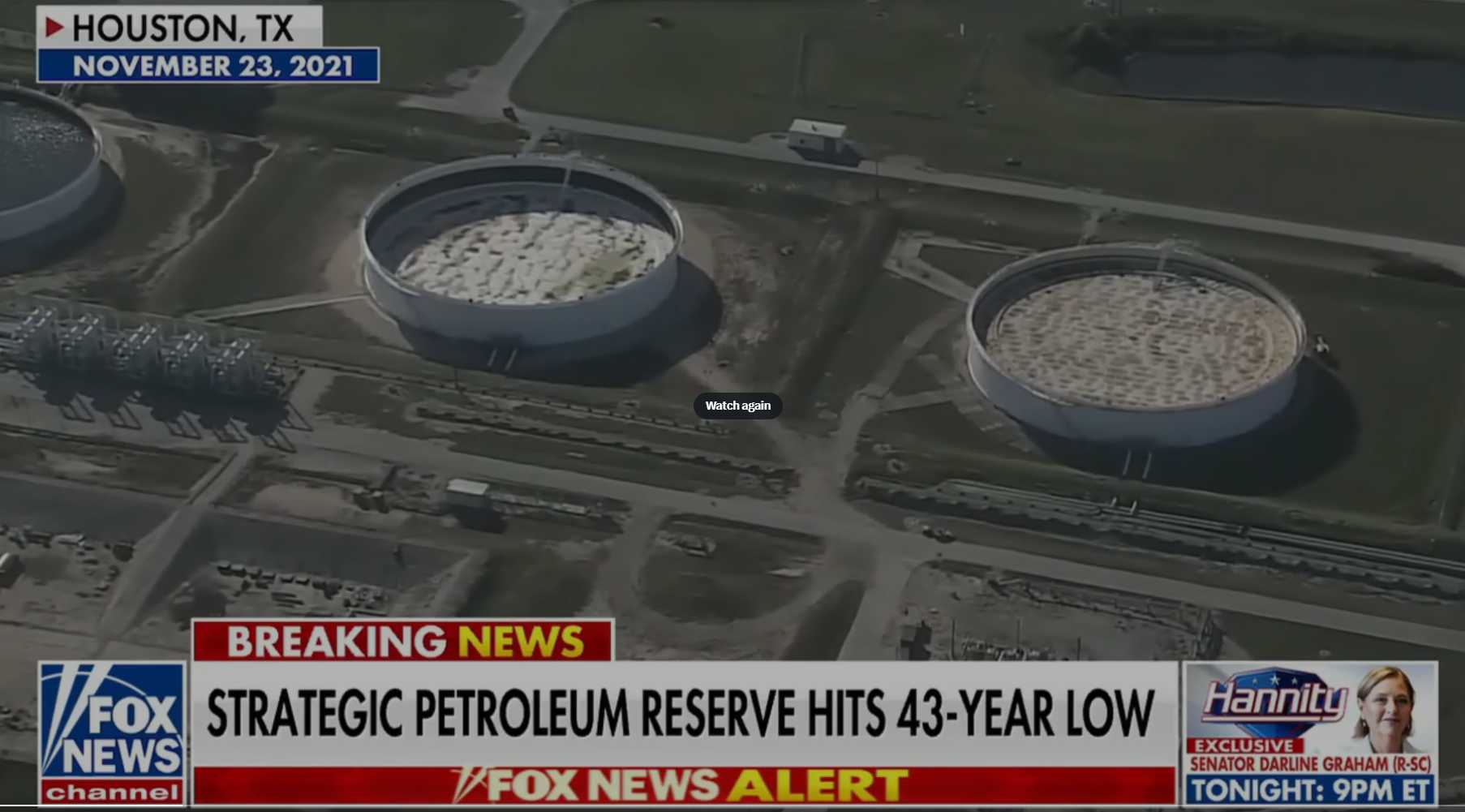
The U.S. Strategic Petroleum Reserve (SPR), the world’s largest emergency crude oil stockpile, is facing serious operational challenges after years of massive drawdowns, deferred maintenance, and mismanagement. One of the four primary storage sites has been left inoperable, equipment purchased with taxpayer dollars was left exposed and unusable, and critical infrastructure repairs were neglected. President Trump and Energy Secretary Chris Wright are now leading efforts to repair the damage, restore capability, and strategically refill the reserve amid ongoing energy security needs.
Current Crisis: Lowest Levels Since 1983 and Reduced Operational Capacity
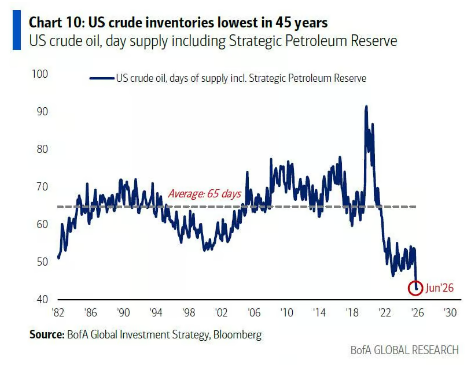
As of early July 2026, the SPR holds approximately 319.5 million barrels of crude oil — roughly 45% of its authorized capacity of about 714 million barrels and the lowest level since the early 1980s.en.wikipedia.org
This follows large releases under the previous administration and a more recent ~172 million barrel emergency release (structured largely as exchanges/swaps) to address supply disruptions tied to geopolitical events, including conflicts involving Iran and earlier Ukraine-related actions.
The four main SPR sites (Bryan Mound and Big Hill in Texas; West Hackberry and Bayou Choctaw in Louisiana) store oil in underground salt caverns. Aging infrastructure, combined with rapid and repeated drawdowns, has strained the system. A major Government Accountability Office (GAO) report highlights growing backlogs of repairs, reduced drawdown and fill rates (effective capability down to roughly 61% for drawdown and 56% for fill in some assessments), and looming operational limitations.
Key Problems Attributed to Biden-Era Policies
Massive drawdowns without full refill: The Biden administration oversaw the release of roughly 180–300 million barrels (including the large 2022 release ahead of midterms and other sales). The reserve was never fully replenished afterward, leaving it depleted.
One site left inoperable: Reports indicate one of the four main sites was rendered inoperable or severely limited due to prior actions and lack of maintenance.
Wasted taxpayer dollars on equipment: Equipment was purchased but left sitting on the surface, exposed to weather, rendering it unusable. This forced the current administration to invest additional funds to clear blocked access and procure replacements.
Failed maintenance: Sites were not properly maintained, contributing to equipment failures, leaks, and deferred upgrades on the multi-billion-dollar Life Extension Phase 2 (LE2) project.
These issues were highlighted in a Fox News segment featuring Under Secretary of Energy Kyle Haustveit, who detailed how the previous administration “wasted taxpayer dollars” on uninstalled equipment and left critical infrastructure problems that the Trump team is now addressing.
This Is a Real Issue — GAO and Expert Warnings
The problems are not hypothetical. The GAO’s 2026 report (GAO-26-106918) warns that aging infrastructure, combined with drawdowns and underinvestment, is creating “looming operational limitations.” Wells are far beyond their design life, there have been multiple equipment failures (including leaks and a well rupture), and construction delays have limited site availability (e.g., Big Hill impacted by ongoing work).
Rapid drawdowns can enlarge caverns and reduce long-term structural integrity. Sandia National Laboratories monitors cavern “available drawdowns” — many caverns retain capacity, but repeated use consumes the designed lifecycle (originally planned for limited cycles). Effective maximum drawdown rates have dropped from the original ~4.4 million barrels per day design toward lower operational levels.Low inventory also complicates operations: below certain thresholds, pumping becomes harder, quality risks rise, and some caverns face heightened integrity concerns.
How Many Days at Current Drawdown Rates Before Operational Bottoms?
Current inventory stands at ~319–320 million barrels (as of mid-July 2026 data points around 316–325 million).
Analysts and operational discussions point to an operational floor in the 150–300 million barrel range, with risks increasing notably below ~250–275 million barrels. A statutory/legal minimum for certain limited drawdowns sits around 252 million barrels. Physical/structural risks to caverns rise significantly lower (estimates around 150 million before draw rates could collapse and integrity issues escalate).
Buffer to critical low (~250 million barrel operational threshold): Roughly 70 million barrels.
Recent weekly draw rates during the current release have varied:
Peak weeks: up to ~8–10 million barrels.
More recent weeks: slowing to ~3–6 million barrels as levels drop and markets adjust.
Estimated time to operational bottom at recent average rates:
At ~5 million barrels/week average → ~14 weeks (~98 days).
At slower recent ~3 million barrels/week → ~23+ weeks.
These are estimates; actual rates are slowing as the release proceeds (structured as swaps/exchanges where companies return more oil later with premiums, helping net refill). The Trump administration has emphasized using exchanges rather than outright sales to minimize net depletion while addressing immediate market needs.
The U.S. still retains meaningful emergency capability, but the thinning buffer and infrastructure strain reduce flexibility for future major shocks.
Trump Administration and Secretary Wright’s Fix-It Efforts
President Trump and Energy Secretary Chris Wright have prioritized repairs, additional funding for maintenance, and strategic refilling. Efforts include:
- Completing or advancing LE2 upgrades.
- Addressing blocked access and unusable equipment.
- Using exchange agreements to release oil now while securing more barrels back later (net gain in some tranches).
- Restoring operational readiness across sites.
Wright has testified about damage from prior rapid drawdowns and the need to finish repairs before aggressively refilling.
Why This Matters
The SPR exists for true emergencies — wars, major supply disruptions — not routine political or price management. Depleting it while neglecting maintenance leaves the U.S. more vulnerable. With U.S. production strong but global risks persistent (e.g., Strait of Hormuz dynamics), a functional SPR remains vital for energy security and economic stability.
The current administration is cleaning up inherited problems rather than creating new ones. Restoring the reserve to higher, more reliable levels will take time and investment, but it is essential work.
Appendix: Sources and Links
- X Post/Video (EricLDaugh / Fox News segment with Kyle Haustveit): https://x.com/EricLDaugh/status/2079232239859122245
- GAO Report GAO-26-106918 (Energy Security: Congress and DOE Need a Unified Plan…): https://www.gao.gov/assets/gao-26-106918.pdf (and related GAO summaries)
- EIA/DOE SPR Inventory Data: Weekly Petroleum Status Reports (e.g., ~319.5 million barrels as of July 9, 2026 data)
- DOE SPR Quick Facts and Site Information: https://www.energy.gov/hgeo/opr/spr-quick-facts and https://www.energy.gov/ceser/spr-storage-sites
- Fox News / Related Coverage: Segments on SPR lows and prior administration actions (via the referenced video and articles like Trump policies/SPR context)
- Historical SPR Chart Context: Wikipedia SPR page and EIA data series
- Additional Analysis: WSJ, Bloomberg, OilPrice.com, and Sandia National Labs cavern monitoring references in GAO reports
Note on visuals: Historical inventory chart and SPR site aerial images sourced via public web imagery for illustrative purposes. All data reflects publicly reported figures as of mid-July 2026. Operational estimates are based on analyst discussions, GAO findings, and cavern lifecycle modeling — actual thresholds involve site-specific engineering assessments by DOE/Sandia.Energy security requires steady stewardship. The Trump administration is focused on restoring capability after years of strain.