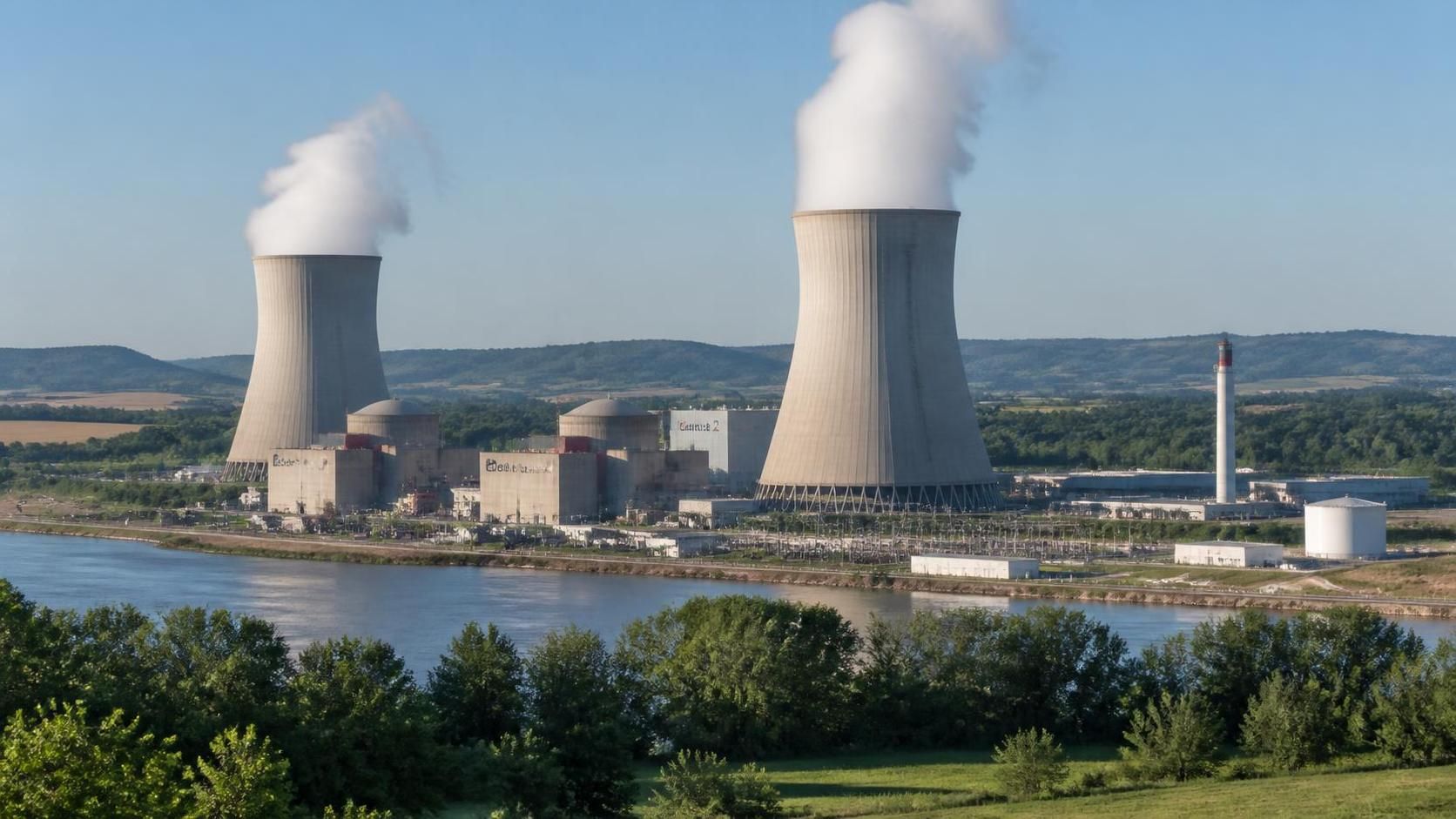
Electricité de France (EDF) has shut down the Golfech-2 nuclear reactor in southern France as a blistering heatwave drives temperatures toward 40°C across parts of Europe. This is the latest in a record number of heat-related outages hitting France’s nuclear fleet this summer, curbing output from what remains the backbone of Europe’s electricity system. EDF has also warned of potential production cuts at the Tricastin plant overnight as soaring river temperatures constrain reactor cooling.
Nuclear plants rely on river water for cooling. Environmental regulations limit the temperature of water discharged back into rivers to protect aquatic life. When rivers heat up or levels drop during prolonged heat and low rainfall, operators must reduce or halt output. Similar restrictions have already taken multiple reactors offline or forced deratings earlier this summer, including units at Golfech, Bugey, and others, at times cutting several gigawatts—equivalent to a meaningful share of French demand.
France normally generates the bulk of its electricity from nuclear power and is a major exporter to neighbors. When its fleet is constrained, the effects cascade. Europe’s interconnected grid means shortfalls or higher prices in one country quickly affect others. Heat-driven demand for air conditioning is simultaneously rising, while low river levels have also disrupted barge traffic for fuels on key waterways such as the Rhine, raising transport costs.
Europe’s Current Electricity Mix
According to Ember’s European Electricity Review 2026 (covering full-year 2025 data, the most recent complete picture), wind and solar generated a record 30% of EU electricity—higher than fossil fuels (29%) for the first time. Renewables overall (including hydro and biomass) supplied nearly 48%. Nuclear provided about 23%, remaining the largest single clean source. Coal fell to a historic low of roughly 9%, while gas filled balancing roles.
These shares reflect rapid growth in intermittent sources over the past five years. Wind and solar rose from about 20% in 2020. Yet the same weather patterns that boost solar during clear, hot conditions often suppress wind. High-pressure systems accompanying heatwaves reduce wind speeds; denser hot air also yields less energy, and turbines may derate to protect equipment. Earlier in the 2026 heat episodes, wind output slumped sharply in Germany, France, Spain, and Italy, forcing greater reliance on remaining dispatchable plants and driving price spikes.
Net Zero Policies and the Erosion of Dispatchable Capacity
This vulnerability did not appear overnight. EU Net Zero policies—centered on the European Green Deal, Fit for 55 package, REPowerEU, and the Emissions Trading System (ETS)—have accelerated the phase-out of coal and, in some countries, nuclear, while prioritizing rapid renewable deployment.
Germany’s Energiewende is the clearest example. After the 2011 Fukushima accident, the country accelerated its nuclear exit, completing the shutdown of its last reactors in April 2023. Parallel coal phase-out legislation targets full exit by 2038 (with earlier capacity reductions via auctions and negotiated closures). High carbon prices under the EU ETS made coal increasingly uneconomic, while renewable subsidies and targets drove massive wind and solar buildout. Germany now often sees renewables supply over 60% of public net electricity generation in strong periods, but the loss of firm nuclear capacity increased reliance on gas and remaining coal for reliability, contributing to higher emissions in some years than a nuclear-retaining path would have produced and exposing the system to fuel-price and weather shocks.
Similar dynamics played out elsewhere: the UK closed its last coal plant, and multiple EU members accelerated fossil and nuclear reductions under climate targets aiming for climate neutrality by 2050. The policy emphasis was on decarbonization speed and renewable volume. Storage, firm low-carbon capacity, and grid flexibility lagged. Battery capacity has grown but remains a small fraction relative to variable renewable capacity. The result is a system more exposed to simultaneous stresses—heat-driven demand spikes, low wind, constrained nuclear cooling, and tight fuel logistics.
Reliability Takes Decades of Consistent Engineering, Not Political Cycles
Building a secure, affordable, low-carbon electricity system requires decades of consistent planning, engineering, and investment. Nuclear plants take 10–20 years from decision to operation. Large-scale transmission upgrades, long-duration storage, and diversified firm capacity cannot be rushed without cost overruns or reliability gaps. Policies driven by short political timelines, ideological preferences against certain technologies, or regulatory frameworks that undervalue dispatchability create exactly the domino risks now visible: when the wind does not blow and rivers run warm and low, the remaining flexible capacity is stretched, and prices spike.
France’s nuclear fleet, despite its own aging and maintenance challenges, still provides critical baseload that many neighbors no longer possess in equivalent volume. Heatwave constraints on that fleet illustrate the limits of relying on weather-dependent generation plus a shrinking pool of thermal plants. A durable energy system prioritizes physics and engineering over targets alone—ensuring adequate firm capacity, realistic timelines, and regulatory stability free from the distortions of successive short-term political mandates.
The current heatwave is exposing these structural gaps in real time. Europe has achieved impressive renewable growth and falling coal shares. Yet the simultaneous derating of nuclear, soft wind conditions, and surging cooling demand show that energy security is not automatic. Restoring and maintaining it will require long-term, pragmatic policy that values reliability alongside emissions reductions.
We have covered on the Energy News Beat podcast for years that you can deliver the lowest kWh to consumers while having the least impact on the environment. It just requires no corruption and solid plans. After the UN announced that they misled, or as I call it, lied, about the climate crisis and Net Zero policies that have been implemented by the UN, they have cost the world trillions of dollars in lost revenue and people’s health.
- Bloomberg: “France Shuts Off More Nuclear Power as Heat Builds Across Europe” (30 July 2026) — https://www.bloomberg.com/news/articles/2026-07-30/france-shuts-off-more-nuclear-power-as-heat-builds-across-europe
- Ember: European Electricity Review 2026 — https://ember-energy.org/latest-insights/european-electricity-review-2026/
- Guardian / Euronews / Reuters reporting on French nuclear heat restrictions (July 2026)
- Agora Energiewende and related analyses of Germany’s nuclear and coal phase-outs
- Energy News Beat prior coverage of the unfolding European energy stresses under Net Zero policies — https://energynewsbeat.co/enb-publisher-picks/net-zero-and-the-heat-wave-are-an-energy-crisis-in-europe-unfolding/
- Additional context from ENTSO-E data, IEA Electricity reports, and contemporary heatwave energy analyses.