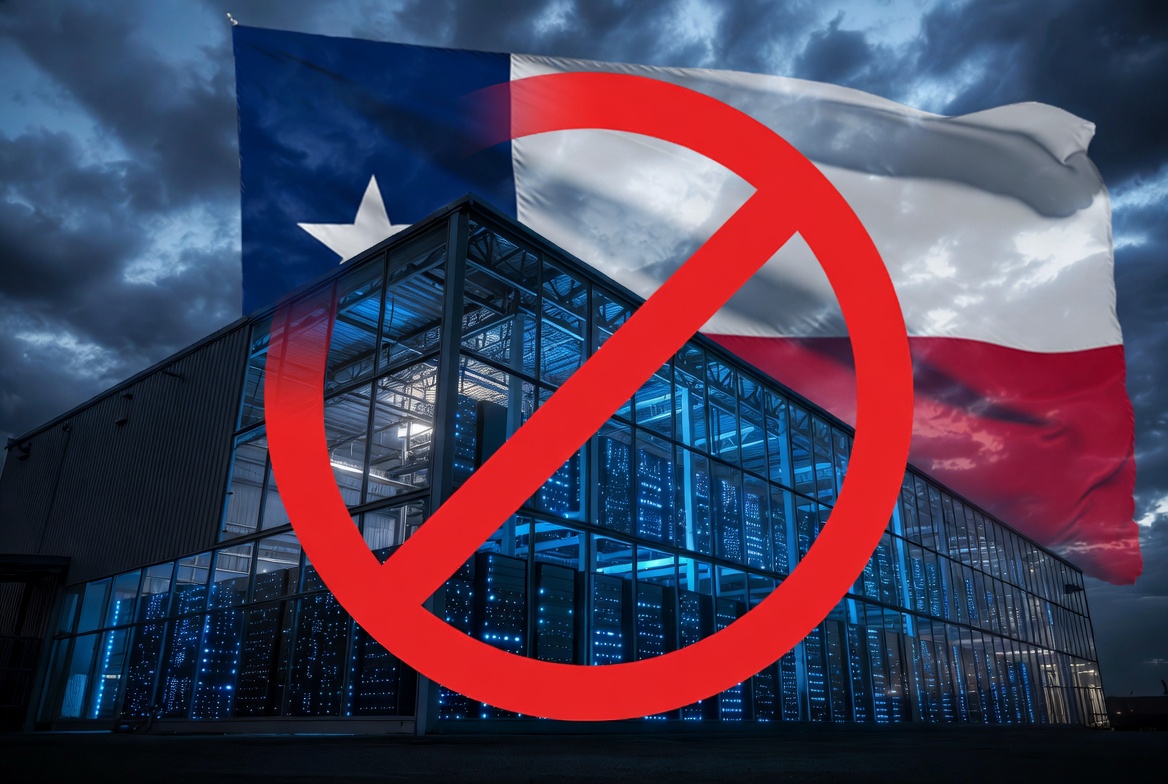
This action, announced August 3, 2026, comes roughly three weeks after New York became the first state to impose a temporary statewide moratorium on new hyperscale data centers. It applies to projects seeking to interconnect with the Electric Reliability Council of Texas (ERCOT) system and pauses related transmission planning work, including the “Batch Zero” study.
Details of the Texas Directive
In a letter to the Public Utility Commission of Texas (PUCT) and ERCOT, Abbott ordered a full verification and audit of data centers advancing through the interconnection process. No project may proceed with grid connection until the review is complete; any that fail to comply with requirements or state law must be denied.
Regulators must collect detailed information from each project on:
- State and local tax incentives, grants, abatements, or other public financial assistance.
- Projected annual and peak electricity consumption, plus any on-site generation or measures to reduce reliance on the ERCOT grid.
- Projected water use and sources, cooling technology (air-cooled, closed-loop, or other water-efficient systems), and efforts to bring or reuse their own water rather than drawing from local community supplies.
- Measures to mitigate impacts on neighboring property owners and communities (noise, light, setbacks, traffic, emergency response coordination).
Ownership and controlling interests.
Abbott stated: “Our top priority is to protect Texans’ safety and quality of life. That includes providing affordable energy, maintaining a reliable electric grid, preserving water for our communities, and championing Texas values… Simply put, Texans must come first.”
The move builds on earlier directives, including a June 2026 order requiring data centers to pay their own infrastructure costs and avoid raising residential electric bills. It follows low response rates to prior water-and-power surveys and growing local opposition in counties and cities across the state.
Scale of Pending Projects
ERCOT is tracking more than 1,800 projects in its interconnection queue representing over 474 gigawatts of requested capacity—more than five times Texas’ recent record peak demand (which reached approximately 91 GW in July 2026). Approximately 90 percent of the new power requests are from data centers.
This means the pause directly affects the large majority of those queued projects—roughly the equivalent of well over 1,600 data-center-related requests by capacity share—until the audit is finished. No fixed end date for the review has been announced. The Texas Tribune has separately identified at least 248 planned data centers in the state (plus hundreds more in earlier stages) alongside more than 300 already operating.
Industry groups such as the Data Center Coalition have urged a swift process to distinguish serious, responsible projects from speculative ones, noting the potential for billions in investment and significant job creation. Critics, including some Republicans and Democrats, have called the directive insufficient without stronger legislation or a special session.
Context: Following New York’s Lead
On July 14, 2026, New York Governor Kathy Hochul signed an executive order establishing the nation’s first statewide temporary moratorium on new hyperscale data centers (generally those of 50 MW or larger). The pause, lasting up to one year, suspends certain state environmental permits while the state develops stronger standards to protect ratepayers, the grid, water resources, and communities.
Hochul’s order cited risks of higher utility bills, depleted natural resources, and uncertainty for residents amid the AI-driven boom. New York is also pursuing a community investment framework, a generic environmental impact statement, and potential changes to tax incentives.
Texas’ action is notable because it comes from a Republican governor in a heavily Republican state that has aggressively courted data-center and AI investment. Energy analyst and author Robert Bryce highlighted the political contrast in an August 4, 2026, post on X (@pwrhungry): “Wow. I would not have predicted this, not in 100 years. Sure, NY, a heavily Democratic state, put a freeze on data centers last month. But now, the TX governor, a Republican, in a (very) Republican state has slapped a freeze on new data center projects. Again, wow.” The post is authentic and includes a video.
Local pushback in Texas has already included temporary county moratoriums (some later rescinded after lawsuits), city zoning restrictions, and calls from lawmakers for greater regulation of water, power, and tax incentives. Community concerns center on strained water supplies in arid regions, potential upward pressure on electricity prices and reliability, noise, traffic, and quality-of-life effects in rural and suburban areas.
The Texas pause does not ban data centers outright and does not necessarily stop projects that rely solely on on-site generation rather than the ERCOT grid. It does, however, inject a significant review period into what had been a rapid expansion, forcing greater transparency on resource use and community effects before further interconnection approvals.
As the AI and data-center boom continues nationwide, Texas’ audit and New York’s moratorium signal that both Democratic- and Republican-led states are recalibrating to balance economic opportunity against grid reliability, water security, and local impacts.
- Robert Bryce X post (Aug. 4, 2026): https://x.com/pwrhungry/status/2084684208908169456
- Governor Abbott official announcement: https://gov.texas.gov/news/post/governor-abbott-directs-comprehensive-data-center-audit
- Texas Tribune: “New Texas data center projects frozen until state audits them” (Aug. 3, 2026): https://www.texastribune.org/2026/08/03/texas-data-center-project-audit-greg-abbott/
- Houston Public Media: “Gov. Greg Abbott pauses new data centers until ERCOT, PUCT audit energy, water usage” (Aug. 3, 2026): https://www.houstonpublicmedia.org/articles/news/energy-environment/2026/08/03/558529/gov-greg-abbott-pauses-new-data-centers-until-ercot-puct-audit-energy-water-usage/
- New York Governor Hochul announcement (July 14, 2026): https://www.governor.ny.gov/news/first-statewide-moratorium-new-hyperscale-data-centers-launched-governor-kathy-hochul
- New York Executive Order No. 62: https://www.governor.ny.gov/executive-order/no-62-establishing-temporary-moratorium-data-centers-new-york-while-state-develops
- CNBC / Reuters coverage of New York action: https://www.cnbc.com/2026/07/14/new-york-ai-data-center-ban.html and https://www.reuters.com/world/new-york-becomes-first-state-impose-data-center-moratorium-2026-07-14/
- ERCOT peak demand context and related reporting via Texas Tribune and ERCOT records.