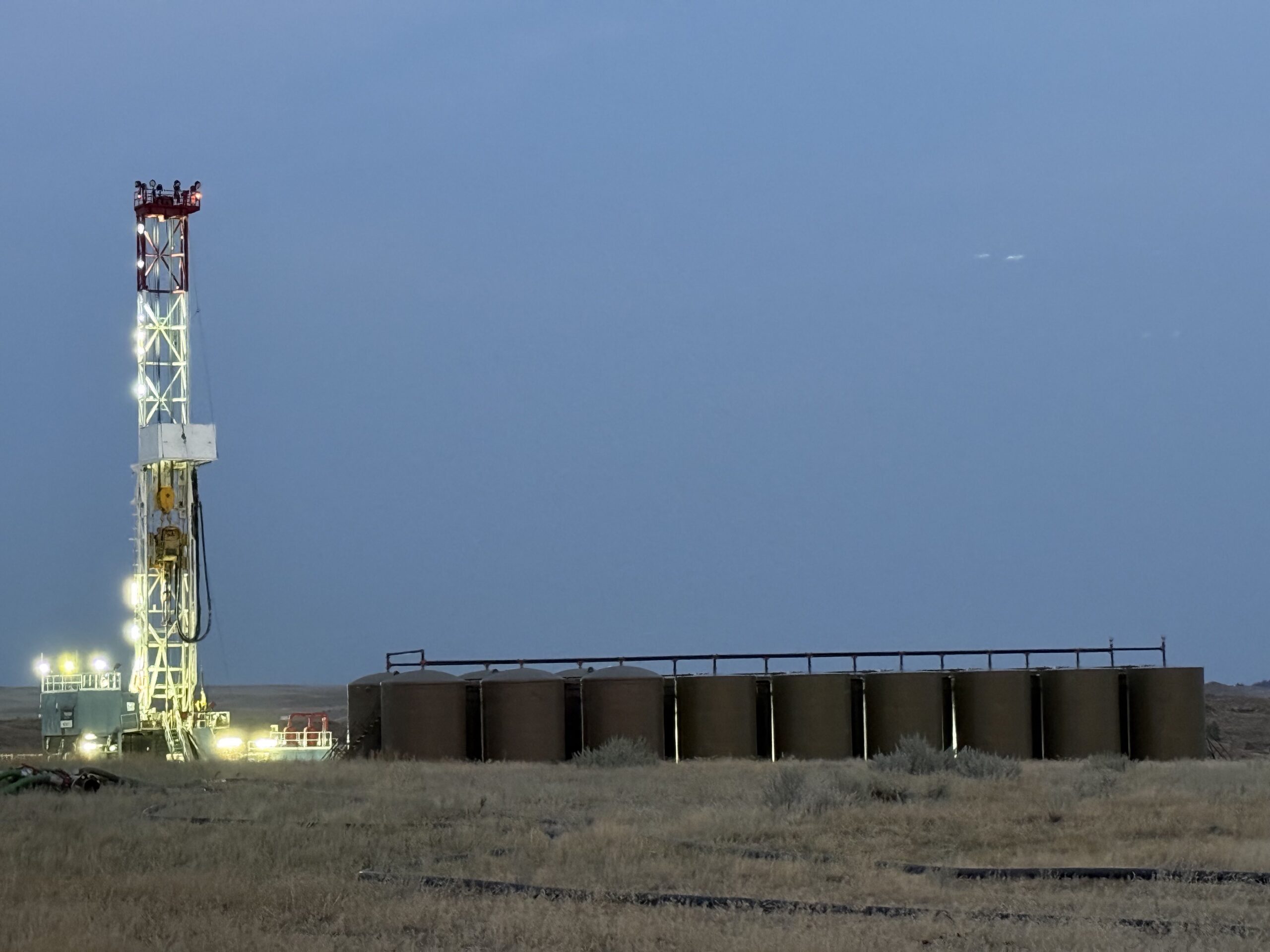
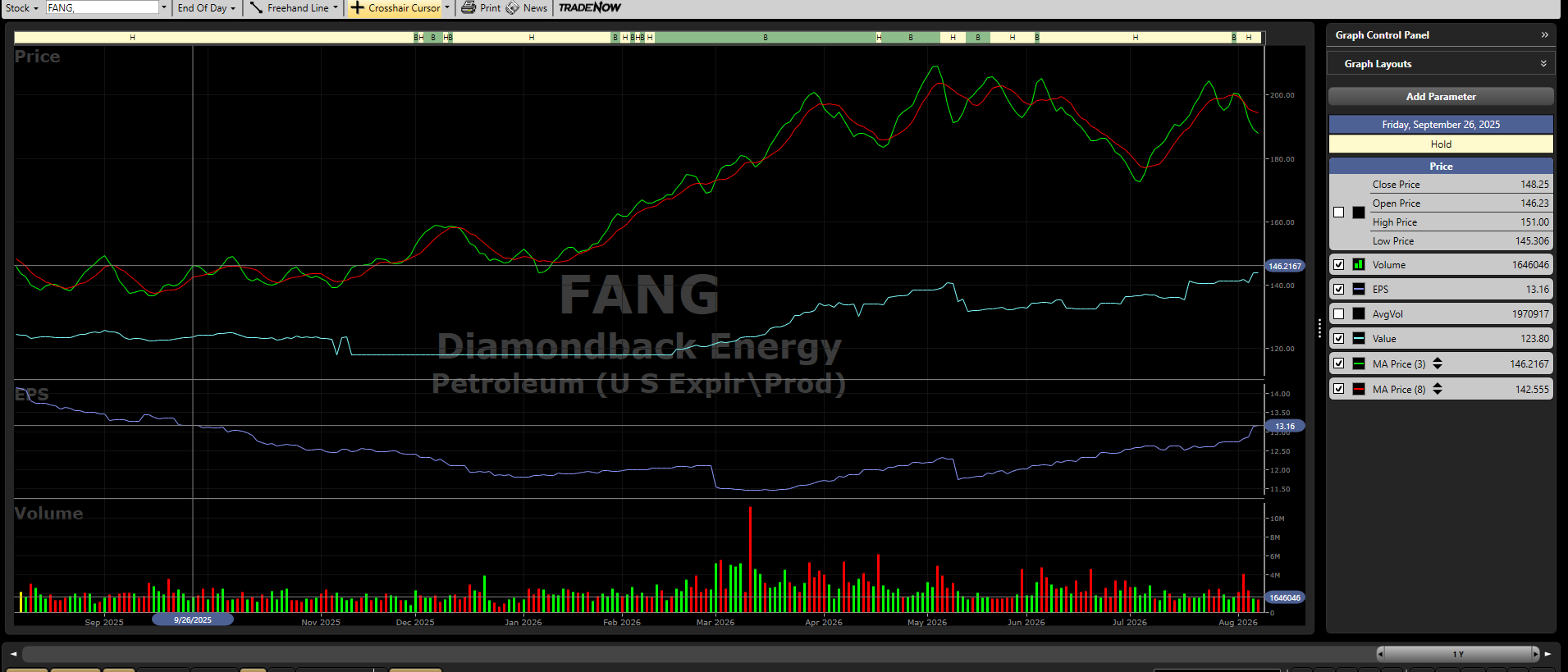
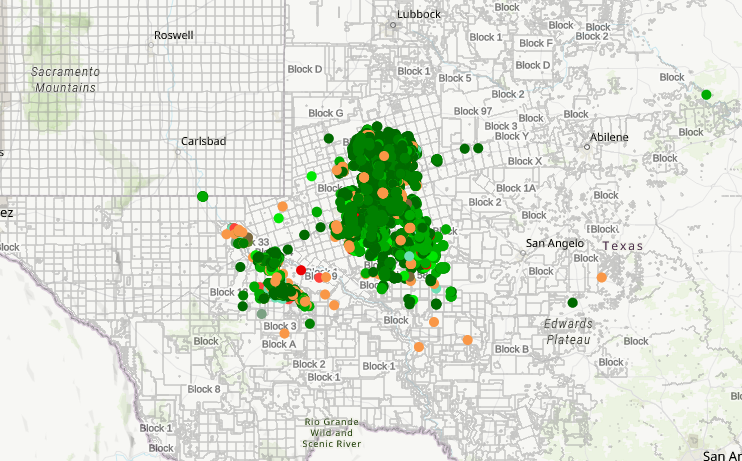
In the heart of the Midland Basin, two pure-play Permian operators are delivering a clear message in mid-2026: well productivity is holding up—and in key cases improving—amid ongoing efficiency gains across the broader Permian. Recent Hart Energy/Oil and Gas Investor analysis highlights Diamondback Energy’s (FANG) new Midland Basin wells showing a strong rebound in early 2026 with “no clear sign of productivity degradation.” Parallel coverage notes SM Energy (SM) results overcoming a prior “science-heavy” experimental phase, with stronger operational performance in Midland assets.
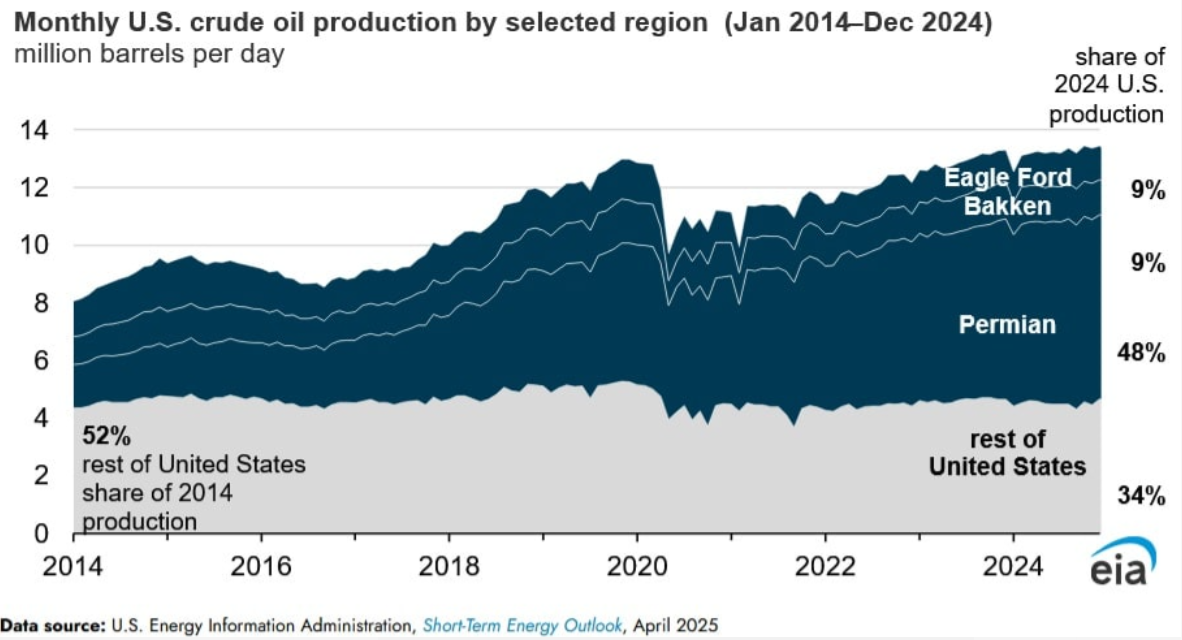
These outcomes align with larger basin trends: U.S. Energy Information Administration (EIA) data show Permian tight oil and shale production remaining robust even as active rig counts have declined from prior peaks. Geographic Permian crude oil output reached about 6.7 million barrels per day (b/d) in December 2025 (tight/shale formations ~6.0 million b/d, or 44% of total U.S. oil), with full-year 2025 average around 6.6 million b/d—up roughly 280,000 b/d or 4% from 2024.
Operator Highlights
Diamondback, a Midland-focused independent with extensive core acreage, reported Q2 2026 oil production of 525 thousand barrels of oil per day (MBO/d) and total production of 1,018 thousand barrels of oil equivalent per day (MBOE/d)—crossing the 1 million BOE/d threshold for the first time. The company raised full-year 2026 oil guidance to 522+ MBO/d (total 1,000+ MBOE/d) while holding capital expenditures near $3.9 billion. Operational notes include record lateral lengths (including U-turn wells), lowest-cost Wolfcamp D wells, continuous pumping efficiencies (~4,700 lateral feet completed per day), and outperforming Barnett formation results relative to core Midland and peer averages. Cumulative oil productivity metrics place Diamondback among the basin leaders despite lower proppant intensity and denser development.
SM Energy has similarly posted production beats and guidance raises in 2026 (post-Civitas merger integration). Midland-focused activity emphasized development optimization, longer/faster Wolfcamp D wells, and efficiency gains in completions. Earlier “science-heavy” testing of newer zones and techniques appears to be translating into more consistent commercial results.
Production Rising (or Holding) with Fewer Rigs
Baker Hughes data show Permian active rigs in the mid-250s range through much of 2026 (e.g., ~263 as of early August 2026), well below peaks near or above 300 in prior years. Yet output has grown or stabilized at high levels. EIA and industry analyses attribute this to:
- Longer laterals (often 2–3+ miles).
- Higher new-well productivity per rig.
- Optimized spacing, completions, and multi-zone co-development.
- Capital discipline and focus on core inventory.
New-well oil productivity in the Permian has supported monthly additions that more than offset legacy declines in many periods. EIA’s Drilling Productivity Report and Short-Term Energy Outlook (STEO) frameworks consistently show efficiency gains enabling record or near-record U.S. and Permian output despite lower activity. Midland Basin sub-play resilience (Wolfcamp, Spraberry, and emerging zones like Barnett/Dean) underpins much of the eastern Permian contribution.
Implications for Consumers
Sustained or growing Midland/Permian supply supports U.S. energy security and helps moderate price spikes. Higher domestic output (Permian now nearly half of U.S. crude) reduces reliance on imports, buffers global disruptions, and contributes to relatively stable gasoline and diesel availability. Efficiency gains lower the marginal cost of new barrels, which can help keep long-term supply curves flatter even if prices soften. Consumers benefit from the combination of volume growth and capital discipline that avoids the boom-bust overbuilding of earlier cycles—though absolute price levels still depend on global demand, geopolitics, and refining capacity.
Implications for Investors
For equity holders in Diamondback and SM Energy, the well results signal durable inventory quality and execution strength. Rising (not declining) early-time productivity and cost control support free-cash-flow generation, dividend/buyback capacity, and lower corporate breakevens. Basin-wide efficiency means operators can maintain or modestly grow volumes with fewer rigs and lower capital intensity—positive for returns on capital employed. Risks remain (commodity price volatility, inventory exhaustion in non-core areas, gas takeaway constraints, regulatory factors), but the Midland data reduce near-term concerns about rapid productivity “sputtering.” Broader Permian pure-plays and service providers tied to high-spec completions may also see support from sustained activity quality over quantity.
Overall, the 2026 Midland story reinforces a mature shale model: technology and optimization continue to extract more value per well and per dollar of capital, even as the easiest gains moderate. Production resilience with fewer rigs is not temporary; it reflects structural improvements that benefit both the companies delivering the wells and the broader energy system.
Appendix: Sources and Links
- Hart Energy / Oil and Gas Investor: “The Permian Basin Report Card” / Diamondback Midland wells rebound (Aug 2026) — https://www.hartenergy.com/upstream/exploration-production/september-2026-ogi-permian-article/
- Hart Energy: “Diamondback’s New-Well Results Rising, Not Sputtering Out” — https://www.hartenergy.com/upstream/exploration-production/he-diamondback-well-analysis/
- Hart Energy: “SM’s Midland Basin Results Are Overcoming ‘Science-Heavy’ Spell” — https://www.hartenergy.com/upstream/exploration-production/he-sm-midland-basin-dean-woodford/
- EIA Today in Energy: Permian tight oil/shale gas estimates (March 2026) — https://www.eia.gov/todayinenergy/detail.php?id=67364
- EIA STEO and related production tables/data — https://www.eia.gov/outlooks/steo/
- EIA Drilling Productivity Report (historical context and methodology) — https://www.eia.gov/petroleum/drilling/
- Diamondback Energy Q2 2026 results and presentations — company IR site (e.g., production guidance and operational highlights)
- SM Energy Q2/Q1 2026 results and releases — company IR site
- Baker Hughes rig count data (via industry trackers)
- Supporting analyses: Wood Mackenzie Midland Wolfcamp reports; various Permian production/rig trackers (CrudeIR, etc.); Dallas Fed energy surveys on breakevens
Data current as of early-to-mid August 2026; production and rig figures are subject to revisions in subsequent EIA and Baker Hughes releases.