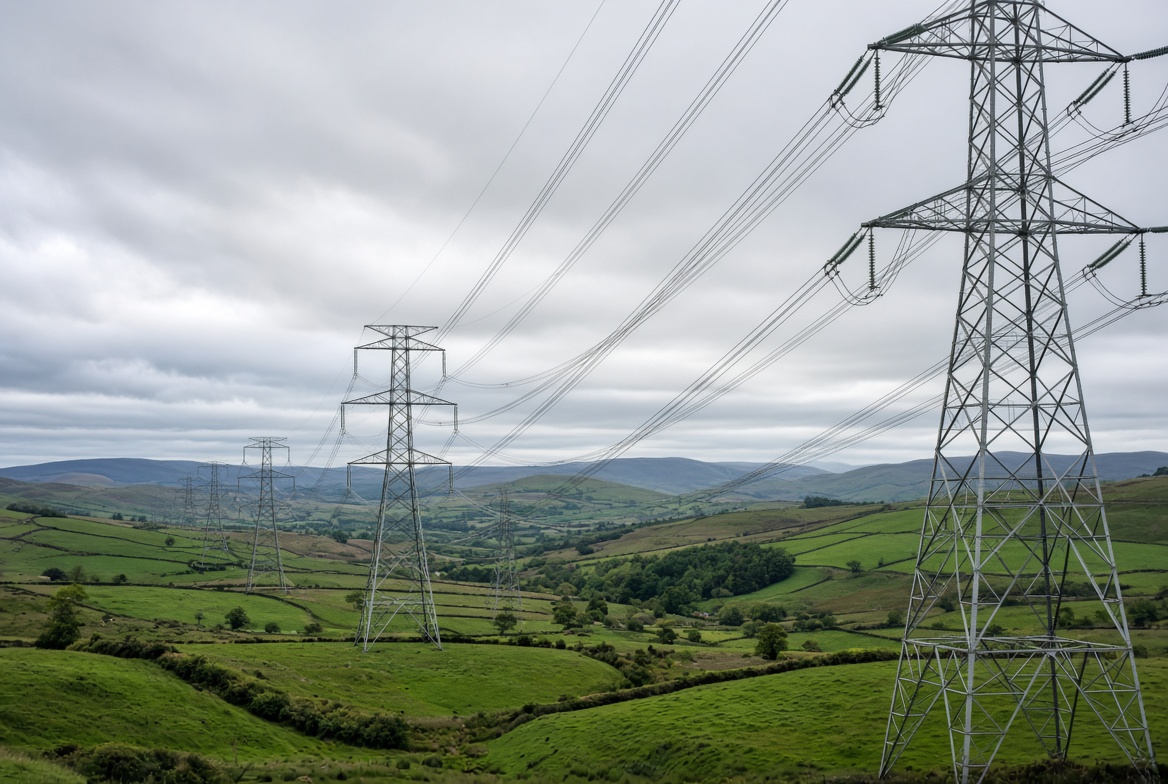
Millions of households and businesses across Great Britain now face the prospect of emergency rotating power cuts with as little as eight hours’ notice. The National Energy System Operator (NESO) has new authority—approved quietly by regulator Ofgem—to initiate large-scale load shedding without requiring emergency government powers under the Electricity Supply Emergency Code.
Under the changes effective this week, NESO can disconnect enough demand in designated areas to reduce electricity use by more than a fifth. Blackouts would typically last up to three hours and rotate across the country to share the burden while the control room manages a short-term supply squeeze. Protected sites—hospitals, water treatment works, and national security facilities—remain exempt. NESO describes this as a last-resort measure for “the most extreme and unlikely circumstances,” after exhausting options such as voltage reduction or disconnecting large industrial users. In a worst-case scenario, full restoration could take five to seven days.
This is the first time the system operator can deploy such tools independently for short-notice imbalances. It bridges older, limited short-term cuts (last used in the 1970s) and the broader government emergency code, which has never been invoked and requires Energy Secretary approval for prolonged shortfalls.
How net zero policies contributed to this vulnerability
Great Britain’s electricity system was once among the world’s most reliable. The shift toward net zero has introduced structural risks centered on intermittency, lost firm capacity, and forecasting challenges.
The Climate Change Act 2008 set an 80% emissions reduction target by 2050; this was upgraded to full net zero in 2019. Coal—once a backbone of dispatchable power—was fully phased out by late 2024 (Ratcliffe-on-Soar closed in September 2024). Roughly 24 GW of reliable coal capacity was retired and replaced primarily by intermittent wind and solar (around 45 GW nameplate). Dispatchable capacity (gas and nuclear) declined sharply relative to demand needs. New gas plants that policymakers once expected never fully materialized, while nuclear projects like Hinkley Point C face multi-year delays and massive cost overruns.
Contracts for Difference (CfDs) and other subsidies accelerated renewables.
In recent years, wind and solar supplied a large and growing share of generation, but their weather dependence creates volatility. System inertia—the physical “shock absorber” from spinning turbines in conventional plants—has fallen, increasing frequency instability risks. NESO has reduced some inertia requirements in favor of batteries for cost savings, even as internal assessments showed higher probabilities of severe disruptions.
The Clean Power 2030 target aims for roughly 95% clean generation. This intensifies pressure: grid connection queues are long, transmission upgrades lag, and forecasting of renewable output grows harder. A confidential Cornwall Insight report commissioned for NESO warned that inaccurate modeling of renewables could raise balancing costs and blackout risks, with uncertainty potentially reaching levels equivalent to two large nuclear stations by decade’s end. Whistleblowers from NESO’s control room have alleged the operator is “flying blind” due to rapid renewable growth and that blackout risks during the June 2026 heatwave were downplayed.
Recent events illustrated the fragility. During the June 2026 heatwave, high temperatures reduced solar efficiency, wind output slumped, and demand rose with air conditioning. NESO issued rare summer Electricity Margin Notices, paid premium prices (sometimes 20 times normal) for gas and imports, cut exports, and at one point phoned French counterparts for emergency interconnector support as grid frequency dipped critically low. System security constraints were reportedly breached. Britain relied heavily on EU imports—exposing it to continental constraints as well.
Imports rose from about 2% of supply in 2009 to around 16% more recently. Curtailment payments (paying renewables to switch off when the grid cannot absorb them) already cost billpayers over £1 billion annually in some years. These are symptoms of a system prioritizing rapid decarbonization over firm, dispatchable capacity and robust transmission.
Parallels with U.S. blue states
Great Britain’s trajectory mirrors energy policies in several Democratic-led U.S. states, often called “blue states.” California and New York have pursued aggressive renewable portfolio standards, net-zero timelines, nuclear retirements or restrictions, and fossil-fuel phase-downs—producing high prices, reliability warnings, and past or threatened blackouts.
California targets high renewable shares (aiming toward 90%+ clean by the 2030s and a net-zero economy-wide by 2045). It experienced rolling blackouts during the August 2020 heatwave, when solar faded in the evening (“duck curve”) and gas plants underperformed. The state has since added significant battery storage and still relies heavily on natural gas for flexibility, yet faces some of the highest electricity rates in the continental U.S. (often double the national average). Refinery closures and EV mandates add further strain; neighboring states feel spillover effects. Recent policy tweaks have eased some targets amid cost and reliability concerns.
New York’s Climate Leadership and Community Protection Act mandates deep emissions cuts and 100% zero-emission electricity by 2040. Closure of the Indian Point nuclear plant removed firm capacity. Pipeline restrictions limited gas, while renewable buildout lagged. The New York Independent System Operator has repeatedly warned of tightening margins and potential shortages. Electricity prices run well above national averages.
In 2025–2026, the state diluted some near-term targets and approved previously blocked gas infrastructure, citing blackout risks.
Across blue states, electricity prices are systematically higher than in red states with more balanced or fossil-friendly policies. Reliability concerns stem from the same core issues visible in Britain: retiring dispatchable plants faster than firm low-carbon alternatives (nuclear, long-duration storage, or reliable gas with carbon capture) can replace them, while intermittent resources require expensive backups, transmission, and balancing services. Both regions have seen policymakers forced into pragmatic retreats when the physical limits of the grid become undeniable.
How consumers should prepare for rolling blackoutsRolling blackouts of a few hours are manageable with basic preparedness. Focus on safety, communication, food, and medical needs.
- Lighting and power: Keep battery-powered or wind-up torches (and spare batteries) in accessible places. Avoid candles due to fire risk.
- Maintain charged power banks and a portable power station for phones and essential devices. Unplug sensitive electronics to protect against surges when power returns.
- Communication: Write down key phone numbers (family, emergency services, your Distribution Network Operator). The UK power-cut helpline is 105. A battery, wind-up, or solar radio provides updates if mobile networks strain.
- Food and water: Stock non-perishable food and at least 3–4 liters of water per person per day for 72 hours. Keep fridge and freezer doors closed— a full freezer stays safe ~48 hours; a fridge ~4 hours. Have a manual can opener.
- Medical and vulnerable needs: Register on the Priority Services Register if you rely on powered medical equipment. Keep backup batteries charged and a 7-day medication supply. Plan for heating or cooling (layers, blankets, or cooler rooms).
- General: Know how to open your garage door manually. Keep some cash on hand. Switch off non-essential appliances before or during an outage. For longer risks, consider a small generator (used outdoors only) or solar-charged systems.
These steps mirror standard advice from National Grid, Citizens Advice, and U.S. preparedness guides used during California and other outages.
Looking ahead
NESO and the government insist the new protocol strengthens resilience and that blackouts remain unlikely. Yet the need for it—coming after heatwave near-misses, whistleblower claims, and explicit warnings about renewable-driven forecasting and inertia challenges—reveals the cumulative effect of net-zero acceleration without sufficient firm capacity, storage, and grid upgrades.Britain and U.S. blue states demonstrate that rapid displacement of dispatchable generation by intermittent sources raises costs and reliability risks unless matched by realistic engineering, nuclear expansion, long-duration storage, and retained flexible gas. Consumers will ultimately pay—through higher bills or, in extremes, managed outages. Transparent acknowledgment of these trade-offs, rather than assurances alone, is the clearest path to keeping the lights on while pursuing emissions goals.
- The Guardian: “Millions in Great Britain could face emergency power cuts at short notice” (10 Aug 2026) – https://www.theguardian.com/business/2026/aug/10/great-britain-emergency-power-cuts-grid-neso-blackouts
- Related Guardian coverage of NESO heatwave issues and political row – https://www.theguardian.com/business/2026/jul/22/risking-blackouts-great-britain-grid-operator-neso-heatwave and https://www.theguardian.com/business/2026/jul/13/lawyers-to-investigate-claims-of-gb-power-grid-cover-up-over-blackout-risk
- The Telegraph reports on heatwave near-misses, imports from EU/France, and inertia changes – https://www.telegraph.co.uk/business/2026/06/24/grid-operator-demands-more-power/; https://www.telegraph.co.uk/business/2026/07/26/seconds-from-disaster-britain-was-forced-to-beg-france-for/; https://www.telegraph.co.uk/business/2026/07/28/grid-bosses-tried-to-water-down-rules-before-blackout-scare/
- The Times: Net zero risks blackouts and higher bills; whistleblower claims – https://www.thetimes.com/uk/politics/article/net-zero-blackouts-bills-national-grid-z88zz3l8v
- Ofgem and NESO operational notes and Summer Outlook materials (various 2026)
- Prosperity Institute / “It’s Broke – Fix It” report on UK capacity loss and policy timeline – https://www.prosperity.com/wp-content/uploads/2026/01/Its-Broke-Fix-It-Report-RD-22Jan26-FINAL.pdf
- GOV.UK Statutory Security of Supply Report and Electricity Supply Emergency Code guidance
- CapX and other analyses of Clean Power 2030 grid risks
- California and New York policy and reliability reporting: Institute for Energy Research, City Journal, NY Post, Bloomberg, and state ISO warnings on high prices, nuclear retirements, and blackout risks
- Consumer preparation: National Grid UK tips – https://www.nationalgrid.com/power-cuts/tips-prepare-for-power-cut; Citizens Advice; PowerOutage.us and similar U.S. guides
All factual claims draw from the above publicly reported events, official statements, and analyses as of August 2026.