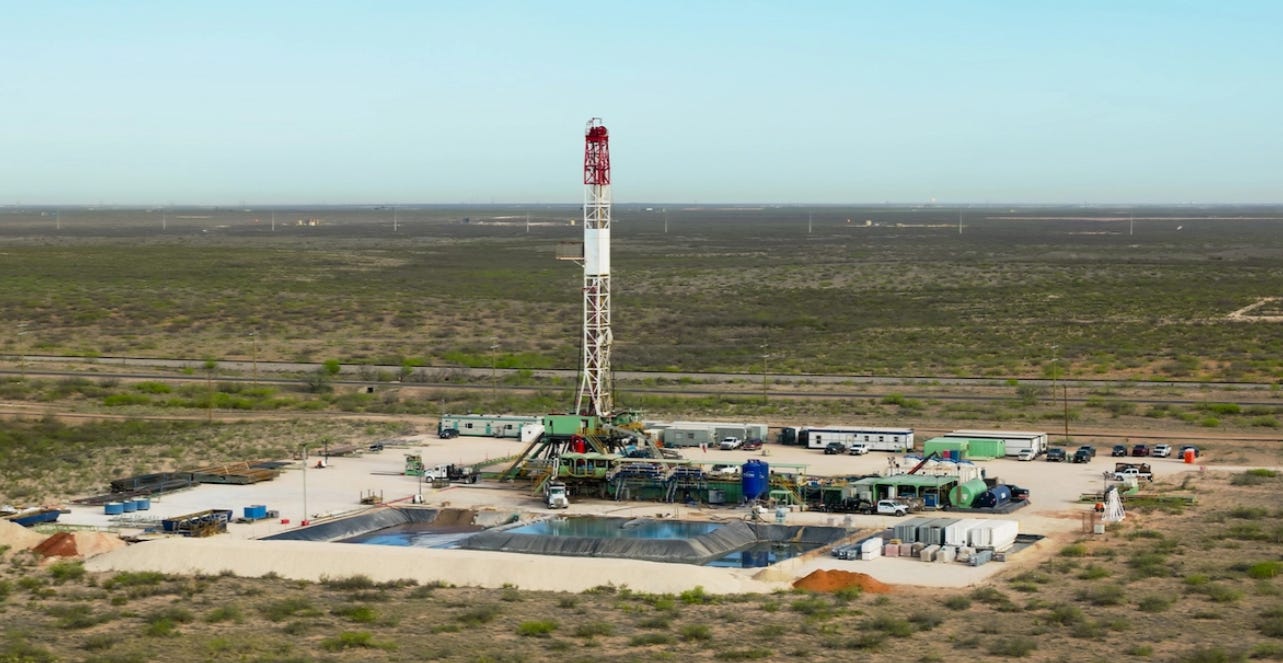
Major U.S. shale producers are dialing back capital expenditures in key basins even as crude prices remain elevated, prioritizing shareholder returns, debt reduction, and free cash flow over rapid production growth. This capital discipline is creating headwinds for U.S. oil supply expansion at a time when global markets continue to seek reliable barrels.
According to recent earnings reports and analysis, Chevron Corp. and ConocoPhillips reduced capital expenditure in the Lower 48 by about 10% in the first six months of 2026. Occidental Petroleum Corp. cut Permian Basin spending by roughly 20% over the same period. Companies including APA Corp., Matador Resources Co., and HighPeak Energy Inc. are also on track to spend considerably less on U.S. drilling and fracking than a year earlier.
These cuts reflect a broader industry shift that began after the post-2022 spending surge. Producers are generating strong cash flows from high oil prices but channeling much of that windfall into dividends, buybacks, and balance-sheet strength rather than accelerating output. Efficiency gains—longer laterals, better completions, and optimized operations—have allowed many operators to maintain or modestly grow production despite lower spending. Chevron, for example, has pursued a “plateau” strategy in the Permian, holding oil-equivalent production near 1 million barrels per day while generating substantial free cash flow.
The U.S. Energy Information Administration (EIA) currently forecasts U.S. crude oil production will rise by about 200,000 barrels per day in 2026 to average 13.8 million barrels per day. That growth is far more modest than the roughly 1.1 million barrels per day added in 2023. Some producers, such as Diamondback Energy and ExxonMobil, are exceptions and plan higher investment to capture additional volumes, but the overall trend among large public shale operators remains one of restraint.
Why Capital Is Flowing Elsewhere: Costs and Profitability
A key reason U.S. shale investment is moderating relative to other opportunities is the evolving cost structure and profitability comparison. U.S. shale wells decline rapidly—often 70% or more in the first few years—requiring continuous high levels of drilling and completion activity just to hold production flat. Service costs, labor, steel, and other inputs have faced inflationary pressure, and recent surveys show average new-well breakeven prices in major basins around $65–$67 per barrel WTI. Operating breakevens on existing wells sit lower (near $40–$45), but the need for ongoing capital to replace declines remains high.
In contrast, major international projects offer lower full-cycle costs and longer-lived production. Guyana’s Stabroek Block, operated by ExxonMobil (with partners including Chevron via its Hess acquisition and CNOOC), stands out. Multiple floating production, storage, and offloading (FPSO) vessels are online or ramping, with production already exceeding 900,000 barrels per day and capacity targeted toward 1.7 million barrels per day by 2030. Breakeven costs for several Guyana projects are estimated in the $25–$35 per barrel range (some phases lower), with lifting costs reported as low as around $7 per barrel in recent periods. High initial flow rates, cost recovery under the production-sharing agreement, and strong margins have allowed ExxonMobil to recover substantial upfront investment ahead of schedule and generate significant free cash flow.
Similar economics apply in Brazil’s pre-salt deepwater fields, where Petrobras and partners continue to sanction large FPSO projects with competitive breakevens often cited below $40 per barrel. These conventional developments deliver multi-decade plateaus once online, reducing the reinvestment intensity compared with shale.
U.S. operators are not abandoning domestic shale—the Permian remains a core, high-return asset for companies such as ExxonMobil and Chevron—but the relative attractiveness of low-cost, high-margin international barrels has drawn a growing share of growth capital. Investor pressure for returns after years of capital destruction in the shale boom has reinforced this discipline.
Top Areas for Drilling and Production Growth
Global non-OPEC supply growth in 2026 is expected to be led by a handful of regions, with Latin America playing an outsized role. Brazil, Guyana, and Argentina alone are projected to contribute a large share (in some estimates, more than half) of incremental crude supply.
Top 5 areas for drilling/production growth (based on 2026 forecasts and project pipelines):
- Guyana (Stabroek Block) — Fastest-growing major source. Output is ramping via sequential FPSOs (Yellowtail/ONE GUYANA already contributing, Uaru expected in 2026). Production is on track toward or past 950,000–1 million barrels per day by end-2026, with further phases supporting 1.3 million+ by 2027 and 1.7 million by 2030. Extremely competitive economics and high resource quality.
- Brazil (pre-salt, especially Búzios and related fields) — Largest absolute contributor among non-U.S. sources. New FPSOs and field expansions are forecast to add 150,000–200,000 barrels per day in 2026. Petrobras continues heavy investment in ultra-deepwater developments that deliver high volumes at competitive costs.
- Argentina (Vaca Muerta shale) — Strong unconventional growth. Shale oil now dominates national output; production records continue to be set, with forecasts of roughly +70,000 barrels per day contribution in 2026 and longer-term potential toward 1 million+ barrels per day as infrastructure (pipelines) expands.
- United States (primarily Permian Basin) — Still a major volume source despite slower growth. Efficiency gains and selective investment support the EIA’s ~200,000 barrels per day national increase. The Permian remains the highest-quality U.S. shale play, though overall U.S. growth has decelerated from earlier peaks.
- Canada (oil sands and related) — Steady incremental growth from oil sands projects with improving cost structures (some breakevens now competitive with or better than average U.S. shale). Ongoing debottlenecking and efficiency improvements support reliable additions.
Emerging activity in Suriname (adjacent to Guyana) and potential recovery in Venezuela could add further barrels in coming years, but the near-term growth leadership rests with the five areas above.
Outlook
U.S. shale remains a flexible, responsive source of supply, but the current emphasis on capital discipline means production growth will stay measured. Companies are effectively “sweating” existing assets and prioritizing returns. Meanwhile, low-cost international projects in Guyana, Brazil, and Argentina are absorbing a larger share of industry growth capital because of superior full-cycle economics and lower ongoing reinvestment needs.
This dynamic supports a more balanced global supply picture but also means the era of rapid U.S. shale-led growth that defined the 2010s and early 2020s has given way to a more measured, returns-focused phase. Efficiency will continue to stretch every dollar of capital further, yet the headwinds from reduced spending are real and already visible in the tempered production forecasts.
Appendix: Sources and Links
- Bloomberg: “US Oil Growth Faces Headwinds as Shale Producers Cut Spending” (August 14, 2026)
https://www.bloomberg.com/news/articles/2026-08-14/us-oil-growth-faces-headwinds-as-shale-producers-cut-spending - TT News / Bloomberg reprint: “U.S. oil companies cut capital spending in shale basins”
https://www.ttnews.com/articles/us-oil-companies-shale-basin - U.S. Energy Information Administration Short-Term Energy Outlook (August 2026 and related releases)
https://www.eia.gov/outlooks/steo/ - Global Energy / related reporting on Latin America supply growth (Brazil, Guyana, Argentina contributions)
https://globalenergy.mx/noticias-especiales/articulos/america-latina-liderara-crecimiento-petrolero-global-2026-brasil-guyana-argentina/ - Petroleum Economist / World Oil outlook pieces on South America
https://read.nxtbook.com/gulf_energy_information/petroleum_economist/pe_outlook_2026_v2/americas_kurt_abraham_offshore_26.html - Dallas Fed Energy Survey and breakeven data references (via industry summaries)
Related analyses citing Q1 2026 survey results showing ~$65–$67 new-well breakevens. - ExxonMobil, Hess/Chevron, and industry reports on Guyana economics and production (multiple 2025–2026 updates)
Examples include coverage of Stabroek FPSO ramp-ups, cost recovery, and breakevens in the $25–$35 range. - OilPrice.com, Rystad Energy, Wood Mackenzie, and World Oil reporting on Vaca Muerta, Brazil pre-salt, and comparative costs.
- Additional context from Energy Intelligence, Reuters, and company earnings releases on capital budgets and production guidance.
All production, spending, and cost figures are drawn from publicly reported company data, EIA forecasts, and industry analyses available as of mid-August 2026. Figures can be revised with subsequent data releases.