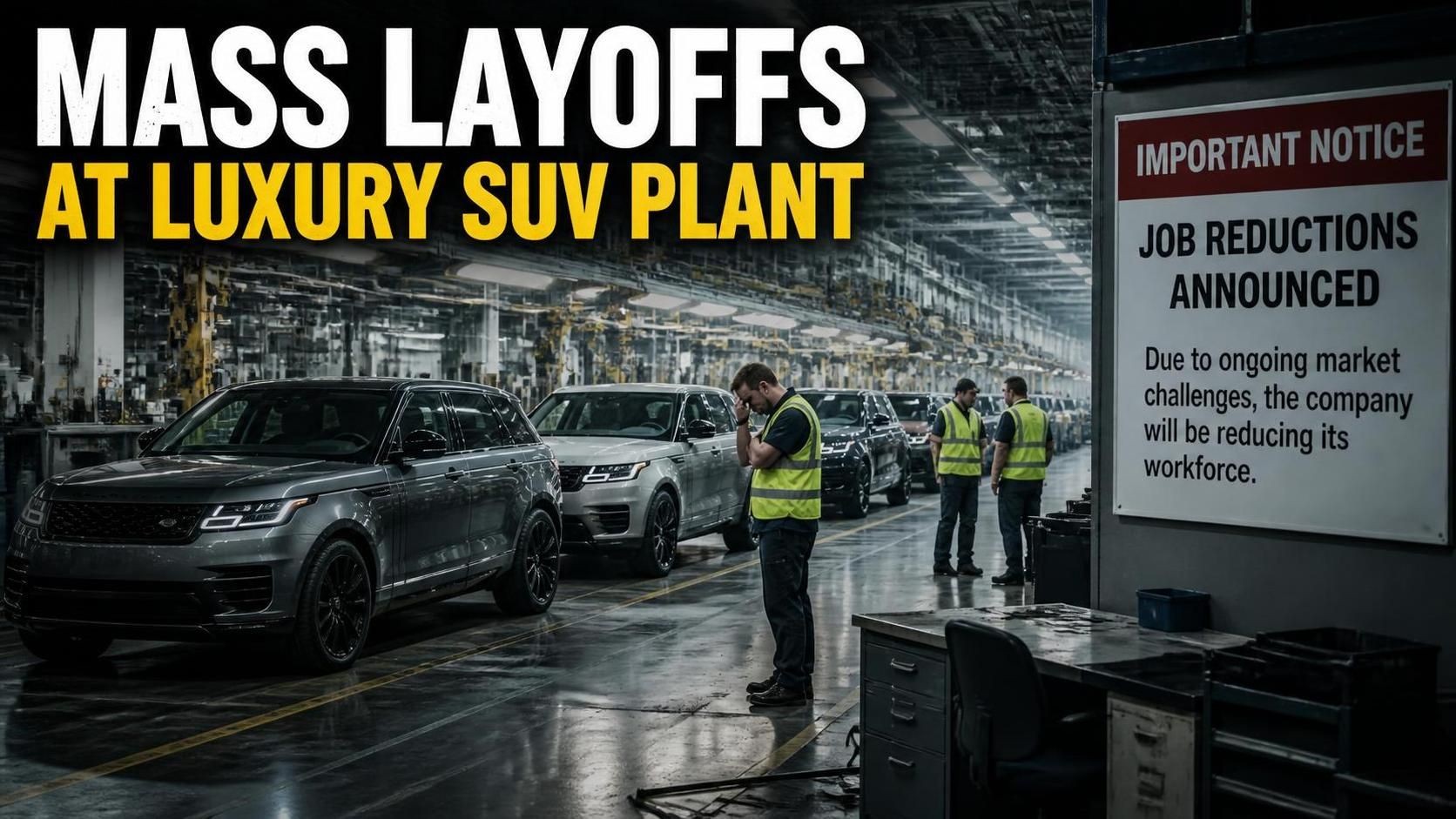
Business Secretary Jonathan Reynolds will meet Jaguar Land Rover chief executive PB Balaji and Unite general secretary Sharon Graham early this week to discuss thousands of expected job cuts at Britain’s largest carmaker. JLR has opened a voluntary redundancy program for salaried and management staff as it targets £1.7 billion in savings over two years. Reports put potential losses as high as 4,000 roles—mainly white-collar—on top of earlier smaller programs. Reynolds ruled out a bailout but left the door open to long-term investment and signaled willingness to adjust electric-vehicle sales mandates that rise toward 80 percent zero-emission vehicles by 2030.
JLR employs about 30,000 people in the UK. The immediate triggers include a September 2025 cyber-attack that halted production for weeks, cost an estimated £1.9 billion, and cut output by 27 percent, plus tariffs and weaker sales. Union leaders describe a “perfect storm” and “death by a thousand cuts.” High industrial energy costs, EV mandates outpacing consumer demand, and Chinese competition lie beneath those headline shocks.
The same pattern is visible in Germany and Canada. It is not a coincidence.
Germany’s industrial core is shrinking
Volkswagen’s board has approved the largest restructuring in the company’s 89-year history. Combined plans point toward roughly 100,000 job cuts by 2030 and the phased wind-down of four German plants (Emden, Zwickau, Hanover, and Audi’s Neckarsulm). Production costs remain about 30 percent higher than competitors’. Model line-ups are being slashed and capacity cut by more than 500,000 vehicles a year.
German and European industrial electricity prices are roughly twice U.S. levels even after subsidies. Energy-intensive output in chemicals, metals, paper, glass, and cement has fallen by nearly 18 percent from 2021 levels. Steel production sits at multi-decade lows. Officials describe industrial electricity-price subsidies as life support rather than restored competitiveness. Cheap Chinese EVs, produced with coal-fired power and state support, have taken share while EU climate quotas and fines accelerate the forced shift off internal-combustion platforms.
Canada’s auto sector under tariff and policy pressure
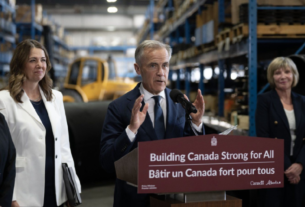
Canadian vehicle production has fallen from about 2.4 million units a decade ago to 1.2 million in 2025—a 44 percent decline. The sector still supports roughly 125,000 direct jobs and $16 billion in GDP, but recent years brought plant pauses, shift cuts and about 36,000 auto-sector job losses in a single twelve-month stretch. U.S. tariffs on non-U.S. content, stalled EV demand after incentives changed, and a quota allowing tens of thousands of Chinese EVs into Canada at modest tariffs add to the squeeze. Pipeline cancellations and delays reduced energy-export leverage that could have offset some of the industrial pain.
Ottawa has announced billions in support, work-sharing programs and a revised emissions-reduction path that still aims for high EV shares by 2035–2040. Industry voices are blunt: without reliable U.S. market access, Canada does not have a large auto industry.
How the UK lost primary steelmaking
The United Kingdom no longer operates commercial blast furnaces that turn iron ore into virgin steel. Tata Steel closed Port Talbot’s last blast furnace in September 2024 after losses of £1 million a day. The site is being converted to a 3.2 million-tonne-per-year electric-arc furnace (EAF) that melts scrap, with government grant support of £500 million toward a £1.25 billion project expected online in late 2027 or early 2028. About 2,500 jobs were lost in the transition. During construction, the plant mills imported slab.
British Steel’s Scunthorpe works—the last remaining blast-furnace complex—required emergency government intervention in April 2025 after its Chinese owner Jingye prepared to close the furnaces. The state spent hundreds of millions of pounds (reported figures include £377 million in nine months and later totals above £640 million) to keep the site running at more than £1 million a day, then fully nationalized the company in July 2026 after no private buyer emerged. Officials described the move as protecting a “vital national capability.” UK crude steel output has fallen from around 12 million tonnes a decade ago to roughly 4 million.
EAF steel is lower-carbon when powered by clean electricity and uses abundant UK scrap. It cannot fully substitute for primary steel in every high-specification defense and infrastructure application. Ministers have called the defense impact “low,” yet the government’s own steel strategy and defense industrial documents emphasize domestic supply for rail, construction, AUKUS submarines and critical infrastructure. The UK now imports much of the virgin steel it still needs.
China is not following the same script
China’s official line is “dual carbon”: peak emissions before 2030 and carbon neutrality before 2060. In practice the guiding principle has been “first build, then destroy.” China remains the world’s dominant steel producer, with roughly 90 percent of output still coming from coal-based blast-furnace/basic-oxygen-furnace routes. It continues to add coal-fired power capacity for energy security even while installing record volumes of wind and solar. Coal supplied more than half of primary energy as recently as 2024. New coal plants are framed as grid backup and peak-load insurance.
The result is a dual-track system: cheap coal-powered manufacturing and EV batteries that undercut Western producers, plus a growing renewable fleet. Chinese steel and vehicle exports have filled gaps created when European and British energy-intensive plants became uncompetitive. Capacity-replacement rules and modest EAF targets exist, but they have not ended coal-based expansion on the scale required to match Western Net Zero timelines.
Can the UK change course like India, Japan, South Korea and the United States?
Those countries have not abandoned heavy industry on the same schedule.
India targets 300 million tonnes of crude steel capacity by 2030 and 500 million by 2047 under its National Steel Policy, with net-zero only in 2070. Most new capacity remains blast-furnace based even as green-steel pilots and a carbon-credit scheme begin.
Japan and South Korea still produce the large majority of steel via blast furnaces. Both are introducing emissions-trading systems, subsidies for hydrogen-DRI and EAF upgrades, and “green steel” strategies, but they have not shut primary capacity on a UK-style timetable. They treat industrial competitiveness and energy security as co-equal with long-term climate goals.
The United States, after exiting the Paris Agreement in January 2026, has used Section 232 and other tariffs to protect domestic steel. Capacity utilization has risen, import share has fallen to multi-decade lows, and more than $25 billion has gone into new mills, rebuilt blast furnaces, EAFs and downstream lines. Policy has shifted from rapid industrial decarbonization mandates toward production and national-security capacity.
The UK could, in principle, follow a similar pragmatic mix: keep or rebuild a core of primary capacity where defense and infrastructure demand it, use EAFs for the rest, lower industrial electricity prices, and treat Net Zero timelines as adjustable rather than legally rigid. That would require reversing or delaying parts of the current policy stack—carbon costs, network charges, EV mandates and the political commitment to close blast furnaces before replacements are proven at scale.
Will consumers demand a policy change?
Public support for the goal of climate action remains majority-level in many polls, often around 60 percent in the UK. Support for the implementation—high bills, job losses in steel and autos, and visible deindustrialization—is weaker and more conditional. Cost-of-living pressure, industrial electricity prices three to four times U.S. or Chinese levels, and plant closures have already fuelled political shifts: Reform UK’s rise in Britain and the AfD’s gains in Germany both link energy and climate policy to lost competitiveness and working-class pain.
The national-security argument is becoming harder to dismiss. Wars are supplied from factory floors. Virgin steel, chemicals, refining and heavy manufacturing cannot be summoned overnight if they have been offshored. When Net Zero policy is seen to cripple the ability to remanufacture ships, armour, rail, energy infrastructure and munitions at speed, the political coalition that treated 2050 targets as non-negotiable will face harder questions from voters who pay the bills and from defence planners who need surge capacity.JLR’s meeting this week is one data point. Volkswagen’s 100,000-job plan, Canada’s halved auto output, and the UK’s closed blast furnaces are others. China continues to run coal plants and blast furnaces while selling the products those policies make expensive in the West. Whether British, German and Canadian consumers—and their governments—decide that energy policy must serve industrial and defense resilience first will determine whether the current wave of job cuts is a painful adjustment or the next stage of structural decline.
At Energy News Beat, we Make Appendices Great Again.
Appendix: Sources and links
- BBC: Minister to meet Jaguar Land Rover boss as thousands of job cuts expected — https://www.bbc.com/news/articles/crer948xq00o
- Reuters: UK business minister to meet Jaguar Land Rover CEO over job cuts — https://www.reuters.com/world/uk/uk-business-minister-meet-jaguar-land-rover-ceo-over-job-cuts-2026-09-06/
- The Guardian: No bailouts for Jaguar Land Rover — https://www.theguardian.com/business/2026/sep/06/bailouts-jaguar-land-rover-redundancies-cuts-business-secretary
- Financial Times: Jaguar Land Rover plans up to 4,000 job cuts — https://www.ft.com/content/4a751ca7-83ac-4c62-8d3f-3643e74ad92b
- The Times: Jaguar Land Rover to axe 4,000 jobs — https://www.thetimes.com/business/companies-markets/article/jaguar-land-rover-4000-jobs-lost-vt3fsdt68
- BBC earlier coverage of July 2026 cuts — https://www.bbc.co.uk/news/articles/cq6dmjv1jpdo
Germany, Volkswagen and deindustrialization
- Energy News Beat: Net Zero is the root cause of deindustrialization as Germany’s Volkswagen cuts 100k jobs — https://energynewsbeat.co/net-zero/net-zero-is-the-root-cause-of-deindustrialization-as-germanys-volkswagen-cuts-100k-jobs/
- Reuters: VW weighs up to 100,000 job cuts — https://www.reuters.com/business/autos-transportation/volkswagen-ceo-aims-cut-up-100000-jobs-next-years-manager-magazin-reports-2026-06-26/
- Financial Times: Volkswagen to axe up to 100,000 jobs — https://www.ft.com/content/d0760eaf-d345-4964-b2ae-f55f6dfd9a4a
- New York Times: Volkswagen Plans to Cut 50,000 Jobs (additional tranche) — https://www.nytimes.com/2026/09/03/business/volkswagen-job-cuts.html
- The Guardian: VW plans to cut up to 100,000 jobs — https://www.theguardian.com/business/2026/jun/26/vw-cut-jobs-shut-plants-volkswagen-china
Canada auto industry
- Prime Minister of Canada: New strategy to transform Canada’s auto industry — https://www.pm.gc.ca/en/news/speeches/2026/02/05/prime-minister-carney-announces-new-strategy-transform-canadas-auto
- Government of Canada auto strategy — https://www.canada.ca/en/employment-social-development/news/2026/02/government-of-canadas-new-auto-strategy.html
- The Globe and Mail: Canada’s auto sector is marked for death — https://www.theglobeandmail.com/business/commentary/article-canada-auto-sector-us-trade-trump-tariffs/
- RBC: Four future paths for Canada’s auto industry — https://www.rbc.com/en/thought-leadership/geopolitics-trade-and-the-economy/steering-through-uncertainty-four-future-paths-for-canadas-auto-industry/
- Parliament Audit: Canadian auto production 2014 vs later — https://parliamentaudit.ca/news/canadian-auto-industry-2014-vs-2024-44-percent-decline
UK steel: Port Talbot, Scunthorpe and nationalization
- BBC: Traditional steelmaking ends as Tata’s Port Talbot blast furnace closes — https://www.bbc.co.uk/news/articles/c70zxjldqnxo
- BBC: Tata Steel ‘hellbent’ on building Port Talbot’s green future — https://www.bbc.co.uk/news/articles/c89d5yvqknwo
- New York Times: U.K. Nationalizes British Steel — https://www.nytimes.com/2026/07/16/business/britain-nationalizes-steel-mill.html
- Reuters: Britain nationalizes British Steel — https://www.reuters.com/world/uk/britain-takes-british-steel-into-public-ownership-2026-07-16/
- National Audit Office: Government spends £377 million to keep Scunthorpe operating — https://www.nao.org.uk/press-releases/government-spends-377-million-in-9-months-to-keep-british-steels-scunthorpe-site-operating/
- GOV.UK: The UK steel strategy — https://www.gov.uk/government/publications/steel-strategy/the-uk-steel-strategy-web-version
- Tata Steel UK statements on EAF transition — https://www.tatasteeluk.com/corporate/news/looking-to-a-green-future-as-port-talbot-safely-closes-%E2%80%98heavy-end%E2%80%99
China energy and steel policy
- ChinaPower / CSIS: How Robust Is China’s Energy Security? — https://chinapower.csis.org/china-energy-security/
- Climate Action Tracker: China policies & action — https://climateactiontracker.org/countries/china/policies-action
- CREA / Global Energy Monitor reporting on coal and steel capacity
- Yale E360: As It Boosts Renewables, China Still Can’t Break Its Coal Addiction — https://e360.yale.edu/features/china-coal-five-year-plan
- Wood Mackenzie: Green steel in China: easier said than done — https://www.woodmac.com/news/opinion/green-steel-in-china-easier-said-than-done/
India, Japan, South Korea, United States steel and climate policy
- Global Energy Monitor: Pedal to the Metal 2026 — https://globalenergymonitor.org/sites/default/files/2026-05/Pedal%20to%20the%20Metal%202026.pdf
- RMI: How better policy can support Japan’s / South Korea’s green steel opportunity
- ORF: Pathways to Green Steel: Trilateral Opportunities for India, Japan, and South Korea — https://www.orfonline.org/research/pathways-to-green-steel-trilateral-opportunities-for-india-japan-and-south-korea
- Mondaq / trade analysis: U.S. steel tariffs and capacity investment — https://www.mondaq.com/unitedstates/international-trade-investment/1834702/price-a-whirlwind-year-for-trade-sets-up-a-consequential-steel-summit
- LSE Grantham: Asia’s steel expansion is creating carbon lock-in — https://www.lse.ac.uk/granthaminstitute/news/asias-steel-expansion-is-creating-carbon-lock-in/
National security, defense steel and public opinion
- Army Technology: Steel sector changes have “low” impact on UK defense — https://www.army-technology.com/news/steel-sector-changes-have-low-impact-on-uk-defence-says-minister-of-state/
- spiked: Net Zero is leaving Britain defenseless — https://www.spiked-online.com/2026/09/01/net-zero-is-leaving-britain-defenceless/
- Financial Times: How cheap steel endangers Europe’s defense build-up
- European Commission: Repurposing European idle industrial capacities for defense production
- IPPR: Apathy and opposition (UK net-zero opinion) — related briefing
- Third Way: Greenlash: The Polarization of German Energy Politics — https://www.thirdway.org/blog/greenlash-the-polarization-of-german-energy-politics-is-a-warning-to-the-us
- The Times / WSJ reporting on energy prices and industrial closures
Additional contemporaneous coverage from BBC, Reuters, Financial Times, The Times, The Guardian, New York Times, CNBC and national statistical agencies informed production, employment and energy-price comparisons.