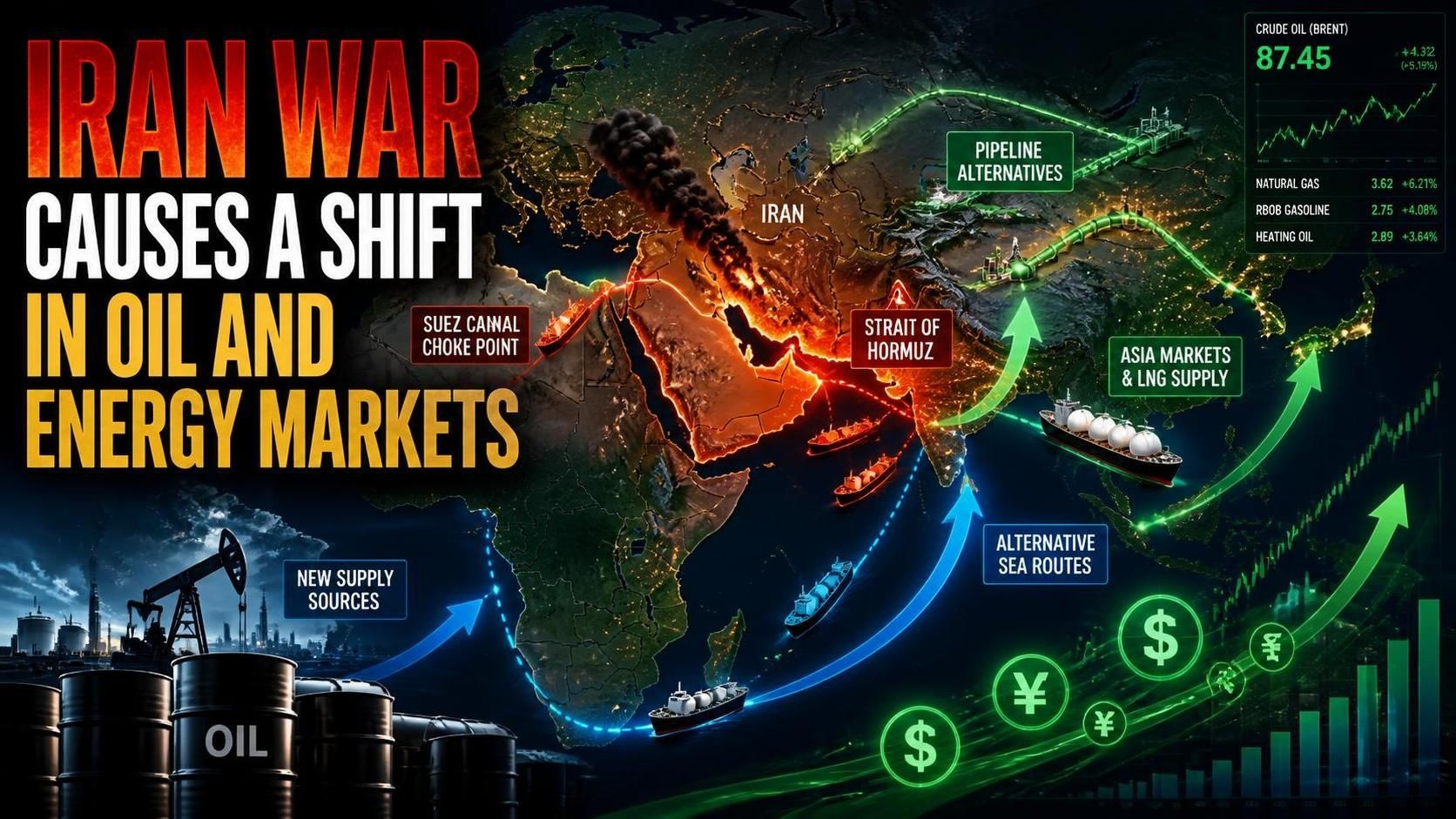
The war that began on February 28, 2026, with U.S. and Israeli strikes on Iran, and Iran’s subsequent campaign against tanker traffic in the Strait of Hormuz, has forced the largest rewrite of global oil trade routes in decades. Pre-war, roughly 20 million barrels per day of crude and products moved through Hormuz. Flows have since collapsed to a fraction of that—often 2–8 million bpd depending on the week—while refined-product markets have been hit even harder than crude.
Six months on, the market has not collapsed into $150 oil. It has fractured. Producers are building and expanding pipelines that never touch Hormuz. Shuttle tankers and ship-to-ship transfers are moving barrels around the chokepoint. Russia is selling more crude into Asia at stronger netbacks. Japan is buying crude from the Americas, Africa, and the Caspian—and importing more finished petrochemicals because Middle East naphtha has vanished. China is using inventories as a swing tool and buying discounted barrels so its refiners can capture record crack spreads. Capital is flowing into energy that does not sit behind a single waterway.
The result is a two-speed market: paper crude has retraced from April peaks above $125, while physical barrels delivered to refineries remain tight and product cracks stay extreme. That gap is likely to keep crude supported into 2027 until new pipeline capacity, product trade, and inventory rebuild finally compress margins.
The Chokepoint That Stopped Working
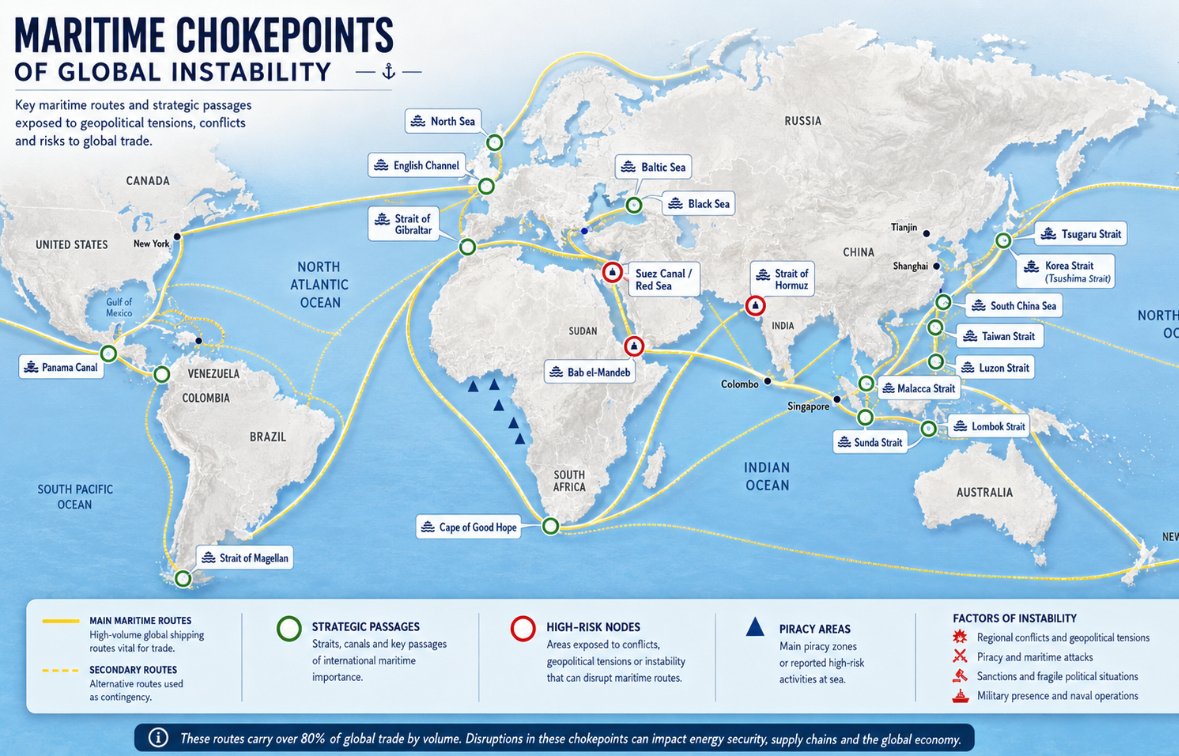
Hormuz handled about one-fifth of globally traded oil before the war. After Iranian attacks, a U.S. blockade of Iranian ports, a brief June memorandum of understanding that briefly lifted traffic, and then renewed fighting, the waterway has never returned to normal. Kpler and other trackers have shown commodity transits collapsing to single digits per day at the worst points, with “dark” sailings (AIS off) rising sharply. Qatar’s Ras Laffan LNG hub was damaged; Middle East refinery runs fell roughly 27 percent in the second quarter. Global product exports from the region, once more than 5 million bpd, were bottled up.
Bab el-Mandeb, the Red Sea exit that Saudi Arabia used as a workaround via Yanbu, has also been threatened by Houthi activity. Two chokepoints, not one, now constrain the old Gulf-to-Asia map.
Crude prices have stabilized in a high-$80s to mid-$90s band in early September—Brent futures near $95, WTI near $91—well below wartime peaks but far above pre-war levels. The more violent shock is in fuels. U.S. diesel cracks spiked above $100 per barrel in August on top of an $85 WTI price. European diesel cracks more than tripled. Finished transportation fuels have traded in the $150–$190 per barrel range at the extreme. That is the refined-product blind spot the 1970s strategic-reserve system was never built to cover.
Gulf Producers Race to Build Around Hormuz
Every major Gulf exporter that can bypass the strait is doing so. Those that cannot are planning pipelines that will take years.
Saudi Arabia — East-West Pipeline (Petroline).
The 1,200-kilometer line from the Eastern Province to Yanbu on the Red Sea was converted to full crude service after the war started. Capacity is now about 7 million bpd: roughly 2 million bpd for west-coast refineries and about 5 million bpd for export. Yanbu loadings hit wartime highs near 4.2 million bpd of crude in April. The bottleneck is the port, not the pipe. Combined Yanbu terminals can nominally load about 4.5 million bpd and closer to 3–4 million under wartime berth constraints. Saudi Arabia is in talks with Kuwait, Bahrain, and Qatar on a further 1–2 million bpd expansion, possibly including a products line, which would take years and billions of dollars. Northbound workarounds via Egypt’s SUMED pipeline and Suez are being used to keep Asia-bound barrels from having to run the full length of the Red Sea and Bab el-Mandeb.
UAE — Habshan–Fujairah and the new West-East line.
The existing 48-inch Abu Dhabi Crude Oil Pipeline (ADCOP) from Habshan to Fujairah on the Gulf of Oman already carries 1.5–1.8 million bpd outside Hormuz. It has been the UAE’s main wartime export valve. ADNOC is building a parallel West-East pipeline, reported 50 percent complete in May, scheduled to start in 2027 and double Fujairah export capacity. Crown Prince Sheik Khaled ordered the project fast-tracked. TotalEnergies has said it will take equity in the new line. ADNOC is also studying a multi-fuel products pipeline so gasoline, diesel, and jet can leave without using Hormuz. Fujairah itself has been attacked; capacity, not just pipe diameter, remains the constraint until 2027.
Iraq — Ceyhan, Banias, Aqaba.
Iraq is the most exposed major producer: most of its oil left through Basra and Hormuz. Southern loadings collapsed. Baghdad has ramped the Kirkuk–Ceyhan corridor through Kurdistan toward Turkey’s Mediterranean port, targeting a jump from about 220,000 bpd to 770,000 bpd. Oil Minister Basim Mohammed Khudair said exports recently reached about 3 million bpd and that the government wants 5 million bpd of alternative capacity once new strategic lines are built: a northern route linking southern fields to Fishkhabur and Ceyhan, and a western route from Haditha to Syria’s Banias. A Basra–Haditha–Aqaba (Jordan) concept has been revived with U.S. encouragement. The Syria line is not a quick rehab of the old 1950s Kirkuk–Banias pipe; sources told Reuters it would require new infrastructure, four years, and at least $15 billion. Trucking of fuel oil and limited Basra crude to Banias has already started at small volumes.
Kuwait and Bahrain have no independent Hormuz bypass. That is why they are in the Saudi East-West talks. Qatar’s problem is LNG as much as crude; Ras Laffan damage and Hormuz risk have slashed gas exports.
These projects will not replace 20 million bpd in 2026. They will permanently reduce the share of Gulf oil that must sail past Iran.

Shuttle Tankers and the Shadow Transfer System
While pipelines are built, the physical market invented a workaround that looks a lot like the sanctioned trades Iran and Russia already knew.From early May, the U.S. military oversaw ship-to-ship oil transfers off Fujairah and off Sohar, Oman—using the same STS technique Iran long used to evade sanctions. Reuters reported at least 116 ships involved by mid-June, with convoys sailing dark, staggered 3,000–4,000 meters apart, and guided by drones and helicopters. An Apache lost over the operation triggered further strikes. Then-Energy Secretary Chris Wright said the U.S. military effort was helping move roughly 7 million bpd out of the Gulf—about half the oil still stranded after Hormuz froze.
UAE, Kuwait, and Iraqi shuttle tankers have been positioned outside Hormuz to ferry cargoes to waiting VLCCs. Dark fleet activity and AIS-off crossings have soared, raising collision and spill risk in already crowded waters. This is not a permanent architecture. It is expensive, slow, and politically fragile. It is also why more oil reached the water than many paper traders assumed in the first months of the war.
How Russia Adapted—and Profited
Russia did not lose the Hormuz war. It gained a market.
When Gulf barrels disappeared, India and China needed crude that did not have to transit the strait. Russian ESPO Blend from Kozmino and Urals redirected east filled the gap. India raised Russian crude imports sharply—KSE Institute and other trackers showed Indian seaborne Russian crude climbing toward 1.9–2.6 million bpd in mid-year months. China remained the largest buyer of Russian fossil fuels even while cutting total imports. U.S. waivers that allowed completion of cargoes already at sea further legitimized the trade.
Ukrainian strikes on Russian refineries cut product exports and forced more crude onto the water. Russia’s shadow fleet—often old, frequently sanctioned, sometimes sharing hulls with Iranian and Venezuelan trades—moved a majority of seaborne crude in some months. Discounts that had been $20-plus on Baltic Urals compressed on Pacific grades; some ESPO cargoes traded at only $1–$3 off Brent, and at times at a premium when Gulf supply was tightest.
Strategically, Moscow’s pitch to Beijing on more pipeline capacity (ESPO expansion, Power of Siberia 2) looks stronger when tankers must run a gauntlet of Ukrainian drones, EU interdiction risk, Bab el-Mandeb, and Hormuz. Russia’s 2026 oil revenues were revised higher after the Iran conflict raised the entire price deck. Sanctioned barrels became the swing supply that Asia could actually receive.
Japan: From Hormuz Crude to Distant Barrels and Imported Products
Japan imported more than 90 percent of its crude from the Middle East before the war, most of it through Hormuz. That model broke in weeks.
Tokyo released strategic and commercial stocks as part of the IEA’s record coordinated draw. It then rebuilt a procurement book from the United States (Alaska and other grades; U.S. crude intake hit a record 331,000 bpd in May and was projected to rise more than tenfold year-on-year in July), Canada, Mexico, Azerbaijan, African producers, and even unsanctioned Sakhalin volumes. Prime Minister Sanae Takaichi said July crude arrivals would recover to year-earlier volumes and that 100 percent of crude would arrive via non-Hormuz routes. The July energy import bill was already a record $76.39 billion; August was expected to be worse because longer-haul freight is more expensive.
The deeper problem is refined products and petrochemicals. Japan’s naphtha system depended on Middle East imports plus naphtha produced from Middle East crude in Japanese refineries—together more than 80 percent Hormuz-exposed. April naphtha imports plunged 47 percent; Middle East naphtha dropped 79 percent. The United States, Algeria, and South Korea filled part of the gap. Even so, ethylene plants cut runs. Japan flipped toward net importer of basic petrochemicals from China and South Korea because it became cheaper to buy the molecules than to crack scarce, expensive naphtha at home. Solvents, plastics, packaging, and construction chemicals all felt the shortage. That is the “refined products as energy-security blind spot” story in one country.
Japan is not waiting for Hormuz to reopen. It is paying more for barrels that never see the Gulf.
China: Inventories First, Then Cheap Crude for Fat Cracks
China is the reason crude did not go to $200.The world’s largest importer cut seaborne crude arrivals by roughly 30–40 percent at the low point. May and June imports fell to eight-year or decade lows—around 7–8 million bpd versus a 2025 average near 11.6 million. State refiners cut runs. Fuel exports were restricted to protect the domestic market. Beijing drew commercial inventories and barely touched the strategic reserve at first. That single demand destruction—on the order of 3–4 million bpd versus pre-war buying—offset a large share of the Gulf loss and kept Brent from staying above $120.
The second phase is the one that matters for 2026–27 balances. As official selling prices from Gulf producers were slashed for some loading months, and as Russian and Iranian barrels offered $3–$10 discounts, Chinese refiners—especially Shandong independents—started buying again. They snapped up September ESPO. They talked Iranian cargoes when the brief sanctions waiver was in force. And they began easing product-export limits to sell diesel and gasoline into a world short of molecules.
That is the crack-spread trade: buy discounted crude, run the units, export products into $75–$100 diesel cracks. Goldman Sachs now sees 2027 U.S. diesel margins versus Brent averaging $63/bbl and European diesel $49/bbl—more than double pre-war estimates—because product inventories are gone, Middle East and Russian product exports are still impaired, and new refining capacity cannot arrive fast enough. China is positioned to monetize that until cracks compress.
Capital Follows the Non-Choke-Point Map
The $330 billion extra the world paid for oil and gas imports between March and August is not only a tax. It is a signal. Money is moving toward:
- Gulf pipelines and Fujairah/Yanbu/Ceyhan/Banias/Aqaba terminals
- U.S., Canadian, Guyanese, Brazilian, and African crude that never sees Hormuz
- Russian Pacific pipeline and Kozmino loadings
- Shuttle and STS logistics, war-risk shipping, and dark-fleet hulls
- Refining and petrochemical flexibility outside the Gulf
- Strategic stock rebuilds once prices allow
Irina Slav’s September 5 OilPrice analysis put it cleanly: exporters are diversifying channels; importers are diversifying suppliers; the market is “fracturing.” Longer routes mean higher freight and a structurally higher cost of energy even after the shooting stops. The silver lining is a network less dependent on two waterways that one regional war can paralyze.
Paper Prices, Physical Barrels, and the 2027 Crack Compression
Physical markets told a tighter story than futures for much of 2026. Inventories—including the U.S. SPR—were drawn at historic rates. Cushing has hovered near operational minimums at times. IEA members released on the order of 400 million barrels. Temporary buffers (floating storage, SPR, Chinese tanks) are finite.
Paper crude sold off hard whenever a diplomatic headline suggested Hormuz would reopen “soon.” It rallied when the MoU collapsed and when Iran struck tankers or Gulf infrastructure again. That is why analysts keep talking past each other. Goldman Sachs, after the June deal optimism, cut 2027 average Brent to about $75 and WTI to $70, while still warning that a prolonged Hormuz disruption could put Brent above $130 late this year and average $105 in 2027. Morgan Stanley has talked $70 Brent by end-2027 if supply normalizes. EIA’s August STEO still had 2026 Brent near $87 and 2027 near $69 under a recovery path, with residual Middle East disruptions of about 0.6 million bpd into next year. Kpler in early September raised its 12-month Dated Brent view to $81, arguing the conflict is now the operating environment, not a spike.
The coherent near-term picture is this: crude can stay firmer than a “glut in 2027” headline while refiners still pay up for any barrel that can actually berth and run. Paper has to catch that physical tightness. Once Fujairah’s second line starts, Yanbu and SUMED stay full, Chinese product exports refill diesel tanks, and SPR rebuild demand is met, crack spreads should ease—most analysts put that compression into 2027, not this winter. Until then, diesel and jet remain the market’s sharp edge, and crude has a security premium underneath it.
Helima Croft at RBC has warned that a wider regional war could still take oil to new records. Daan Struyven at Goldman has sketched both the $75 base and the $130-plus tail. The market is pricing a long stalemate, not a clean reopening.
The Iran war did not just raise the oil price. It changed who can sell, who must buy from farther away, which pipes get built, and which molecules—crude or refined—move first. That map will outlast the next ceasefire.
As we watch the Western World fall into disrepair and fiscal collapse for those countries following Net Zero, we will see the new trading blocs forming around sound energy and manufacturing policies. As Stu Turley says often on the Energy News Beat Podcast, “Energy Security Starts at Home, and Energy Dominance is displayed through your Exports” is taking hold globally. The world is looking less at climate fear-mongering and more at reliable energy sources closer to home. Homegrown is even better, but look at Russia adapting to icebreakers or ice-capable tankers to open the Northern Arctic route and bypass other trading areas where sanctions can be enforced.
Anyone paying attention in the White House should look at how sanctions could be imposed on the U.S., impair exports of our energy, and therefore pose a threat to our Energy Dominance. With the over-weaponization of the U.S. petrodollar, countries will retaliate. It is the way things normally follow patterns. Getting rid of the Jones Act, or building our own ships, is critical. But not at the front of anyone’s mind, as the global oil and gas markets are shifting and redefining permanent leadership. The world is healing, and it will get a bit bumpy along the way.
At Energy News Beat, we Make Appendices Great Again.
Appendix: Sources and Links
Primary article referenced
- Irina Slav, “Iran War Forces a Rewrite of Global Oil Trade Routes,” OilPrice.com, September 5, 2026: https://oilprice.com/Energy/Crude-Oil/Iran-War-Forces-a-Rewrite-of-Global-Oil-Trade-Routes.html
Market overview, prices, refined products
- Center on Global Energy Policy, Columbia SIPA, “Beyond Crude: Iran War Reveals Refined Products as an Energy Security Blind Spot,” August 28, 2026: https://www.energypolicy.columbia.edu/publications/beyond-crude-iran-war-reveals-refined-products-as-an-energy-security-blind-spot/
- New York Times, “How 6 Months of War in Iran Jolted Oil, Gas, Stocks and More,” August 28, 2026: https://www.nytimes.com/2026/08/28/business/iran-war-oil-stocks-prices.html
- Reuters, “The Iran war energy crisis is just getting started,” August 20, 2026: https://www.reuters.com/commentary/reuters-open-interest/iran-war-energy-crisis-is-just-getting-started-2026-08-20/
- Reuters, “World absorbs historic Iran war oil supply loss, but depleted stocks bring risks,” July 6, 2026: https://www.reuters.com/business/energy/world-absorbs-historic-iran-war-oil-supply-loss-depleted-stocks-bring-risks-2026-07-06/
- Rigzone/Bloomberg, “Iran Strikes Keep Oil Near $91,” September 3, 2026: https://www.rigzone.com/news/wire/iran_strikes_keep_oil_near_91-03-sep-2026-184535-article/
- CNN Business, “A dangerous new phase of war is breaking all the oil market’s constraints,” July 24, 2026: https://www.cnn.com/2026/07/24/business/oil-prices-inflation-bonds-iran-war
- CSIS, “The Iran War at Six Months: Energy, Markets, and National Security,” August 24, 2026: https://www.csis.org/analysis/iran-war-six-months-energy-markets-and-national-security
- Brookings, “The timing of the impending crude crisis,” May 22, 2026: https://www.brookings.edu/articles/the-timing-of-the-impending-crude-crisis/
- The Edge Malaysia, “Oil market confronts reality as ceasefire collapses,” July 28, 2026: https://theedgemalaysia.com/node/811588
Saudi East-West pipeline
- Reuters, “EXCLUSIVE: Saudi Arabia considers expansion of oil pipeline to Red Sea,” July 7, 2026: https://www.reuters.com/business/energy/saudi-arabia-considers-expansion-oil-pipeline-red-sea-sources-say-2026-07-07/
- Institute for Energy Research, “Saudi Arabia Considers Expanding Its East-West Pipeline,” July 10, 2026: https://www.instituteforenergyresearch.org/international-issues/saudi-arabia-considers-expanding-its-east-west-pipeline/
- Kpler, “Can Saudi Arabia keep its Red Sea oil exports flowing without Bab el-Mandeb?” September 2, 2026: https://www.kpler.com/blog/explainer-can-saudi-arabia-keep-its-red-sea-oil-exports-flowing-without-bab-el-mandeb
- Wikipedia, East–West Crude Oil Pipeline: https://en.wikipedia.org/wiki/East%E2%80%93West_Crude_Oil_Pipeline
UAE Habshan–Fujairah / West-East pipeline
- AGBI, “TotalEnergies to invest in expanding Fujairah oil export pipeline,” August 24, 2026: https://www.agbi.com/oil-and-gas/2026/08/totalenergies-to-invest-in-expanding-fujairah-oil-export-pipeline/
- The National, “UAE’s West-East pipeline expansion to become operational in 2027,” May 15, 2026: https://www.thenationalnews.com/business/energy/2026/05/15/uaes-west-east-pipeline-expansion-to-become-operational-in-2027-doubling-oil-export-capacity/
- Seatrade Maritime, “ADNOC fast-tracks Fujairah pipeline expansion,” May 18, 2026: https://www.seatrade-maritime.com/tankers/adnoc-fast-tracks-fujairah-pipeline-expansion
- Financial Times, “Adnoc plans new UAE pipeline to bypass Strait of Hormuz,” June 2, 2026: https://www.ft.com/content/d604f90a-3570-446b-bf05-ec2a713a9856
- Wikipedia, Habshan–Fujairah oil pipeline: https://en.wikipedia.org/wiki/Habshan%E2%80%93Fujairah_oil_pipeline
Iraq pipelines
- Hürriyet Daily News, “Iraq targets 5 million bpd oil exports via Türkiye, Syria,” September 6, 2026: https://www.hurriyetdailynews.com/iraq-targets-5-million-bpd-oil-exports-via-turkiye-syria-226494
- Reuters, “New Syria-Iraq crude pipeline still years away,” August 17, 2026: https://www.reuters.com/business/energy/new-syria-iraq-crude-pipeline-still-years-away-sources-say-2026-08-17/
- Bloomberg, “Iraq to Boost Ceyhan Oil Exports as Hormuz Strait Remains Shut,” June 2, 2026: https://www.bloomberg.com/news/articles/2026-06-02/iraq-to-boost-ceyhan-oil-exports-as-hormuz-strait-remains-shut
- The National, “Strait of Hormuz crisis prompts Iraq and Jordan to revisit oil pipeline plan,” July 16, 2026: https://www.thenationalnews.com/news/mena/2026/07/16/syria-iraq-oil-pipeline-hormuz/
- S&P Global, “Iraq eyes new crude export routes after Iran war”: https://www.spglobal.com/energy/en/news-research/latest-news/crude-oil/071326-iraq-eyes-new-crude-export-routes-after-iran-war
Shuttle tankers / STS / U.S. facilitation
- Reuters, “Exclusive: The US is using an Iranian smuggling tactic to sneak oil out of the Gulf,” June 16, 2026: https://www.reuters.com/business/energy/us-is-using-an-iranian-smuggling-tactic-sneak-oil-out-gulf-2026-06-16/
- OilPrice.com, “U.S. Military Helping Move 7 Million Bpd Out of Persian Gulf, Wright Says,” June 12, 2026: https://oilprice.com/Latest-Energy-News/World-News/US-Military-Helping-Move-7-Million-Bpd-Out-of-Persian-Gulf-Wright-Says.html
- New York Times, “Iran War Raises Risk of Collisions and Oil Spills in Strait of Hormuz,” August 21, 2026: https://www.nytimes.com/2026/08/21/business/iran-war-hormuz-oil-spill.html
- Windward, “IRGC Turn-Back Order Stalls Strait of Hormuz Recovery,” June 25, 2026: https://windward.ai/blog/irgc-turn-back-order-stalls-strait-of-hormuz-recovery/
Russia
- Reuters, “China refiners snap up September Russian crude, eye Iranian oil,” July 23, 2026: https://www.reuters.com/business/energy/china-refiners-snap-up-september-russian-crude-eye-iranian-oil-mideast-supply-2026-07-23/
- Maritime Executive, “How Russia Benefited From Iran’s Chokepoint Weapon,” June 25, 2026: https://maritime-executive.com/editorials/how-russia-benefited-from-iran-s-chokepoint-weapon
- KSE Institute Russian Oil Tracker (June/July 2026 editions)
- CREA, June 2026 monthly analysis of Russian fossil fuel exports: https://energyandcleanair.org/june-2026-monthly-analysis-of-russian-fossil-fuel-exports-and-sanctions/
- Carnegie Endowment, “What the Russian Energy Sector Stands to Gain From War in the Middle East,” March 24, 2026: https://carnegieendowment.org/russia-eurasia/politika/2026/03/russia-oil-iran-war-consequences
Japan
- OilPrice.com, “Japan Taps Reserves and New Suppliers to Beat the Oil Blockade,” June 11, 2026: https://oilprice.com/Latest-Energy-News/World-News/Japan-Taps-Reserves-and-New-Suppliers-to-Beat-the-Oil-Blockade.html
- S&P Global, “Japanese refiners eye Q3 Middle East term crude recovery while staying diversified”
- Nikkei Asia, “Japan flips to net importer of petrochemicals on naphtha price surge,” July 23, 2026: https://asia.nikkei.com/business/markets/commodities/japan-flips-to-net-importer-of-petrochemicals-on-naphtha-price-surge
- Nippon.com, “Japan’s Energy Risks Persist Despite US-Iran Deal,” June 30, 2026: https://www.nippon.com/en/in-depth/d01241/
- Prime Minister’s Office of Japan, Ministerial Meeting on the Situation in the Middle East, June 11, 2026: https://japan.kantei.go.jp/105/actions/202606/11kaigi_middle-east.html
China
- Columbia CGEP, “How China Is Managing Lower Oil Imports,” August 13, 2026: https://www.energypolicy.columbia.edu/how-china-is-managing-lower-oil-imports/
- New York Times, “China Moves the Price of Oil, Even When It Buys Less,” June 15, 2026: https://www.nytimes.com/2026/06/15/business/china-oil-iran.html
- OilPrice.com, “How China Became the Ultimate Swing Oil Buyer,” July 30, 2026: https://oilprice.com/Energy/Crude-Oil/How-China-Became-the-Ultimate-Swing-Oil-Buyer.html
- Reuters, “Asia crude and fuel imports recover, still shy of pre-Iran war levels,” August 4, 2026: https://www.reuters.com/commentary/reuters-open-interest/asia-crude-fuel-imports-recover-still-shy-pre-iran-war-levels-2026-08-04/
- Kpler, “Despite a 60-day sanctions waiver, Iranian oil will mainly flow to China,” June 23, 2026: https://www.kpler.com/blog/despite-a-60-day-sanctions-waiver-iranian-oil-will-mainly-flow-to-china
Analyst forecasts and cracks
- Goldman Sachs / Investing.com coverage of June 2026 forecast cuts (2027 Brent ~$75, WTI ~$70; upside scenario >$130)
- Substack summary of Goldman diesel-margin outlook through 2027: https://thedarksideoftheboom.substack.com/p/goldman-sachs-the-diesel-squeeze
- OilPrice.com, “Morgan Stanley Cuts Brent Forecast to $75 a Barrel,” June 30, 2026: https://oilprice.com/Latest-Energy-News/World-News/Morgan-Stanley-Cuts-Brent-Forecast-to-75-a-Barrel.html
- OilPrice.com, “Goldman Sachs Warns Oil Inventory Rebuild Won’t Prevent 2027 Supply Glut,” July 1, 2026: https://oilprice.com/Latest-Energy-News/World-News/Goldman-Sachs-Warns-Oil-Inventory-Rebuild-Wont-Prevent-2027-Supply-Glut.html
- EIA Short-Term Energy Outlook, August 2026: https://www.eia.gov/outlooks/steo/
- Kpler, “Higher floor, hard ceiling: why we have raised our crude forecast to $81/bbl,” September 2, 2026: https://www.kpler.com/blog/higher-floor-hard-ceiling-why-we-have-raised-our-crude-forecast-to-81-bbl
- Goldman Sachs podcast, “How the US-Iran Deal Could Affect Oil Prices,” June 17, 2026: https://www.goldmansachs.com/insights/goldman-sachs-exchanges/how-the-us-iran-deal-could-affect-oil-prices
Related OilPrice / CREA context
- OilPrice.com, “Iran War Triggers Billions in New Oil Pipeline and Port Investment”: https://oilprice.com/Energy/Energy-General/Iran-War-Triggers-Billions-in-New-Oil-Pipeline-and-Port-Investment.html
- Reuters, “Why oil importers are learning to live with longer trade routes,” September 3, 2026: https://www.reuters.com/commentary/reuters-open-interest/why-oil-importers-are-learning-live-with-longer-trade-routes-2026-09-03/