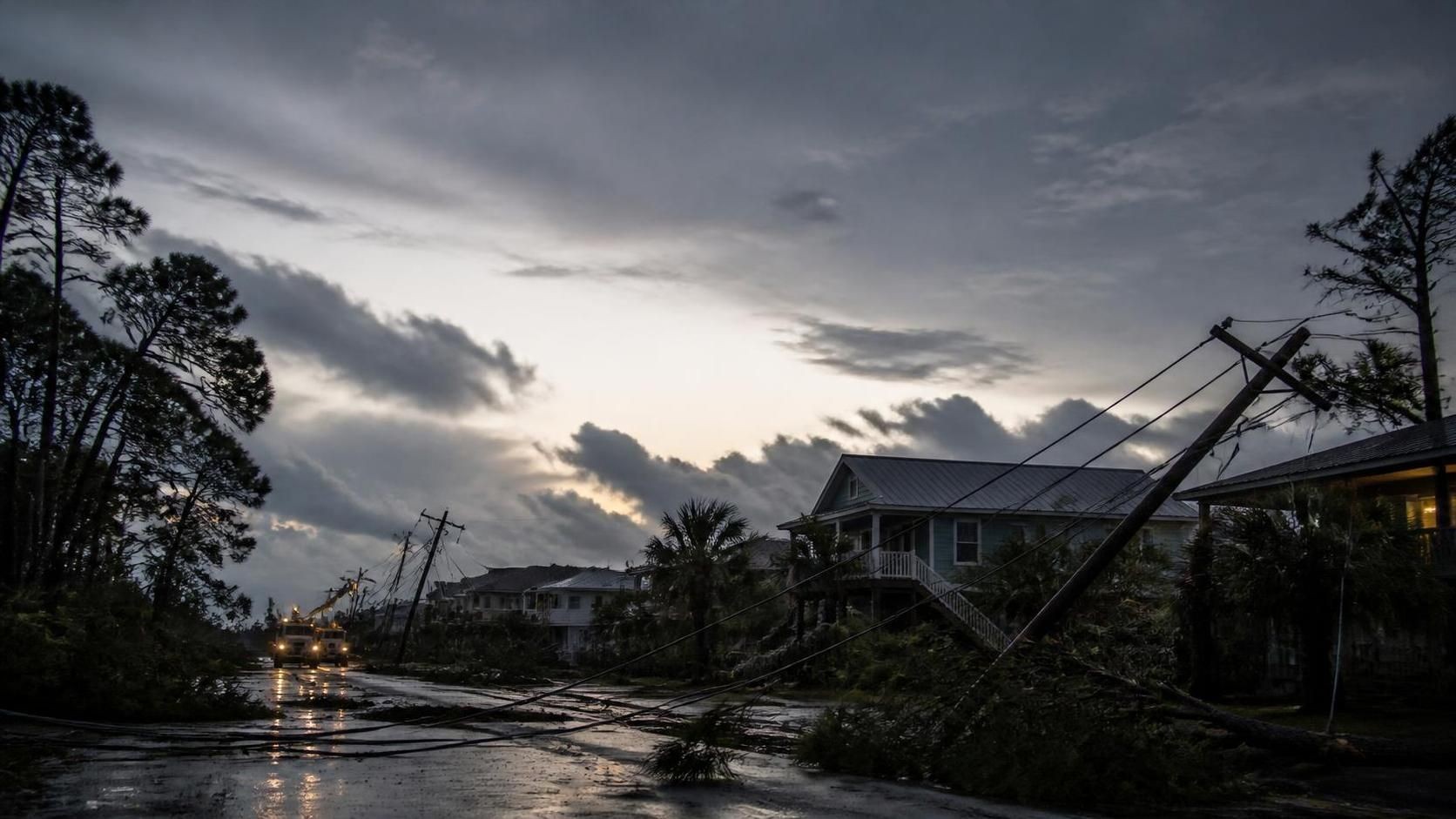
Hurricane Isaias, the first named hurricane of the 2026 Atlantic season, made landfall as a Category 2 storm near Destin, Florida, late Friday evening, bringing destructive winds, storm surge, and heavy rain that left hundreds of thousands of utility customers in the dark across the Gulf Coast and into the Southeast.Bloomberg
If you have power, hug a lineman. If you’re out of power and you listened to the Energy News Beat Podcast, you’ve already had a dry run for an emergency, and after our interview with Steven Wang, CEO of Jackery Americas, we have started saying, “If you love someone, give them a Jackery.” This would be helpful, especially the HomePower models. We are working on the setups that Stu Turley, Energy News Beat Podcast Host, has been installing, what works, and what is not needed. Stay tuned.
Full podcast with Steven and Doomberg.

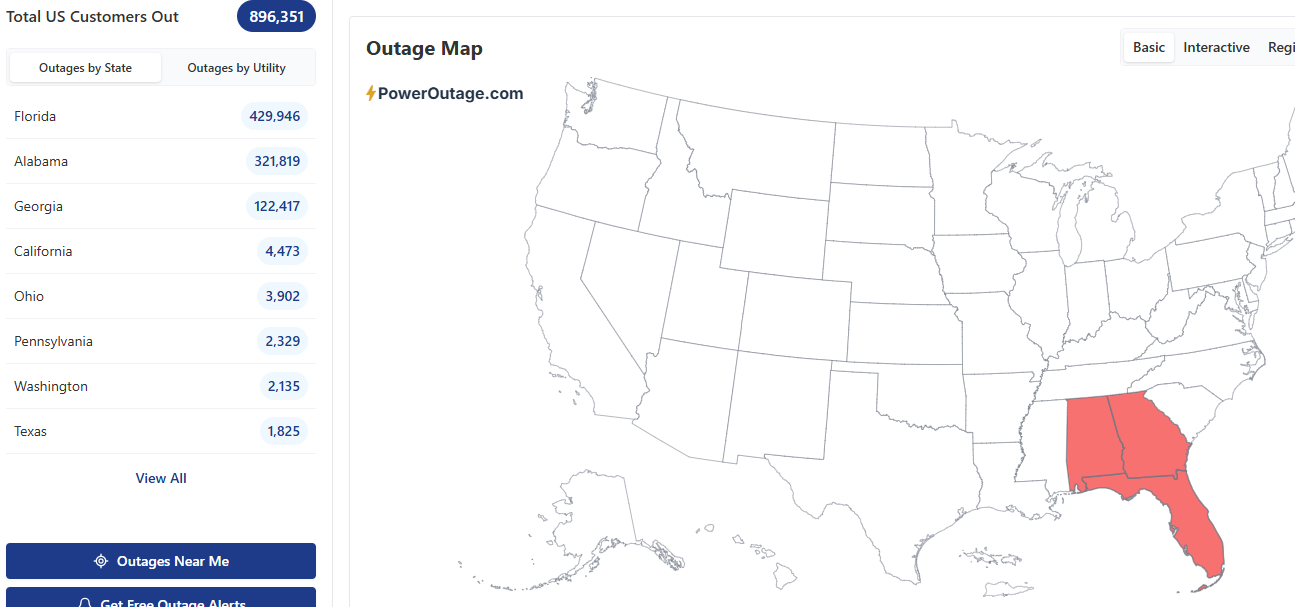
According to the live tracker at poweroutage.us, more than 896,000 customers were without power across the United States as of early Saturday morning (October 10, 2026), with the heaviest impacts concentrated in Florida (429,946 customers out, or about 3.6% of those tracked), Alabama (roughly 322,000 customers out, over 12% of tracked customers), and Georgia (more than 122,000 out).Poweroutage Bloomberg reported more than 800,000 customers without power as communities began assessing damage, aligning with the scale of the outages.Bloomberg
The storm came ashore around 8:30 p.m. local time near Destin with maximum sustained winds of 105 mph (169 km/h). It rapidly weakened after landfall and was soon classified as a post-tropical cyclone, though damaging winds, flooding, and residual surge continued to affect the region as the system moved northward into southern Alabama and toward the Tennessee Valley.Bloomberg
Damage Assessment
Early reports indicate widespread but still incompletely surveyed damage typical of a Category 2 landfall on a relatively less densely developed stretch of coastline. Roads in Destin were flooded, and police in nearby Pensacola warned residents to stay off streets littered with debris. Officials in Mobile, Alabama, reported downed trees and power lines, while all roads in Houston County (southeastern Alabama) were closed early Saturday due to similar hazards. A social media video showed a roof ripped off an inn in Pensacola, and numerous photos circulated of snapped trees and downed lines. Some Florida Panhandle counties temporarily suspended emergency response operations Friday night because conditions were too dangerous for crews.Al Jazeera
Storm surge of several feet (with forecasts of 3–5 feet or higher in spots from Dauphin Island, Alabama, toward Florida’s Aucilla River) contributed to flooding. Airports in the area, including Pensacola, Destin-Fort Walton Beach, and Panama City, suspended commercial operations pending damage checks. Full structural, coastal, and infrastructure assessments were expected to ramp up at daylight Saturday; no confirmed fatalities had been widely reported in early coverage. Flooding risks from heavy rain (forecast totals of several inches, with higher localized amounts) continued inland.Al Jazeera
Energy and Infrastructure Impacts
The primary energy story is the electric grid. High winds and falling trees took out distribution lines and caused outages that peaked well above half a million customers in Florida and Alabama combined. Utilities, including Florida Power & Light, Alabama Power, and local cooperatives such as Riviera Utilities and Baldwin EMC, had pre-positioned crews and mutual-aid resources. Restoration was underway where conditions allowed, though flooded roads, debris, and residual weather complicated access. Some utilities had taken precautionary steps such as temporary natural-gas service interruptions in low-lying coastal areas.Gulfcoastmedia
Offshore, the storm prompted major production shut-ins in the Gulf. Reports indicated roughly 60–72% of Gulf oil production (on the order of 1.3 million barrels per day at peak) and a substantial share of natural gas were offline, with more than 100 platforms evacuated. Nearby refining capacity—including Chevron’s Pascagoula, Mississippi, facility and Vertex’s plant near Mobile, Alabama—faced risks primarily from power loss or flooding, though the storm’s track limited broader refinery exposure compared with a more westerly path. These disruptions come against a backdrop of already tight fuel markets. Any prolonged refinery or pipeline issues could exert modest upward pressure on regional gasoline and diesel prices in the days ahead, though national impacts are expected to be limited if recovery is relatively swift.CNBC
Power restoration timelines will depend on the volume of downed lines, tree damage, and access. Coastal and barrier-island communities may see longer outages where surge or flooding affected substations or rights-of-way. Live outage maps remain the best source for current numbers, which continue to fluctuate as crews restore service and additional failures are reported.
Check out the World’s Greatest Podcast Show Notes at EnergyNewsBeat.co or EnergyNewsBeat.com. And subscribe to: The Energy News Beat Substack.
At Energy News Beat, we make Appendices Great Again.
Sources and Links
- PowerOutage.us live map and data: https://poweroutage.us/
- Bloomberg: “Isaias Leaves Thousands Without Power After Striking Gulf Coast” (October 10, 2026): https://www.bloomberg.com/news/articles/2026-10-10/isaias-leaves-thousands-without-power-after-striking-gulf-coast
- Associated Press / local reports on damage and outages (via multiple outlets including Al Jazeera summary and regional coverage)
- National Hurricane Center advisories on landfall strength, path, and surge
- Industry reporting on Gulf production shut-ins (Marine Minerals Administration / BSEE-equivalent figures cited in contemporaneous energy coverage)
Figures are time-sensitive and drawn from public trackers and early reporting as of Saturday morning, October 10, 2026. Check official utility and emergency-management sources for the latest local conditions.