
Nine huge stories from the Energy News Beat Team – Buckle Up
This was our second Live feed to Substack, and as we try to grow here, we want to hear from you: what is important, and what we can do better.
I am still on a small high this week as we have been rocking the podcast with huge numbers, and Doomberg and Charlie Garcia were just fantastic! We have Charlie lined back up for the Energy Realities October 19th and getting that rolling out with The Nemeth Report and David Blackmon’s Energy Additions .
We cover 9 nine huge stories, and I have been posting some of my stories and show notes ahead of time on Energy News Beat, so you can see what I do to prepare for some of the podcasts.
Today, I break down nine interconnected stories that reveal a troubling pattern in global energy markets and geopolitical stability. From the Houthi attacks disrupting crude flows through the Strait of Hormuz to record-breaking heating oil prices threatening Northeast households, the energy landscape is under unprecedented pressure.
Add a controversial Canadian trade deal with the EU, Chinese security threats embedded in America’s power grid, and soaring tanker rates reshaping oil shipping routes, and you get a complex web of challenges that I argue aren’t random—they’re symptoms of a larger strategic realignment. Whether it’s policy decisions cutting refinery capacity, NATO tensions, or potential cyberattacks on critical infrastructure, this episode connects the dots on why energy security has never been more critical for American consumers and national defense.
1. The Hormuz Strait & Saudi Oil Crisis
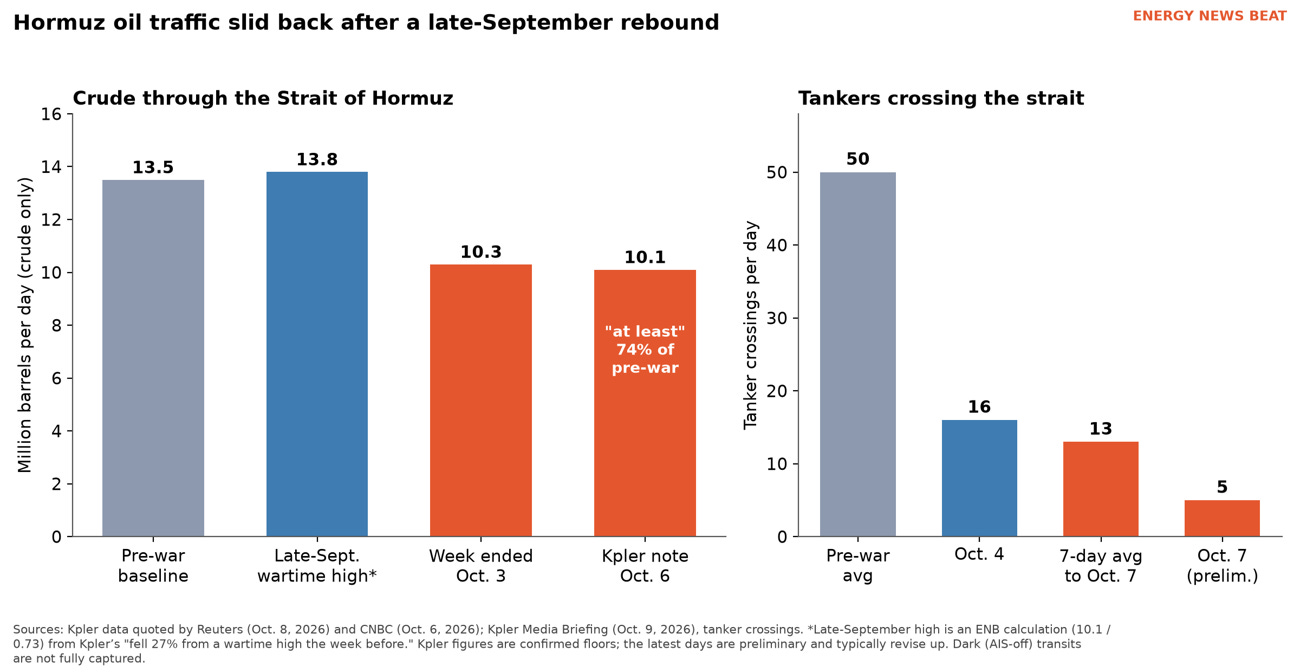
Crude moving through the Strait of Hormuz fell 27% in a week, to at least 10.1 million barrels a day, as tanker attacks picked up and Yemen’s Houthis warned everyone who works at a Saudi oil site. Here is what has actually been hit, what is only claimed, and how much oil can still get out another way.
If you fill a pickup or run a truck, you already know this story. A gallon of regular averaged $4.37 this morning, up from $3.11 a year ago, and diesel averaged $6.28, about 25 cents below the record of $6.53 set on Sept. 22. Georgia truck driver Lloyd Smith told Atlanta News First he fills up every other day for $1,400 to $1,500, and that fleets around him are parking trucks and laying people off. The American Farm Bureau told the White House that “farmers and ranchers cannot postpone harvest or simply stop using diesel when prices rise” (AFBF).
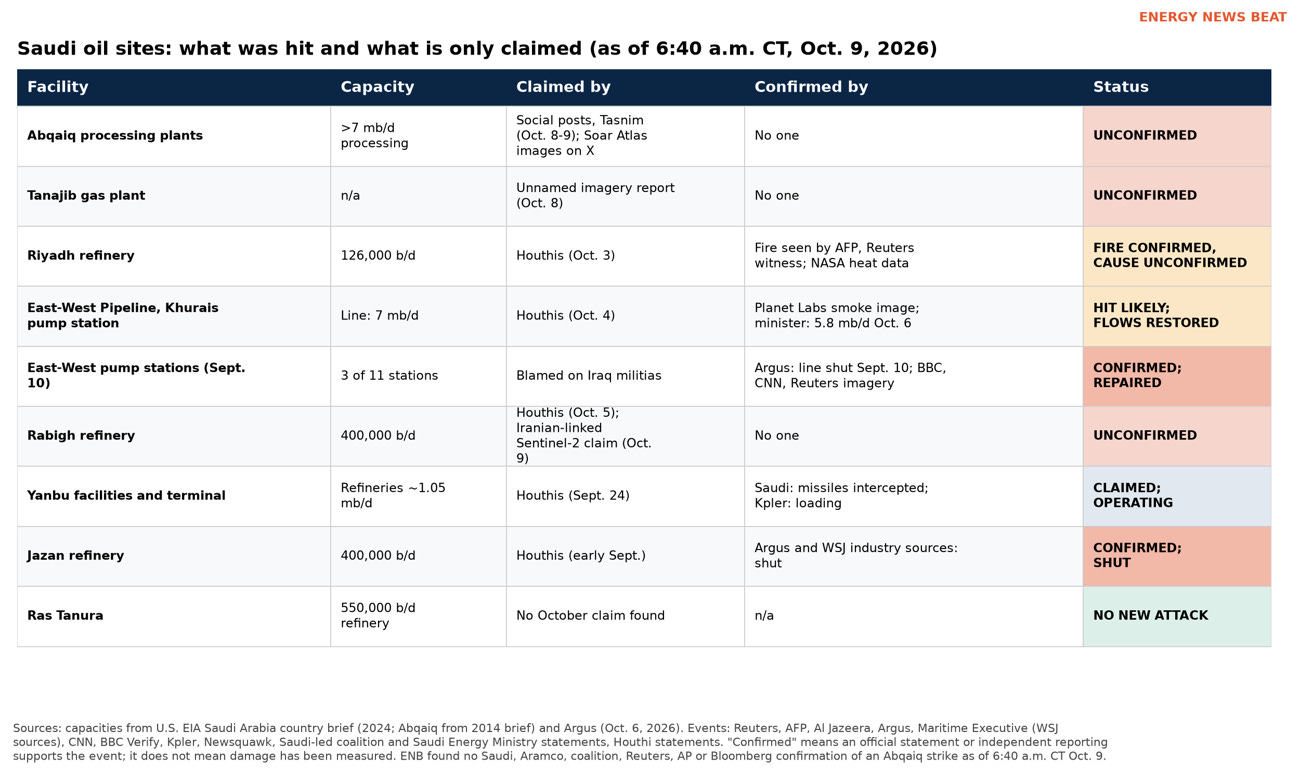
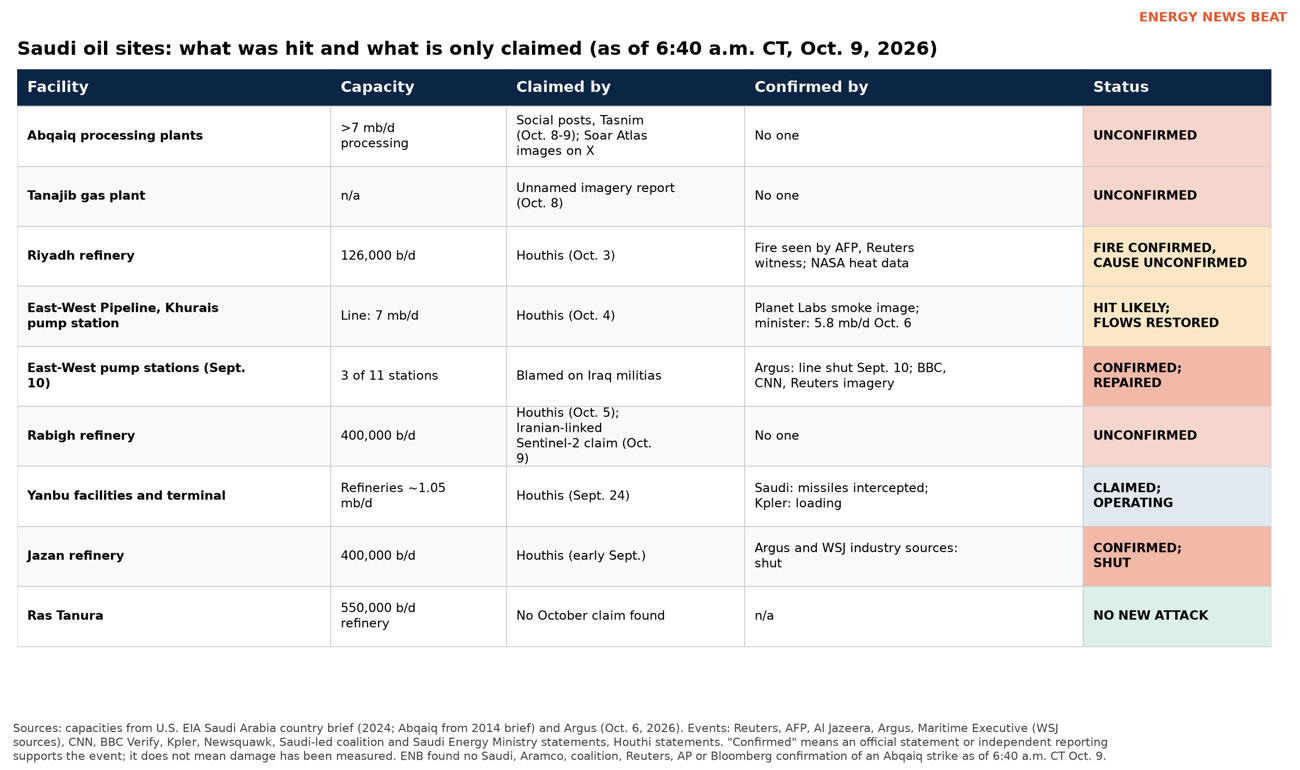
Those prices come down to two places: a narrow strait off Iran and a string of oil plants across Saudi Arabia. Both had a rough week. Overnight, posts on X said a new wave of strikes had set Saudi Arabia’s Abqaiq plant on fire, with satellite pictures. As of 6:40 a.m. CT, Oct. 9, 2026, ENB could not confirm a new wave of attacks this morning. No Saudi, Aramco or coalition statement mentions Abqaiq, and no credible newsroom has published or verified the images. What is confirmed is serious enough: missiles at Riyadh on Thursday, a refinery fire on Oct. 3, a pipeline station hit on Oct. 4, and a Houthi warning to every Saudi oil worker.
Stu’s Take
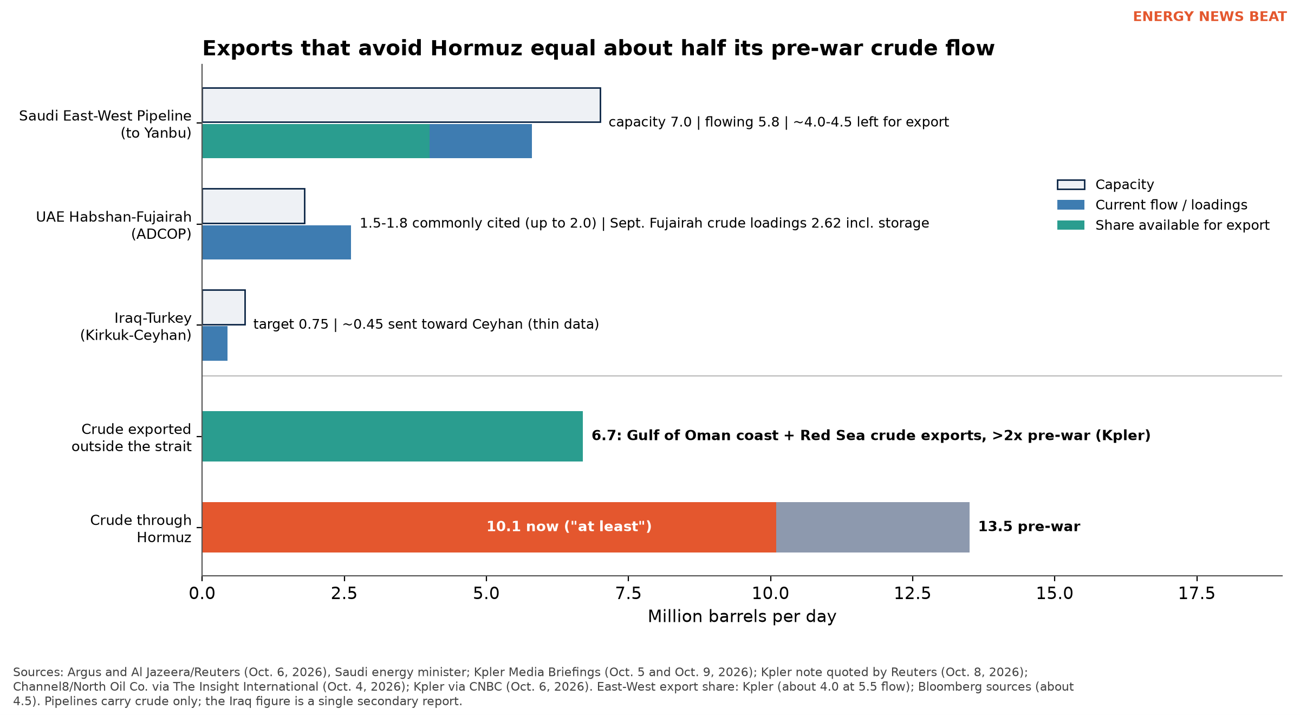
The number I’m watching is 27%. That’s how far crude moving through Hormuz fell in one week, to at least 10.1 million barrels a day, according to Kpler. Saudi Arabia’s East-West pipeline is moving 5.8 million barrels a day to the Red Sea, and in total about 6.7 million barrels a day of crude is leaving from ports outside the strait. But it is still only about half of the 13.5 million that used to go through Hormuz.
What bothers me is how thin the cushion is. EIA puts OPEC spare capacity at 0.02 million barrels a day this month, and our Strategic Petroleum Reserve is at 283 million barrels. When the Houthis say they will go after Saudi oil facilities they have not hit before, every rumor moves the market. I’m treating the Abqaiq reports as claims until Riyadh or a real newsroom backs them up. If you buy diesel for a farm or a fleet, watch the IEA meeting next week.
What was actually hit, and what is only claimed (as of 6:40 a.m. CT, Oct. 9, 2026)
Abqaiq (claim, unverified). Abqaiq is the plant that processes more than 7 million barrels a day of Saudi crude. The reports started with social-media posts and a flash from Hamer Intel, which published at 9:09 a.m. CT Thursday citing “initial reports.” Market wire Newsquawk carried a headline about satellite images showing smoke at Abqaiq and the Tanajib gas plant, without naming the image source, and noted it might be smoke from earlier. At 2:22 a.m. CT today, Newsquawk carried a report from Iran’s Tasnim news agency of a “massive fire” there (Newsquawk). ENB found no formal Houthi statement naming Abqaiq; the Saudi Energy Ministry’s X account posted only conference news Thursday.
Abqaiq update, as of 6:40 a.m. CT Oct. 9 (all unverified). ENB found no Saudi, Aramco, coalition, Reuters, AP or Bloomberg confirmation of a strike on Abqaiq. The Abqaiq images circulating are Soar Atlas imagery dated Oct. 8 (example post); no newsroom has verified them, and some accounts sharing them suggest the flaring may be precautionary. Iranian-linked outlets are also pushing a claim that Sentinel-2 images show damaged fuel tanks at Petro Rabigh (StoryChase aggregation). That claim is also unverified.
Thursday, Oct. 8 (confirmed). The coalition said it intercepted two ballistic missiles aimed at Riyadh and one at Khamis Mushait; falling debris damaged a kindergarten and a clinic (Al Jazeera; Al Arabiya). A Saudia plane was heavily damaged by fire while parked at Riyadh’s airport, three people briefed on the matter told Reuters (Middle East Online/Reuters). A day earlier, on Oct. 7, Saudi Arabia’s General Authority of Civil Aviation said attacks on the Abha and Riyadh airports on Oct. 6–7 killed three people and injured 36: two killed and 28 injured at Abha, one killed and eight injured in Riyadh (Al Jazeera; BBC). Houthi military spokesman Yahya Saree warned “all employees, experts and engineers working at all Saudi oil facilities” to stay away from likely targets (Argus).
Oct. 3–5 (mixed). A fire at the 126,000 barrel-a-day Riyadh refinery on Oct. 3 was seen by an AFP journalist (SBS/AFP) and showed up in NASA heat data (Türkiye Today). The coalition called Houthi claims “misleading” (Al Jazeera). On Oct. 4 the Houthis claimed a hit near Khurais. A Saudi energy source told AFP “the pipeline stopped again” after “big damage” to a pumping station (AFP). Two days later the energy minister said, “As of this morning, we are back to 5.8mn b/d” (Argus). The Houthis’ Oct. 5 claim of a fire at the 400,000 barrel-a-day Rabigh refinery has no Saudi confirmation (Business Recorder).
Earlier damage (confirmed). Drones hit three of the East-West line’s 11 pumping stations on Sept. 10 (Argus; Reuters), and the Jazan refinery has been shut since early-September attacks, according to Argus and industry sources cited by the Wall Street Journal (Argus; Maritime Executive). A Sept. 24 Houthi claim against Yanbu ended with the coalition saying it shot the missiles down (Al Jazeera), and Kpler shows Yanbu still loading (Kpler).
The satellite pictures: what holds up
Real satellite evidence exists, but for the earlier attacks. A Planet Labs image distributed by AFP shows black smoke near the Khurais pumping station on Oct. 4 (CNA/AFP). NASA’s FIRMS fire map caught heat over the Riyadh refinery on Oct. 3. CNN used Planet Labs and Airbus images to show fires at two pumping stations in September, and BBC Verify showed major damage to one.
The Abqaiq pictures are different: as noted above, they are unverified Soar Atlas images, and Pakistan’s Dawn ran a headline about them with no image credit or story text that we could find. Until a credible provider or newsroom publishes and checks them, treat them as claims.
Corrections to early reports
- “A new wave hit Saudi oil this morning.” Not confirmed as of 6:40 a.m. CT, Oct. 9, 2026. The Abqaiq reports are a Tasnim claim and unverified X images (above).
- “The East-West pipeline is down.” It stopped briefly on Oct. 4, according to AFP’s Saudi source. Bloomberg sources said it was running normally on Oct. 5 (Market Briefs), and the minister put it at 8 million barrels a day on Oct. 6.
- “Hormuz traffic just fell another 27%.” It is the same drop. Our Oct. 6 article used Kpler’s 3 million barrels a day for the week ended Oct. 3. Kpler’s later note put it at at least 10.1 million, a floor that gets revised. Both are about 74% to 76% of pre-war levels.
- “Aramco shut Abqaiq on July 27.” Saudi Arabia’s defense ministry said that day’s drones from Iraq were intercepted, with no damage reported (The National).
- “22 million barrels went through Hormuz last night alone.” President Trump posted that figure (Guardian). Kpler’s data shows all oil clearing Hormuz averaged about 9.9 million barrels a day over the week to Oct. 7.
Hormuz traffic (as of Oct. 7 data)
Why the drop? The naval-run Joint Maritime Information Center counted six confirmed attacks between Oct. 3 and Oct. 6 (Maritime Executive). On Wednesday a tanker was hit about 51 nautical miles north of Qatar’s Madinat ash Shamal, well west of the strait, UKMTO reported (Reuters via Al Arabiya). Kpler’s newest days usually revise up 1.5 to 2 times (Kpler).
How many escape routes are left?
Add it up and Kpler says crude exports from the Gulf of Oman coast and the Red Sea hit 6.7 million barrels a day, more than double pre-war levels. That is a big achievement, and it is about half of the 13.5 million barrels a day that crossed Hormuz before the war (ENB calculation).
2. Hurricane Isaias & Gulf Oil Production
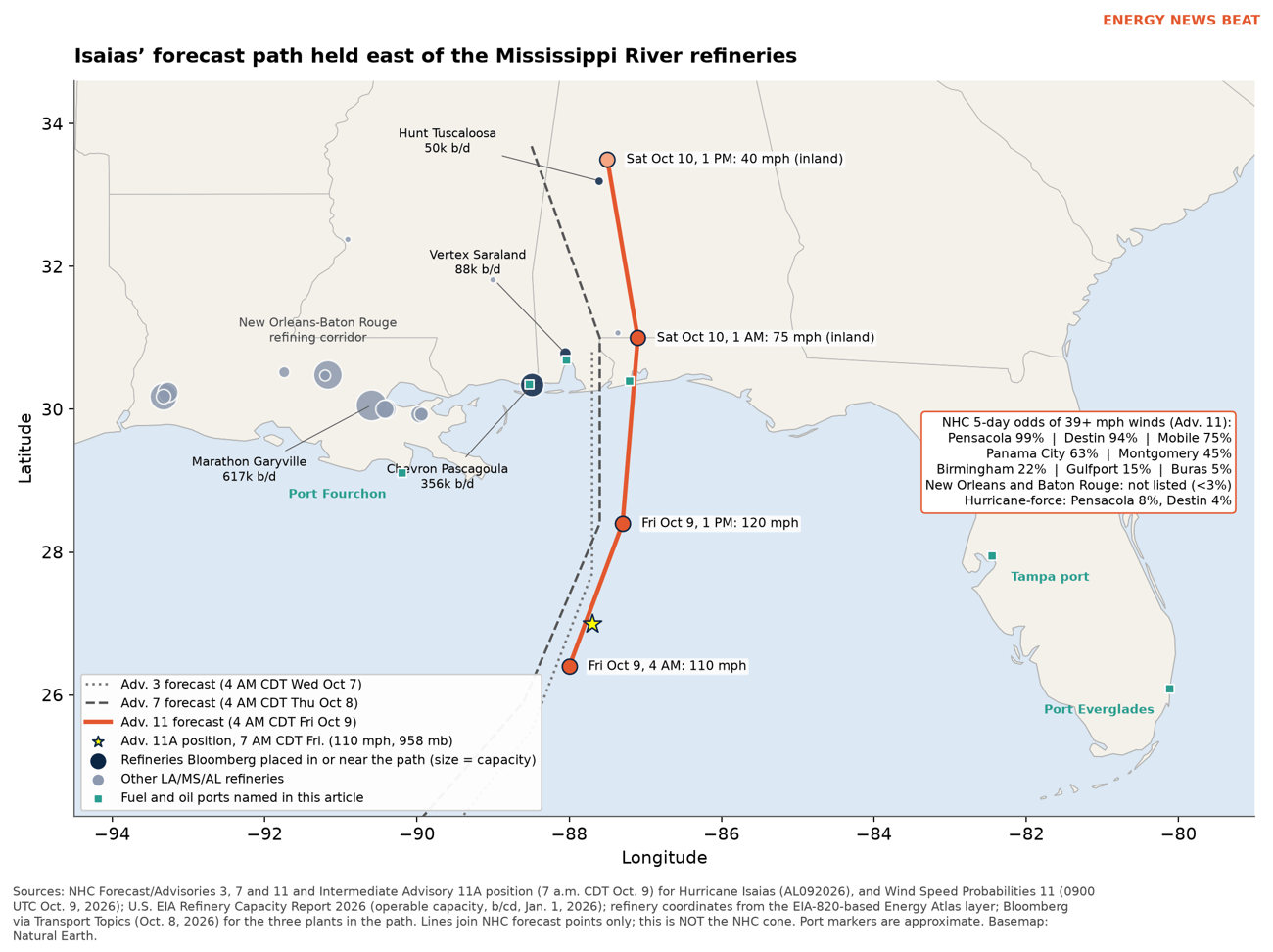
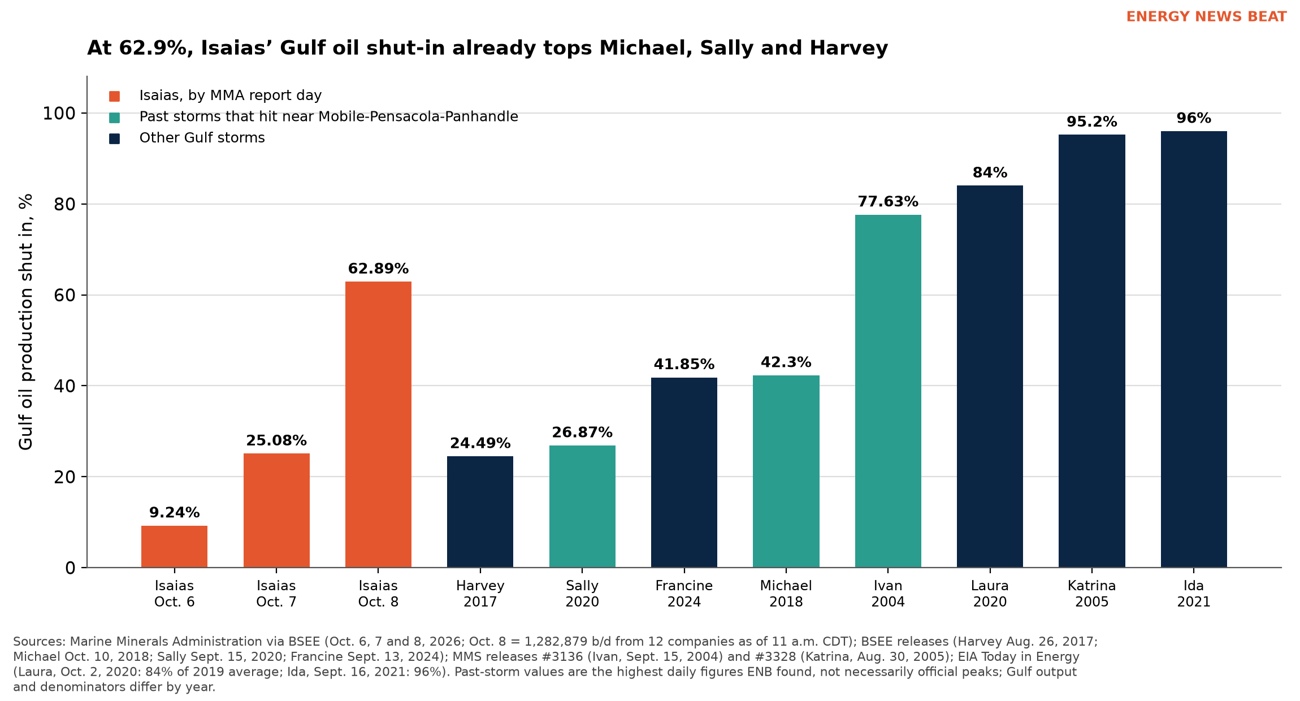
Isaias had 110 mph winds at 7 a.m. CDT Friday, on the cusp of major-hurricane strength, and is expected to come ashore between Mississippi and the Florida Panhandle tonight or early Saturday. It has already shut in 62.9% of Gulf oil output. Here is what the next one to three weeks could mean at the pump, who gets hit first, and what investors are watching. We will be using this for Podcast Preparation on the Energy News Beat Stand Up for Later Today.
In Pensacola on Wednesday, one Cumberland Farms sold more than 13,000 gallons of gas, roughly three times a normal day. By Thursday morning the store was out of propane and nearly out of ice, and a RaceWay nearby had run out of regular (Pensacola News Journal). In Talladega County, cotton farmer Jeremy Wilson was racing to pick a 100-acre field worth about $150,000 before the rain. “Once the cotton is on the ground, there’s nothing I can do with it,” he told ABC 33/40.
That is where Hurricane Isaias hits first: gas tanks, harvest budgets and trucking margins. It arrives with the U.S. average for diesel at $6.28 a gallon, about 25 cents below AAA’s Sept. 22 record, and regular gas at $4.37, up $1.26 from a year ago (AAA). This update follows our Oct. 7 report.
3. Heating Oil Crisis in the Northeast
4. Mark Carney’s EU-Canada Trade Deal
6. Devon Energy & Coterra Merger Challenges
Devon Energy’s February all-stock combination with Coterra Energy closed in May and is now drawing sharper investor scrutiny over pace, debt, and what the company keeps. The latest answer from management is a $4.2 billion Eagle Ford exit announced October 8, aimed at concentrating capital in the Delaware Basin while oil prices remain elevated on Middle East supply risk.
The deal itself was straightforward on paper. Devon and Coterra announced the merger on February 2, 2026. Coterra holders received 0.70 Devon shares for each Coterra share, implying an equity value of roughly $21.4–$21.5 billion and a combined enterprise value of about $58 billion. Devon shareholders ended up with approximately 54 percent of the company and former Coterra holders about 46 percent. The companies targeted $1 billion in annual pre-tax synergies by year-end 2027 and pointed to pro forma production above 1.6 million barrels of oil equivalent per day, including more than 550,000 barrels of oil and 4.3 billion cubic feet of gas, anchored by roughly 750,000 net acres in the core of the Delaware Basin. Clay Gaspar stayed CEO. The combined company kept the Devon name, put headquarters in Houston, and retained a major Oklahoma City presence. Stockholders of both companies approved the deal on May 4; it closed May 7—94 days after announcement.
7. Chinese Grid Security Threat
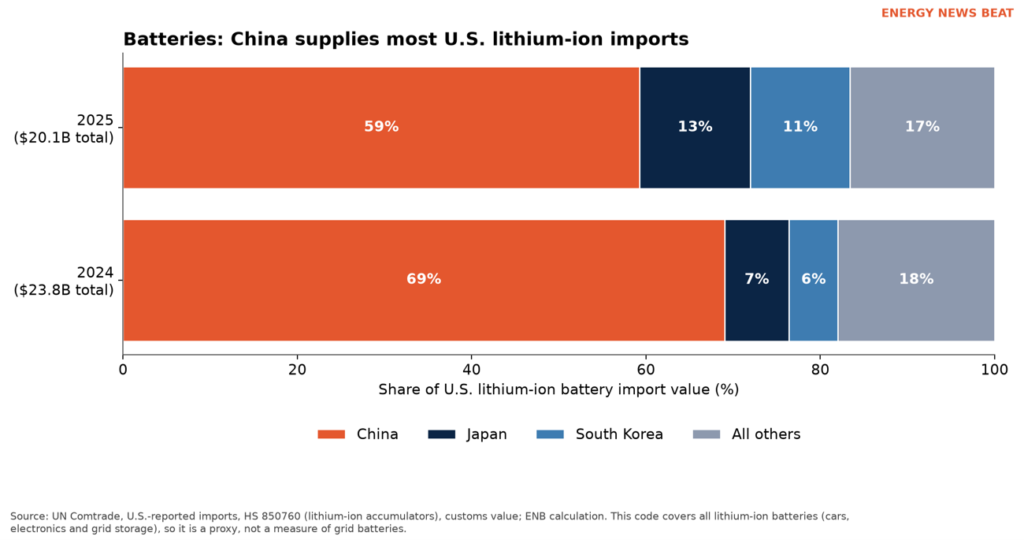
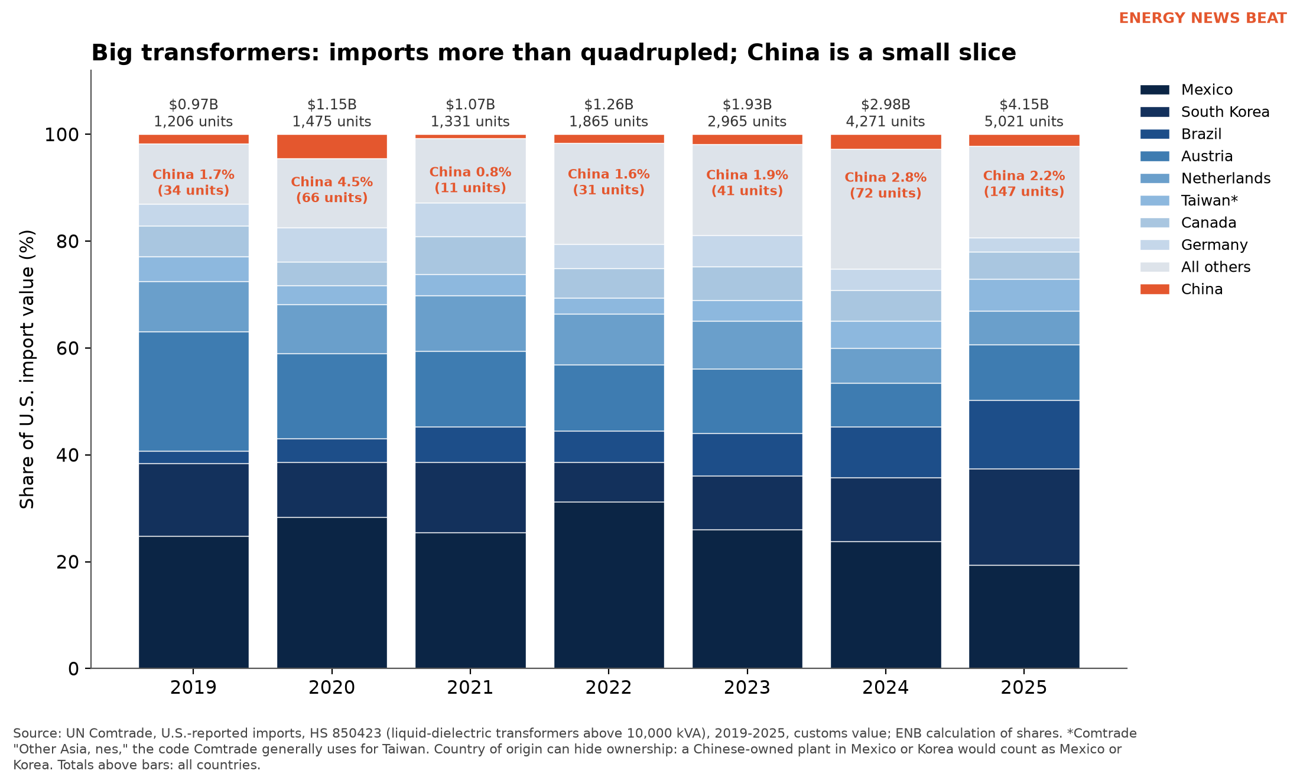
Please secure your home’s alternative power supplies, water, and food. No confirmed stories, but there is enough evidence that it could happen.
8. Tanker Rates & Oil Shipping Routes
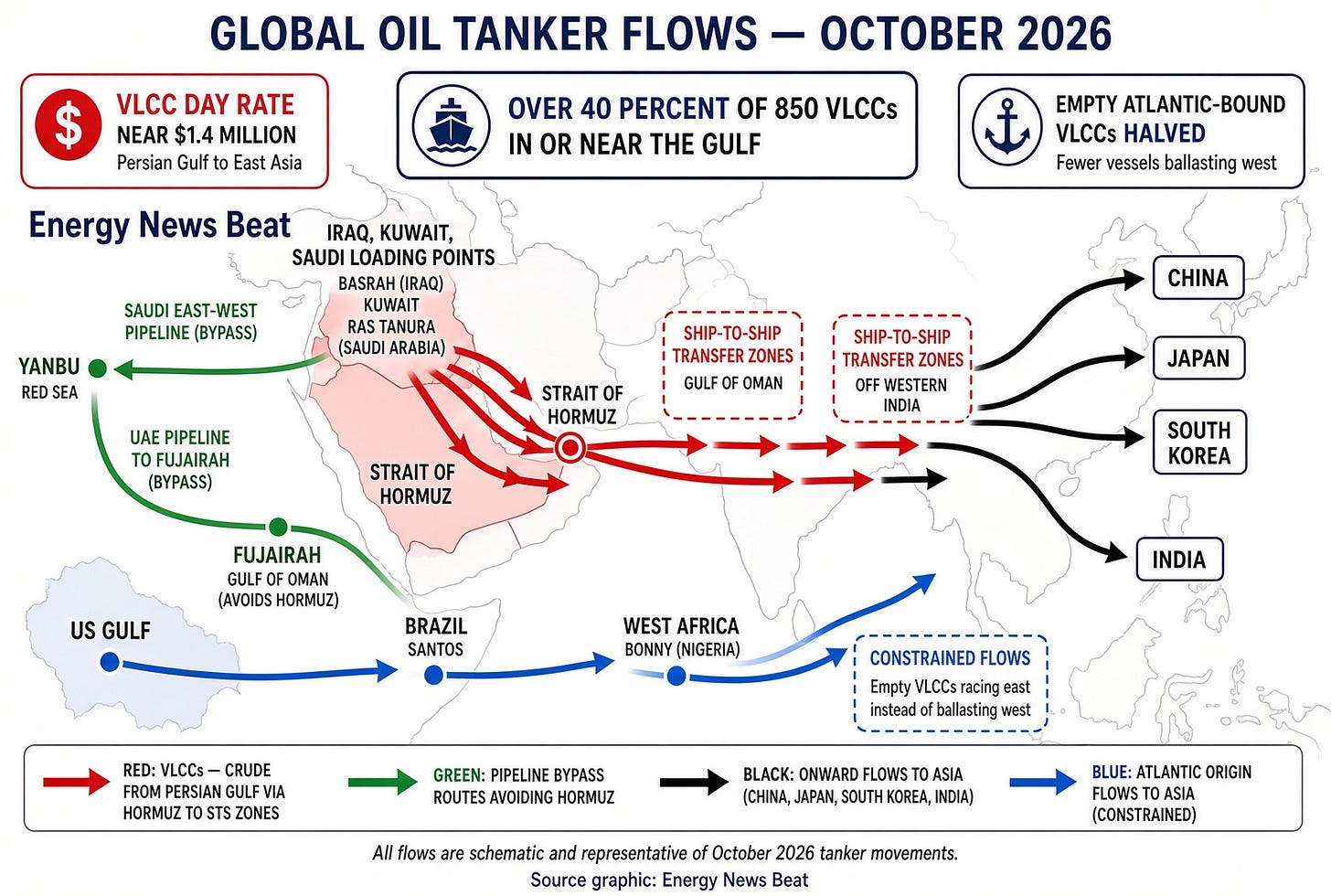
9. India’s Venezuela Crude Imports & Global Refining
We would also like to give our sponsors a shout-out.
Check out the World’s Greatest Podcast Show Notes at EnergyNewsBeat.co or EnergyNewsBeat.com, and the Energy News Beat Substack at:

At The Intersection of Energy and Finance – By Sandstone Group
We would also like to give our sponsors a shout-out.
A shout-out to Steve Reese and the Reese Energy Consulting group for sponsoring the Podcast https://reeseenergyconsulting.com/.
Data2 if you have any business systems, can you trust A? Well, they have the patent on validation. . https://data2.zoholandingpage.com/energy
And we have WellDatabase rolling, and we use their tools for the Energy News Beat weekly Rig Reports: https://welldatabase.com/
Also entering Sponsor Rey Trevino, Pecos Operating https://pecos.energy/
Appendix:
All stories have their appendices.
1.Hormuz Traffic Sinks and Saudi Oil Comes Under Fire: How Many Escape Routes Are Left?
3.The Latest Nord Stream News Might Lead To Something Much More
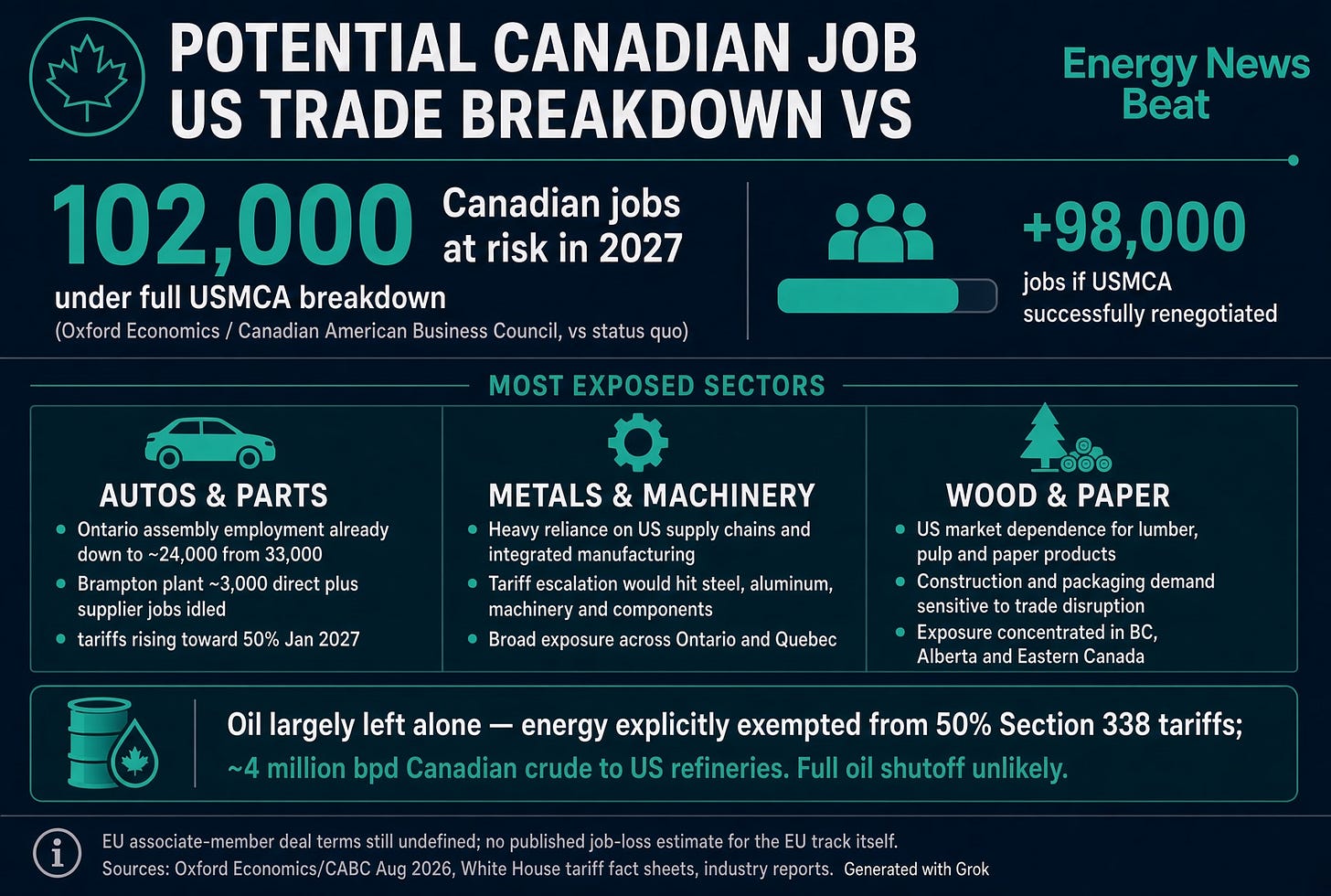
4.How Many Canadian Jobs Will Be Lost When Carney Signs the EU Trade Deal?
5.Devon’s Coterra Bet Faces the Portfolio Test
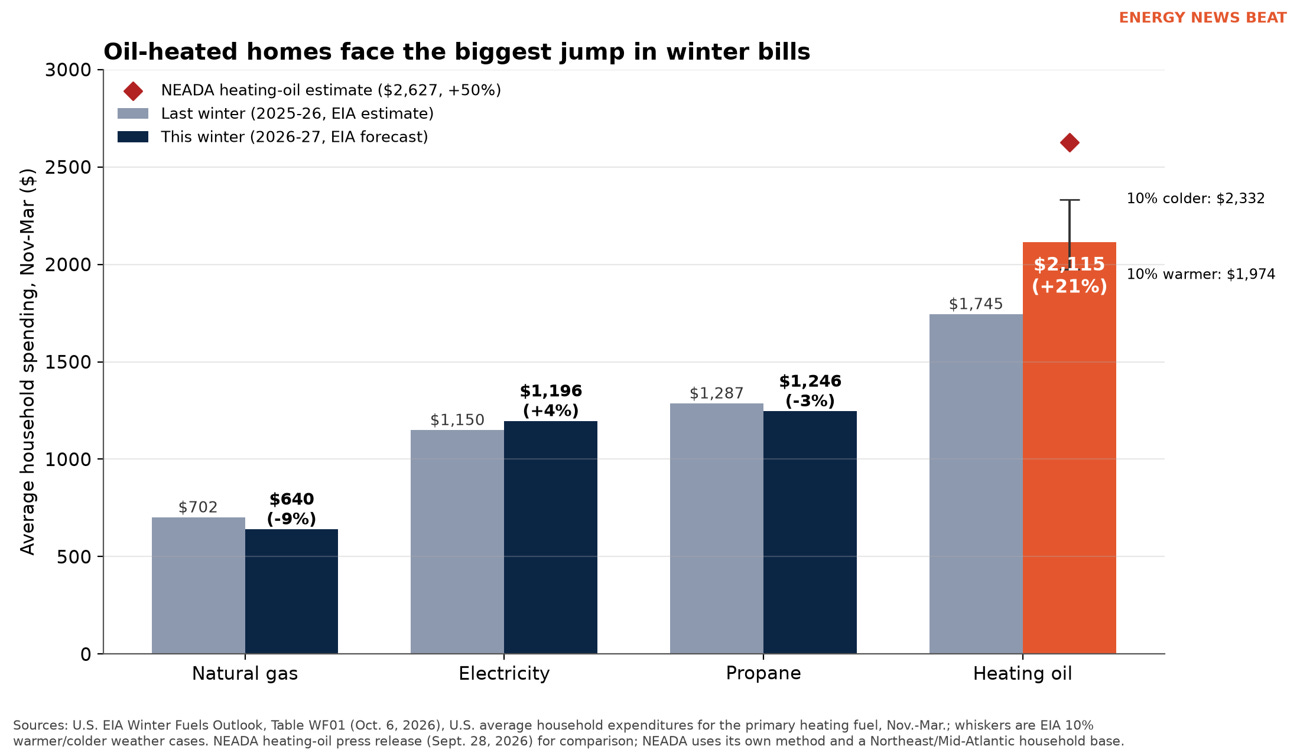
7.Nearly $1,700 to Fill the Tank: The Heating Oil Shock Hits Northeast Kitchen Tables
8.Tanker Rates Are Redefining Oil Distribution Routes
9.India Hits Seven-Year High in Venezuelan Crude as Reliance Loads Up Jamnagar