


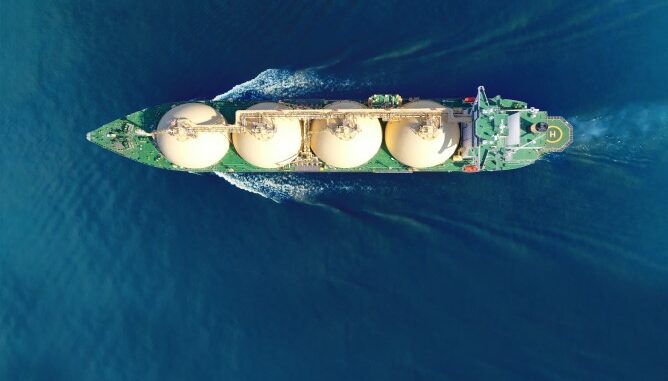
In the high-stakes world of global energy, where geopolitical tensions and climate imperatives collide, Abu Dhabi National Oil Company (ADNOC) is making a bold play to redefine its role in the liquefied natural gas (LNG) arena. No longer content with its traditional oil dominance, ADNOC is aggressively scaling its LNG footprint—aiming for a total capacity of 60 million tonnes per annum (MTPA)—and placing the United States squarely at the heart of this expansion. This strategic pivot isn’t just about securing supply; it’s a savvy bet on long-term energy security amid surging global demand. As highlighted in a recent LinkedIn post by energy analyst Giacomo Prandelli, ADNOC’s moves echo the playbook of giants like QatarEnergy and Shell, blending equity stakes, long-term offtake agreements, and geographic diversification to navigate market volatility.
ADNOC’s Ambitious LNG Blueprint: From Ruwais to Rio Grande
ADNOC’s LNG strategy is a tale of two worlds: bolstering domestic production while venturing abroad for resilience. At home in the UAE, the crown jewel is the Ruwais LNG project, a low-carbon facility set to add 9.6 MTPA of capacity by 2028. This $5 billion initiative, powered by renewable energy and carbon capture, has already locked in over 8 MTPA of sales through a series of 15-year heads of agreement (HOAs). Key deals include 1 MTPA with China’s ENN Natural Gas, 1 MTPA with Germany’s SEFE Securing Energy for Europe, 0.6 MTPA with EnBW, and a recent 1 MTPA pact with India’s IndianOil starting in 2029.
These agreements underscore ADNOC’s appeal as a “reliable and responsible” supplier, particularly in Europe and Asia, where energy diversification is paramount.
But the real game-changer is ADNOC’s international push, spearheaded by its new lower-carbon growth arm, XRG, launched in November 2024 with an $80 billion war chest.
In the U.S., ADNOC has doubled down on the Rio Grande LNG (RGLNG) project in Texas’ Brownsville area, developed by NextDecade Corporation. Initially acquiring an 11.7% equity stake in Phase 1 (Trains 1-3) in May 2024—complete with a 20-year sales and purchase agreement (SPA) for 1.9 MTPA—ADNOC recently snapped up an additional 7.6% in Phase 2, boosting its total exposure to 19.3% across 27 MTPA of capacity and over $13 billion in capital expenditure.
This positions RGLNG as ADNOC’s U.S. linchpin, leveraging the Gulf Coast’s abundant shale gas and export prowess.
Further afield, ADNOC inked a 10% equity deal in Mozambique’s Area 4 Rovuma Basin LNG project in 2023, enhancing its African foothold.
Collectively, these moves aim to more than double ADNOC’s LNG output, transforming it from a regional player into a global contender akin to TotalEnergies or Shell.
Prandelli’s LinkedIn analysis cuts to the chase: ADNOC’s strategy mirrors QatarEnergy’s multi-basin approach, combining UAE assets (Das Island plus Ruwais) with U.S. Gulf Coast equity for “physical optionality.” This setup allows flexible routing to Europe or Asia, hedges against price swings via equity-plus-SPA structures, and future-proofs against a potential 2030s oversupply glut. Notably, ADNOC entered the U.S. market at a discount—LNG equity valuations have plunged over 50% in six months—prioritizing strategic volume over short-term profits.
Stu Turley is scheduling Jack Prandelli to return to the Energy News Beat Podcast to cover this and other stories from The Merchant News Substack.
Global LNG Demand: A Thirst Set to Quench by 2040
ADNOC’s timing couldn’t be better. Global LNG demand is on a tear, driven by Asia’s industrialization, Europe’s quest to ditch Russian gas, and the fuel’s role as a bridge to net-zero. Shell’s LNG Outlook 2025 forecasts a 60% surge to 2040, with annual demand hitting 630-718 million tonnes, fueled by economic growth in China and India and emissions cuts in coal-heavy economies.
ExxonMobil echoes this, projecting LNG trade to double by 2050, meeting over 20% of global gas needs as demand swells in hard-to-abate sectors like shipping and heavy industry.
The International Energy Agency (IEA) tempers the enthusiasm slightly, anticipating a 2.8% demand spike in 2024, slowing to under 1% in 2025 amid a U.S.-led supply boom that could add 370 billion cubic meters (bcm) by 2030.
Yet, even with European OECD demand dipping 8-10% through 2030 due to efficiency and renewables, non-OECD markets—led by Asia—will absorb the excess, pushing total capacity to 666.5 MTPA by 2028.
In this environment, diversified players like ADNOC are primed to thrive.
|
Forecast Source
|
Projected Global LNG Demand Growth
|
Key Drivers
|
|---|---|---|
|
Shell (2025 Outlook)
|
+60% by 2040 (630-718 MTPA)
|
Asia growth, coal-to-gas switch
|
|
ExxonMobil (Global Outlook)
|
Double by 2050 (>20% of gas demand)
|
Hard-to-decarbonize sectors
|
|
IEA (2025)
|
+2.8% in 2024, <1% in 2025; supply surge 370 bcm by 2030
|
Europe decline offset by Asia
|
|
IEEFA (2024-2028)
|
Capacity to 666.5 MTPA by 2028
|
Exceeds IEA scenarios
|
The U.S. at the Core: Investor Goldmine in LNG Expansion
For ADNOC, the U.S. isn’t just a supplier—it’s a strategic core, offering low-cost feedgas, regulatory stability, and unmatched export scale. With 14 active LNG terminals and more in the pipeline, the U.S. will drive 60% of global capacity additions through 2028. But as developers like NextDecade race to FID (final investment decision) amid looming surpluses, investors face a bifurcated market: short-term dips versus long-term booms.
What should investors eye in the U.S. LNG space?
Focus on low-cost, scalable producers with locked-in offtake and expansion potential. Cheniere Energy, the sector bellwether, exemplifies this: Its Corpus Christi Stage 3 expansion (10 MTPA) is ramping up, with a new $2.9 billion midscale project seeking FERC approval by May 2026, demanding 3.3 billion cubic feet daily.
Trading at a premium for its experience and 115% Henry Hub-linked contracts, Cheniere offers stability in a volatile $3.25/MMBtu world.
NextDecade, buoyed by ADNOC’s stake, is advancing Rio Grande’s 27 MTPA phases, with Phase 1 exports underway and Phase 2 targeting 2029 startup. Its stock pullback—down amid broader sector woes—signals a potential entry point for patient capital.
Venture Global stands out for aggressive growth: Fresh off a $15.1 billion FID for CP2 Phase 1 (20 MTPA), it’s filed for an IPO and plans $75 billion in total investments, including Calcasieu Pass expansions at rock-bottom $2.25/MMBtu pricing.
Look for firms with modular designs (reducing capex by 20-30%), long-term Asian/European SPAs (mitigating U.S. glut risks), and ESG credentials like carbon capture—hallmarks of ADNOC’s playbook.Risks abound: A post-2028 oversupply could pressure spot prices, but equity owners like ADNOC benefit from tolling fees and volume control. ETFs tracking midstream infrastructure (e.g., pipelines feeding LNG plants) offer diversified exposure without single-stock bets.
Securing the Energy Future
ADNOC’s U.S.-centric LNG surge isn’t mere opportunism—it’s a masterclass in resilience, blending Middle Eastern innovation with American scale to meet a world parched for cleaner fuels. As global demand barrels toward 700 MTPA by 2040, investors who back low-cost U.S. leaders stand to reap rewards in this trillion-dollar transition. For energy markets, it’s a reminder: In LNG, the future belongs to those who own the pipes, the plants, and the partnerships.
Stuart Turley is the host of the Energy News Beat Podcast. Follow @STUARTTURLEY16
on X for real-time energy insights.
Sources: etftrends.com, theenergynewsbeat.substack.com, seekingalpha.com, energy.gov
Get your CEO on the podcast: https://sandstoneassetmgmt.com/media/
Is oil and gas right for your portfolio? https://sandstoneassetmgmt.com/invest-in-oil-and-gas/



Be the first to comment