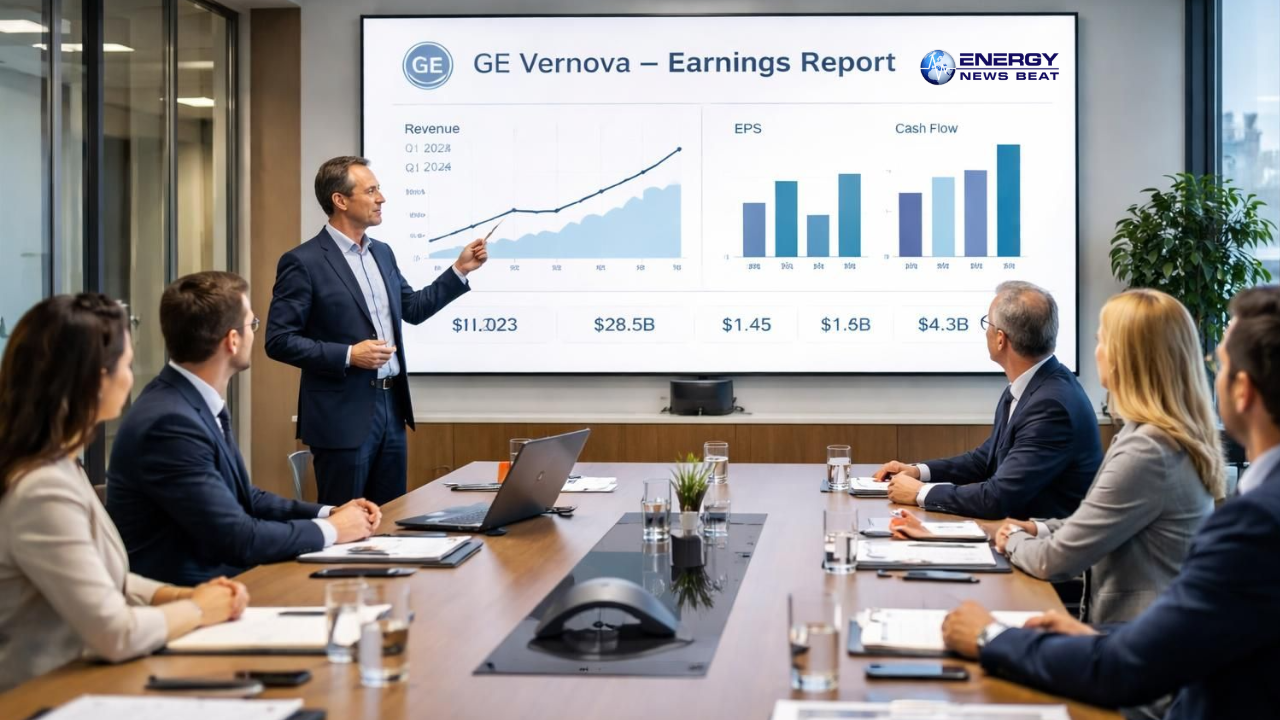
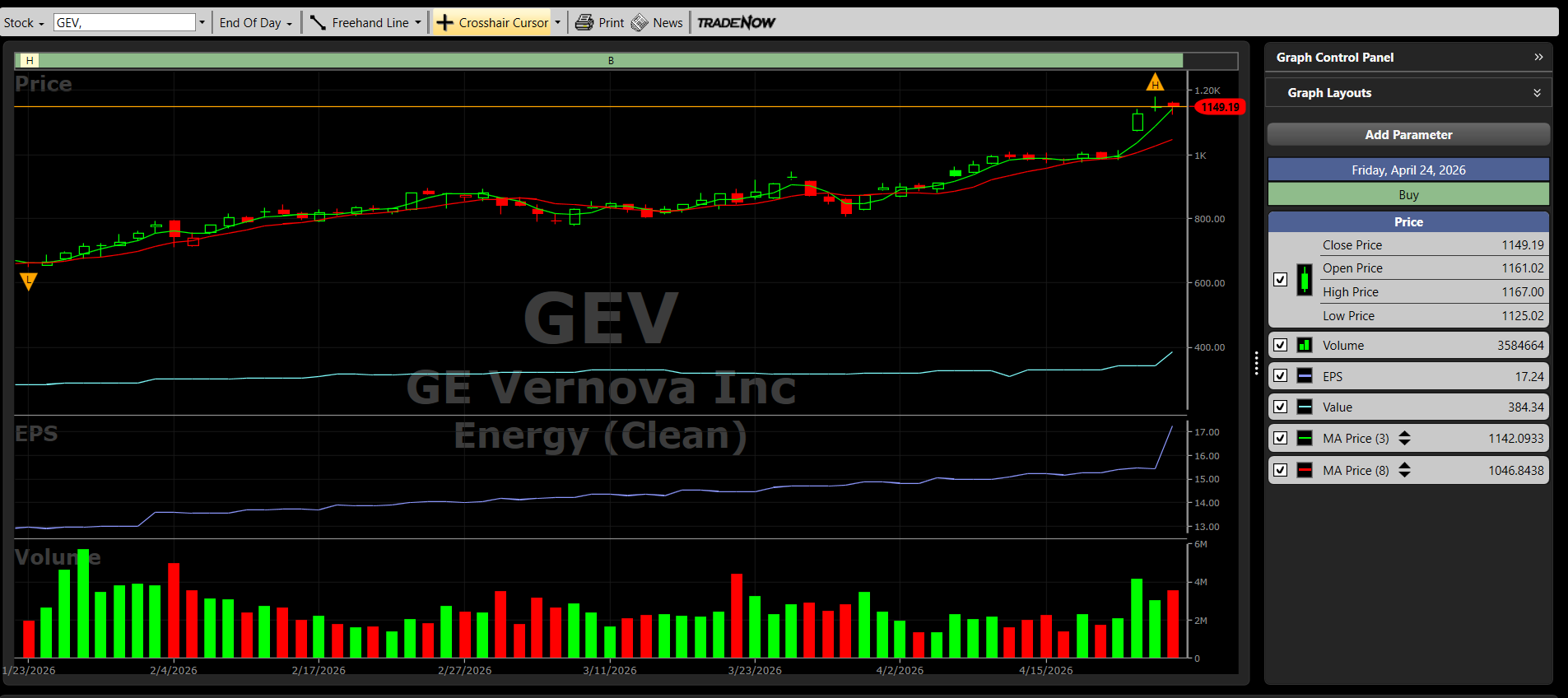
GE Vernova (NYSE: GEV) delivered a blockbuster first-quarter 2026 performance that exceeded analyst expectations across the board, sparking a roughly 13-14% surge in its stock price.
The energy technology leader reported revenue of $9.3 billion (up 16% year-over-year and 7% organically), adjusted EBITDA of $896 million (nearly doubling from the prior year, with a margin of 9.6%, up 390 basis points), and free cash flow of $4.8 billion—more than its entire full-year 2025 total.
GAAP net income hit $4.7 billion (50.9% margin), but that included a massive $4.5 billion pre-tax M&A gain tied to the Prolec GE acquisition. Excluding one-timers, the underlying operational beat was still impressive, with orders exploding 71% organically to $18.3 billion and backlog swelling to a record $163 billion (up $13 billion sequentially, including $5 billion from Prolec).
So, how did GE Vernova pull off such strong results? The answer lies in explosive demand for grid infrastructure and power generation—fueled by AI data centers, electrification, and global energy needs—combined with smart execution on pricing, volume, productivity, and a strategic acquisition. Here’s the breakdown by the numbers and what analysts are saying.
The Key Product Lines Driving Revenue and Profits
GE Vernova operates in three main segments: Power, Electrification, and Wind. The first two carried the quarter, while Wind faced expected headwinds. Electrification (Grid Solutions, Transformers, Data Center Infrastructure) was the standout performer. Revenue jumped 61% (29% organically) to $3.0 billion, with segment EBITDA margin expanding 670 basis points (590 bps organically) to 17.8%. Orders surged 86% organically to $7.1 billion (book-to-bill ~2.5x).
The big catalyst: $2.4 billion in equipment orders specifically for data centers—more than the entire full year of 2025. This included high-voltage transformers, switchgear, HVDC systems, substations, and integrated solutions like energy management systems (EMS) and battery storage for grid stability. The February 2026 acquisition of the remaining 50% stake in Prolec GE (a leading North American transformer maker) added ~$500 million in Q1 revenue at >20% EBITDA margins and contributed $5 billion to backlog.
CEO Scott Strazik highlighted how this segment is capitalizing on the AI-driven power surge: “In the quarter, our Electrification segment booked $2.4 billion in equipment orders to support data centers, more than all of last year.” Backlog here ballooned to $42.4 billion (up over 4x since 2022).
Power (Gas Turbines, Nuclear, Services) delivered rock-solid growth. Revenue rose 12% (10% organically) to $5.0 billion, with segment EBITDA margin up 470 bps (500 bps organically) to 16.3%. Orders grew 59% organically to $10.0 billion.
Key driver: Gas Power equipment. The company signed 21 GW of new gas turbine contracts (heavy-duty HA and aeroderivative units), growing combined backlog and slot reservations to 100 GW (20% tied to data centers). Pricing improved 10-20 points versus late 2025 levels, equipment orders more than doubled, and 25 gas turbines shipped (up 32% YoY). Nuclear services also contributed strong upgrades.
CFO Ken Parks noted robust global demand and execution: “We maintained a strong investment grade balance sheet… Given our strong results and continued business momentum, we are increasing our guidance.”
Wind was the only drag, as expected. Revenue fell 23% (25% organically) to $1.4 billion due to softer onshore equipment deliveries from 2025 order timing. The segment posted a $382 million EBITDA loss (worse YoY from lower volume, tariffs, and offshore contract costs), though onshore services improved and key offshore installations (Dogger Bank A, Vineyard Wind) were completed. Orders still rose 85% organically off a low base.
Overall, equipment revenue grew 10% company-wide (led by Electrification +39% and Power +25%), services rose 4%, and margins expanded across Power and Electrification through price realization, higher-margin volume, and productivity gains (offsetting inflation and tariffs). Free cash flow benefited from strong down payments and working capital inflows tied to the order surge.
What Analysts Are Saying
Wall Street reacted with enthusiasm. Analysts highlighted GE Vernova’s positioning at the center of the AI data center boom, grid modernization, and reliable baseload power needs. The earnings surprise (adjusted EPS ~$1.98 vs. ~$1.84-$1.95 consensus) and guidance raise were viewed as evidence of accelerating momentum, not a one-off.
Several firms raised price targets and earnings estimates, citing the multi-year tailwinds in Electrification (addressable market ~$300 billion by decade-end) and Power (gas turbine capacity ramping to 20 GW annualized). The Prolec deal was praised for scaling transformer capacity—a critical bottleneck. Consensus remains bullish, with some seeing the raised guidance as conservative if order trends hold.
One analyst summary captured the sentiment: GE Vernova is “well-positioned to outperform the broader industrial sector, with the AI data center catalyst providing a differentiated growth story.”
How Does the Rest of 2026 Look?
Management raised full-year guidance, signaling confidence: Revenue: $44.5–$45.5 billion (up $500 million, driven by Electrification strength).
Adjusted EBITDA margin: 12%–14% (up 1 point, from Power and Electrification).
Free cash flow: $6.5–$7.5 billion (up significantly).
Segment outlook: Power: 16%–18% organic revenue growth; 17%–19% EBITDA margin (Gas Power-led). Expect at least 110 GW in gas turbine backlog/slots by year-end.
Electrification: $14.0–$14.5 billion revenue (includes ~$3 billion from Prolec); 18%–20% EBITDA margin.
Wind: Low double-digit organic revenue decline; ~$400 million EBITDA losses.
The company is investing heavily (~30% YoY increase in combined R&D and CapEx) while maintaining a strong balance sheet ($10.2 billion cash) and returning $1.4 billion to shareholders in Q1. Backlog is on track to hit $200 billion by 2027. Risks include tariffs, offshore wind execution, and supply chain, but management emphasized lean initiatives, AI tools, and diversified demand as offsets.
The Bottom Line
GE Vernova didn’t just beat earnings—it proved its strategic bets on gas power, grid electrification, and data center readiness are paying off in real time. With AI-driven electricity demand reshaping the energy landscape, the company’s mix of reliable baseload (gas/nuclear), grid solutions, and execution discipline positions it for continued outperformance. Investors and energy watchers will be watching Q2 closely for more proof points.
- Official GE Vernova Q1 2026 Press Release (April 22, 2026): https://www.gevernova.com/news/press-releases/ge-vernova-reports-first-quarter-2026-financial and PDF: https://www.gevernova.com/sites/default/files/gev_webcast_pressrelease_04222026.pdf
- Earnings Presentation: https://www.gevernova.com/sites/default/files/gev_webcast_presentation_04222026.pdf
- Earnings Call Transcript: https://www.gevernova.com/sites/default/files/gev_webcast_transcript_04222026.pdf and https://www.fool.com/earnings/call-transcripts/2026/04/22/ge-vernova-gev-q1-2026-earnings-transcript/
- Investor Relations Reports & Filings: https://www.gevernova.com/investors/reports-filings
- Analyst/Recap Coverage: Zacks
, Reuters (https://www.reuters.com/business/energy/ge-vernova-lifts-annual-revenue-forecast-data-center-demand-2026-04-22/), Seeking Alpha
, Motley Fool (https://www.fool.com/investing/2026/04/24/ge-vernova-just-beat-earnings-by-a-mile-is-this-th/), Barron’s, Yahoo Finance, and others as cited.
- All data as of April 22, 2026 earnings release.
Energy News Beat will continue monitoring GE Vernova’s progress through 2026.