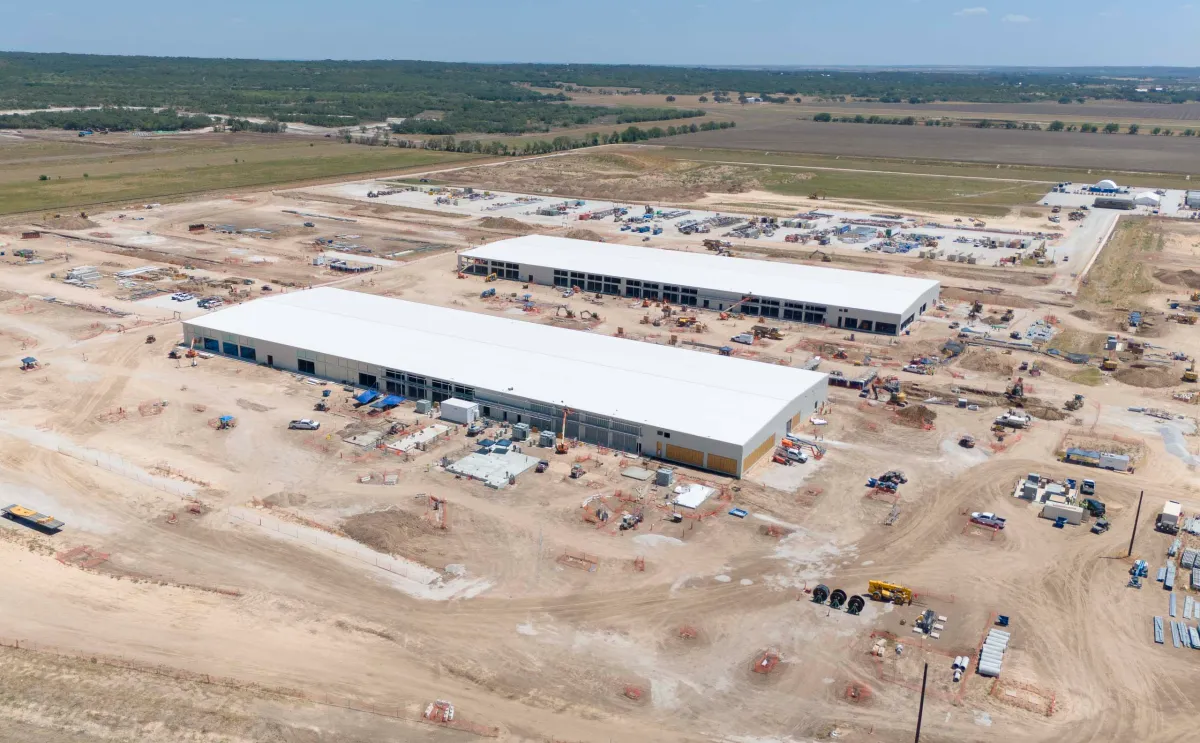
San Antonio is at the center of Texas’ booming data center surge, driven by AI and hyperscale computing. Roughly two dozen facilities in far western Bexar County already draw about 324 megawatts (MW) from CPS Energy. Projections show new centers could add another 2,700 MW by the end of 2028 and push total demand above 3,300 MW by 2033.
The big question for San Antonio families and small businesses: Will this growth drive up power bills, or can a smart plan keep costs in check?
A new commentary from energy experts Ram Rajagopal and Jessica Hogle of GridCARE Inc. argues the latter—if done right. Published in the San Antonio Report, the piece lays out how data centers, paired with grid flexibility and smart policy, can actually help stabilize or even reduce residential rates by spreading fixed infrastructure costs across a larger customer base.
The Financial Case for “Done Right” Data Centers
CPS Energy plans to spend roughly $1.3 billion on transmission projects over the next five years to support about one gigawatt (GW) of new load-serving capacity. But GridCARE’s analysis shows that serving even 1 GW of AI-driven data center load on the existing grid could generate about $123 million in new annual revenue after pass-through costs—with zero incremental system expense in the near term. That revenue could cut system-wide rates by up to 4.4%, saving the average residential customer roughly $64 per year. It could also fund up to $1.45 billion in new infrastructure without raising rates, or a combination of both.
The key enabler? Flexibility.
Texas Senate Bill 6 (and related rules) already lets large loads (75 MW+) agree to curtail or switch to on-site backup generation during the rare hours when ERCOT’s grid is under peak stress. Data centers that commit to this “electrical equivalent of avoiding rush hour” can connect faster to underutilized transmission lines and substations. Much of the grid sits idle outside true system peaks, so intelligent load management turns spare capacity into a revenue generator instead of a cost burden.
CPS Energy is already moving in this direction. The utility defines large loads as anything over 40 MW and has introduced study fees ($75,000–$150,000) to ensure data centers cover interconnection costs. It is streamlining the process while exploring new tariffs and on-site generation pilots so residential ratepayers are protected.
Cross-Check: CPS Energy’s Power Sources and Supply Planning
CPS Energy’s generation portfolio is diverse and adapting to growth:
Natural gas — Dominant and expanding (thousands of MW online or contracted recently).
Nuclear — Reliable baseload via 40% ownership of the South Texas Project.
Coal — Being retired or converted.
Renewables — Growing solar (over 1,000 MW), wind, and landfill gas, plus battery storage (hundreds of MW under contract or online).
The utility’s current system peak is around 6 GW. Vision 2027 and longer-term plans emphasize adding dispatchable gas, solar, wind, and storage to meet both population growth and large-load demand while maintaining reliability. Large loads (including data centers) currently make up about 9% of CPS sales and are projected to reach 19% in five years—generating significant revenue ($110 million already from 21 centers) without proportional new generation if flexibility is required.
Cross-checks with ERCOT forecasts and CPS updates confirm the utility is actively planning for this load surge through new contracts, process improvements, and cost-allocation mechanisms that shift infrastructure burdens away from residential customers.
Water Usage: Manageable with Recycled Water Focus
Data centers need water primarily for cooling servers. In San Antonio, the San Antonio Water System (SAWS) reports that current facilities use only about 0.1% of the city’s drinking (potable) water. Of that total water use, 75% was recycled (treated wastewater) in 2025—up from 48% in 2023. SAWS actively encourages recycled water for non-potable needs like cooling.
Upcoming projects plan to request roughly 600 acre-feet of drinking water and 3,000 acre-feet of recycled water. SAWS’s recycled system has capacity for about 10,000 more acre-feet before upgrades (already underway). Newer liquid-cooling technologies further reduce water needs compared with traditional evaporative methods. While statewide Texas data-center water demand is projected to grow, San Antonio’s share remains a small fraction of total supply and is trending toward greater sustainability.
Impact on Consumers: Revenue vs. Risk
Positive side (per GridCARE and CPS data): Flexible data centers generate new revenue that can offset fixed costs and delay or reduce the need for rate hikes. CPS has already seen revenue gains, and targeted tariffs ensure large users pay their fair share of studies and upgrades.
Risks and safeguards: Nationally and in parts of Texas, rapid data-center growth has contributed to rate-increase requests as utilities build new transmission and generation. Without proper cost allocation, residential bills could rise. CPS is countering this with interconnection fees, large-load tariffs aligned with Senate Bill 6, and requirements that new customers cover incremental costs. Average residential electric rates in San Antonio hover around 12.9–15.87 ¢/kWh, with typical monthly bills in the $140–$150 range (depending on usage and season). Recent bills have drawn complaints, but CPS attributes volatility more to weather and wholesale prices than data centers so far.
City leaders and CPS emphasize they are “not anti-data center, but anti-unplanned growth.” Zoning, tariffs, and flexibility requirements are the tools to capture economic benefits (tax base diversification, jobs in construction and operations) while shielding families.
Bottom Line
San Antonio has a genuine opportunity. If policymakers, CPS Energy, and data-center operators follow the “done right” playbook—mandating grid flexibility, requiring full cost recovery from large loads, prioritizing recycled water, and integrating new generation responsibly—data centers can help keep power bills stable or even lower them for the average household. The alternative—unmanaged growth or outright blocks—risks concentrating higher fixed costs on residential ratepayers.San Antonio can lead Texas (and the nation) by showing how to govern load growth intelligently rather than fear it.
- Original op-ed: “Done right, data centers can help keep San Antonio’s power bills in check” – San Antonio Report, May 9, 2026. https://sanantonioreport.org/done-right-data-centers-can-help-keep-san-antonios-power-bills-in-check/
- CPS Energy Large Load Customer Growth page: https://www.cpsenergy.com/en/construction-and-renovation/large-load-customer-growth.html
- CPS Energy Energy Generation page: https://www.cpsenergy.com/en/about-us/programs-services/energy-generation.html
- SAWS / San Antonio Report water data article (March 7, 2026): https://sanantonioreport.org/risk-opportunity-san-antonio-water-electricity-data-centers/
- CPS Energy Generation Plan updates and slides (2025): https://www.cpsenergy.com/content/dam/corporate/en/Documents/CAC-Meetings/CPS-Energy-Gen-Plan-Update-April-2025.pdf
- Express-News coverage on data-center boom and CPS planning (March 2026): https://www.expressnews.com/business/article/san-antonio-data-center-boom-cps-energy-21943803.php
- Additional CPS rate and bill information: https://www.cpsenergy.com/rates and bill estimator tools.
- Broader context from ERCOT, Senate Bill 6, and industry reports referenced in the op-ed and cross-checks (GridCARE analysis, Aurora Study).
Energy News Beat Channel – Delivering the latest in energy policy, infrastructure, and consumer impacts.