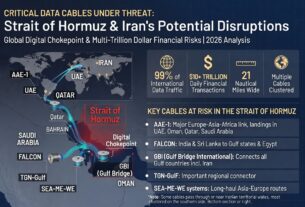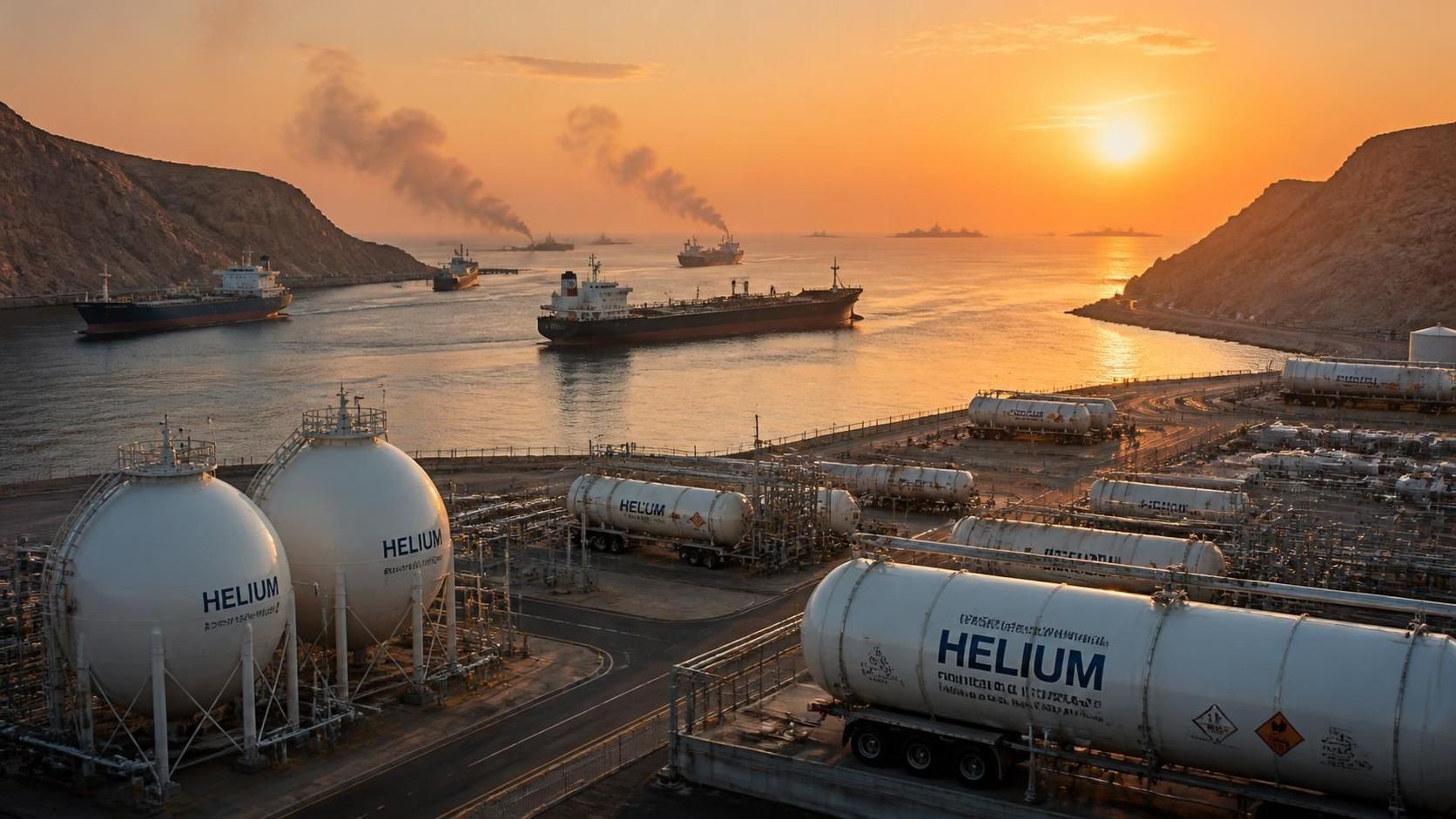
The 2026 US-Iran war and the effective closure of the Strait of Hormuz have delivered a sharp shock to the global helium market. Helium, extracted primarily as a byproduct of natural-gas processing, has no short-term substitutes in many critical applications. Qatar’s Ras Laffan complex—source of roughly one-third of world supply—saw production halted after Iranian strikes in March 2026, with infrastructure damage that could take years to fully repair and export routes constrained by the Hormuz blockade.
What Helium Is Used For and the US Market Picture
According to the U.S. Geological Survey’s Mineral Commodity Summaries 2026, U.S. sales of Grade-A and gaseous helium in 2025 reached an estimated 81 million cubic meters (about 2.9 billion cubic feet), valued at roughly $970 million. That represented approximately 42–44% of estimated global production of 190 million cubic meters. The United States was a net exporter.
U.S. end-use breakdown (USGS, 2025 data):
- Analytical, engineering, laboratory, science, and specialty gases: 22%
- Controlled atmospheres, fiber optics, and semiconductors: 17%
- Lifting gas: 17%
- Magnetic resonance imaging (MRI): 15%
- Aerospace: 9%
- Welding: 8%
- Diving and leak detection: 5% each
- Other: 2%
Helium’s unique properties—extremely low boiling point, inertness, and high thermal conductivity—make it essential for cooling superconducting magnets in MRI machines, precise temperature control and plasma processes in advanced semiconductor fabrication (including AI chips), purging and pressurizing rocket systems, fiber-optic manufacturing, and high-purity welding or leak detection. Demand has been growing with semiconductor expansion and AI buildouts.
Major U.S. production is concentrated at facilities such as ExxonMobil’s LaBarge/Shute Creek plant in Wyoming, which the company has stated accounts for roughly 20% of global helium supply and has decades of remaining resource. The former Federal Helium System (Cliffside storage and associated infrastructure) was privatized and sold to Messer. Smaller new operations have come online in New Mexico, Colorado, Kansas, and Montana.
Supply, Prices, and the Hormuz Shock
Before the crisis, Qatar produced an estimated 63 million cubic meters in 2025 (~33% of global output), almost entirely at Ras Laffan from the North Field gas stream. Iranian missile/drone strikes damaged LNG trains (knocking out ~17% of Qatar’s LNG capacity, with multi-year repair timelines) and halted associated helium extraction. QatarEnergy declared force majeure. Roughly 200 specialized cryogenic ISO containers were stranded. Peak monthly losses were estimated around 5.2 million cubic meters—about one-third of global supply at the time.
As of mid-to-late 2026, the market remains supply-constrained. Partial restarts of helium and some LNG activity have occurred, and limited Hormuz transits have resumed under heightened risk, but volumes are far below pre-war levels. Full normalization of logistics and repaired capacity is expected to take months to years even if security improves. Russia has restricted some exports outside the Eurasian Economic Union, and Algeria and other sources provide limited buffering.
Price impacts have been pronounced on the spot market (a small share of volume but highly visible). Spot prices roughly doubled early in the crisis (from roughly $300–500 per thousand cubic feet pre-war ranges toward $600–1,200+), with some short-term deals reported near $0.90 per cubic foot. Analysts (including Phil Kornbluth of Kornbluth Helium Consulting) have noted continued elevation, with risks of retesting or exceeding prior shortage peaks above $2,000/Mcf in a prolonged scenario. Long-term contract prices are stickier but face upward pressure and surcharges. USGS base prices for Grade-A helium were around $330/Mcf in 2025, before surcharges. Industrial gas companies have implemented allocations and temporary surcharges.
Companies Most Impacted and Those in Jeopardy
Suppliers and distributors: Air Liquide (and its U.S. subsidiary Airgas) declared force majeure, warned of shortfalls, and in some cases limited customers to ~50% of normal monthly volumes while adding surcharges (e.g., $13.50 per hundred cubic feet in reported Airgas communications). The company has reallocated from other global sources and storage (including European caverns). Linde, Air Products, and Japanese importer Iwatani have also been exposed through Qatari offtake agreements, though diversified portfolios and storage help. QatarEnergy’s long-term contracts with major offtakers have been disrupted.
Semiconductor and high-tech manufacturers: South Korean producers (Samsung, SK Hynix) sourced a large share (~65% in recent data) from Qatar and are among the most exposed. Taiwan’s TSMC has stated limited near-term impact thanks to inventories, contracts, and diversification but continues monitoring. Asian fabs overall face higher risks than U.S. facilities. U.S. chipmakers and electronics firms (including those tied to AI server and memory production such as Western Digital or Micron in some analyses) benefit from domestic supply and long-term contracts; critical users are typically prioritized. Helium is a small fraction of wafer cost, so price rises are more manageable than absolute unavailability, but allocation or quality-grade issues for ultra-pure product remain concerns.
Medical imaging: MRI systems (GE HealthCare, Philips, Siemens Healthineers) are high-priority and have been relatively protected. Manufacturers are accelerating low-helium or sealed “dry” magnet designs that use far less (or negligible ongoing) helium. Hospitals and diagnostic chains face higher refill costs and potential service delays if magnets quench, though widespread operational shutdowns have been avoided so far.
Aerospace, research, and industrial users: Rocket manufacturers and NASA-related applications are prioritized. University and national lab cryogenics, welding, and party-balloon or lifting-gas markets feel price increases and tighter availability first. Smaller or contract-free buyers are most vulnerable to rationing.
U.S. manufacturing overall is better positioned than Asian counterparts because of domestic production dominance, storage, and prioritization of critical sectors. However, global price transmission, any export pull from high-paying Asian buyers, and logistics constraints still raise costs.
What Investors and Consumers Should Watch
Investors:
- U.S. producers stand to benefit from higher realized prices and any volume shifts. ExxonMobil’s LaBarge position is unique (large, long-lived, non-Hormuz-dependent); junior explorers and developers (Blue Star Helium, Helium One, Pulsar Helium, and Canadian or U.S. projects) may see stronger offtake interest.
- Industrial gas majors with diversified sourcing, storage caverns, and allocation control (Air Liquide, Linde/Messer, Air Products) can manage through the disruption better than pure Qatari-dependent offtakers.
- Companies advancing helium-efficient or helium-free MRI and semiconductor process technologies may gain share.
- Watch for force-majeure updates, actual Hormuz transit data, Ras Laffan restart progress, new non-Qatari capacity (expected limited before ~2028 in some analyses), and recycling/reclamation adoption.
Consumers and end-users:
- Expect higher costs or surcharges for helium-dependent services (MRI scans, certain industrial processes) and products (electronics, fiber optics). Critical medical and semiconductor uses are protected first.
- Party balloons and non-critical lifting gas may become scarce or expensive.
- Longer term, greater recycling, sealed MRI magnets, and process changes reduce intensity, but near-term availability for non-priority users remains tight.
- Buyers without long-term contracts face the greatest risk of allocation cuts.
The crisis has highlighted helium’s structural fragility—concentrated production, limited storage, specialized transport, and dependence on natural-gas processing in geopolitically sensitive regions—while underscoring the relative resilience of U.S. domestic supply. Prices and allocations are likely to stay elevated until Hormuz logistics normalize and damaged capacity is restored or replaced.