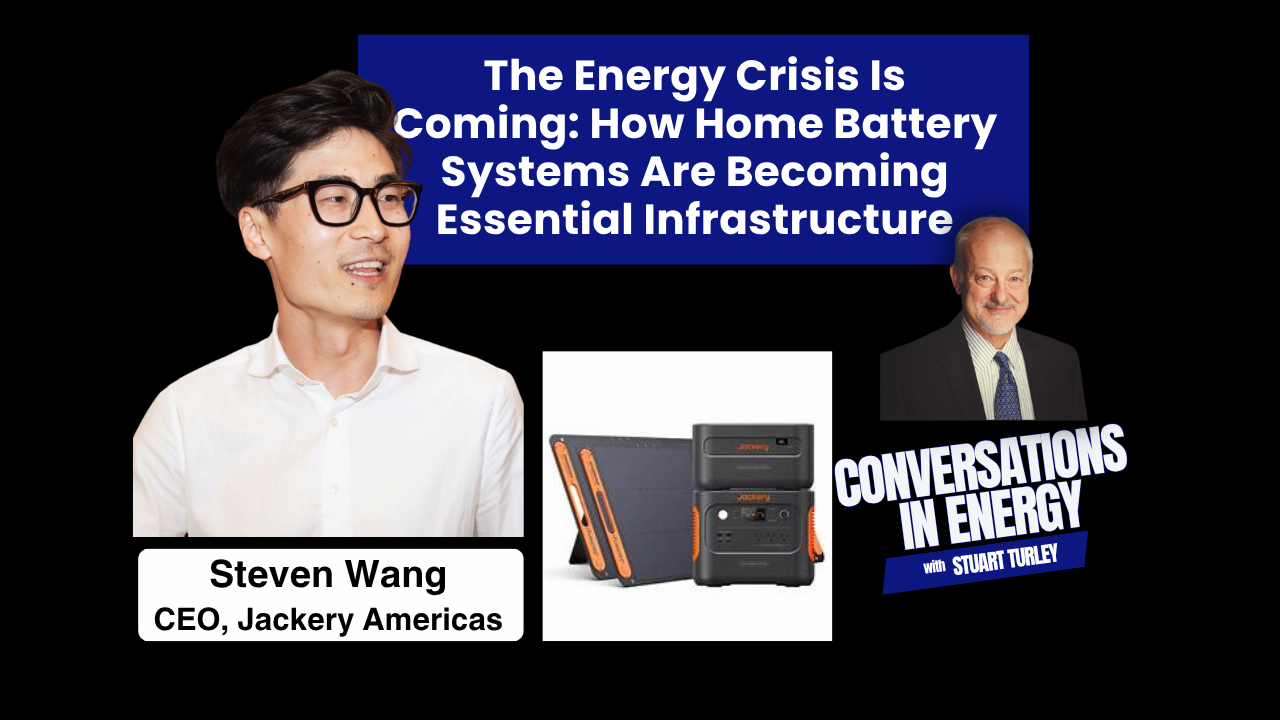
Steven Wang, CEO of Jackery Americas, stops by the Energy News Beat Podcast
There are way too many warning signs across the globe and in the US. We have a real treat with Steven Wang, CEO of Jackery Americas, talking about solutions and what’s around the corner. I would like to get Steven and Doomberg on a podcast in the future to cover the overall market.
JPMorgan’s stark warning about 2027 blackouts is spurring a 28% surge in home battery installations—and it’s reshaping how Americans think about energy security.
The United States faces an unprecedented energy challenge. Electricity demand is surging at a pace the nation’s grid infrastructure simply cannot match. JPMorgan Chase recently issued a dire warning: rolling blackouts are coming to America by 2027. But unlike previous energy crises that left consumers helpless, a quiet revolution is underway in garages and basements across the country—one that’s putting power literally back into people’s hands.
The numbers tell the story. Home battery installations surged 28% year-on-year in the first quarter of 2026, a remarkable growth rate that defies conventional wisdom. This isn’t happening because of government mandates or renewable energy subsidies—in fact, it’s accelerating after those subsidies began phasing out. Instead, Americans are waking up to a simple reality: energy security starts at home.

Why Now?
Beyond Tesla: The Untapped Market
Companies like Jackery are filling this gap with innovative solutions. Their “Fridge Guard” product, for example, offers apartment residents their first real option for permanent backup power—something that was literally impossible just years ago. At $600-$1,000 per unit, multiple units can be deployed throughout a living space for under $2,000, providing comprehensive home backup power.
A Global Problem Demands Global Solutions
The Grid Gets Smarter
This is peak shaving—and it’s a win-win. Utilities get demand flexibility without building new infrastructure. Consumers get free or cheap backup power. The grid becomes more resilient.
What Comes Next
The 2027 blackout warning isn’t a death knell—it’s a wake-up call. And Americans are answering it, one home battery at a time. The question is no longer whether you need backup power. It’s how soon you’ll install it.
I have bought Jackery products for years and use them for my mobile podcasts and as the head end of my emergency systems for the houses.
Using a natural gas Generac is absolutely a great solution, but they are about $15K, and Jackery has even addressed the apartment market. I highly recommend a mixed emergency solution of a Jackery system, with solar and a gasoline or propane generator mix.
The sun does not always shine, and the wind does not always blow, but we are miserable or insecure without power.
The warning signs are all over the place, and now is the time to take stock in your home. Even if you have a natural gas Generac, things happen, so plan a go bag and ways to diversify your emergency power needs.
Don’t forget the water! Have ways to filter or purify water, as that is something many people just plain leave out.
I have offered to Steven on the podcast to test more Jackery Products, and if you would like, I can get specific model numbers that I have and include the deals that are out there.

Let me know how well your setup is at home, and we can all learn.
This article is based on an interview with Steven Wang, CEO of Jackery, on the Energy Newsbeat podcast, discussing the convergence of grid instability, technological maturity, and economic incentives driving the home energy storage revolution.
Thanks to all of our great sponsors, patrons, and subscribers. We could not do anything without you all.
A shout-out to Steve Reese and the Reese Energy Consulting group for sponsoring the Podcast
https://reeseenergyconsulting.com/.
Data2 if you have any business systems, can you trust A? Well, they have the patent on validation. . https://data2.zoholandingpage.com/energy
And we have WellDatabase as a key tool for our weekly Rig Report from Energy News Beat, where we compare WellDatabase, Enverus, and Baker Hughes for the key trends in the US oil market. https://welldatabase.com/