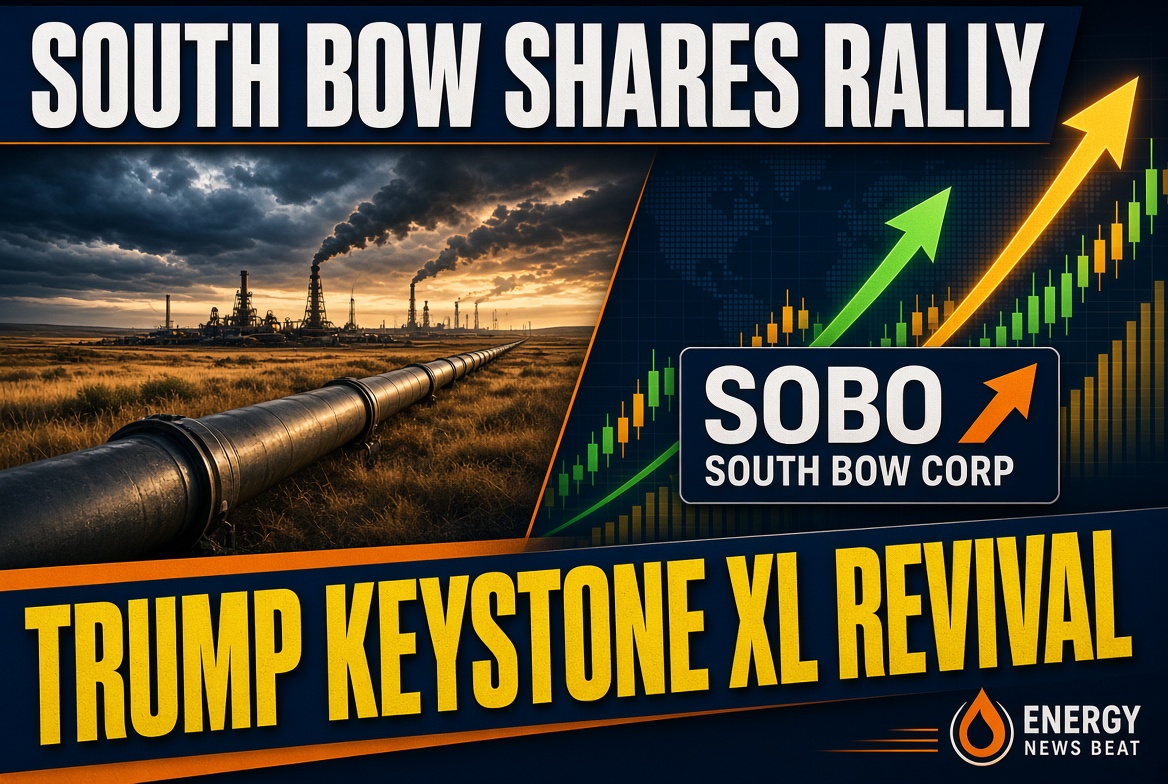
South Bow Corp. (TSX/NYSE: SOBO) shares rose on August 19, 2026, marking their strongest one-day advance in more than a month, after U.S. President Donald Trump publicly suggested a revival of the long-canceled Keystone XL pipeline project.
In a Truth Social post, Trump announced a three-day pause on planned 50% tariffs on Canadian goods, citing progress toward a broader deal with Canada. He added: “The great Keystone XL Pipeline, long ago killed by Sleepy Joe Biden, may be awoken from the grave!” The post was accompanied by an AI-generated image depicting the president extracting a pipeline from a grave marked “Buried by Biden.”
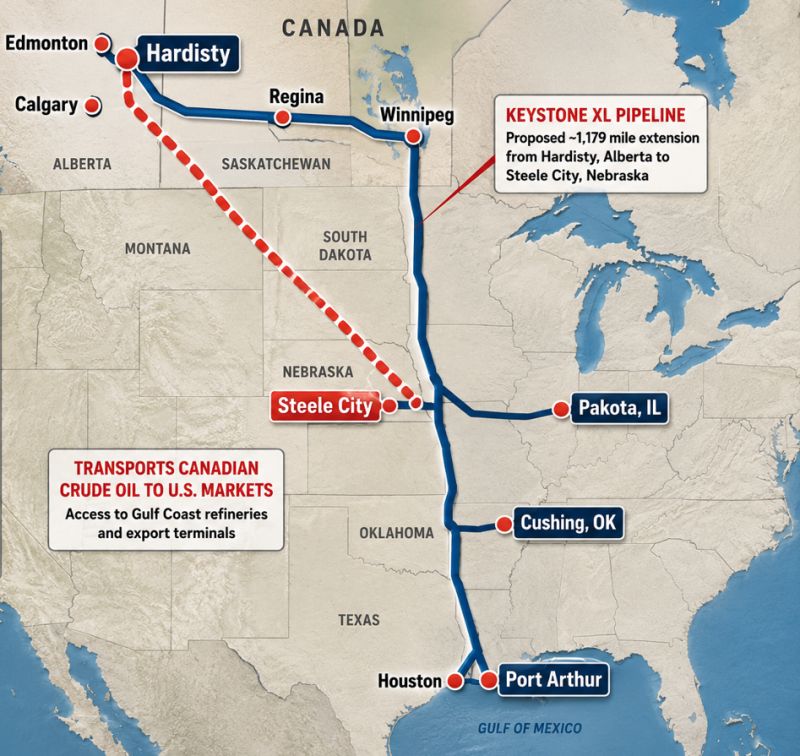
South Bow, the Calgary-based liquids pipeline company spun out of TC Energy in late 2024, operates the existing Keystone Pipeline System and owns the roughly 150 kilometers of previously installed pipe in Canada originally intended for Keystone XL. The company has been advancing a partial revival through its Prairie Connector project, which would transport Canadian crude from Hardisty, Alberta, to the Canada-U.S. border and connect with a proposed U.S. line by Bridger Pipeline LLC to Guernsey, Wyoming, and potentially further to Midwest and Gulf Coast markets.
Trump previously granted a cross-border presidential permit for the Bridger portion. South Bow has secured 20-year binding commitments totaling 465,000 barrels per day from nine shippers for firm transportation service. The project is targeting a final investment decision in mid-2027, with potential initial capacity around 550,000 bpd (expandable) and an in-service goal as early as late 2028 or 2029 depending on construction timelines.
What Investors Should Watch
Investors should focus on several near- and medium-term catalysts:
Final Investment Decision (FID) and permit durability: South Bow management has repeatedly emphasized the need for a “durable” U.S. presidential permit that would survive future administrations. Progress on legislative or contractual safeguards against revocation will be critical. Pre-FID development spending is already reflected in raised 2026 growth capital guidance.
Commercial and operational momentum: The company’s Q2 2026 results (reported August 5) showed strength that underpins confidence in expansion. Revenue reached $546 million (up from $524 million year-over-year), net income $134 million or $0.64 per share (up from $96 million or $0.46), normalized EBITDA $280 million, and distributable cash flow $175 million. Full-year 2026 guidance was raised to normalized EBITDA of approximately $1.04 billion and distributable cash flow of $665 million. Throughput hit records on the U.S. Gulf Coast segment (averaging 800,000 bpd in Q2). Net debt-to-normalized EBITDA improved to 4.4x, and the quarterly dividend remains $0.50 per share.
Execution risks and timelines: Regulatory approvals in Montana and Wyoming, stakeholder engagement, financing, and construction costs (analyst estimates around $2–3 billion range for related segments) remain key. Western Canadian egress capacity is expected to tighten by mid-2027 as production grows, creating a clear commercial need.
Broader market and policy signals: Any concrete details from U.S.-Canada trade negotiations, additional shipper interest, or competing projects (such as Trans Mountain optimizations or Enbridge expansions) will influence valuation. South Bow’s highly contracted cash flows and strategic corridor position it as a pure-play beneficiary of increased Canada-U.S. oil flows.
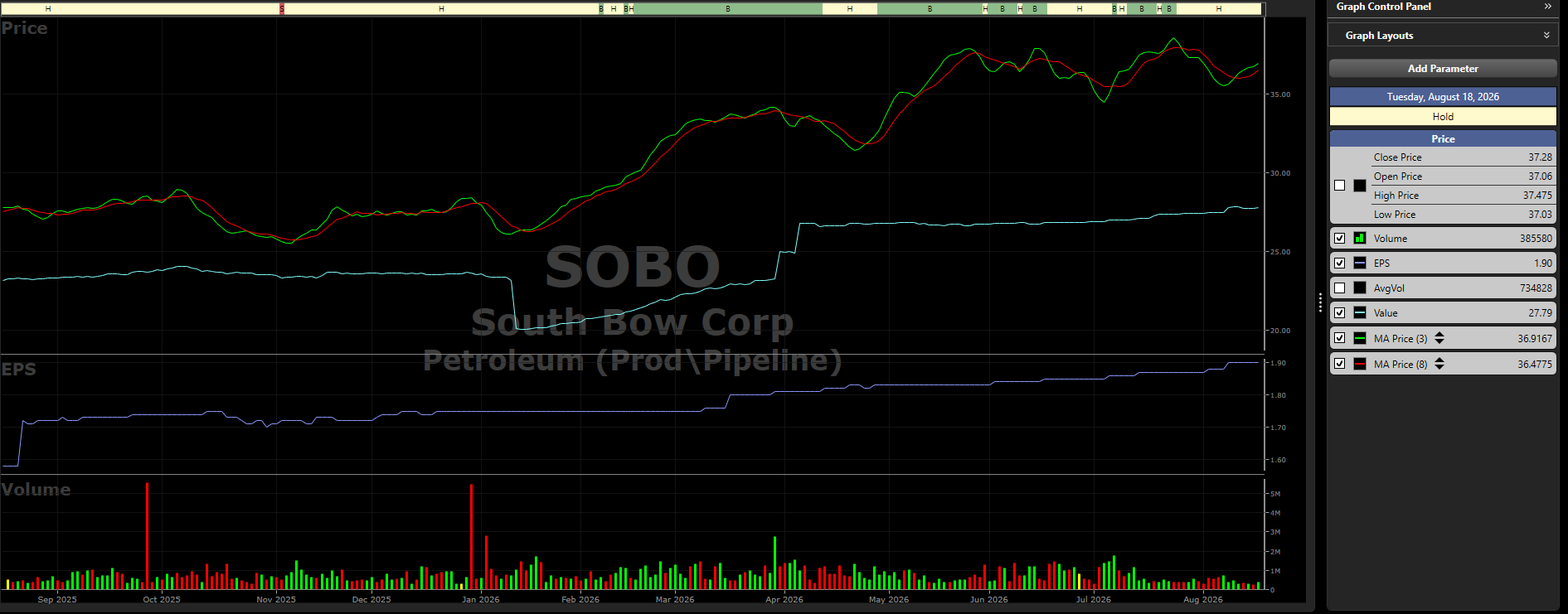
South Bow closed recent sessions near CAD 52–53 on the TSX (roughly $37–38 on the NYSE), with the August 19 move reflecting renewed optimism around the project.
A Huge Win for Alberta
This development represents a significant opportunity for Alberta. Western Canadian crude production continues to grow, and existing pipeline capacity is projected to face shortages as early as mid-2027. The Prairie Connector (leveraging stranded Keystone XL steel and corridors) would add hundreds of thousands of barrels per day of export capacity specifically geared toward U.S. markets that are optimized for heavy Canadian crude.
Greater egress supports higher production volumes from oil sands and conventional assets, reduces the risk of wider price discounts (WCS differential to WTI), boosts provincial royalties and tax revenues, creates construction and long-term operational jobs, and strengthens Alberta’s position as a reliable energy supplier. Previous capacity additions, such as the Trans Mountain Expansion, have already demonstrated how improved market access translates into billions in incremental revenues for producers and governments.
Potential Impact on U.S. Consumers
Increased reliable supplies of Canadian heavy crude to U.S. Midwest and Gulf Coast refiners—facilities specifically configured to process it efficiently—would enhance feedstock availability. This can support higher refinery utilization, improve operational flexibility, and help moderate or stabilize prices for refined products such as gasoline, diesel, and jet fuel, particularly in regions heavily reliant on Canadian imports (which account for a large share of U.S. crude imports).The U.S. benefits from purchasing discounted heavy Canadian oil while exporting higher-value light crude and refined products. Greater North American energy integration strengthens energy security, reduces exposure to more distant or geopolitically riskier suppliers, and supports the broader refining complex that underpins transportation and industrial costs for American households and businesses. While global oil prices remain the primary driver of pump prices, incremental secure supply from a neighboring ally acts as a positive factor against tightness or disruptions.
Challenges remain—including environmental reviews, Indigenous and landowner consultations, and political durability—but the combination of commercial commitments, existing infrastructure, and supportive U.S. policy signals has shifted the project from long-dormant status to active advancement.South Bow’s share response underscores market recognition that a successful Prairie Connector would enhance the company’s growth profile, cash flow durability, and strategic relevance in North American energy infrastructure.
Appendix: Sources and Links
- Bloomberg: “South Bow Shares Rally After Trump Talks Keystone XL Revival” (August 19, 2026) – https://www.bloomberg.com/news/articles/2026-08-19/south-bow-shares-rally-after-trump-talks-keystone-xl-revival?srnd=phx-industries-energy
- South Bow Q2 2026 Earnings materials and transcript (August 5–12, 2026): Motley Fool transcript – https://www.fool.com/earnings/call-transcripts/2026/08/12/south-bow-sobo-q2-2026-earnings-call-transcript/; SEC/stock filings summaries – https://www.stocktitan.net/sec-filings/SOBO/6-k-south-bow-corp-current-report-foreign-issuer-c3e8dd0e0e2a.html and related MD&A coverage
- Canadian Press / Yahoo Finance: “A look back at the Keystone XL pipeline drama as Trump touts its potential revival” (August 19, 2026) – https://ca.finance.yahoo.com/news/look-back-keystone-xl-pipeline-155602508.html
- Reuters coverage of Prairie Connector commitments, Trump permit, and South Bow comments (multiple 2026 articles, e.g., May 29 and earlier) – https://www.reuters.com/business/energy/south-bow-targets-2027-decision-canada-us-oil-pipeline-revival-2026-05-29/
- The Logic: South Bow secures long-term commitments (August 6, 2026) – https://thelogic.co/briefing/south-bow-secures-long-term-commitments-for-proposed-keystone-xl-revival-project/
- South Bow official site and investor materials – https://www.southbow.com/ and https://southbow.com/investors/
- Additional context on Alberta egress, production outlook, and U.S. consumer/refining benefits drawn from industry analyses (S&P Global, Fraser Institute, C.D. Howe Institute, and related energy reports).