

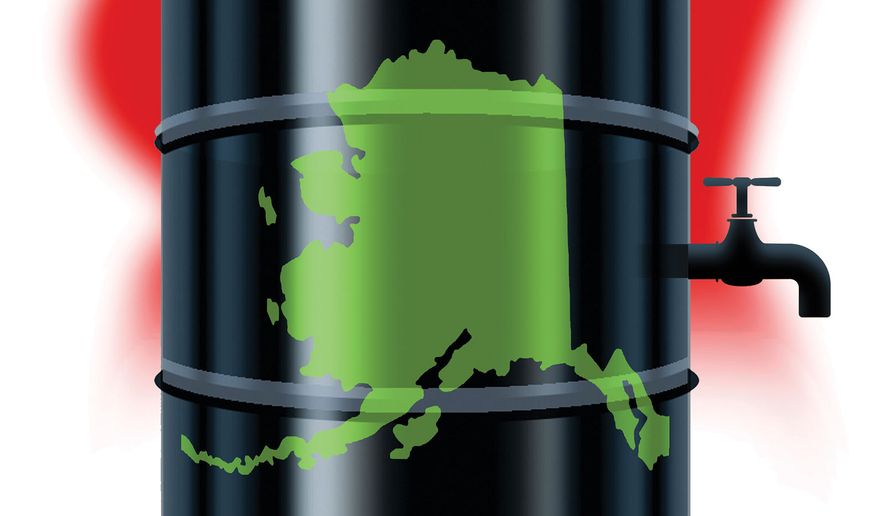
ENB Pub Note: This article first ran in the Washington Times, and it is spot on. My Grandfather is credited with being one of the geologists who discovered the North Slope, and we have yet to take advantage of the resources there. We will cover this on the Next Energy News Beat Stand Up.
–
Its North Slope still holds vast untapped reserves.
In October 1973, the Arab oil embargo quadrupled oil prices overnight, from roughly $3 a barrel to nearly $12. Americans waited in long lines for gasoline. Inflation surged. The economy buckled.
Energy proved to be the Achilles’ heel of our national power. The United States, which imported about 35% of its petroleum at the time, found itself exposed: a superpower dependent on supply chains it didn’t control.
The U.S. had bought into the illusion that dependence was manageable until the Arab states proved otherwise.
Today, arguably, we find ourselves in an even more serious conflict. Iran is firing ballistic missiles at key oil infrastructure throughout the Persian Gulf in a direct attempt to roil world energy markets. The Strait of Hormuz, a sea route that carries one-fifth of the daily global oil supply, was effectively closed until this week, when some commercial ships began passing through after President Trump imposed a blockade on Iranian ports.
Countries remain anxious and are warning of extreme measures in the months ahead to deal with acute energy shortages.
Not us.
For the first time in a generation, the U.S. was able to act against a foreign adversary — whether one agrees with the action or not — without panic at the gas pump. Washington was able to move forward with a strategic freedom unthinkable 50 years ago.
Sure, gas prices have inched up, and many Americans are feeling the pinch. Still, there have been no lines at filling stations, and there is no hostagelike relationship with Gulf oil nations.
Alaska made that possible.
The lessons of the Carter-era oil embargo were not merely economic. They affected our strategic thinking and planning. We learned that energy insecurity narrows diplomacy, weakens deterrence and hands hostile actors leverage over the decisions of our government leaders.
We discovered the hard way that a country dependent on unstable or adversarial suppliers has fewer options when confronting threats abroad. It’s equally true today.
In November 1973, Congress responded. The Trans-Alaska Pipeline Authorization Act set into motion construction of an 800-mile pipeline moving North Slope crude from Prudhoe Bay, the largest American oil field ever discovered, to the port at Valdez.
By 1988, Alaska was supplying nearly a quarter of all U.S. oil output. Over its lifetime, the pipeline has moved more than 18 billion barrels.