ENB Pub Note: This article was originally published on the Daily Caller, and we recommend subscribing to their publications. Stu Turley had the opportunity to visit with David Blackmon and Tom Pyle about this on the podcast released Friday.
Will the affordability issue decide the balance of power in Congress this November? Democrats have pounded on the issue over the last several months based on polling data indicating many Americans blame President Donald Trump and the Republicans for the high cost of living, having apparently forgotten the four years of record inflation brought on by the Biden Autopen presidency and a Democrat-dominated Congress.
The cost of electricity has served as one of the focal points for Democrat messaging, as rates continued rising during 2025, driven by massive demand from the booming AI datacenter industry. But a new report by the Institute for Energy Research (IER) warns that Democrat candidates should consider treading lightly on this narrative, because it could backfire on them and their campaigns.
A recent study published by IER – titled “Blue States, High Rates” – supports Democrat claims that the rate of increase in power rates accelerated during 2025: After rising 27% across the four years of the Biden presidency, U.S. consumers endured another 11% increase in the average electricity bill last year. (RELATED: Three Worst Republicans On Key Affordability Policy According To New Study)
But, the study adds, “[e]lectricity prices are especially high in traditionally liberal areas of the country. In total, 86% of states with electricity prices above the national average in the continental U.S. are reliably blue, having voted for the Democratic nominee for president in the 2020 and 2024 elections.” Of the 10 states saddled with the highest utility rates in the nation in 2025, only one – Alaska – ranks as a fairly reliable “red” state in presidential elections.
By contrast, the nine other states that fill out that dubious Top 10 read like a Murderer’s Row of the most notorious “blue” states in the country: Hawaii, California, Connecticut, Rhode Island, Massachusetts, Maine, New York, New Hampshire, and Washington, DC.
The contrast with the states with the lowest power rates is stark, with eight of the lowest 10 reliably “red,” and one – Nevada – falling into the “purple” category since it has alternated between the Republican and Democrat presidential candidates in recent election cycles. The only “blue” state ranked among the cheapest 10 is New Mexico, whose utility rates benefit greatly from a power grid supplied largely by natural gas thanks to it being home to the Western extent of the Permian Basin.
So, what factors cause the liberal states to suffer from higher electricity costs than more conservative states? IER cites a variety of reasons, but says that, more than any other single driver, “electricity prices are a direct result of state energy policies because states have the exclusive power to decide which resources supply their grids.” By and large, this means that states that have gone in whole hog on mandates and costly incentives for “renewables,” – most often wind and/or solar – suffer with higher utility costs than states that have mostly avoided the climate alarm fever dreams.
Not surprisingly, the study cites Gavin Newsom’s California, trailing only Hawaii as the second most expensive state in the country, as a prime example of irrational government policies forcing higher costs on rate payers.
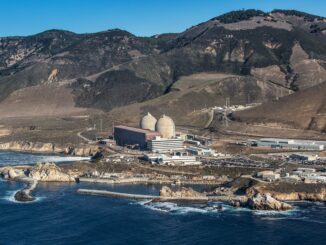
“Governor Newsom and California’s state legislature have embraced numerous policies that intentionally increase electricity rates, including a carbon dioxide reduction mandate, renewable mandates, solar cost-shifting (net metering), nuclear reactor closures, and EV charging subsidies, to name a few,” IER says, adding that, “Instead of trying to expand electricity generation to meet the energy needs of Californians, California is second in the country in electricity imports, as it embeds policy goals in electric rates to drive social policy. This is a toxic mix for California’s ratepayers.”
So, why does Texas, which sports more wind and solar capacity than any other state by far, rank among the 11 cheapest electricity states in this study? Because, while Texas did enact a renewable portfolio standard in 2001, it has avoided enacting any of the other unsound policies California has pursued and still generates the majority of its electricity with natural gas plants.
What this all means is that, if Republicans are smart about laying out the facts to voters on this “affordability” issue in the fall campaign, they — not the Democrats — will win the argument in November.
David Blackmon is an energy writer and consultant based in Texas. He spent 40 years in the oil and gas business, where he specialized in public policy and communications.
The views and opinions expressed in this commentary are those of the author and do not reflect the official position of the Daily Caller News Foundation.