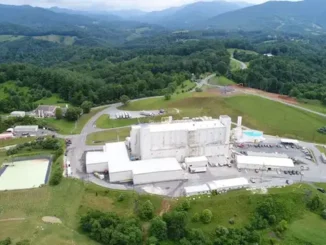
In a significant move toward bolstering its clean energy portfolio, Duke Energy has taken an initial regulatory step to explore building new nuclear capacity in North Carolina. The company recently submitted an early site permit (ESP) application to the U.S. Nuclear Regulatory Commission (NRC) for a potential site at its Belews Creek Steam Station in Stokes County.
This marks Duke’s first pursuit of an ESP, a process that evaluates environmental and safety factors without committing to a specific reactor technology, thereby mitigating long-term risks. The decision comes amid surging electricity demand driven by data centers, manufacturing resurgence, and widespread electrification. Duke Energy views advanced nuclear, particularly small modular reactors (SMRs), as a critical baseload source to complement intermittent renewables like solar and wind. The proposed site is a brownfield location with an existing coal-fired plant, which could leverage current infrastructure for up to 600 megawatts of capacity. While no final investment has been greenlit, the first unit could come online as early as 2036, with full deployment targeted by 2037.
This initiative aligns with broader industry trends, including federal incentives from recent energy legislation that support advanced nuclear through tax credits. However, challenges persist, such as high upfront costs and the fact that no commercial-scale SMRs have been built in the U.S. yet. Duke executives describe this as a “measured step” to assess SMR viability while safeguarding stakeholders.
Implications for Investors
For investors, Duke Energy’s nuclear ambitions signal a strategic pivot toward long-term growth in a decarbonizing energy landscape. The company’s latest financials underscore its stability: In Q3 2025, Duke reported adjusted earnings per share (EPS) of $1.81, surpassing analyst estimates of $1.75, with revenue hitting $8.54 billion.
This performance reflects robust operational efficiency and positions Duke to capitalize on rising demand. Dividend payouts remain a cornerstone of Duke’s appeal to income-focused investors. The company declared a quarterly dividend of $1.065 per share in October 2025, payable December 16, equating to an annualized yield of approximately $4.22 per share.
With a payout ratio around 65%, dividends are sustainable, and Duke has increased them annually since 2007.
Forward-looking statements emphasize investments in renewables, grid modernization, and advanced nuclear to drive economic growth and meet capacity needs.
In its 2025 strategic plan, Duke outlined adding large light-water reactors and SMRs, potentially enhancing asset value and revenue streams from AI-driven data center loads.
However, risks like regulatory delays or cost overruns could pressure returns, though the ESP process aims to de-risk these. Overall, this nuclear push could boost Duke’s stock by aligning with clean energy mandates, potentially attracting ESG-focused capital while maintaining dividend reliability.

Implications for Consumers
Consumers in North Carolina and beyond stand to benefit from more reliable, round-the-clock power as Duke transitions from coal. The Carolinas Resource Plan highlights a “cost-effective, forward-looking” approach to integrate nuclear with renewables, ensuring grid resilience amid growing demand.
This could stabilize energy prices long-term by diversifying away from volatile fossil fuels. On the flip side, building new nuclear plants involves substantial capital outlays, which might translate to rate hikes if approved by regulators. Duke’s plan also includes new gas-fired plants and delayed coal retirements, which could temper immediate cost savings.
Still, the emphasis on advanced technologies like SMRs promises modular, potentially cheaper deployment compared to traditional reactors.
For ratepayers, the key will be balancing affordability with reliability—Duke’s executives stress protecting customers through prudent evaluations.
Implications for the Environment
Environmentally, this development is a win for decarbonization efforts. Nuclear power provides zero-emission baseload energy, helping Duke meet carbon reduction goals and phase out coal. The Belews Creek site repurposes existing infrastructure, minimizing new land disruption.
By supporting renewables with nuclear, Duke can reduce reliance on natural gas, cutting overall greenhouse gas emissions. Critics, however, point to nuclear waste management and potential safety risks, though the ESP focuses on site suitability to address these early.
Broader plans include renewing licenses for existing plants and investing in storage, aligning with federal climate incentives.
Some environmental groups have raised concerns about “greenwashing” if nuclear credits overshadow residential clean energy programs.
Nonetheless, this step advances a cleaner grid, crucial for combating climate change. In summary, Duke Energy’s ESP filing is a proactive stride in a high-demand energy era. It promises growth opportunities for investors, dependable power for consumers, and environmental progress—though execution will be key to realizing these benefits.
Sources: oilprice.com, news.duke-energy.com, powermag.com