ENB Pub Note: This article was originally published on America Out Loud, and we recommend reading and following Ronald Stein!
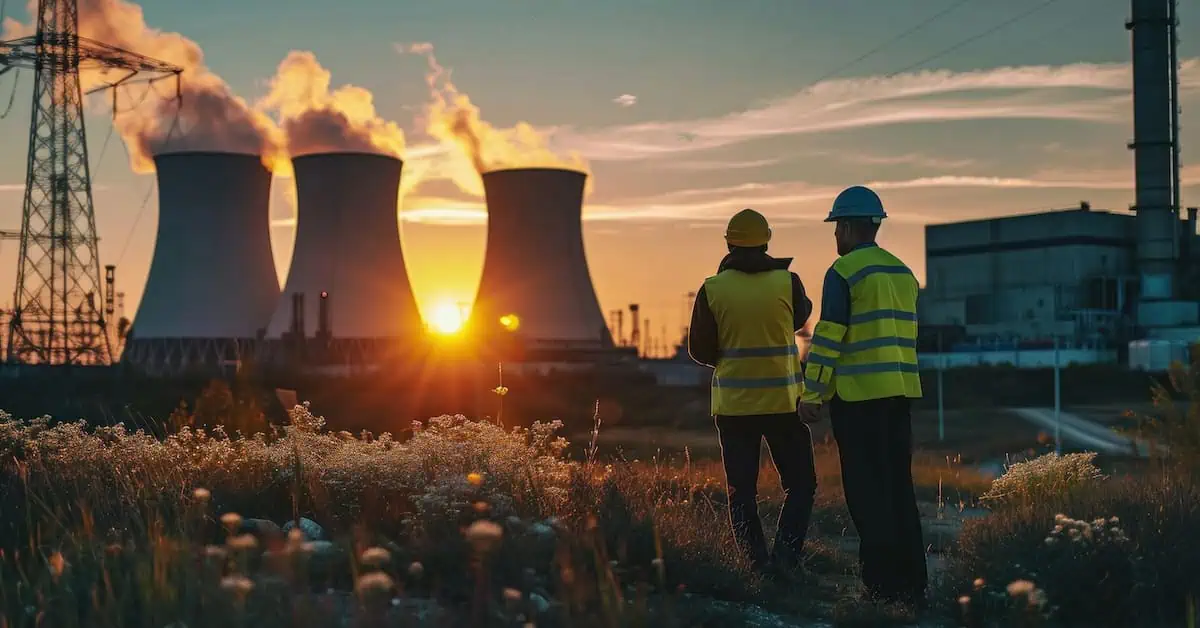
Most California politicians have hated the zero-emissions electricity generated by nuclear power since 1976, when they passed a moratorium on new nuclear power plants. Nuclear is the cleanest, safest, proven, least-emitting fuel of all, and yet most of California’s politicians hate it. Once, California had multiple operating nuclear power plants, including San Onofre, Diablo Canyon, Rancho Seco, and partial ownership in Palo Verde, located in Arizona. Now, only Diablo Canyon and Palo Verde remain in operation.
For many years, politicians enacted anti-nuclear policies and laws. The Energy Reorganization Act of 1974 created the Nuclear Regulatory Commission. The U.S. Nuclear Regulatory Commission’s (NRC) Fiscal Year (FY) 2027 budget request is $892.3 million, which includes 2,606 full-time equivalents (FTE).
Not too long ago, coal and nuclear together provided about 70% of America’s electricity generation. Since the enormous investments from federal and state subsidies for electricity generation by wind turbines and solar panels, electricity prices across the country have more than doubled.
The World Nuclear Association shows about 80 nuclear reactors are under construction across the world. About 120 further reactors are planned. Most reactors under construction or planned are in Asia.
The list of multiple nuclear reactors under construction is as follows:
- China 37
- India 8
- Russia 5
- Egypt 4
- Korea 4
- Turkey 4
- Bangladesh 2
- Japan 2
- Ukraine 2
- UK 2
In America, President Trump has incentivized the nuclear industry with up to $300 billion in loan authorities, sponsored a slate of permitting reform legislation, and issued executive orders to modify the Nuclear Regulatory Commission and streamline reactor licensing approvals from a decade to 18 months.
California was one of the largest producers of U.S. crude oil and petroleum products. Today, with oil production in California in terminal decline, the State imports between 60% and 70% of its crude oil from foreign countries to meet the State’s demand at operating refineries.
It’s shocking that the State imports most of its crude oil demand when California’s Pacific Outer Continental Shelf contains massive, mostly untapped, and undeveloped heavy oil reserves that are among the largest reserves in the world.
California’s estimated undiscovered technically recoverable resources (UTRR) range between 4 and 14.2 billion barrels of oil, depending on the region and the specific federal assessment. The lower end corresponds with long-term downgrades of onshore shale, while the upper end highlights the potential of the Pacific Outer Continental Shelf (OCS).
The California economy runs on transportation. The 4th largest economy in California demands from the remaining 7 refineries operating in the State a reliable supply chain of 48 million gallons of transportation fuels DAILY (these include jet fuel for 40 military airports and 9 international airports, three grades of gasoline for its 30 million vehicles, and diesel for the trucking and construction industries). During the 1970’s there were dozens of refineries in California. Today, because of demonization of fossil fuels to inflame the public, harmful laws, rules, and restrictions have been applied. Now, only 7 operating refineries remain to provide the supply chain of those transportation fuels that are running the 4th largest economy in the world.
Now let’s move on to affordable electricity generation. A popular misunderstanding is that intermittent solar and wind are “free,” but increasing electricity costs are caused by at least three factors:
- Two electricity generating systems need to be built. The fact is that because wind and solar are intermittent, two power generation systems need to be built. The renewable system is powered by wind and solar energy, and then a backup generation system powered by coal, gas, nuclear, or other “Dispatchable” generation. The second generating system is necessary to provide uninterrupted generation when the sun sets and the wind doesn’t blow.
- The gas fuel for the gas turbine backup power is volatile and usually at a higher cost than coal or nuclear fuel.
- Wind and solar farms require vast acreage away from populated areas; thus, transmission lines and substations must be constructed to connect the power generation from remotely located solar and wind farms. to bring that “free” electricity back to where people and businesses are located.
Of course, there are numerous and complicated reasons unique to each area. However, the pattern of results is clear. The more solar and wind are installed, the higher the cost of electricity. At this point in time, the end results of other states and other countries cannot be ignored.
- Hawaii, which prematurely shut down its 180 MW coal plant about five years ago, has the highest electricity rates in all the U.S. Hawaii is an energy island and cannot back up the wind and solar that is installed with gas turbines or imported power from neighboring utilities. There are no gas lines in Hawaii, so the backup is Diesel-fueled generation.
- Germany tried to transition to wind and solar, and the high electric rates created de-industrialization because energy-intensive industries could not compete in the world markets.
- Then there are numerous other U.S. states that have shut down their coal plants with a similar result as Germany and Hawaii. Extreme price escalation. These are simply facts from published electricity rates and state energy profiles of generation by fuel.
Then came politically driven energy laws that forced coal plants to shut down.
The Los Angeles Department of Water and Power (LADWP) owned a large portion of the well-designed, well-run, clean, and affordable 1900 MW Intermountain Power Coal Plant in Delta, Utah. The power from Delta, Utah flowed over special high-voltage D.C. power lines very reliably for many years. The Intermountain Power Coal Plant was shut down in 2025 and no longer operates on coal fuel. Almost a fifth of LADWP electricity was generated from coal fuel as recently as 2016. Now, zero generation is from coal fuel.
The escalating power costs are likely to force any electricity-intensive industry to move toward continuous, uninterruptible, and emission-free electricity. Thus, America is watching the world’s movement to nuclear power generation.
Please share this information with teachers, students, and friends to encourage Energy Literacy conversations at the family dinner table.
Click this Link to Sign up for Energy Literacy from Ronald Stein.