Energy News Beat Channel | July 16, 2026
Pacific Gas and Electric Company (PG&E) has implemented a Public Safety Power Shutoff (PSPS) affecting approximately 7,800 customers across small portions of 10 counties in Northern and Central California. The action, announced on July 14, 2026, began in the afternoon of July 15 as a precautionary measure against heightened wildfire danger driven by high winds, low relative humidity, and dry fuel loads.
This marks the third PSPS event of 2026 for PG&E, which serves over 16 million people across 70,000 square miles.
Details of the Affected Areas
The targeted areas are limited to high fire-threat zones. Customer counts by county include:
- Monterey: 3,083 customers
- Marin: 2,017 customers
- San Luis Obispo: 1,978 customers
- Smaller numbers in Alameda (75), Contra Costa (70), Santa Barbara (287), San Benito (154), Merced (77), San Joaquin (33), and Fresno (17).
PG&E activated its Emergency Operations Center and issued advance notifications via phone, text, and email to affected customers, in line with California Public Utilities Commission (CPUC) requirements. Outage duration depends on real-time weather, damage assessments, and post-event patrols and repairs. Power may be restored in phases once conditions improve and inspections confirm safety.
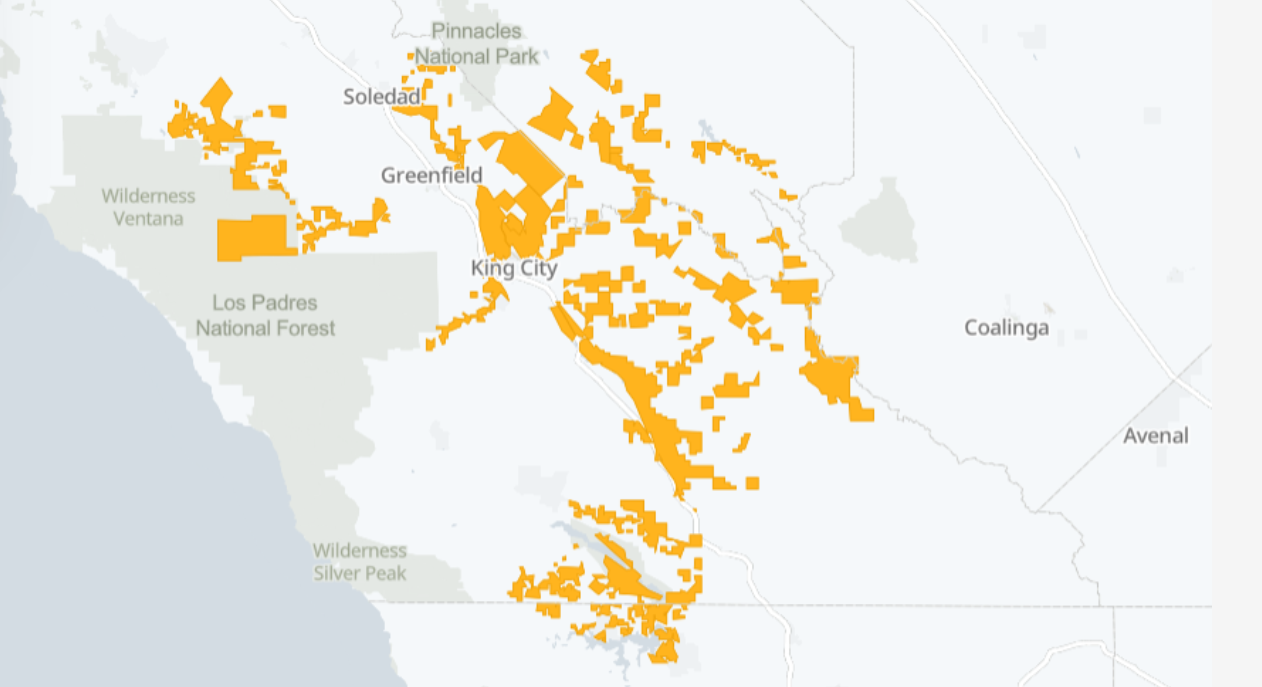
Example of PG&E PSPS targeted areas (illustrative map from similar events; check pge.com/pspsupdates for the latest).
Why PG&E Is Taking This Action
PG&E uses PSPS as a last-resort measure when severe weather conditions could cause power lines or equipment to fail and ignite dry vegetation. High winds increase the risk of trees or debris contacting energized lines, potentially starting fires.
The utility monitors forecasts, Red Flag Warnings, and ground conditions closely. In this case, the combination of winds, low humidity, and dry fuels created an elevated risk across portions of its service territory.
Historical context shows why these precautions matter. Past utility-related ignitions (including some attributed to PG&E infrastructure) have sparked devastating wildfires, such as the 2018 Camp Fire (85 deaths, over 18,800 structures destroyed) and the 2021 Dixie Fire (nearly 1 million acres burned). While utility equipment causes a small percentage of total wildfires overall, it has been linked to some of the most destructive ones in recent history.
Simulations from past events (e.g., May 2026) indicated that without PSPS, potential fire spread could have impacted hundreds of thousands of acres. Post-event patrols have also identified wind-related damage that was mitigated by de-energization.
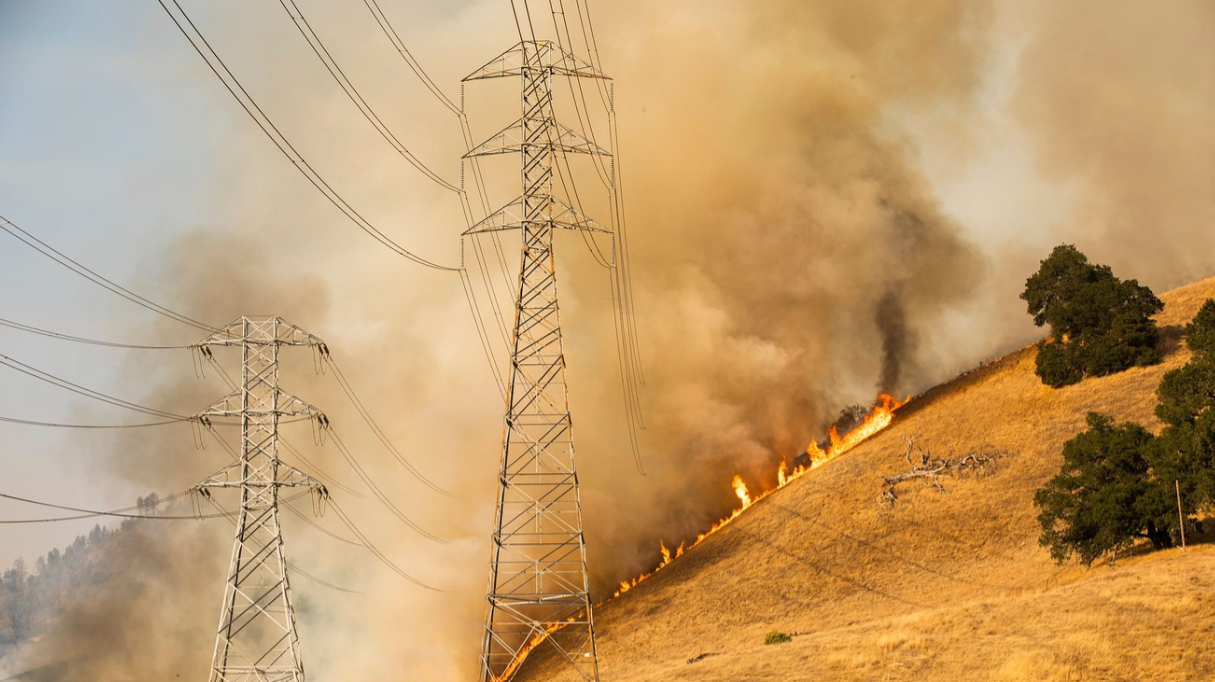
Power lines in high-wind, dry conditions represent a key wildfire ignition risk that PSPS aims to reduce.
Potential Damage and Broader Impacts
Without the shutoff, the primary risk is catastrophic wildfire ignition, leading to:
- Loss of life and injuries
- Destruction of homes, businesses, and infrastructure
- Billions in economic damages
- Long-term environmental and community impacts
PG&E’s proactive approach has significantly reduced these risks in recent years.
Impacts of the PSPS itself include temporary power loss for the affected customers, which can disrupt:
- Daily life (lighting, refrigeration, charging devices)
- Businesses and remote work
- Critical services (though PG&E supports medical baseline customers and has expanded Community Resource Centers)
PG&E has made major progress in minimizing the scope and duration of these events. Customer impacts dropped from over 2 million in 2019 to around 18,000 in 2025 through technology, targeted de-energization, undergrounding, and better forecasting.
Current wildfire activity in California includes smaller, mostly contained incidents (e.g., in Los Angeles and Lassen areas), but conditions remain elevated in parts of the state through summer.
California’s Energy Mix: A Leader in Renewables with Reliability Challenges
California has one of the most aggressive clean energy transitions in the U.S., supported by strong policy goals (including 100% clean electricity retail sales by 2045 under Senate Bill 100).
Latest available data (2025 in-state generation) from the California Energy Commission shows a diverse and increasingly renewable-heavy mix:
- Natural Gas: ~36% (73,750 GWh) — still critical for reliability and peaking
- Solar PV: ~26% (53,642 GWh) — fastest-growing source
- Large Hydro: ~12% (24,125 GWh)
- Nuclear: ~8.6% (17,575 GWh)
- Wind: ~7.4% (15,172 GWh)
- Geothermal: ~5.3% (10,908 GWh)
- Biomass: ~2.1% (4,226 GWh)
- Small hydro, solar thermal, and others make up the balance
Total in-state generation: ~205,132 GWh.
According to the U.S. Energy Information Administration (EIA), renewable resources (including hydroelectric and small-scale solar) supplied approximately 62% of California’s in-state electricity generation in 2025, with natural gas at ~31% and nuclear at ~7%.
Key trends:
- Solar has surged dramatically.
- Natural gas generation has declined significantly (down ~22% from 2023 levels) as renewables and battery storage grow.
- The state relies on imports and behind-the-meter (rooftop) solar to meet demand.
- Batteries are playing an increasing role in managing the “duck curve” (midday solar oversupply followed by evening ramps).
Challenges highlighted by events like PSPS:
High renewable penetration improves decarbonization but requires robust transmission, distribution hardening, and flexible resources (gas, batteries, demand response) for reliability during extreme weather. Grid modernization efforts—including PG&E’s undergrounding program (over 1,000 miles completed in recent years) and advanced monitoring—aim to reduce future PSPS needs while maintaining safety
Looking Ahead
PG&E continues to invest in wildfire mitigation (vegetation management, technology like Gridscope sensors, and system hardening) while supporting California’s clean energy goals. Customers in affected areas should monitor pge.com/pspsupdates or the PG&E app for restoration timelines and prepare with backup power where possible (especially medical baseline customers).
This event underscores the delicate balance between public safety, grid resilience, and the clean energy transition in a state facing increasing climate-driven wildfire risks.
Appendix: Sources and Links
- PG&E Press Release (July 14, 2026): PG&E Monitoring High Wind Event… https://investor.pgecorp.com/news-events/press-releases/press-release-details/2026/PGE-Monitoring-High-Wind-Event-Is-Preparing-for-Possible-Public-Safety-Power-Shutoff-for-Portions-of-10-Counties/default.aspx
- PG&E Public Safety Power Shutoffs Overview: https://www.pge.com/en/outages-and-safety/safety/community-wildfire-safety-program/public-safety-power-shutoffs.html
- PG&E PSPS Updates Page: https://www.pge.com/pspsupdates
- California Energy Commission – Electric Generation by Fuel Type (2025 data): https://www.energy.ca.gov/data-reports/energy-almanac/california-electricity-data/electric-generation-capacity-and-energy
- U.S. EIA – California State Energy Profile: https://www.eia.gov/states/CA/overview (and related analysis)
- CPUC Wildfire and Safety Information: https://www.cpuc.ca.gov/industries-and-topics/wildfires
- CAL FIRE Incidents and Outlook: https://www.fire.ca.gov/incidents
- PG&E Wildfire Safety Progress: https://www.pge.com/en/outages-and-safety/safety/community-wildfire-safety-program/wildfire-safety-progress.html
Additional supporting coverage from news outlets (ABC7, KCRA, etc.) and historical wildfire data referenced in CPUC and legal summaries.For the most current restoration status or personalized alerts, visit PG&E’s official channels directly.