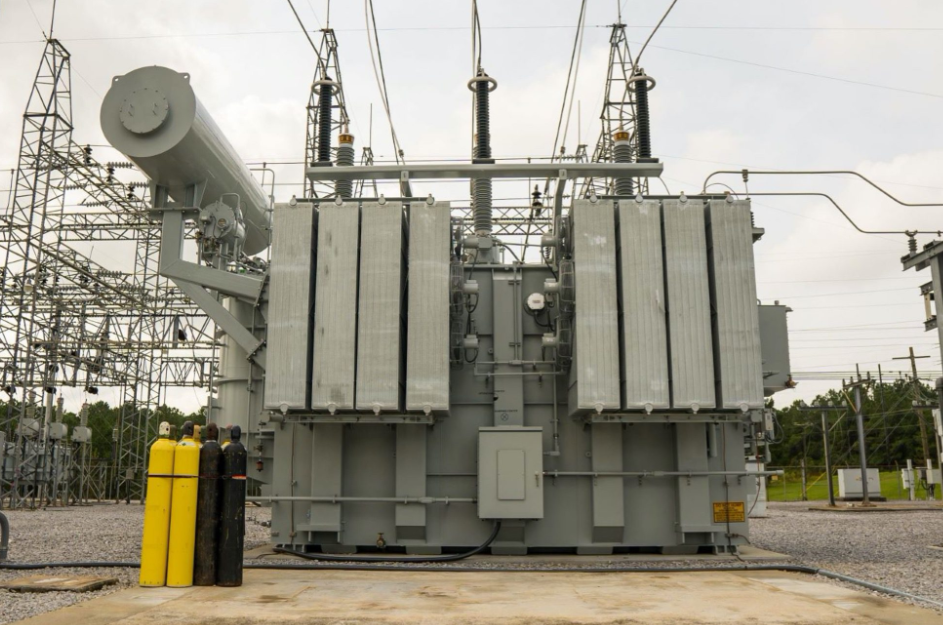
The U.S. power grid faces a deepening equipment crisis, with power transformer lead times reaching record highs and constraining everything from routine repairs to major new infrastructure projects. According to recent industry data, standard power transformer delivery times now average 128 weeks (nearly 2.5 years), while generator step-up (GSU) transformers average 144 weeks, with some specialized orders stretching to four years.
This bottleneck—driven by explosive demand and persistent supply constraints—has made transformers the primary gating factor for industrial growth, grid modernization, and new power generation connections, surpassing traditional hurdles like capital or permitting.
The Scale of the Shortage
Demand for power transformers has surged 119% since 2019, while GSU transformer demand has exploded by 274% over the same period. Distribution transformer prices have risen 78–95% since 2019, and power transformer prices are up 77%.
Wood Mackenzie’s Q2 2025 analysis projected a 30% supply deficit for power transformers and a 10% deficit for distribution transformers in 2025, with imports filling much of the gap (approximately 80% of large power transformers and 50% of distribution transformers).
These trends persisted into 2026, with lead times remaining elevated and prices continuing to climb. The North American Electric Reliability Corporation (NERC) noted lead times exceeding 120 weeks as early as 2024, a trajectory that has only worsened.
Root Causes: Surging Demand Meets Constrained Supply
Multiple demand drivers are converging simultaneously without relief:
- AI data center expansion — Hyperscale facilities require massive, reliable power delivery.
- Industrial electrification — Factories shifting processes to electric power.
- Grid modernization and aging infrastructure replacement — More than half of U.S. distribution transformers (roughly 40 million units) are beyond their expected service life.
- Renewable energy integration and load growth — Electricity consumption has risen 7% since 2020 after a prior decade of decline.
On the supply side, domestic manufacturing capacity has not kept pace. Approximately 80% of large power transformers are imported, primarily from Mexico and South Korea, exposing the U.S. to global supply chain pressures, shipping delays, and foreign demand competition.
Critical materials play a central role. Grain-oriented electrical steel (GOES), essential for efficient transformer cores, has only one domestic producer: Cleveland-Cliffs (facilities in Pennsylvania and Ohio). Domestic GOES output meets only about one-fifth of demand, forcing heavy reliance on imports. Copper prices have also risen sharply (over 50% since 2020 in relevant periods), adding cost pressure.
U.S. Domestic Production Increases: Progress and Limitations
The U.S. has seen meaningful investment in domestic manufacturing, which could help alleviate long-term pressures:
- Hitachi Energy committed over $1 billion, including a new large transformer facility in South Boston, Virginia (online 2028) and a component plant in
- Tennessee (mid-2027).
- Siemens Energy expanded spending in North Carolina to $421 million, with a new transformer factory in Charlotte coming online in 2026.
- GE Vernova completed the acquisition of Prolec GE in early 2026 to strengthen North American capacity.
- Other players (Hyosung HICO, WEG) are also investing.
Federal support has included the Defense Production Act invocation for grid components and prior incentives under the Inflation Reduction Act and related programs. Total announced North American transformer production investments exceed $2 billion, with new capacity ramping up through 2028.
How this helps: Increased domestic output will gradually reduce import dependence, shorten lead times as capacity comes online, create high-skill manufacturing jobs, and improve supply chain resilience and national security. Long-term agreements and slot reservations are already providing manufacturers with the certainty needed to invest.
Limitations: New capacity will not fully close the gap in the next 3–5 years because demand growth shows no signs of slowing. Some planned projects (e.g., Cleveland-Cliffs’ proposed distribution transformer plant in Weirton, WV) have been canceled due to partnership and financial factors. Labor shortages for specialized manufacturing skills remain a constraint.
Impacts on Repairs, New Installations, and New Power Sources
The shortage directly delays repairs and replacements of aging equipment, raising outage risks during storms or peak demand. Utilities report that equipment availability—not funding—now dictates timelines.
New installations face even greater hurdles. Long lead times force out-of-sequence construction, higher financing costs, and deferred revenue. Some developers are procuring transformers early (at premiums) or exploring on-site generation to bypass grid delays.
New power sources attached to the grid are significantly impacted. Interconnection queues already exceed 2,600 GW of proposed generation and storage. Transformers and associated substation equipment are essential for connecting new renewables, gas-fired plants (especially for data center backup), and other sources. Delays here slow the energy transition, hinder clean energy deployment, and constrain economic growth in high-demand areas.
Which States Are Most Impacted?
Hotspots include:
- Virginia — Epicenter of data center growth (especially Northern Virginia), driving concentrated load increases and grid strain.
- Texas — Major data center expansion combined with rapid overall load growth and energy market dynamics.
Other areas with high industrial activity, aging infrastructure, or renewable development pipelines (e.g., parts of the Midwest, Southeast, and Southwest) also face acute pressure, though data centers in VA and TX are frequently cited as primary flashpoints.
What Consumers and Investors Should Watch
Consumers should monitor:
- Potential upward pressure on electricity rates as utilities recover higher equipment and project costs.
- Grid reliability reports from NERC and local utilities.
- Delays in new housing, industrial, or commercial projects that require grid connections.
Investors have opportunities in:
- Utilities with aggressive capex plans in high-growth regions (strong rate base growth potential).
- Equipment manufacturers (Hitachi Energy, Siemens Energy, GE Vernova) benefiting from long-term orders.
- Material suppliers (copper producers, Cleveland-Cliffs for GOES/electrical steel).
Watch policy developments on domestic manufacturing incentives, tariffs, and grid modernization funding.
Risks include project delays affecting near-term earnings and potential policy shifts affecting incentives.
Outlook
The transformer shortage represents a multi-year structural challenge rather than a temporary disruption. While domestic production expansions are a positive step toward greater self-reliance, they will take time to scale meaningfully. In the interim, imports, early procurement, refurbishments, and innovative project sequencing will remain essential.
Policymakers, utilities, and developers must prioritize long-term supply agreements, workforce development, and further domestic capacity to ensure grid reliability supports AI-driven growth, electrification, and the clean energy transition.
- ZeroHedge / Industrial Sage: “Power Transformer Lead Times Hit Record Highs As US Grid Equipment Shortage Deepens” (May 2026) — https://www.zerohedge.com/markets/power-transformer-lead-times-hit-record-highs-us-grid-equipment-shortage-deepens and https://www.industrialsage.com/power-transformer-lead-times-us-grid-shortage/
- Wood Mackenzie: “Power transformers and distribution transformers will face supply deficits of 30% and 10% in 2025” (Aug 2025) — https://www.woodmac.com/press-releases/power-transformers-and-distribution-transformers-will-face-supply-deficits-of-30-and-10-in-2025/
- Reuters: “US power transformer buyers scramble for imports, factory slots” (May 11, 2026) — https://www.reuters.com/business/energy/us-power-transformer-buyers-scramble-imports-factory-slots–reeii-2026-05-11/
- Additional supporting data from NERC reports, DOE/NIAC transformer supply chain analyses (2024), and industry updates referenced in the above sources.
This article draws on the latest available industry analyses as of mid-2026. The situation remains dynamic, and readers should consult primary sources for the most current developments.