In a stark display of policy versus practice, European Union buyers snapped up every single cargo of liquefied natural gas (LNG) from Russia’s Yamal LNG project in February 2026—the first time since April 2018 that all shipments headed straight to EU ports. This comes as the bloc ramps up rhetoric about energy independence, with a full ban on Russian LNG set to kick in on January 1, 2027. The irony is palpable: while EU leaders trumpet sanctions and diversification, their markets remain hooked on Arctic-sourced Russian gas, funding Moscow’s coffers amid ongoing geopolitical tensions. When will this hypocrisy be called out? Perhaps only when President Vladimir Putin decides to redirect Russia’s LNG, oil, and natural gas exports away from Europe entirely, forcing the EU to confront the real costs of its indecision.
The Yamal LNG Purchases: A Verified Snapshot of Dependence
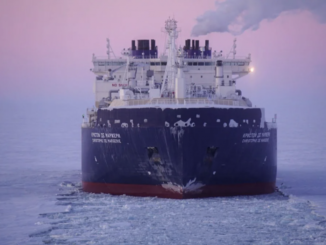
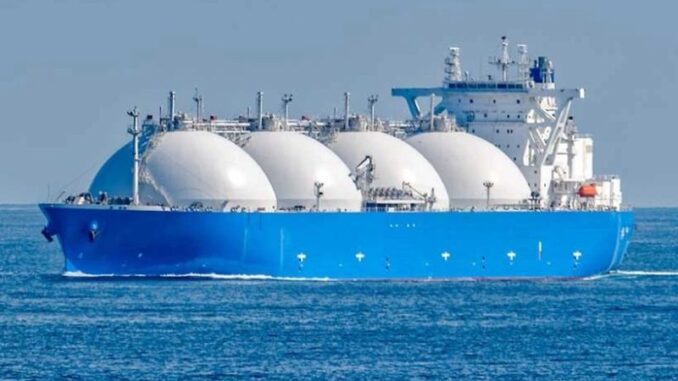
According to a detailed report from gCaptain, published on March 9, 2026, the Yamal LNG facility—Russia’s flagship Arctic export hub—shipped 21 cargoes totaling 1.54 million tonnes in February alone, all destined for European terminals. This marks a complete reliance on EU buyers, with zero shipments diverted to Asia, unlike in previous years when China and other markets took a share. In January 2026, the EU already absorbed 93% of Yamal’s output, underscoring a trend of increasing imports despite years of sanctions following Russia’s 2022 invasion of Ukraine.The infrastructure enabling this? Predominantly European. Seventeen of the 21 cargoes were transported by EU-based shipping firms like the UK’s Seapeak and Greece’s Dynagas, using specialized Arc7 ice-class tankers. European insurers cover the risks, and the project’s logistics remain untouched by broader sanctions. As gCaptain’s analysis notes, this highlights a “disconnect between EU policy intentions and market realities,” where short-term supply pressures—such as tensions in the Strait of Hormuz—override long-term geopolitical goals. The report, authored by maritime expert Malte Humpert, paints a picture of Europe as Russia’s “most reliable customer,” even as the bloc pursues energy independence.
This isn’t an isolated incident. EU imports of Russian LNG rose 18% in 2024, per energy think tank Ember, driven by demand in countries like Italy, Czechia, and France. Despite no overall growth in EU gas consumption that year, Russian revenues from these sales continued to flow, exposing the fragility of Europe’s diversification efforts.
Europe’s Lingering Reliance on Russian Gas: The Numbers Don’t Lie
Russia’s share of EU gas imports has plummeted since 2021, when it supplied around 40-45% of the bloc’s needs. By 2025, that figure stood at approximately 13% for combined pipeline gas and LNG, according to the European Council and Eurostat data. Pipeline imports from Russia dropped to just 6% of total EU gas, while LNG from Russia accounted for 15-19% of the EU’s LNG imports in 2024-2025, equating to roughly 40-50 billion cubic meters (bcm) annually across all forms.
These percentages, while reduced, still represent a critical vulnerability. The EU imported over 140 bcm of LNG in 2025, with Russia as the second-largest supplier behind the US. Countries like France, Spain, and Belgium alone accounted for 85% of Europe’s Russian LNG imports in 2024, spending an estimated €6.3 billion. As the Institute for Energy Economics and Financial Analysis (IEEFA) warns, this ongoing trade risks overinvestment in fossil fuels, with EU LNG import capacity set to exceed demand by 26% by 2030 if trends continue.
The Planned Ban: Timeline and Challenges
The EU’s response has been a stepwise ban formalized in Regulation (EU) 2026/261, adopted in January 2026 as part of the REPowerEU initiative. Spot-market Russian LNG imports are prohibited starting early 2026, with short-term contracts (signed before June 2025) banned from April 2026 for LNG and June 2026 for pipeline gas. Long-term contracts face a cutoff on January 1, 2027, for LNG and September 30, 2027 (potentially extendable to November 1), for pipeline supplies. A full phase-out of all Russian gas is targeted by late 2027, with penalties for non-compliance and mandatory national diversification plans.
This timeline aims to “deplete Putin’s war chest,” as European Commission President Ursula von der Leyen put it, but it leaves room for loopholes—like shadow vessels or indirect purchases—that could prolong dependence. Hungary has already signaled plans to challenge the ban in court, highlighting internal divisions.
Solving the Energy Crisis: Alternatives Without Russian Gas
The good news? Analysts agree the EU can wean itself off Russian gas without triggering a new crisis, thanks to declining demand, spare infrastructure, and rapid diversification. EU gas consumption is projected to fall 29% from 2024 levels by 2030 and 67% by 2040, per various forecasts, driven by efficiency gains and renewables.
Key strategies include:
Boosting Non-Russian LNG Supplies: The US already provides 50-60% of EU LNG, with 2025 imports hitting a record 284 bcm—a 23% rise from 2024. New US capacity online since late 2024 exceeds Russia’s entire EU exports. Qatar, Norway (30% of 2025 supplies), and Algeria (15%) are stepping up, with no need for new EU import terminals—utilization rates sat below 40% at half of them in 2024.
Accelerating Renewables and Efficiency: The Oxford Sustainable Finance Group estimates Europe can replace Russian gas entirely with wind, solar, heat pumps, and efficiency measures by 2028, offsetting half the investment costs through fuel savings. In 2025, wind and solar generated more electricity than fossil fuels for the first time in EU history, per Ember. The International Energy Agency (IEA) echoes this, noting the bloc can cut Russian imports by two-thirds via its “Fit for 55” package alone.
Diversifying Pipelines and Reducing Demand: Spare LNG capacity and alternative routes (e.g., from North Africa and the UK) ensure supply security. REPowerEU emphasizes energy savings in homes and industry, with no extension needed for coal power or new gas infrastructure.
Electricity and gas prices have stabilized in 2026 after the 2022-2023 volatility, reflecting these shifts. The EU’s approach balances energy security with its Green Deal, avoiding a scramble for new fossil deals that could lock in emissions.
Putin’s Potential Response: A Redirect That Could Backfire
If the EU drags its feet, Putin might preemptively redirect exports, as he’s hinted amid escalating tensions. Russia has already suggested pivoting to Asia, but logistics limit this—Yamal’s Arc7 tankers are optimized for European routes, and Asian demand hasn’t fully absorbed surpluses. A sudden cutoff could spike global prices temporarily, but with Russia’s 2025 exports already down 10% to Europe, the impact would hit Moscow harder, losing a key revenue stream (EU payments topped €7 billion for LNG alone in 2024).
Putin could weaponize supplies earlier, as in 2022, but this would accelerate Europe’s transition, validating the ban. As gCaptain notes, Moscow’s threats to redirect are “unlikely due to logistical realities,” leaving Russia more isolated in a market flooded with US and Qatari LNG.
Time to End the Charade
The February 2026 Yamal purchases expose the EU’s hypocrisy: preaching independence while propping up Russia’s energy empire. With viable alternatives in place—US LNG, renewables, and efficiency—the bloc has no excuse for delay. If Putin pulls the plug first, it might be the wake-up call Europe needs. Until then, the question remains: How much longer will policy lag behind reality in the face of an energy crisis that’s entirely solvable?
Get your CEO on the #1 Energy Podcast in the United States: https://energynewsbeat.co/energy-news-beat-media-kit/
Is oil and gas right for your portfolio? https://energynewsbeat.co/invest/