


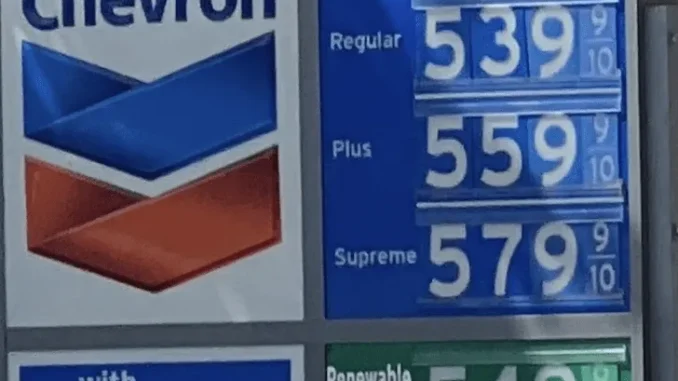
Gasoline prices have surged to a national average of around $3.79 per gallon as of mid-March 2026, with some regions seeing diesel climb toward $4.86 and isolated spots hitting over $6. That’s a roughly 25% jump in just 17 days, driven largely by supply disruptions tied to the ongoing U.S.-Iran conflict and tensions in the Strait of Hormuz.
Economist Peter St. Onge (@profstonge) nailed the frustration in his latest video post: “Gas prices just hit $3.70 — up 25% in 17 days.
Gas prices just hit $3.70 — up 25% in 17 days.
There’s 5 ways Congress and states can immediately lower gas prices by up to $1.10.
This could make gas *cheaper* than before the war. pic.twitter.com/LzEQURqnO7
— Peter St Onge, Ph.D. (@profstonge) March 17, 2026
There are 5 ways Congress and states can immediately lower gas prices by up to $1.10. This could make gas cheaper than before the war.”The Trump administration isn’t powerless. While long-term “Drill Baby, Drill” policies will boost domestic supply, here are the immediate levers the President, Congress, and states can pull right now — many of which align directly with the options Prof. St. Onge highlights in his video.
These steps can deliver quick relief at the pump without waiting years for new wells.
1. Tap the Strategic Petroleum Reserve (SPR) — Executive Action
The President and Energy Secretary can authorize releases from the SPR during supply shocks. The Biden-era 2022 release of 200 million barrels cut gas prices by an estimated 17–42 cents per gallon. A targeted release today could cool markets fast and buy time while production ramps up. Trump has already signaled he’s reviewing every tool — this one is ready to deploy.
2. Pause Federal and State Fuel Taxes — Needs Congress + State Legislatures
Federal gas tax: 18.4¢/gallon
Federal diesel tax: 24.4¢/gallon
Average state gas tax: 30–50+¢/gallon (varies widely)
Suspending these taxes (as Prof. St. Onge emphasizes, Congress and states can do immediately) could deliver 50–80 cents of direct relief per gallon. States like Florida, Texas, and Georgia have done short-term suspensions before.
Congress can act on the federal portion via simple legislation. Combined with state action, this alone gets you most of the way toward that $1.10 drop St. Onge mentions.
3. Relax Summer Gasoline Rules & Ethanol Blending Waivers — EPA + Executive
The EPA’s summer ban on E15 (higher-ethanol blends) is designed to limit evaporation, but it shrinks supply exactly when demand spikes. Temporary waivers — already used in emergencies — expand the gasoline pool and can shave 5–15 cents off prices. The administration can issue these quickly and pair them with broader refinery regulatory relief to boost output.
4. Waive the Jones Act — National Defense/Emergency Authority
The 1920 Jones Act requires U.S.-flagged ships for domestic transport, inflating costs for moving oil and refined products. A temporary waiver (already done in past crises) lets cheaper foreign vessels help move fuel where it’s needed most. Experts say combining this with an SPR release multiplies the impact.
5. Restrict U.S. Oil Exports (Short-Term Emergency Measure)During a declared national emergency, the President can limit crude exports to keep more American oil at home. This keeps domestic supply higher and prices lower in the near term. It’s controversial long-term (it can discourage drilling), but as a bridge measure while new production comes online, it’s on the table.
Bonus Administration Moves Already in Motion
Navy escorts & insurance for tankers through the Strait of Hormuz (Trump announced this).
Defense Production Act to fast-track offshore and pipeline projects (DOJ opinion already supports overriding state blocks in California).
Deregulation sprint — Trump’s team is already slashing red tape on refining, permitting, and fuel standards that the prior administration layered on.
Bottom Line: Relief Is Within Reach
Prof. St. Onge is right — Congress and states acting together on taxes plus smart executive moves on SPR, waivers, and rules could drop prices by up to $1.10 per gallon almost immediately. That puts gas back below pre-conflict levels and gives families breathing room.
The Trump administration has made clear it’s “looking under every rock” to lower energy costs. With Republican majorities in Congress, the political runway exists to pass tax suspensions and backstop executive actions. Long-term, expanded drilling, more refineries, and LNG export growth will make America the dominant energy superpower again — exactly as Trump promised.
Americans are watching. The tools are there. Now it’s time to use them.
What do you think — should Congress move on a federal gas-tax holiday this week? Stu Turley will be covering this on the next Energy News Beat Stand Up. I personally think it is time to get rid of ethanol and the Jones Act, and save a lot of money
Drop your thoughts below and stay tuned to Energy News Beat for updates as the administration rolls out its plan.
Get your CEO on the #1 Energy Podcast in the United States: https://sandstoneassetmgmt.com/media/
Is oil and gas right for your portfolio? https://energynewsbeat.co/invest/





Be the first to comment