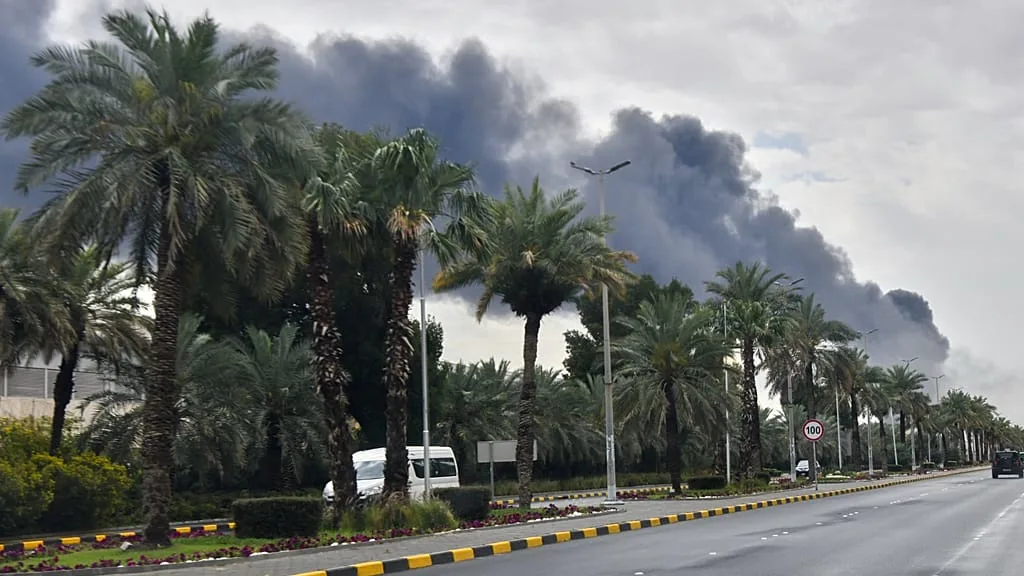
In a sharp escalation of the ongoing 2026 Iran conflict, Iranian drones and missiles struck Kuwait International Airport overnight on June 2-3, hitting Terminal One and causing significant material damage. Kuwaiti authorities reported at least one fatality and dozens of injuries (with some sources citing up to 63 wounded), prompting the immediate suspension of all air traffic and the diversion of flights to other airports. Emergency procedures were activated as debris and fires were visible in the terminal area.
Iran’s Revolutionary Guard claimed responsibility, describing the strikes as retaliation for recent U.S. military actions and issuing a direct warning to Gulf states supporting American operations. At the same time, U.S. Central Command confirmed it had intercepted additional Iranian projectiles targeting Kuwait and Bahrain before launching retaliatory strikes on an Iranian military control facility on Qeshm Island, near the Strait of Hormuz.
The attack marks one of the most direct Iranian strikes on Gulf civilian infrastructure since the conflict began earlier this year. Kuwait, which hosts major U.S. military facilities and serves as a critical logistics hub, had largely avoided becoming a primary target until now. The incident follows a pattern of Iranian retaliation that has increasingly drawn in regional states.
In response, the UAE called for a unified Gulf Cooperation Council (GCC) stance. Presidential advisor Anwar Gargash stated on X: “In light of Iran’s repeated aggression against the brotherly states of Kuwait and Bahrain, a firm, unified and cohesive Gulf stance is imperative. No Gulf state should be left to face these attacks alone, because the security of the GCC states is interconnected, their interests are shared, and their destiny is one and the same.”
LNG Tankers Amass in the Gulf of Oman – “Going Dark” to Navigate Hormuz
While the strikes dominate headlines, energy markets are closely watching developments at the Strait of Hormuz—the world’s most critical energy chokepoint. Bloomberg energy reporter Stephen Stapczynski noted today that empty LNG tankers linked to Qatar and Abu Dhabi National Oil Company (ADNOC) are amassing in the Gulf of Oman, raising questions about whether operators are preparing fresh runs through the strait.
Qatar has not yet sent an empty LNG tanker inbound through Hormuz during the current crisis but has managed a limited number of loaded outbound shipments. ADNOC, however, has been more active in testing the route. Multiple reports confirm that both producers have relied on “dark transits”—deliberately switching off Automatic Identification System (AIS) transponders—to slip tankers past heightened risks.
As recently as late May 2026, three tankers (including LNG carriers) exited the Strait of Hormuz with transponders off, heading toward destinations in India and China. ADNOC-controlled vessels such as the Umm Al Ashtan, Mraweh, and Al Hamra have been documented making dark inbound and outbound transits to reload at Das Island. Qatar has similarly instructed chartered and owned tankers to go dark near Ras Laffan and during Hormuz crossings. Satellite imagery and shipping analytics from firms like Vortexa and Kpler continue to show activity at export terminals even when AIS signals vanish.
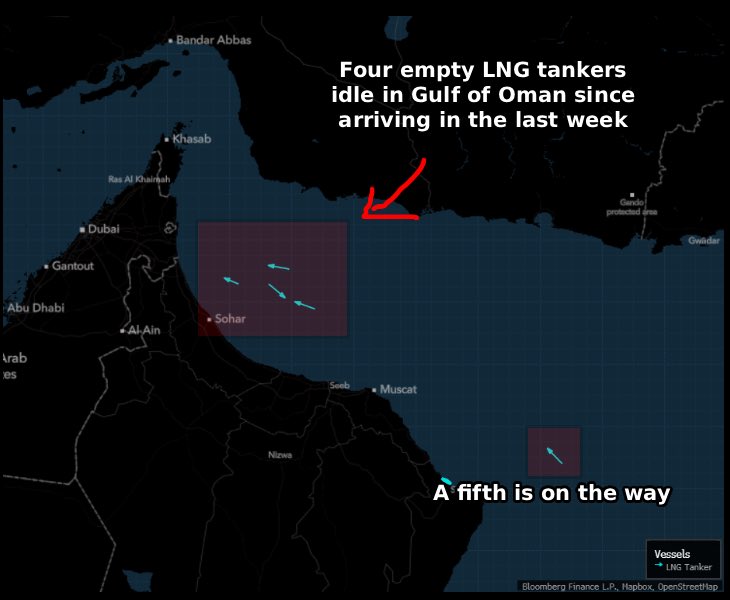
These shadow operations reflect the extreme risk calculus now governing Gulf energy exports. Empty tankers carry no cargo revenue to offset potential hull damage or insurance losses, making each transit a high-stakes gamble. Yet with force majeure declarations still in effect at some terminals and global LNG buyers facing tight supplies, producers appear willing to test the waters—literally—as diplomatic and military pressures fluctuate.
Broader Implications for the End of the War
The Kuwait airport strike and the parallel U.S. retaliation on Qeshm Island underscore how quickly Gulf security and energy infrastructure can become entangled in the broader U.S.-Iran confrontation. While President Trump has repeatedly signaled that negotiations with Tehran remain active and could yield a broader agreement “within days,” the latest violence complicates the path to de-escalation.
For Gulf states, the attacks raise the direct cost of hosting U.S. forces and supporting allied operations. Energy exports—already constrained by the partial closure of Hormuz—face renewed uncertainty. Even limited dark-transit success by Qatar and ADNOC demonstrates resilience, but it is no substitute for open, safe passage. Any sustained disruption risks higher global LNG and oil prices, supply chain volatility, and pressure on Asian buyers who depend heavily on Gulf cargoes.The strikes may also serve as leverage in talks. Iran has framed its actions as proportionate responses, while Gulf states and the U.S. emphasize the need for de-escalation to protect civilian and economic interests. Whether this latest round accelerates a ceasefire or hardens positions remains to be seen. What is clear is that the stakes for Gulf energy security—and by extension, global markets—have risen once again.
Appendix: Sources and Links
- OilPrice.com article (primary reference for strike details and analysis): https://oilprice.com/Latest-Energy-News/World-News/Iranian-Strike-On-Kuwait-Airport-Raises-Stakes-For-Gulf-States.html (Charles Kennedy, June 3, 2026)
- X post by Stephen Stapczynski (@SStapczynski) on empty LNG tankers: https://x.com/SStapczynski/status/2062113782504325356 (June 3, 2026)
- Supporting reporting on Kuwait strike: Al Jazeera, The Hindu, The New York Times, BBC, Reuters, Arab News (various live updates, June 3, 2026).
- LNG tanker “dark transit” coverage: Bloomberg/Energy Connects (May 8, 2026), Reuters (May 28–June 2, 2026), Vortexa/Kpler shipping data referenced in multiple outlets.
Energy News Beat will continue to monitor developments in the Gulf and their direct impact on global energy flows.