
High fuel prices are likely to persist even if crude oil prices ease in the coming months. Global refining capacity remains critically constrained by the ongoing wars involving Iran (including the Strait of Hormuz disruption under Operation Epic Fury) and Russia-Ukraine, according to warnings from the chief executives of ExxonMobil and Chevron.
On recent earnings calls, ExxonMobil CEO Darren Woods emphasized that available global refining capacity relative to demand is lower than he has ever seen. “With all that supply out, we’re well below available capacity, frankly, that I’ve ever seen,” Woods said. “It’s going to take a while for the industry to kind of climb its way out of that hole.” He pointed to Iran’s effective closure of the Strait of Hormuz, removing about 3 million barrels per day (bpd) of refining capacity, combined with limited product exports from China and Russia (the latter hit by sustained Ukrainian attacks on its refineries). In total, at least 5 million bpd of capacity was offline. Exxon’s own refineries delivered record diesel production in the second quarter, and Woods anticipates a “very robust refining market with very high margins” ahead. He stressed the shortage could have a “significant impact on consumers and people’s pocketbooks,” while the company pushes hard to maximize output.
Chevron CEO Mike Wirth echoed the tightness. The company’s refineries ran at record rates, with crude unit throughput of 1.07 million bpd and utilization above 97 percent. “I think we’re going to see some upward pressure on product pricing here into the third quarter and perhaps beyond that,” Wirth said. Global diesel and heating oil supplies look particularly tight as countries stockpile ahead of winter. He does not expect the supply crunch to ease soon, though he sees limited evidence so far of lasting structural demand destruction.
U.S. refineries are operating near maximum levels—around 97 percent of operable capacity in recent data—helping fill some of the global gap but leaving little spare room. American refiners deferred much of their typical spring maintenance to capture strong margins and demand, running hard through the first half of the year with average shutdowns far below recent norms. This high utilization raises the risk of unplanned outages, especially with hurricane season underway and a more typical maintenance cycle expected in the second half of 2026 or beyond.
Reports earlier in 2026 indicated that war-related damage, run cuts, and feedstock constraints had taken nearly 9 percent of global refining capacity offline at peaks (against roughly 100+ million bpd of worldwide capacity), with more recent assessments citing 4.5–5+ million bpd reductions in throughput or available capacity. Demand has not fallen by a comparable amount; while some short-term demand destruction appeared in certain Asian markets, overall petroleum product demand has held relatively firm, amplifying the imbalance.
The Jones Act Waiver’s Role in Domestic Balancing
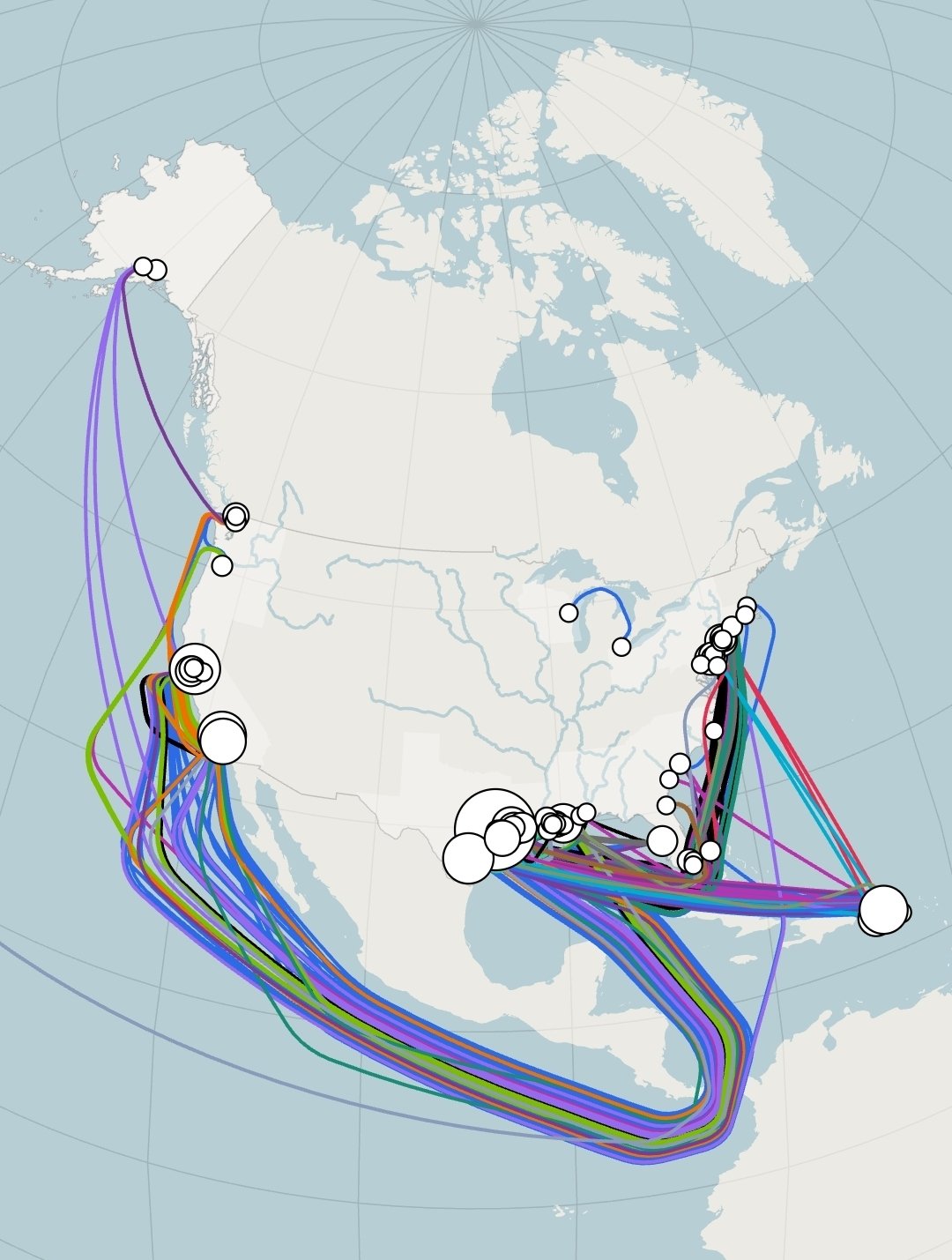
Against this backdrop, the Trump administration’s emergency Jones Act waiver—issued March 17, 2026, at the request of the Department of War (now supporting military logistics under Operation Epic Fury) and later extended through mid-August—has enabled significant domestic movements of crude and refined products on foreign-flagged vessels. Normally, the century-old law restricts coastwise trade to U.S.-built, -owned, and -crewed ships, limiting capacity and raising costs.
By late July 2026, data tracked roughly 148–162 voyages moving approximately 49.5 million barrels of cargo under the waiver. Key volumes included gasoline (around 13–14 million barrels), crude oil (similar scale), diesel/ULSD, jet fuel, renewable fuels, naphtha, and other products, plus some fertilizers and ammonia. Primary flows ran from Gulf Coast ports (Texas and Louisiana) to the West Coast (especially California), East Coast, Florida, Puerto Rico, and Alaska. Earlier snapshots showed more than 3 million barrels of gasoline, diesel, jet fuel, and crude already reaching California alone, with additional cargoes supporting other regions.
These shipments helped balance regional energy costs and supplies by unlocking cheaper foreign tanker capacity when the limited Jones Act fleet was fully employed. They addressed shortfalls on the West Coast (hit by prior refinery closures and lost Middle Eastern crude access), supported Puerto Rico, and allowed faster movement of Gulf Coast products and even Strategic Petroleum Reserve crude. Analysts note the volumes met or exceeded historical baselines on many routes and revealed previously suppressed domestic demand. However, the overall impact on national pump prices has been limited: shipping rates remained elevated, total volumes were modest relative to U.S. consumption, and exports of clean products continued at high levels. National average gasoline prices recently hovered around $4.10 per gallon (nearly $1 higher year-over-year), with California far higher.
Implications for Consumers and Investors
For consumers, the message is clear: elevated gasoline, diesel, and heating oil prices are likely to endure into the third quarter and potentially longer. U.S. refiners are already near full tilt and cannot easily expand output further to offset global shortfalls. Deferred maintenance raises the chance of sudden capacity losses, while winter stockpiling could tighten middle distillates further. Households and businesses face sustained higher costs at the pump and for freight, with limited near-term relief even if crude softens.
For investors, the environment favors integrated majors and pure-play refiners with strong domestic capacity. Exxon and Chevron posted sharply higher refining profits in the second quarter—Exxon turning around to billions in earnings on strong Gulf Coast runs and record diesel; Chevron’s refining segment surged several-fold—driven by elevated crack spreads. High utilization, robust margins (with forecasts of continued strength into year-end), and the ability to capture both upstream and downstream upside support earnings and cash flow. Risks include potential demand destruction if prices stay high too long, unplanned outages, policy changes around the Jones Act waiver expiration, and geopolitical de-escalation that could eventually ease product tightness. Refining stocks have already responded positively to record crack spreads in recent months.
In short, the combination of war-damaged and constrained global refining, resilient demand, maxed-out U.S. plants approaching maintenance, and partial domestic shipping relief via the Jones Act waiver points to a prolonged period of elevated fuel prices. Consumers will feel the pinch; investors in well-positioned energy companies stand to benefit from the margin environment—while watching carefully for the next round of operational or geopolitical shifts.
Appendix: Sources and Links
- Bloomberg article (title and context): https://www.bloomberg.com/news/articles/2026-08-01/exxon-chevron-warn-fuel-prices-to-endure-as-war-knocks-refining
- Politico coverage of Exxon/Chevron warnings: https://www.politico.com/news/2026/07/31/oil-refining-limits-prices-high-01020385
- CNBC on Exxon/Chevron earnings and refining: https://www.cnbc.com/2026/07/31/exxon-xom-chevron-cvx-q2-earnings.html
- Reuters on global refining capacity offline (nearly 9%): https://www.reuters.com/business/energy/iran-ukraine-wars-deliver-worst-hit-years-oil-refining-output-2026-05-13/
- Argus/Vitol on >5 million bpd refining cut: https://www.argusmedia.com/en/news-and-insights/latest-market-news/2813348-war-cuts-global-refining-by-over-5mn-b-d-vitol
- IEA/Forbes references to ~4.5 million bpd reductions: https://www.forbes.com/sites/garthfriesen/2026/07/23/refining-stocks-soar-as-crack-spread-hits-record-high-in-2026/
- Cato Institute Jones Act Waiver Tracker (voyages, ~49.5 million barrels): https://www.cato.org/jones-act-waiver-tracker
- gCaptain on Jones Act waiver shipments and California flows: https://gcaptain.com/jones-act-waiver-reshapes-u-s-oil-trade-as-foreign-tankers-flood-domestic-routes/
- Reuters/CBP and White House on initial 60-day waiver (March 2026) and extensions: https://www.reuters.com/world/us/us-expected-issue-jones-act-waiver-domestic-shipping-soon-wednesday-sources-say-2026-03-18/
- Oilprice and related on extension through August: https://oilprice.com/Latest-Energy-News/World-News/Trump-Extends-Jones-Act-Shipping-Waiver-Through-August.html
- American Energy Alliance / Energy Now on U.S. high utilization and deferred maintenance: https://www.americanenergyalliance.org/2026/06/u-s-refiners-keeping-american-families-on-the-road/ and https://energynow.com/2026/06/us-crude-refiners-are-pushing-run-rates-to-maximum-levels/
- Industrial Info and EIA references to 2026 utilization, closures, and maintenance patterns: https://www.industrialinfo.com/iirenergy/industry-news/article/us-refineries-prepare-for-maintenance-ahead-of-a-busy-2026–351253
- AAA/pump price context via secondary reports: referenced in Politico and Reuters analyses of waiver impact.
- Additional waiver impact assessments: https://journalrecord.com/2026/05/27/trump-jones-act-waiver-limited-impact-gasoline-prices/
All figures and statements are drawn from publicly reported earnings commentary, government and industry trackers, and contemporaneous news coverage as of early August 2026.