


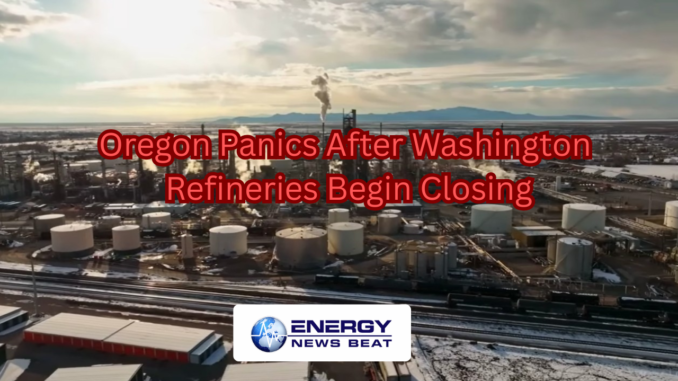
In a dramatic escalation of California’s aggressive push toward green energy, Governor Gavin Newsom’s policies on oil and gas have rippled beyond state borders, igniting concerns in Oregon and Washington. What began as a targeted “war on fossil fuels” in the Golden State has now “exploded” into neighboring regions, with refinery closures in California threatening fuel supplies for the Pacific Northwest. Oregon Governor Tina Kotek has voiced urgent alarm over the potential fallout, highlighting vulnerabilities in Portland’s fuel distribution network and the broader implications for consumers across the West Coast.
This article delves into the key developments, identifies the critical refineries in Washington State now facing shutdown risks, the companies involved, and the harsh realities consumers are confronting amid these critical closures.
Newsom’s Policies: A Catalyst for Closures
Governor Newsom’s administration has long championed ambitious climate goals, including a net-zero emissions target by 2045 and stringent regulations on fossil fuel operations. These policies have accelerated the conversion or outright closure of refineries in California, where refiners cite regulatory burdens, declining demand for traditional fuels, and economic unviability as primary reasons for exiting.
In recent months, two major facilities have been hit hard:
Phillips 66 Los Angeles Refinery: This plant, with a capacity of 139,000 barrels per day, ceased operations in late 2024 (with full impacts felt into 2025), erasing a significant chunk of California’s refining output.
Valero Benicia Refinery: Set to end petroleum refining by April 2026, this Bay Area facility will remove another 145,000 barrels per day from the market.
These moves represent a 17% loss in California’s in-state refining capacity within the next 12 months, escalating to 20% over 18 months.
Critics argue that Newsom’s mandates, including minimum fuel storage requirements imposed by the California Energy Commission, have forced refiners’ hands, leading to divestments and shutdowns.
Phillips 66, for instance, is offloading $3 billion in assets as part of a broader retreat from West Coast operations.
While proponents see these changes as a step toward sustainable biofuels (e.g., conversions to renewable diesel), the reality is a sharp drop in overall fuel production—often to just 20-30% of original capacity.
This shortfall isn’t isolated to California; it directly affects interconnected supply chains in Oregon and Washington, where pipelines and shared markets amplify the pain.The Ripple Effect: From California to Oregon and PortlandOregon, lacking any in-state refineries, relies almost entirely on imports—primarily from Washington’s five refineries, which supply about 90% of its gasoline via the Olympic Pipeline to Portland’s storage terminals.
With daily demand hovering around 100,000 barrels, Oregon operates as a “fuel island,” vulnerable to disruptions. Governor Kotek has publicly panicked over the cascading effects, warning of potential supply shortages and price spikes that could cripple Portland’s economy.
Recent incidents, like the September 2025 Olympic Pipeline shutdown, have already caused immediate price surges, underscoring the fragility.
The “explosion” in Oregon stems from California’s reduced output, forcing greater dependence on Washington refineries, which are themselves under siege from similar climate policies. Washington’s Clean Energy Transformation Act mandates 100% clean electricity by 2045 and net-zero emissions by 2050, pressuring refiners to adapt or exit. A state government study predicts that all five Washington refineries will need to alter their product mixes or functions by 2050, likely resulting in lower volumes and potential full shutdowns.
Critical Refineries in Washington Now Facing Shuttering Risks
While no Washington refineries have fully shuttered as of December 2025 due to direct California mandates, Newsom’s policies have indirectly accelerated threats through market pressures and divestments. Phillips 66’s broader asset sales, triggered by California closures, put Washington’s facilities in the crosshairs.
Based on current trends and analyses, here are the critical refineries at highest risk:
|
Refinery Name
|
Location
|
Capacity (Barrels/Day)
|
Status and Risk Level
|
Key Notes
|
|---|---|---|---|---|
|
Phillips 66 Ferndale
|
Ferndale
|
~101,000
|
High Risk of Closure/Divestment
|
Central to Oregon’s supply via Olympic Pipeline; part of Phillips 66’s $3B divestment plan following CA shutdowns. Could see conversion to biofuels, slashing output by 70-80%.
|
|
BP Cherry Point
|
Blaine
|
~225,000
|
Medium Risk
|
Largest in WA; under pressure to shift to renewables but no immediate closure announced.
|
|
Marathon Anacortes
|
Anacortes
|
~119,000
|
Medium Risk
|
Facing state mandates for product changes; potential for reduced operations.
|
|
Shell Puget Sound
|
Anacortes
|
~149,000
|
Low-Medium Risk
|
Recent ownership changes; adapting to clean fuel standards but vulnerable to market shifts.
|
|
US Oil Tacoma
|
Tacoma
|
~42,000
|
Low Risk
|
Smallest; more flexible but still impacted by regional supply chains.
|
These facilities collectively process over 600,000 barrels per day, but conversions or closures could halve effective output.
The Ferndale refinery stands out as the most critical for Oregon, as its potential shuttering would force a pivot to costly Asian imports, with shipping times nearing a month and premiums of $40 per barrel.
Companies Involved in the Turmoil
The primary players navigating these closures include:
Phillips 66: Leading the charge with the LA shutdown and Ferndale divestment, the company is pivoting to renewables but at the expense of traditional refining.
Valero Energy: Responsible for the Benicia closure; focusing on cost-cutting amid regulatory headwinds.
BP, Marathon Petroleum, Shell, and US Oil: Operators of Washington’s refineries, all grappling with state-level climate laws that mirror California’s aggressive stance.
These corporations cite unprofitable margins and policy uncertainty as drivers for exits, though environmental groups applaud the moves as essential for climate progress.
What Consumers Are Facing: Skyrocketing Costs and Supply Woes
The human cost of these closures is stark. In Oregon and Washington, consumers are already paying a premium—gas averages $3.70 per gallon, well above the national $2.95.
If Washington refineries follow suit, experts warn of a shift to 100% imports, potentially tripling prices to $8-$10 per gallon due to added shipping and logistics expenses (an extra $1 per gallon from import premiums alone).
For a typical driver consuming 480 gallons annually, this translates to a fuel bill jumping from $1,776 to $3,840-$4,800—a $2,000-$3,000 annual hit per family. Vulnerable groups like school bus drivers, truckers, and low-income households face the brunt, with no robust backup plans in place.
Oregon’s limited storage (just 10-15 days’ worth, half the national average) heightens risks of shortages during disruptions.
Broader implications include economic strain on Portland’s ports and Washington’s energy sector, potential job losses in refining (thousands affected regionally), and even national security concerns if military fuel supplies are compromised.
As Governor Kotek scrambles for solutions, the West Coast’s energy landscape teeters on the edge, underscoring the tension between climate ambitions and reliable affordability.
This unfolding crisis serves as a cautionary tale: aggressive policies without adequate transitions can backfire, leaving consumers to foot the bill. Stay tuned to Energy News Beat for updates on this volatile situation.
Sources: youtube.com, californiaglobe.com, hydrocarbonprocessing.com

