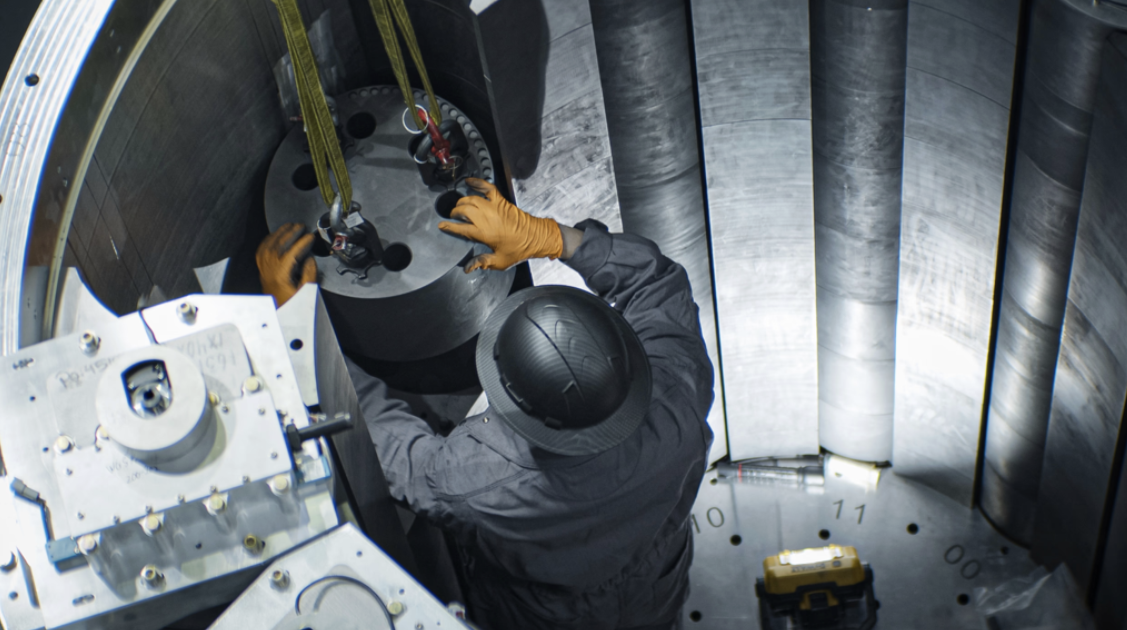
In a landmark achievement for America’s nuclear renaissance, the U.S. Department of Energy (DOE) announced that Deployable Energy’s Unity demonstration reactor successfully achieved criticality on June 30, 2026 (late yesterday), at Idaho National Laboratory (INL). This marks the third DOE-authorized advanced reactor to reach this milestone by the July 4, 2026, deadline set by President Donald Trump in his May 2025 executive order.
The U.S. is now the first country in history to achieve criticality in three unique advanced microreactor designs in a single month. The prior two were Antares Nuclear’s Mark-0 (June 4) and Valar Atomics’ Ward 250 (June 18). This fulfills a precedent-setting directive to reignite nuclear energy innovation and demonstrates the power of streamlined federal processes under the Trump Administration.idahostatejournal.com
Secretary of Energy Chris Wright, who visited the Unity site last week, stated: “Last week, I had the opportunity to see the Unity demonstration reactor firsthand and meet with the talented teams from Deployable Energy, INL, and DOE whose work made this historic moment possible on the eve of our nation’s 250th anniversary. America’s nuclear renaissance is underway because of President Trump’s bold vision and ambitious goals.
Yesterday, we accomplished a significant milestone on a timeline many thought was unachievable. Advanced nuclear technologies like Unity will help power the next generation of American industry, strengthen our energy security, and ensure the United States remains the world’s nuclear innovation leader.
”Bobby Gallagher, Co-Founder and CEO of Deployable Energy, added: “We are proud to be a part of this historic achievement and I want to express Deployable Energy’s gratitude to the administration for setting an audacious goal to have three reactors reach criticality before July 4th, the U.S. Department of Energy for ensuring our ability to meet this goal with safety, quality, and speed, and the Idaho National Laboratory for providing an incredible partnership in execution. I also want to thank my team and supply chain partners of dedicated professionals.”
The Executive Order and Reactor Pilot Program
On May 23, 2025, President Trump signed Executive Order 14301, “Reforming Nuclear Reactor Testing at the Department of Energy.” It directed the DOE to create a pilot program authorizing at least three advanced reactors (using DOE’s Atomic Energy Act authority) with the explicit goal of achieving criticality in each by July 4, 2026 — America’s 250th anniversary.
This led to the Reactor Pilot Program (later evolving into the Nuclear Energy Launch Pad initiative managed by the National Reactor Innovation Center at INL). The program provides a fast-tracked DOE authorization pathway for first-of-a-kind advanced reactor demonstrations, bypassing some traditional hurdles while maintaining rigorous safety standards. It leverages national lab resources, public-private partnerships, and expedited reviews to validate designs quickly.The program selected multiple companies (initially around 10–11, with more on a rolling basis), including Antares Nuclear, Valar Atomics, Deployable Energy, Aalo Atomics, Oklo, and others. It focuses on microreactors and advanced designs suited for rapid deployment, defense applications, remote power, data centers, and industrial heat.
The Three Historic Reactors
Here’s a closer look at the three companies and their breakthrough products:
1. Antares Nuclear – Mark-0 Reactor
The first to achieve criticality (June 4, 2026) under the program at INL.
The Mark-0 is a zero-power fueled criticality demonstration reactor and precursor to Antares’ flagship sodium heat-pipe-cooled, TRISO-fueled microreactor (R1 design). It validates core physics, safety, and instrumentation for their advanced non-light-water technology using high-assay low-enriched uranium (HALEU) TRISO fuel.
This marked the first novel reactor criticality at INL in over 50 years and the first privately developed non-light-water reactor criticality in the U.S. in more than four decades. Antares targets electricity production in 2027 and power to the warfighter by 2028. It has raised significant private capital and partners with DOE, INL, and the U.S.
2. Valar Atomics – Ward 250 Reactor
Achieved criticality on June 18, 2026, at the Utah San Rafael Energy Lab — the first DOE-authorized reactor built and tested outside a national laboratory.
Ward 250 is a high-temperature gas-cooled reactor (HTGR) using helium coolant and TRISO fuel particles in graphite compacts. The test unit is rated at 100 kWt thermal (scalable to ~5 MWe electrical). It features passive safety, modularity, and transportability.
Applications include electricity generation, industrial process heat, hydrogen production, and materials processing. Valar emphasizes a “hardware-first” approach with prior non-nuclear thermal testing (Ward Zero) and aims for rapid manufacturing and deployment to military bases and remote sites.valaratomics.com
3. Deployable Energy – Unity Nuclear Battery
Achieved criticality on June 30/July 1, 2026, at INL — completing the President’s goal.
Unity is a compact 1 MWe gas-cooled microreactor (helium primary loop) using standard low-enriched uranium (4.95% UO₂) fuel — a key advantage for near-term scalability without relying on HALEU. It is factory-built, fully modular, and designed to fit in a standard 20-foot shipping container for true plug-and-play transportability via truck, rail, or air.
The design prioritizes inherent safety, manufacturability at scale, and low cost (targeting ~5¢/kWh for nth-of-a-kind units). It is ideal for remote sites, industrial loads, defense, humanitarian aid, and behind-the-meter applications. Deployable Energy highlights its use of commercially available materials and processes for rapid volume production.
Accelerating the Nuclear Renaissance: How This Momentum Can Be Built Upon
These three criticalities in under a month prove the Trump Administration’s streamlined DOE pathway works. From selection and approval to fueled criticality in roughly 10–12 months for these projects, the model dramatically compresses timelines that previously took decades.
To accelerate further and bring many more online:Expand the Pilot/Launch Pad Program: Continue rolling approvals for additional companies (Aalo Atomics is reportedly close; others like Oklo, Radiant, and more have advanced authorizations). Target 5–10+ additional criticalities in 2026–2027.
Fuel and Supply Chain Scale-Up: Prioritize domestic HALEU production while leveraging LEU designs (like Unity) for faster near-term deployments. Invest in TRISO fuel fabrication and advanced manufacturing.
- Move to Power-Producing Demos: Shift from zero-power tests to electricity-generating demonstrations in 2027, as Antares has outlined.
- Streamline to Commercial Licensing: Use DOE data to fast-track NRC pathways for commercial versions. Reduce regulatory duplication.
- Public-Private Partnerships & Funding: Leverage national labs (INL, etc.), military applications, and private capital (these companies have raised hundreds of millions). Designate more sites for rapid deployment, including for AI/data centers and grid resilience.
- Policy Continuity: Maintain bold executive leadership, workforce development, and export controls that favor U.S. technology.
With factory-built microreactors, deployment could scale from single units to hundreds or thousands rapidly — far faster than traditional large reactors. Dozens of U.S. advanced reactor companies exist; this proven pathway could unlock a wave of deployments meeting surging demand from electrification, AI, manufacturing reshoring, and national security.
Trump Administration Leadership Under Secretary Chris Wright
President Trump’s May 2025 executive orders and Secretary Chris Wright’s execution have transformed a historically risk-averse regulatory environment into one that delivers results. Wright has repeatedly emphasized meeting ambitious timelines while upholding safety, visiting sites, engaging industry, and celebrating milestones publicly.
This is not incremental progress — it is a decisive shift. After decades of stagnation, the U.S. is once again leading in nuclear innovation, with three unique advanced designs proving their physics in rapid succession. The nuclear path is accelerating under this administration.
- DOE Official Announcement (July 1, 2026): https://www.energy.gov/articles/us-department-energy-meets-president-trumps-goal-delivers-third-advanced-reactor
- White House Executive Order (May 23, 2025): https://www.whitehouse.gov/presidential-actions/2025/05/reforming-nuclear-reactor-testing-at-the-department-of-energy/
- DOE Reactor Pilot Program Overview: https://www.energy.gov/ne/us-department-energy-reactor-pilot-program
- Antares Nuclear updates: https://antaresindustries.com/
- Valar Atomics Ward 250: https://valaratomics.com/ward-250
- Deployable Energy Unity: https://www.deployable.energy/
- World Nuclear News coverage on first criticality (Antares): https://www.world-nuclear-news.org/articles/first-criticality-for-us-microreactor-under-doe-programme
- Additional reporting: ANS Nuclear Newswire, Power Magazine, and company statements.
This achievement is a powerful proof point. With continued momentum, America’s advanced nuclear fleet can grow rapidly — delivering clean, reliable, abundant energy for the 21st century and beyond. The nuclear renaissance is not just underway; it is delivering.