In a stark reminder that “green” energy isn’t always as tidy as it seems, the state of Texas has filed a high-stakes lawsuit against a wind turbine recycler accused of turning a rural Texas town into an unintended graveyard for massive, non-biodegradable blades. The case, centered in Sweetwater, highlights not just one company’s alleged negligence but a growing crisis in the wind industry: what happens when the turbines stop spinning? As the U.S. wind fleet swells to tens of thousands of installations, the challenges of recycling, decommissioning, and land reclamation are coming home to roost—often quite literally, in landfills and abandoned fields.
We have questions about the life span of wind farms. We have seen evidence that the numbers are inflated through subsidies for “Maintenance” or nameplate upgrades after 3 to 5 years, and that the real lifespan of wind farms has been masked by the industry through the availability of upgrade money. What we have seen is verifiable increases in consumer bills after 3 to 5 years that Utilities seek in the United States for rate increases following the addition of wind farms to grids. It is a pattern, and we are trying to get the documentation. The 8-year lifespan has been used before on the Energy News Beat podcast, due to upgrade cycles and available funding. That is drying up, so we will be able to watch for new patterns and see the truth unfold.
The Sweetwater Scandal: A Mountain of Unwanted Blades
Texas Attorney General Ken Paxton announced the lawsuit on February 5, 2026, targeting Global Fiberglass Solutions of Texas, LLC, along with its affiliates—Global Fiberglass Solutions, Inc.; GFSI-MHE Manufacturing of Texas, LLC; Vo Dynasty, LLC—and individual defendant Donald Lilly.
The allegations paint a picture of environmental recklessness dating back to 2017, when the company began operations promising to recycle wind turbine components but instead established two unpermitted disposal sites in Sweetwater, a wind-rich hub in Nolan County.
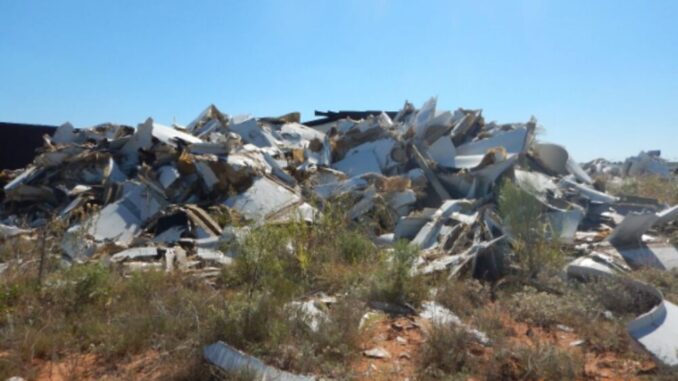
According to the complaint, filed in the 201st Judicial District Court of Travis County, Global Fiberglass accepted shipments of over 3,000 turbine blades—some stretching up to 200 feet long—along with bulky nacelles (the housings for turbine generators), amassing roughly 487,000 cubic yards of solid waste by March 2025. Despite a 2022 “Agreed Order” from the Texas Commission on Environmental Quality (TCEQ) mandating that the company stop accepting waste and secure proper permits, operations allegedly continued unchecked. None of the defendants held TCEQ authorization to process or store industrial waste, and Global Fiberglass has never met the legal threshold of recycling at least 75% of its accumulated materials annually.
The environmental fallout is already visible: sprawling piles of fiberglass composites scarring the West Texas landscape, posing risks to soil, water, and wildlife. Paxton didn’t mince words: “Illegal disposal of wind turbines hurts our land and will never be permitted under my watch. Just because the radical left calls something a ‘green industry’ does not give any company a free pass to harm the Texas countryside, break our laws, and leave Texans to deal with the negative impacts.”
The state is seeking over $1 million in penalties, civil fines of $50 to $25,000 per day per violation, and a permanent injunction requiring cleanup within 180 days.
This isn’t just a local headache—it’s a microcosm of an industry-wide reckoning.
The Scale of the Problem: A Fleet of 70,000+ Turbines and Counting
The U.S. boasts one of the world’s largest wind energy fleets, with installed capacity reaching approximately 147,500 megawatts (MW) as of late 2023, and projections for over 7 gigawatts (GW) of new additions in 2025 alone—a 36% jump from the prior year.
Translating capacity to turbines, the country currently operates around 70,000 to 75,000 units nationwide, with Texas leading at over 19,000, followed by Oklahoma (5,600+), California (4,900+), and Kansas (4,400+).
By mid-2025, global wind capacity hit 1,245 GW, underscoring the explosive growth—but also the looming waste stream.
Each turbine’s lifespan averages 20-25 years, meaning the first major wave of retirements is underway. With blades alone weighing 10-20 tons apiece and composed of tough, non-recyclable fiberglass composites, the math is daunting: millions of tons of material headed for disposal if solutions don’t scale.
The Toxic Legacy: Why Wind Blades Are Recycling’s Nightmare
Wind turbine blades aren’t your garden-variety trash. Made from epoxy resins reinforced with glass fibers (often containing bisphenol A, or BPA—a known endocrine disruptor), they’re durable by design but devilishly hard to break down.
Traditional recycling methods like incineration fail because the high fiberglass content resists burning, releasing potential toxins into the air, while mechanical shredding yields low-value “fluff” unfit for much beyond filler in cement or asphalt.
The environmental toll is multifaceted. Landfilling—still the dominant end-of-life fate for U.S. blades—consumes vast space and risks leaching chemicals into groundwater if not managed perfectly.
Emerging alternatives like pyrolysis (thermal decomposition) or solvolysis (chemical breakdown) show promise but remain costly and energy-intensive, with lifecycle analyses revealing they can sometimes emit more greenhouse gases than landfilling.
A 2024 Imperial College London study flagged health risks from recycling processes, including worker exposure to particulates and volatile organics.
As the fleet ages, experts warn of a “toxic legacy” lasting centuries: methane from decomposing organics in landfills, habitat disruption from blade graveyards, and a false sense of sustainability for an industry marketed as zero-waste.
In the U.S., blade disposal could surge 10-fold by 2050 without innovation, exacerbating occupational hazards and straining already overburdened landfills.
Decommissioning Dollars: Who Foots the Bill for Reclamation?
When a wind farm reaches end-of-life, liability falls squarely on operators—but the costs can bankrupt the unwary. Decommissioning a single site runs $100,000 to $500,000 per turbine for disassembly and removal, plus $10,000-$30,000 per acre for land restoration like reseeding and erosion control.
For a mid-sized farm (50-100 turbines), that’s millions, not including grid disconnection or recycling premiums. Full “greenfield” restoration—returning land to pre-project condition—can balloon expenses further, especially on sensitive terrain.
Landowners bear the brunt if operators vanish, leading to protracted legal battles over “abandonment clauses” in leases.
States like Texas and Oklahoma now mandate detailed cost estimates in permits, but enforcement varies. The Bureau of Land Management (BLM) requires bonds for federal projects, covering everything from turbine haul-off to habitat rehab.
The Bond Gap: Are There Funds Set Aside? Not Nearly Enough
Here’s the rub: While some jurisdictions require decommissioning bonds or financial assurances, coverage is spotty—and often woefully inadequate. A 2025 state-by-state assessment found that only about half of U.S. wind projects mandate upfront bonding, with amounts typically 10-20% of estimated costs to avoid tying up developer capital.
Surety bonds, letters of credit, or cash escrows are common tools, but they’re project-specific and rarely adjusted for inflation or rising recycling costs.
Critics, including rural municipalities, argue these safeguards fall short. In places like Taber, Alberta (a model for U.S. reforms), bonds are withheld from lease payments to build a cleanup war chest.
Yet in the U.S., no national fund exists, and many early-generation farms operate under outdated leases with zero provisions. A 2025 Colorado Law Review analysis called for “smarter” policies: annual bond reviews, salvage value credits, and mandatory recycling quotas to close the gap.
Without them, taxpayers or landowners could inherit multimillion-dollar liabilities.
Abandoned Wind Farms: California’s Cautionary Tales Verified
The specter of abandonment looms largest in California, home to the nation’s oldest large-scale wind developments. Viral claims of “14,000 abandoned turbines littering the desert” have been thoroughly debunked as exaggeration—totaling closer to a few thousand outdated units from the 1980s boom, many now removed or repowered.
Still, verified examples persist, underscoring enforcement gaps.
Altamont Pass Wind Resource Area (Alameda/Tracy Counties): Once boasting 5,000+ turbines, this iconic site has seen hundreds idled since the 1990s due to inefficiency and bird strikes (e.g., golden eagles). A 2015 extension allowed operations to continue, but repowering efforts have dismantled over 1,000 old units by 2025, leaving remnants in “graveyards” awaiting full cleanup.
Tehachapi Pass (Kern County): Home to about 5,000 turbines, roughly 100 (2%) remain inactive as of 2013 data, with ongoing removals. Modernization has cleared most, but stragglers dot the hills, reclaimed slowly under state oversight.
Patterson Pass Wind Project (near Livermore): Built in 1985 by EDF Renewables, this site features abandoned turbines rusting in plain sight off Patterson Pass Road as of 2024 footage. Decommissioning lags due to ownership disputes, exemplifying how early projects evade modern bonds.
These cases, while not the apocalypse of myth, illustrate a pattern: Without robust bonds, abandonment shifts costs to locals and ecosystems. Hawaii reports six fully abandoned farms, but California’s delays—decades in some spots—serve as a warning for the 45 GW of U.S. wind slated for addition by 2029.
Winds of Change: Toward a Sustainable Fleet
The Sweetwater suit isn’t just punitive—it’s a catalyst. As wind power surges to meet climate goals, the industry must confront its waste footprint head-on: investing in scalable recycling (e.g., chemical processes yielding reusable fibers), standardizing national bond requirements, and baking reclamation into project economics from day one. For now, Texas’s action sends a clear message: The “green” revolution won’t spin forever on borrowed land and empty promises.
Energy News Beat will continue tracking this unfolding saga. Stay tuned for updates on the litigation and broader policy shifts. After all, true sustainability isn’t about erecting turbines—it’s about what happens when they come down.
If you are a Utilities CEO and would like to come on the podcast, we would love to hear your side of the energy story.
Sources: youtube.com, reneweconomy.com.au, kqed.org, scholar.law.colorado.edu, businessrenewables.ca, climate.ny.gov, dallasexpress.com
Get your CEO on the podcast: https://sandstoneassetmgmt.com/media/
Is oil and gas right for your portfolio? https://sandstoneassetmgmt.com/invest-in-oil-and-gas/