


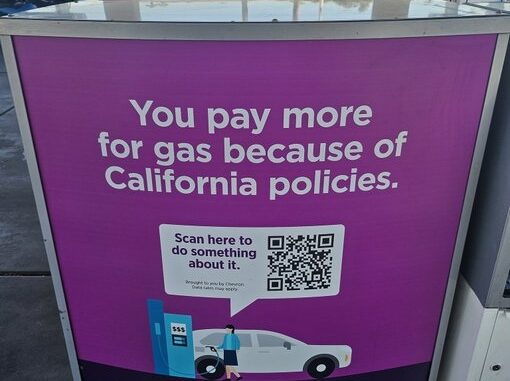
Southern Nevadans are paying over $5 a gallon for gas — and Congresswoman Susie Lee wants you to believe it’s all because of “Trump’s war.”
In a now-viral X post, Rep. Lee (D-NV) claimed: “Southern Nevadans are now paying over $5/gallon for gas because of Trump’s war. We need to lower costs for hardworking families. Instead, Republicans in Washington are spending $1 billion/day on a war that is making it more expensive for you to fill your gas tank.”The US Oil & Gas Association (@US_OGA) fired back with the facts the congresswoman apparently missed: Roughly 88% of Nevada’s transportation fuels — including nearly 90% of Southern Nevada’s supply and the Las Vegas area — comes straight from California refineries via the Calnev Pipeline. Nevada has virtually zero gasoline refining capacity of its own. And California’s Democrat-led energy policies have forced refinery closures and choked domestic production, leaving the state (and everyone downstream) dependent on expensive international imports.
We have enjoyed watching the US Oil & Gas Association’s X Account, and Tim Stewart, the President, has appeared on the Energy News Beat Podcast with David Blackmon and Stu Turley.
Hello Congresswoman
This has already been pointed out but allow us to reemphasize that:
Roughly 88% of Nevada’s transportation fuels — including nearly 90% of Southern Nevada’s supply and the Las Vegas area via the Calnev Pipeline — comes from California refineries.
With CA… https://t.co/1Ja0J0PEKH
— US Oil & Gas Association (@US_OGA) March 25, 2026
Gas prices in Southern Nevada have spiked past $5/gallon amid global tensions — but the structural problem started long before any conflict.
Nevada Doesn’t Make Its Own Fuel — It Buys California’s
Nevada has modest oil production and one tiny refinery that only makes asphalt and road oil. Everything else — gasoline, diesel, jet fuel — flows in by pipeline. The Calnev Pipeline from Los Angeles refineries supplies about 90% of the fuel consumed in Las Vegas and Southern Nevada. Another line from the Bay Area serves Reno, while a smaller Utah pipeline provides backup.
That means when California sneezes, Nevada gets pneumonia at the pump.
California supplies roughly 88% of Nevada’s total transportation fuels. Arizona gets a big chunk too. When California refineries cut output or shut down, the ripple effect is immediate and expensive for its neighbors.
California’s Self-Inflicted Energy Crisis: Newsom’s Overreach in ActionCalifornia sits on billions of barrels of proven oil reserves, yet Governor Gavin Newsom and the Democrat supermajority have spent years waging war on domestic production:Oil production collapse: In-state crude output has plummeted — down dramatically over the past decade-plus, with a ~35% drop just since Newsom took office and steeper long-term declines. New drilling permits have been slashed.
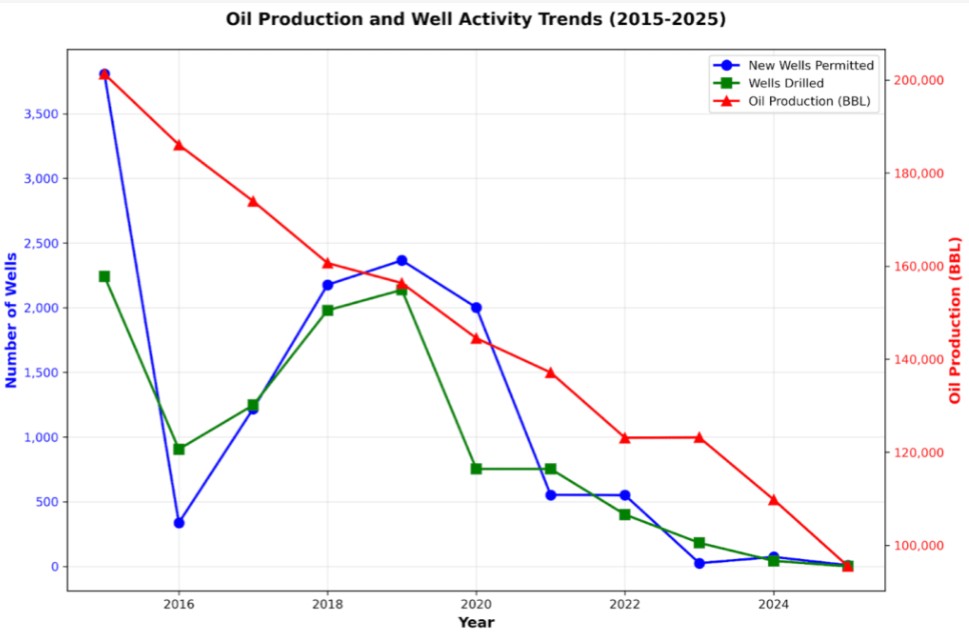
Refinery exodus: Phillips 66 closed its Los Angeles-area Wilmington refinery in late 2025. Valero is shutting its Benicia refinery in April 2026. Together, these facilities represented ~17% of California’s refining capacity. More closures are threatened by aggressive low-carbon fuel standards, cap-and-trade, and a 2024 law forcing minimum inventory levels that made operations unsustainable.
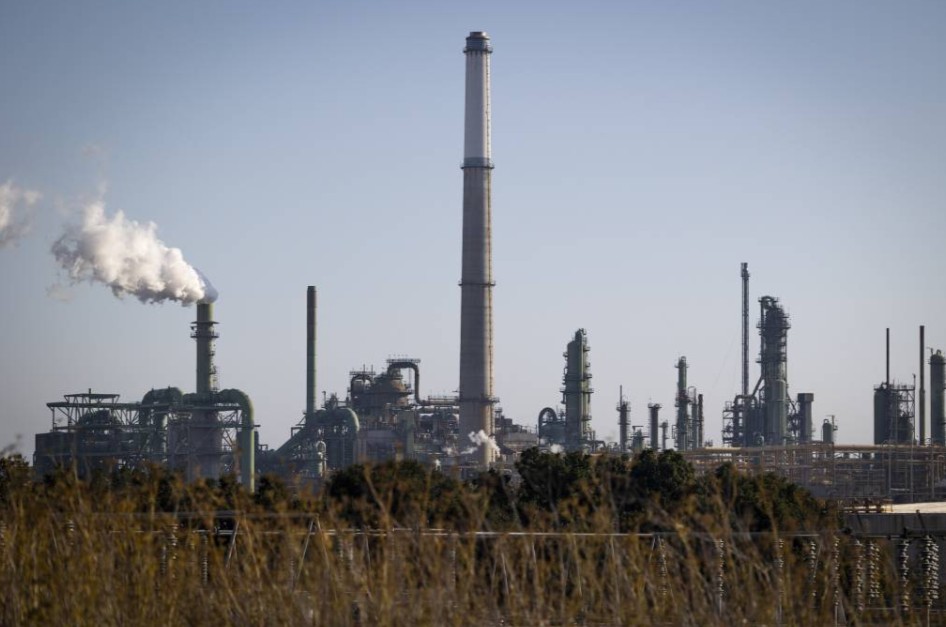
California’s remaining refineries are under siege. Closures like Valero’s Benicia facility are already tightening supply across the West.
Foreign dependence: California now imports 60-70% of its crude oil from foreign sources — Brazil, Iraq, Guyana, Saudi Arabia, Ecuador, and more. Even finished gasoline and diesel are increasingly shipped in from Asia or rerouted from the Gulf Coast via expensive workarounds like the Bahamas. These imports cost more and carry higher logistics and carbon footprints than domestic crude.
Unique California blend + regulations: CARB’s reformulated gasoline requirements, environmental fees, taxes, and renewable fuel mandates make California fuel the most expensive in the nation. Nevada pays the premium because it has no choice but to buy that same specialized product.
The result? California’s policies have turned a once self-sufficient refining powerhouse into an import-dependent island. And Nevada is locked into that system.
Global Events Expose the Vulnerability — But Policy Created It
Yes, tensions in the Middle East (the “war” Rep. Lee references) have pushed crude prices higher and added to the pain at the pump nationwide. But Nevada’s prices were already structurally higher because of its total reliance on a single, policy-constrained supplier. When California refineries operate at lower utilization or import costlier foreign barrels and finished products, every Nevadan feels it — regardless of what happens in Washington or Tehran.
Nevada Governor Joe Lombardo gets it. He’s formed a Fuel Resiliency Committee and is actively exploring ways to diversify supply — more pipelines from Utah or the Midwest, local terminal expansions, and reduced dependence on California’s failing system.
The Real Cost Isn’t a War — It’s Government Overreach
The true cost of gasoline and diesel in Nevada isn’t measured just in dollars at the pump. It’s measured in lost economic freedom, higher prices for families and businesses, and vulnerability created by politicians who prioritize ideology over energy security.
Congresswoman Lee owes her constituents more than partisan soundbites. She should be demanding California fix its self-inflicted supply crisis — or better yet, helping Nevada break free from it.’
Nevada doesn’t need lectures about “Trump’s war.” It needs leaders who understand pipelines, refineries, and the real-world consequences of shutting down American energy production.
The data is clear. The dependency is real. The overreach in Sacramento is the root cause.
It’s time the true cost of California’s energy policies gets told — loud and clear — in Nevada. Energy News Beat will continue tracking this story as Nevada pushes for fuel independence and California’s refinery closures accelerate. We love Chevron’s leadership and executives for helping spread the truth.
Appendix: Sources and References
(For the article “The True Cost of Gasoline and Diesel in Nevada Needs to be Told”)Below is a complete, verifiable list of primary sources used to support the key facts, statistics, and claims in the article. All links are current as of March 2026 and point directly to official government data, news reports, company announcements, and the original X posts referenced.1. Congresswoman Susie Lee’s Statement on Gas Prices and “Trump’s War”Rep. Susie Lee (D-NV) X post: “Southern Nevadans are now paying over $5/gallon for gas because of Trump’s war…”
Link: https://x.com/RepSusieLee/status/2036497838624915945
Additional variant post by Rep. Lee: “Promises broken. Gas is pushing $5/gallon in southern Nevada because of Trump’s war.”
Link: https://x.com/SusieLeeNV/status/2034996875942666324
2. US Oil & Gas Association Response Highlighting Nevada’s California DependencyUS_OGA X post correcting Rep. Lee and citing the 88% California supply figure.
Link: https://x.com/US_OGA/status/2036948483362505091
3. Nevada’s Fuel Supply Dependency on California (88% Overall, ~90% Southern Nevada)Washington Examiner – “Nevada governor warns California climate-altering rules could spike gas prices” (March 11, 2026)
Link: https://www.washingtonexaminer.com/policy/energy-and-environment/4488095/nevada-governor-lombardo-warns-california-climate-rules-fuel-supply/
The Nevada Independent – “California’s quest to phase out fossil fuels could make Nevada gas prices soar” (Jan 4, 2026)
Link: https://thenevadaindependent.com/article/californias-quest-to-phase-out-fossil-fuels-could-make-nevada-gas-prices-soar
Stillwater Associates – “California Gasoline Supply to Arizona and Nevada” (foundational analysis still cited in 2026 reporting)
Link: https://stillwaterassociates.com/california-gasoline-supply-to-arizona-and-nevada/
Nevada Current – “Nevada taking steps to wean itself off California fuel dependency” (Jan 20, 2026)
Link: https://nevadacurrent.com/2026/01/20/nevada-taking-steps-to-wean-itself-off-california-fuel-dependency/
The Pershing Post – “Where Nevada’s Fuel Comes From” (Oct 23, 2025)
Link: https://www.thepershingpost.com/article/335,where-nevada-s-fuel-comes-from
4. Calnev Pipeline and Southern Nevada Supply DetailsWikipedia / Kinder Morgan infrastructure summary (Calnev supplies ~90% of Las Vegas-area fuel)
Link: https://en.wikipedia.org/wiki/Calnev_Pipeline
EIA / industry maps confirming Calnev as primary lifeline from LA refineries to Las Vegas.
5. California Refinery Closures (17% of State Capacity)Phillips 66 official announcement – Wilmington (LA-area) refinery closure (late 2025)
Link: https://investor.phillips66.com/financial-information/news-releases/news-release-details/2024/Phillips-66-provides-notice-of-its-plan-to-cease-operations-at-Los-Angeles-area-refinery/default.aspx
Valero official announcement – Benicia refinery idling/closure by April 2026
Link: https://investorvalero.com/news/news-details/2025/Valero-Announces-Notice-to-the-California-Energy-Commission-Regarding-its-Benicia-California-Refinery/default.aspx
U.S. Energy Information Administration (EIA) – “Refinery closures present risk for higher gasoline prices on the West Coast” (Jul 9, 2025)
Link: https://www.eia.gov/todayinenergy/detail.php?id=65704
Governor Newsom’s statement on Valero Benicia update (Jan 6, 2026)
Link: https://www.gov.ca.gov/2026/01/06/governor-newsoms-statement-on-valeros-benicia-refinery-update/
6. California Crude Oil Imports (60–70% Foreign Sources)California Energy Commission – “Foreign Sources of Crude Oil Imports to California 2025” (official table: 61.1% foreign in 2025 data)
Link: https://www.energy.ca.gov/data-reports/energy-almanac/californias-petroleum-market/foreign-sources-crude-oil-imports
California Energy Commission – “Annual Oil Supply Sources to California Refineries” (2025 data)
Link: https://www.energy.ca.gov/data-reports/energy-almanac/californias-petroleum-market/annual-oil-supply-sources-california
7. California In-State Oil Production Decline Under NewsomForbes – “Newsom’s California: Slouching Towards A Self-Inflicted Energy Crisis” (Dec 7, 2025) – 65% decline since 2001
Link: https://www.forbes.com/sites/davidblackmon/2025/12/07/newsoms-california-slouching-towards-a-self-inflicted-energy-crisis/
California Policy Center analysis – production drop from 402 million barrels (1986) to 118 million barrels (2024)
Link: https://californiapolicycenter.org/newsoms-concessions-to-oil-industry-will-not-save-it/
Consumer Watchdog – “State of California Oil 2026” (drilling permits and production trends)
Link: https://consumerwatchdog.org/energy/state-of-california-oil-2026-accountability-for-oil-companies-is-so-much-bigger-than-newsom/
8. Nevada’s Minimal Local Refining Capacity
U.S. Energy Information Administration (EIA) – Nevada State Profile (one tiny asphalt-only refinery)
Link: https://www.eia.gov/states/NV/overview
and https://www.eia.gov/states/NV/analysis
9. Nevada Governor Lombardo’s Fuel Resiliency Committee & Diversification Efforts
Nevada Current and Washington Examiner articles (linked above) detail the committee’s formation and push for Utah/Midwest pipelines.
These sources are drawn from official government agencies (EIA, California Energy Commission, Nevada Governor’s office), company press releases, and reputable regional news outlets. They provide transparent, primary documentation for every statistic and claim in the article.
Energy News Beat will update this appendix as new data becomes available.



Be the first to comment