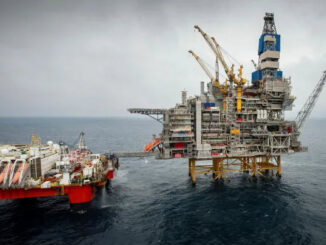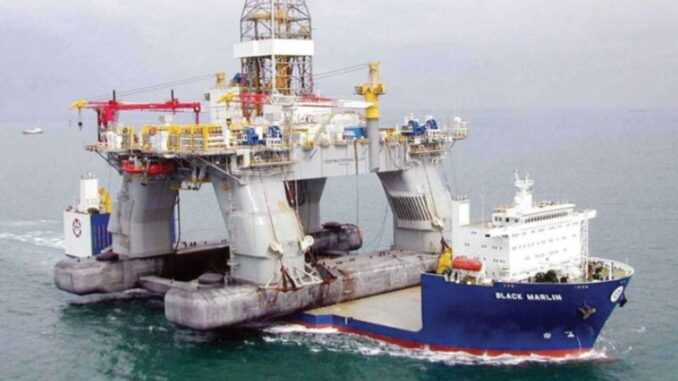
In a landmark move shaking up the offshore drilling sector, Transocean Ltd. (NYSE: RIG) has announced its acquisition of Valaris Limited (NYSE: VAL) in an all-stock transaction valued at approximately $5.8 billion.
This deal, unveiled on February 9, 2026, positions the combined entity as the world’s largest offshore drilling contractor, boasting a formidable fleet and enhanced capabilities amid a recovering global energy market.
Breaking Down the Deal Details
The transaction is structured as an all-stock exchange, where Valaris shareholders will receive a fixed ratio of 15.235 shares of Transocean stock for each Valaris share they hold.
Upon completion, Transocean shareholders will own about 53% of the combined company on a fully diluted basis, while Valaris shareholders will hold the remaining 47%.
The pro forma enterprise value of the merged company is estimated at $17 billion, with a market capitalization around $12.3 billion.
Key highlights include:Fleet Expansion: The combined fleet will consist of 73 rigs, including 33 ultra-deepwater drillships, 9 semisubmersibles, and 31 modern jackups. This diversification allows operations across deepwater, harsh-environment, and shallow-water basins worldwide.
Financial Synergies: The merger is projected to unlock more than $200 million in annual cost synergies, in addition to Transocean’s existing cost-saving initiatives aiming for over $250 million in reductions through 2026.
The combined backlog stands at approximately $10 billion, providing strong revenue visibility.
Leadership and Governance: Transocean’s CEO, Keelan Adamson, will lead the combined company, with Jeremy Thigpen serving as Executive Chairman of the Board. The board will comprise 9 directors from Transocean and 2 from Valaris.
Timeline and Approvals: The deal is expected to close in the second half of 2026, pending regulatory approvals, shareholder votes from both companies, and other customary conditions. It’s structured as a court-approved scheme of arrangement under Bermuda law.
This acquisition follows a wave of consolidation in the industry, including Noble Corporation’s purchase of Diamond Offshore in 2024 and ADES’ merger with Shelf Drilling in 2025.
Transocean and Valaris emphasize that the timing aligns with an emerging multi-year upcycle in offshore drilling, driven by increasing demand for energy security and deepwater exploration.
What This Means for Investors
For investors, this merger represents a strategic bet on the offshore sector’s rebound. The combined company will have greater scale, improved liquidity, and a stronger balance sheet, accelerating deleveraging to a net leverage ratio of about 1.5x within 24 months post-closing.
Enhanced cash flows from the $10 billion backlog could support dividends, share buybacks, or further investments in high-spec assets.Market reaction has been positive: Valaris shares surged over 28% to around $80 on the announcement day, reflecting investor enthusiasm for the premium implied in the exchange ratio.
Transocean shares also saw gains, up nearly 12% in the prior week.
Analysts view the deal as creating a “very attractive investment” in offshore drilling, with diversified exposure to high-growth basins.
However, risks remain. Integration challenges, potential regulatory hurdles, and fluctuations in oil prices could impact outcomes. Forward-looking statements highlight uncertainties like commodity volatility, operational disruptions, and failure to achieve synergies.
Investors should monitor approvals and market conditions closely. For those holding Valaris stock, no action is needed—brokers will handle the share conversion.
Overall, this positions the merged entity as a leader, potentially benefiting long-term holders in a tightening supply market.
Impact on Oil and Gas Plays
The merger will significantly influence offshore oil and gas plays, particularly in regions where deepwater and ultra-deepwater drilling are pivotal. The expanded fleet enhances capabilities in key basins, including:Gulf of Mexico: A core area for both companies, where ultra-deepwater drillships will support major operators like BP and Shell in high-potential fields.
Brazil: Pre-salt developments will benefit from the combined expertise, as seen in recent contracts like Transocean’s $120 million deal with BP for the Deepwater Mykonos.
North Sea and Harsh Environments: Semisubmersibles suited for rough conditions will bolster operations in the UK and Norway sectors.
Australia and Shallow Wliaters: Jackups will impact Asia-Pacific plays, including extensions like the $130 million contract for Deepwater Skyros in Australia.
Global Reach: Exposure to emerging areas in West Africa, Guyana, and the Mediterranean could accelerate project timelines and reduce costs for E&P companies through better rig availability and negotiating power.
This consolidation reduces competition, potentially leading to higher day rates in a supply-constrained market.
However, it may raise antitrust concerns in concentrated basins. For energy producers, it means access to a one-stop-shop for diverse drilling needs, fostering efficiency in an upcycle driven by energy transition and supply growth.
Final Thoughts
Transocean’s acquisition of Valaris marks a pivotal consolidation in offshore drilling, creating a powerhouse ready to capitalize on global energy demands. While investors eye synergies and growth, the deal underscores the sector’s evolution toward scale and efficiency. Stay tuned to Energy News Beat for updates on this transformative merger.
Sources: thepopularinvestor.substack.com,
Get your CEO on the podcast: https://sandstoneassetmgmt.com/media/
Is oil and gas right for your portfolio? https://sandstoneassetmgmt.com/invest-in-oil-and-gas/