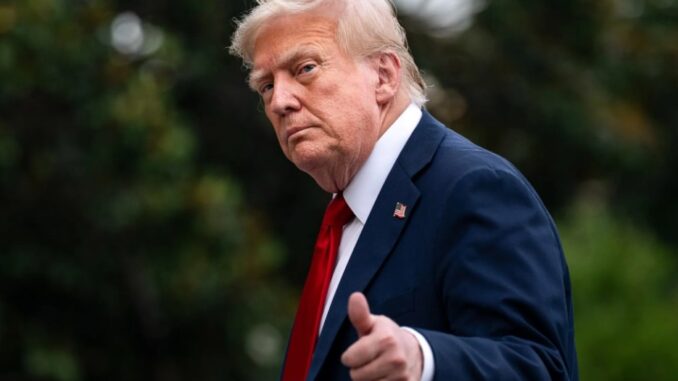
In a surprising turn of events amid the escalating conflict in the Middle East, President Donald Trump has indicated that the ongoing war with Iran may conclude imminently. Speaking to CBS News on March 9, 2026, Trump described the military operation as “very complete” and suggested that hostilities could wrap up soon.
This statement comes just over a week after the United States and Israel launched coordinated strikes on Iran, dubbed Operation Epic Fury, which targeted key military infrastructure, missile sites, and leadership figures, including the death of Supreme Leader Ayatollah Ali Khamenei.
The conflict, which began on February 28, 2026, stemmed from longstanding tensions over Iran’s nuclear program, ballistic missiles, and regional influence.
Initial U.S. objectives included degrading Iran’s missile capabilities, neutralizing its navy, and preventing nuclear weapon development. Trump has repeatedly demanded Iran’s “unconditional surrender” as a prerequisite for ending the war, while also expressing openness to working with a new, “acceptable” Iranian leadership to rebuild the country economically.
He has emphasized that the decision to cease operations would be mutual with Israel, highlighting close coordination with Prime Minister Benjamin Netanyahu.
Recent developments suggest a potential path to de-escalation. Trump has noted that strikes could continue for four to five weeks but might end earlier if objectives are met.
Iran’s interim leadership has suspended attacks on neighboring states and issued apologies to Gulf nations, though hardliners remain defiant.
The appointment of a new Supreme Leader, deemed “unacceptable” by Trump, has complicated matters, but U.S. officials indicate that full realization of military goals could equate to surrender, regardless of Tehran’s formal declaration.
The Trump-Putin Call: A Diplomatic Push?
Adding to the optimism for resolution, Trump held a one-hour phone call with Russian President Vladimir Putin on March 9, 2026—their first direct conversation of the year.
Initiated by the U.S., the discussion focused on the Iran conflict, the Ukraine war, and global oil market stability, including the situation in Venezuela.
Putin shared proposals for a “quick political and diplomatic settlement” to the Iran war, emphasizing Russia’s interest in de-escalation given its alliance with Tehran.
The Kremlin described the call as “businesslike, frank, and constructive,” with potential implications for broader international cooperation.
This dialogue underscores Russia’s limited enthusiasm for direct intervention in Iran’s defense, despite condemnations of U.S. and Israeli actions.
Analysts suggest Putin’s input could facilitate backchannel negotiations, especially as Iran faces internal protests and economic collapse.
Ramifications for Global Energy Markets
Trump’s signal of an impending end to the conflict has triggered immediate market reactions, with energy sectors poised for significant shifts.
Oil Markets: From Spike to Plunge
The war initially disrupted global oil supplies, particularly through the Strait of Hormuz—a chokepoint for about 20% of the world’s seaborne oil trade.
Traffic through the strait plummeted over 80%, with attacks on tankers and facilities in Saudi Arabia, Qatar, and Bahrain exacerbating shortages.
Brent crude surged amid fears of prolonged disruption, potentially pushing prices to $120–$150 per barrel in a worst-case scenario.
However, Trump’s de-escalation comments have reversed this trend dramatically. On March 9, Brent crude crashed 23% to $88 per barrel as markets priced in reduced geopolitical risk.
Global equities rallied, with the S&P 500 up 0.8%, reflecting optimism for normalized supply flows.
If hostilities end soon, oil prices could stabilize in the $65–$75 range, assuming a rapid ceasefire and reopened routes.
Nonetheless, lingering risks—such as Iranian retaliation—could sustain volatility.
Refinery Markets: Disruptions and Recovery Prospects
Refineries across the Gulf have borne the brunt of the conflict. Strikes on facilities like Saudi Arabia’s Ras Tanura (550,000 bpd capacity) and Bahrain’s BAPCO refinery have forced shutdowns, tightening global refined product supplies and inflating margins temporarily.
Qatar halted LNG production after hits on gas sites, further straining energy markets.
With de-escalation in sight, refinery operators anticipate a swift rebound. Reduced war premiums could lower input costs, boosting margins if demand holds steady. However, prolonged damage assessments and repairs might delay full capacity restoration, keeping jet fuel and other products elevated in the short term.
Tanker Markets: Insurance Woes and Backlogs
The tanker sector has been hit hard by the Strait’s de facto closure. Over 150 vessels, including oil and LNG tankers, remain anchored, awaiting safe passage amid missile and drone threats.
Major insurers have withdrawn war-risk coverage for Persian Gulf voyages, rendering transits commercially unviable for most operators.
Shipping lines like Maersk have rerouted via the Cape of Good Hope, imposing surcharges and extending transit times.
Trump’s signal could alleviate these pressures. As risks subside, insurance premiums may normalize, clearing backlogs and reducing freight rates. In a base-case scenario of one-week disruption followed by diplomacy, tanker flows could resume within days, though electronic interference and residual threats might persist.
Venezuelan-Style Controls on Iran: A Likely Outcome?
Trump has explicitly drawn parallels between the Iran conflict and the U.S. operation in Venezuela, where forces captured President Nicolás Maduro in January 2026, leading to a cooperative regime under heavy sanctions and oversight.
He described the Venezuela model as “perfect,” involving regime preservation but with U.S.-approved leadership and economic reintegration.
For Iran, Trump has expressed interest in influencing the selection of Khamenei’s successor and ensuring Tehran abandons nuclear ambitions and proxy support.
Analysts note differences—Iran’s power structure remains more intact, and its alliances with Russia and China complicate matters—but a similar framework of sanctions, diplomatic isolation, and potential military pressure could be imposed if surrender terms are met.
This might include blocking Iranian oil exports (1.6 mb/d, mostly to China) and demanding cooperation on nuclear sites, mirroring Venezuela’s post-capture compliance.
Outlook: Cautious Optimism Amid Uncertainty
Trump’s signaling, bolstered by the Putin call, offers hope for a swift end to the Iran war, potentially stabilizing energy markets battered by recent turmoil. Oil, refinery, and tanker sectors stand to benefit from de-escalation, though full recovery hinges on sustained diplomacy. A Venezuelan-style approach could reshape Iran’s energy exports, enforcing U.S. oversight but enabling gradual reintegration. As events unfold rapidly, stakeholders in the energy space will watch closely for confirmation of peace—and its lasting impact on global supply chains.
Sources: csis.org, politico.com, kpler.com, instituteforenergyresearch.org,