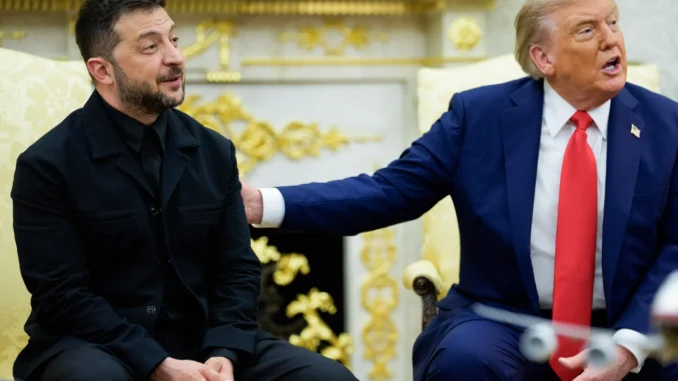
In a significant development amid ongoing efforts to resolve the Russia-Ukraine conflict, Ukrainian President Volodymyr Zelenskiy has announced plans to meet U.S. President Donald Trump in Florida this Sunday, December 28, 2025.
The meeting, expected to take place at Trump’s Mar-a-Lago resort in Palm Beach, comes as peace negotiations reach a critical juncture.
This high-level discussion could pave the way for a breakthrough in ending the war that has reshaped global energy dynamics since Russia’s invasion in 2022.
Summarizing the Meeting’s Expectations
Zelenskiy has expressed optimism about the talks, stating that a comprehensive 20-point peace plan is “90% there.”
The agenda is likely to focus on security guarantees for Ukraine, including potential NATO involvement or alternative alliances, and mechanisms to enforce a ceasefire.
Trump, known for his deal-making approach, has emphasized the need for a swift resolution to reduce U.S. financial commitments to Ukraine while addressing broader geopolitical stability.
Analysts anticipate discussions on territorial concessions, demilitarization zones, and economic reconstruction, with energy security playing a central role given the war’s profound impact on oil and gas supplies.
Zelenskiy has highlighted that “a lot can be decided before the New Year,” underscoring the urgency as both leaders seek to capitalize on recent diplomatic momentum.
A successful outcome could signal the end of hostilities and lead to the gradual lifting of Western sanctions on Russia. However, the Trump administration has taken a hawkish stance on enforcement, which might complicate post-war energy transitions.
Post-War Shifts in Global Oil and Gas Markets
The Russia-Ukraine war has already triggered massive realignments in global energy trade, and a post-war scenario would accelerate these changes.
Pre-invasion, Europe relied heavily on Russian pipeline gas and oil, accounting for up to 40% of its natural gas and significant crude imports.
The conflict prompted swift diversification, with increased LNG imports from the U.S., Qatar, and Australia filling the void.
Post-war, the market could see a partial reintegration of Russian supplies if sanctions are eased, but lingering infrastructure damage and geopolitical mistrust may prevent a full return to pre-2022 norms. Globally, the war has elevated energy security as a priority, spurring investments in renewables and alternative sources.
Oil flows have shifted eastward, with Russia redirecting exports to Asia, while gas markets remain fragmented due to limited pipeline connectivity.
A peace deal could stabilize prices by reducing risk premiums, but short-term volatility is expected as trade routes normalize.
Russia’s Pivot to Asia and Europe’s Balancing Act
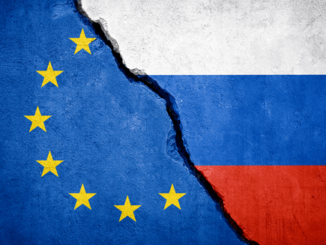
Russia has aggressively pivoted its energy exports toward Asia in response to Western sanctions and embargoes.
By mid-2025, Europe’s share of Russian petroleum imports had plummeted from 29% in 2021 to just 2%, with Asia absorbing the bulk through increased shipments to China, India, and other markets.
Natural gas exports to Europe dropped by over two-thirds, while piped gas and LNG to Asia rose, though not enough to fully offset losses.
This shift leverages Asia’s growing demand, projected to drive global energy consumption through 2040.
However, Russia’s overall gas exports could remain 13-38% below 2020 levels even with an Asian pivot, due to infrastructure constraints.
For Europe, balancing the market post-pivot involves continued diversification. The EU has ramped up LNG terminals and secured long-term contracts from non-Russian suppliers, reducing vulnerability.
If Russian transit through Ukraine ceases entirely—a risk heightened by the war’s end—Europe could face temporary shortages, pushing prices higher in the short term.
However, enhanced storage, renewable integration, and new pipelines (e.g., from Norway and Azerbaijan) should stabilize supplies.
The EU’s energy imports from Russia now account for only 8% of Moscow’s top export revenues, signaling a successful decoupling.
Could Oil Prices Rise Amid Sanction Removal and Dark Fleet Enforcement?
A peace agreement brokered in the Zelenskiy-Trump meeting could lead to the phased removal of sanctions on Russian oil, potentially flooding the market with additional supply and exerting downward pressure on prices. But many see that Russia and other countries’ production capabilities are limited, and the fear of Russia flooding the market is being downplayed, as they have not been able to increase production to meet the new OPEC+ quotas.
However, President Trump’s aggressive enforcement against the “Dark Fleet”—the shadowy network of aging, uninsured tankers used to evade sanctions—might counterintuitively drive prices upward.
Trump’s administration has intensified actions, including sanctions on 183 Russian vessels in January 2025 and blockades on sanctioned tankers.
Recent moves, such as seizing Venezuelan oil cargoes, demonstrate a willingness to disrupt illicit flows.
Even if sanctions on Russian oil are lifted post-war, enforcement could persist for environmental, safety, and anti-evasion reasons, targeting substandard ships that pose risks like spills or explosions.
Why might this increase prices? First, cracking down on the Dark Fleet reduces Russia’s low-cost transport options, forcing reliance on compliant, more expensive vessels and insurers.
This could shrink effective export volumes in the short term, tightening global supply.
Second, broader enforcement—potentially extending to opportunistic seizures—creates market uncertainty, adding a risk premium to oil futures.
Third, if Russia struggles to replace Dark Fleet capacity quickly, discounts on its oil (already shrinking) could reverse, pushing benchmark prices like Brent higher.
Analysts estimate that stringent sanctions have already reduced Russian revenues, and sustained enforcement could amplify this effect even amid de-escalation.
In summary, while sanction removal might initially suggest lower prices through increased supply, Trump’s Dark Fleet crackdown could introduce frictions that elevate costs and constrain flows, ultimately supporting higher oil prices. This dynamic highlights the complex interplay between diplomacy and energy enforcement in a post-war world.As the Zelenskiy-Trump meeting approaches, the energy sector watches closely—the outcomes could redefine global markets for years to come. Stay tuned to Energy News Beat for updates.
Sources: bbc.com, csis.org, energyandcleanair.org, atlanticcouncil.org, bloomberg.com