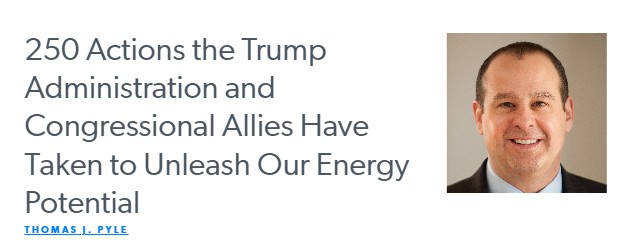
In the first year of the Trump Administration’s return to power—from January 20, 2025, to January 2026—a remarkable series of over 250 actions has been implemented to revitalize America’s energy sector. Compiled by Thomas J. Pyle of the Institute for Energy Research (IER), this comprehensive list highlights executive orders, regulatory rollbacks, legislative victories, and agency decisions aimed at expanding domestic production, reducing bureaucratic hurdles, and prioritizing fossil fuels, nuclear power, and critical minerals. These moves reverse many Biden-era policies, emphasizing energy independence, affordability, and dominance on the global stage.
Drawing from the IER report, this article breaks down the key actions into categories, analyzes their potential impacts on everyday consumers, and explores opportunities for investors, particularly in publicly traded companies directly or indirectly referenced in the actions. While the list is exhaustive, the focus here is on high-level themes and examples to illustrate the broader implications for energy markets, households, and portfolios.
A shout-out to Tom Pyle, who was just on the Energy News Beat podcast for this great list. The graphic below links to the full list and sources.
Overview of the 250 Actions: Key Categories and Examples
The actions span multiple agencies, including the Department of Energy (DOE), Environmental Protection Agency (EPA), Bureau of Land Management (BLM), and Federal Energy Regulatory Commission (FERC). They can be grouped into 10 main categories, each designed to dismantle restrictions and accelerate development:
Executive Orders and Policy Reversals: These foundational steps include declaring a national energy emergency, withdrawing from the Paris Agreement, and rescinding Biden-era orders on climate and energy. For instance, Executive Orders were issued to boost mineral production, reform the Nuclear Regulatory Commission (NRC), and fast-track advanced nuclear technologies.
Oil and Gas Leasing and Development: Vast federal lands were opened for exploration, with leases issued in states like New Mexico (6,259 acres), Wyoming (over 100,000 acres), and Alaska’s National Petroleum Reserve (reopening 82% of 23 million acres). Pipelines such as the Pinyon Pipeline in Nevada and Chapita Wells in Utah were approved, alongside offshore lease sales in the Gulf of Mexico generating $300 million in bids.
Coal Mining and Production: Expansions were greenlit for mines like Spring Creek (Montana, 39.9 million tons), Rosebud (Montana, 33.75 million tons), and Black Butte (Wyoming, 9.2 million tons extension to 2039). Coal lease sales in North Dakota, Alabama, Utah, and Montana unlocked millions of tons, while the Jewell Moratorium on federal coal leasing was rescinded.
Regulatory Deregulation and Rescissions: The EPA reconsidered rules like the Clean Power Plan 2.0 and vehicle emissions standards. NEPA (National Environmental Policy Act) regulations were overhauled to reduce permitting times to as little as 14-28 days. DOE rescinded 47 energy conservation standards for appliances, potentially saving billions in compliance costs.
Critical Minerals and Mining: Approvals accelerated for projects like the Nevada North Lithium Exploration (250 acres) and Velvet-Wood uranium/vanadium mine in Utah. Mineral lease sales offshore American Samoa and copper mining expansions in Utah were prioritized under the FAST-41 permitting program.
LNG and Export Facilitation: Export permits were granted or extended for facilities like Golden Pass LNG, Delfin LNG, Venture Global CP2, Commonwealth LNG, Port Arthur Phase II, and Lake Charles LNG. This includes 20-year agreements for 5.5 million tons/year of LNG purchases by Japan’s JERA.
Legislative and Funding Actions: Bills like H.R. 26 prohibited fracking bans without congressional approval, while the One Big Beautiful Bill Act (H.R. 1) terminated subsidies for hydrogen credits (by 2027) and EV credits (by 2025-2026), rescinded $5 billion in Inflation Reduction Act funds, and expedited environmental reviews.
Nuclear and Grid Reliability: Emergency orders kept coal plants operational for grid stability, and FERC was directed to streamline interconnections for large loads like data centers. EOs promoted nuclear reactor testing and deployment.
Ending Subsidies and Green Energy Priorities: Funding for clean energy grants was axed (e.g., $4.9 billion for Grain Belt Express), and preferential treatment for wind/solar was ended. BLM’s intermittent energy rule was proposed for rescission.
Other Agency Actions: ANWR (Arctic National Wildlife Refuge) leasing was reinstated, and restrictions on Alaska’s Ambler Road and LNG Pipeline were revoked. Orphan well plugging guidelines were updated to support ongoing production.
These actions collectively aim to add billions of barrels of oil, trillions of cubic feet of natural gas, and millions of tons of coal to U.S. supply, while slashing regulatory timelines and costs.
Impacts on Consumers: Cheaper, More Reliable Energy Ahead?
For American consumers, these actions could translate into tangible benefits, primarily through increased supply and reduced costs, though outcomes depend on market dynamics and global factors.
Here’s a breakdown:Lower Energy Prices: By expanding oil, gas, and coal production on federal lands (e.g., reopening 82% of Alaska’s NPR-A and issuing massive leases), domestic supply surges could depress prices for gasoline, heating oil, and electricity. For example, accelerated LNG exports and pipeline approvals might stabilize natural gas prices, which directly affect utility bills.
The IER estimates that rescinding GHG reporting rules alone could save $2.4 billion industry-wide, with savings potentially passed to consumers via lower rates.
Enhanced Grid Reliability: Emergency orders to keep coal plants like J.H. Campbell and Eddystone online prevent blackouts during peak demand, benefiting households in regions reliant on baseload power. Nuclear reforms could lead to more stable electricity generation, reducing volatility from intermittent renewables.
Appliance and Vehicle Cost Savings: Delaying or rescinding energy efficiency mandates for appliances (e.g., dehumidifiers, ovens) and EV-related rules could avoid price hikes on everyday items. Consumers might see short-term relief from avoided “green” surcharges, though long-term shifts away from subsidies could raise costs for renewables-dependent tech like EVs.
Overall, consumers in energy-producing states like Texas, Wyoming, and North Dakota could see job growth and economic boosts, while nationwide, cheaper fuel might ease inflation pressures on transportation and heating—critical for working-class households.
Investor Opportunities: Leveraging Publicly Traded Companies in the Mix
The IER list mentions several companies involved in approved projects, some of which are publicly traded or subsidiaries of public entities. These actions—such as lease approvals, export permits, and regulatory relief—could boost revenues, expand operations, and enhance stock performance for investors.
Here’s how savvy investors might capitalize, focusing on confirmed public companies (based on market data as of January 2026):
ExxonMobil Corporation (NYSE: XOM): Referenced for a Strategic Petroleum Reserve (SPR) exchange and as a partner in Golden Pass LNG (joint venture with QatarEnergy). The LNG export extension and SPR logistics support could increase ExxonMobil’s export volumes and refining efficiency. Investors might see upside in rising LNG demand from Asia (e.g., JERA deals), potentially lifting earnings by 5-10% in the near term.
Strategy: Buy shares or options anticipating higher oil/gas prices from expanded production; current P/E ratio suggests value if energy demand rebounds.
Energy Transfer LP (NYSE: ET): Owner of Lake Charles LNG, which received an export extension for 2.33 Bcf/d capacity. This approval accelerates monetization of Gulf Coast assets, boosting throughput and distributions. With regulatory barriers lifted, ET could expand midstream infrastructure. Investors in master limited partnerships (MLPs) like ET benefit from high yields (around 8%); consider accumulating units for income, especially as LNG exports to Europe and Asia ramp up post-approvals.
Sempra Energy (NYSE: SRE): Operator of Port Arthur LNG Phase II, granted final export approval. This positions Sempra for multi-billion-dollar revenue from LNG sales, with Phase II adding significant capacity. Deregulation of EPA rules could further ease expansions. Strategy: SRE’s utility and infrastructure focus offers stability; investors might target it for long-term growth in exports, with potential 15-20% stock appreciation if global LNG prices hold above $10/MMBtu.
Occidental Petroleum Corporation (NYSE: OXY): Linked to Chipeta Processing LLC (a subsidiary handling natural gas/liquids in Utah’s Uintah Basin, with pipeline approvals). Expanded leasing in Utah and Wyoming enhances OXY’s upstream operations. Warren Buffett’s Berkshire Hathaway stake adds credibility. Investors could leverage OXY’s carbon capture synergies (despite green rollbacks) for diversified plays; expect earnings boosts from faster permitting, making it a buy for value investors.
Surge Battery Metals Inc. (TSX.V: NILI; OTC: NILIF): Approved for the Nevada North Lithium Exploration Project (250 acres). As lithium demand grows for batteries (even amid EV subsidy cuts), this fast-tracked project could accelerate resource development. Being a smaller-cap explorer, it offers high-risk/high-reward potential; investors might speculate on exploration success, with shares potentially doubling if assays prove viable deposits.
Other mentions like Venture Global (private) or Navajo Transitional Energy (tribal-owned, private) don’t offer direct public investment, but could indirectly benefit suppliers or partners in public indices like the Energy Select Sector SPDR Fund (XLE). Broader investor strategies: Focus on energy ETFs for diversified exposure to oil/gas/coal rebounds; monitor FERC interconnections for data center-related growth; and watch for volatility from global trade (e.g., LNG to JERA). Risks include policy reversals or commodity price drops, but the deregulatory wave favors bulls in traditional energy.
In summary, these 250 actions mark a bold pivot toward energy abundance, promising lower costs for consumers and lucrative opportunities for investors in giants like ExxonMobil and Energy Transfer. As the administration builds on this momentum, the Energy News Beat Channel will continue tracking how these policies reshape America’s energy landscape. For the full list, visit the IER report.
Stu Turley will be covering this list and the stocks on the Energy News Beat Stand Up today.
Get your CEO on the podcast: https://sandstoneassetmgmt.com/media/
Is oil and gas right for your portfolio? https://sandstoneassetmgmt.com/invest-in-oil-and-gas/