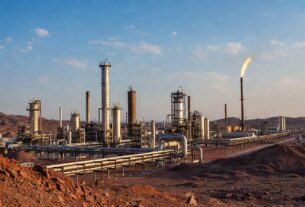
In a stark illustration of the petrochemical industry\’s deepening woes, ExxonMobil is set to permanently shutter one of its two steam crackers at its sprawling Jurong Island complex in Singapore. The decision, first reported by Reuters and echoed across global energy outlets, marks a pivotal moment for the U.S. energy giant and underscores the seismic shifts rippling through global markets due to China\’s relentless overcapacity. As the sector grapples with oversupply, depressed margins, and structural realignments, this closure raises critical questions for investors and everyday consumers alike.
The Closure: A Cost-Cutting Move in a Glutted Market
ExxonMobil\’s older steam cracker, operational since 2002, will begin winding down in March 2026, with full shutdown expected by June.
This facility, part of the integrated Singapore Chemical Plant (SCP) with a total ethylene capacity of 1.9 million tonnes per year, has been a cornerstone of Exxon\’s Asian petrochemical footprint. The newer 2013 cracker, boasting 1.1 million tonnes per year, will continue operations, preserving some production muscle.
The move isn\’t isolated. It aligns with Exxon\’s broader restructuring, including a 10-15% workforce reduction in Singapore by 2027—potentially affecting up to 500 jobs—and the recent sale of its Esso-branded retail fuel network to Indonesia\’s Chandra Asri Group.
Despite these cuts, Exxon launched a new refining unit at its 592,000-barrel-per-day Jurong refinery in September 2025, signaling a pivot toward more resilient downstream assets.
ExxonMobil has declined to comment on the \”market rumors,\” but industry insiders point to unprofitability driven by a global ethylene glut.
Local buyers are expected to pivot to Singapore\’s remaining ethylene producers, while Exxon may import feedstock to sustain select polyolefin units if margins allow.
Naphtha imports, a key feedstock, have already dipped to 1.5 million metric tonnes in the first 11 months of 2025, down from 2.5 million in 2024.
China\’s Overcapacity: The Root of the Global Crunch
At the heart of this turmoil lies China\’s petrochemical juggernaut. Over the past decade, Beijing has erected seven massive integrated complexes, catapulting the country past the U.S. as the world\’s top producer of ethylene and polyethylene—the building blocks of plastics, fibers, and rubbers.
By 2025, China\’s ethylene capacity is projected to hit 50 million metric tonnes, a 50-60% surge from five years prior, while plastics output could reach 120 million tonnes.
This expansion, fueled by self-sufficiency goals and government subsidies estimated at $59 billion in 2024 (over 75% of global plastics support), has created a structural oversupply.
Global excess capacity for key building blocks ballooned to 218 million tonnes in 2023—triple the historical average—with China accounting for 60% of new additions.
Ethylene operating rates have plummeted below 80%, compared to 88-90% in the early 2010s, eroding margins across Asia and beyond.
The ripple effects are profound. South Korea, another Asian powerhouse, is slashing 25% of its petrochemical capacity amid government-mandated restructuring.
In Europe, closures loom at sites like TotalEnergies\’ Antwerp cracker by 2027.
Even China is feeling the pinch, with polypropylene plants idling at 75% utilization and authorities cracking down on aging facilities to curb the glut.
From 2025-2029, China plans to add another 28 million tonnes of ethylene annually, exacerbating the imbalance unless demand surges.
Petrochemicals now drive 95% of oil demand growth, but China\’s shift from importer (15 million tonnes in 2024) to exporter is flipping the script, flooding markets and pressuring prices.
Trade barriers, like impending U.S. tariffs, could worsen this, limiting China\’s access to key outlets and forcing more surplus onto global shelves.
Investor Implications: Navigating a High-Risk Landscape

For investors, Exxon\’s Singapore closure is a double-edged sword. On one hand, it streamlines operations by retiring an inefficient asset, potentially boosting near-term profitability. The phase-out will slash naphtha needs and operational costs, allowing Exxon to redirect capital toward higher-return ventures like its new 1.6 million-tonne Huizhou cracker in China—ironically built amid the same overcapacity storm.
This portfolio optimization could enhance Exxon\’s downstream resilience, with analysts viewing it as a pragmatic response to \”structural adjustments\” in the value chain.
Yet, the broader sector signals caution. Persistent oversupply has cratered margins—ethylene profitability is down 30% since 2018—and could linger through 2026, per S&P Global forecasts.
Credit rating agencies now flag petrochemical hubs as \”credit negative,\” with $80 billion in global subsidies propping up a \”failing industry\” at risk of collapse without caps on production.
For Exxon shareholders, this means heightened volatility: Q3 2025 earnings may reflect writedowns, but long-term bets on energy transition (e.g., low-carbon tech) could mitigate risks.
Investors in peer firms like Chevron or Dow should eye diversification into specialties or bio-based alternatives, as commodity chains face \”existential threats\” from China\’s deflationary exports.
Geopolitical wildcards—U.S. tariffs, EU carbon policies—add layers of uncertainty, potentially reshaping trade flows and favoring integrated giants over standalone players.
In short, while Exxon\’s move may stabilize its balance sheet, the sector\’s overcapacity demands vigilant, adaptive strategies to weather the storm.Consumer Ripple Effects: Cheaper Plastics, But at What Cost?For the average consumer, petrochemical overcapacity translates to a complex mix of short-term wins and long-term headaches. On the upside, the glut has depressed prices for end-products: plastics for packaging, synthetic fibers in clothing, and rubbers in tires could see sustained affordability.
Global ethylene surplus—projected at 11.5 million tonnes by 2025—means lower costs passed downstream, potentially easing inflation in consumer goods like bottles, bags, and apparel.
In a post-pandemic world, where demand for single-use packaging spiked, this could keep essentials cheap amid economic headwinds like rising debt and sluggish growth.
However, volatility looms large. Oversupply breeds price swings—spot ethylene has flatlined in Q3 2025 amid weak demand—disrupting supply chains for everything from EVs (which use fewer petrochemicals) to construction materials.
Consumers may face intermittent shortages or hikes if closures like Exxon\’s cascade, especially in Asia where 50% of global demand resides.
Environmentally, the crisis accelerates a dirty secret: subsidies mask emissions from inefficient plants, delaying the shift to recyclables and bio-alternatives that 87% of consumers say they\’ll pay premiums for.
Trade tensions exacerbate this. U.S. tariffs on Chinese imports could raise costs for American shoppers on imported plastics, while Europe\’s high-energy woes might inflate prices for local goods.
Ultimately, while today\’s glut offers bargain-bin plastics, tomorrow\’s instability—coupled with decarbonization pressures—could burden consumers with higher prices, scarcer sustainable options, and a heavier environmental tab.
Looking Ahead: A Sector in Flux
ExxonMobil\’s Singapore closure isn\’t just a corporate footnote; it\’s a harbinger of a painful recalibration for petrochemicals. China\’s overcapacity has upended the status quo, forcing closures, consolidations, and a scramble for efficiency. Investors must prioritize resilient assets and innovation, while consumers navigate a market where cheap today might mean costly tomorrow. As the industry eyes 2026, the path forward hinges on demand rebound, policy interventions, and a greener pivot—challenges that will define energy\’s next chapter. For now, the beat goes on, but the rhythm has irrevocably changed.
Want to get your story in front of our massive audience? Get a media Kit Here. Please help us help you grow your business in Energy.