


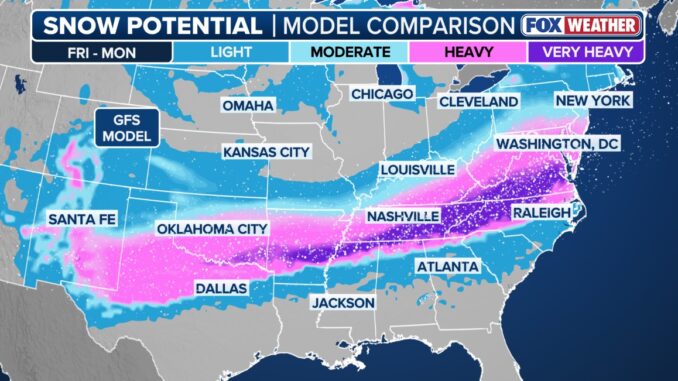
As we approach the weekend of January 23-25, 2026, a major winter storm is brewing that could bring widespread snow, ice, and freezing temperatures across the southern United States, from Texas to the Carolinas and beyond.
This system, fueled by an Arctic air mass clashing with moisture from the Gulf of Mexico and subtropical Pacific, has prompted warnings from meteorologists, including @MaxVelocityWX
, who urged immediate preparations for ice and heavy snow impacting regions from Texas to the East Coast.
With over 150 million people potentially affected, this event could rival some of the most disruptive winter weather in recent years, raising concerns about power outages, travel hazards, and energy market volatility.
Forecast Overview: Cold Snap and Storm Details
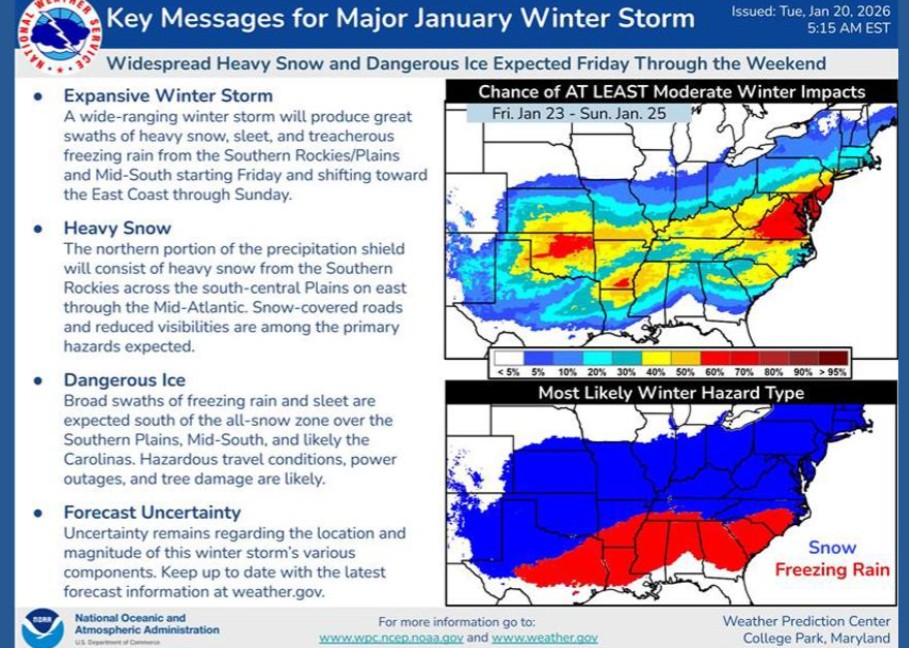
According to the latest models from sources like the National Weather Service, AccuWeather, and FOX Weather, the storm will intensify starting Friday, January 23, spreading a mix of heavy snow, sleet, and freezing rain eastward through Sunday.
Arctic air plunging south from Canada will drive temperatures well below freezing in the South, with subzero readings in the Upper Midwest and prolonged freezing conditions from the Southern Plains to the Southeast.
Expect highs in the 20s and 30s across Texas, Oklahoma, Arkansas, and into Georgia, with overnight lows dipping into the teens or single digits in some areas.
Snow accumulations could reach 3-5 inches in northern Alabama and up to a foot in parts of the southern Appalachians, while a “very major ice storm” is forecast for southern regions, with ice buildup of up to half an inch or more from Texas through the Carolinas.
This atmospheric river setup—drawing heavy moisture over the cold air—could lead to extended periods of freezing rain along major corridors like I-20 and I-40.
@MaxVelocityWX ‘s recent posts emphasize the need to fine-tune preparations as details emerge, highlighting the storm’s potential for historic levels of snow and ice in the Deep South.
EXTREME COLD is expected Saturday morning across the United States.
Wind chills will be as low as 50 degrees below zero in the Midwest, and subzero wind chills are likely in Oklahoma, Arkansas, and parts of Tennessee. Exposed skin could lead to frostbite. pic.twitter.com/75Dixutj0b
— Max Velocity (@MaxVelocityWX) January 20, 2026
⚠️ I can’t overstate how CATOSTROPHIC this Ice Storm could be if the models are even half right.
🧊The Model AVERAGES are showing around 1 inch of Ice Accumulation from Texas, through Louisiana, Arkansas, Mississippi, Georgia, Alabama, and into the Carolinas.
Some Models (like… pic.twitter.com/gloaZwrvzk
— Brady Harris (@StormCat5_) January 20, 2026
Looking ahead to February, long-range outlooks from NOAA suggest a shift toward above-normal temperatures in the Southeast and Gulf Coast, but with elevated chances of below-normal precipitation.
However, models like the ECMWF indicate persistent cold risks in early February, potentially extending wintry conditions if high pressure rebuilds over the West.
While not every week will bring storms, the overall pattern favors episodic cold intrusions, making this a volatile winter for the South.
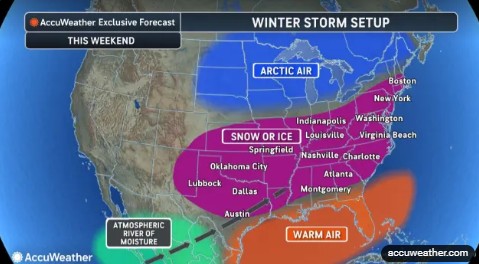
Potential Risks: Ice, Power Outages, and Grid Strain
The greatest threats stem from ice accumulation, which could weigh down trees and power lines, leading to widespread outages across over 30 states.
Forecasters warn of “potentially catastrophic” impacts, with half an inch of ice capable of causing tree damage, impassable roads, and prolonged blackouts—especially in areas unaccustomed to such events.
Travel disruptions are likely, affecting highways, airports, and rail, while deadly cold wind chills could pose life-threatening risks.
The power grid in southern states remains vulnerable, with NERC’s 2025-2026 Winter Reliability Assessment highlighting risks in areas like Texas (ERCOT) and SERC regions due to rapid demand growth from data centers and electrification outpacing firm capacity additions.
During extreme cold, natural-gas-fired plants may face fuel supply issues, echoing past failures.
Outages could last hours to days, particularly if ice exceeds a quarter-inch, triggering energy emergencies.
HISTORIC ICE STORM COMING – A destructive and potentially catastrophic ice storm is forecast to impact the south this weekend. Widespread ice will cripple travel, cause major power outages, and down trees. This is a rare high-impact event — potentially the worst in decades since… pic.twitter.com/1kLp1of0kX
— Dylan Federico (@DylanFedericoWX) January 20, 2026
How Bad Could It Be? Comparing to Texas Storm Uri
Meteorologists are drawing parallels to Winter Storm Uri in February 2021, which caused catastrophic blackouts in Texas, leaving millions without power amid subfreezing temperatures and resulting in hundreds of deaths.
Like Uri, this 2026 event involves a displaced polar vortex sending Arctic air deep south, combined with heavy moisture for ice and snow.
However, while Uri was a 1-in-100-year event with over 30 GW of generation failures, current forecasts suggest a less extreme but still high-impact scenario—potentially a 1-in-10-year storm with outages under 10 GW if recent resiliency standards hold.
Texas’s grid has added batteries and weatherization, but reserves are thinner (down to 10% from 17.5% in 2021), and reliance on variable renewables could strain multi-day events.
It may not match Uri’s devastation, but “worst-case” ice could still cripple infrastructure similarly in unprepared areas.
Preparation for Long-Term Grid Outages: Food, Water, and Essentials
If power fails, focus on safety and self-sufficiency. Stock at least a week’s worth of non-perishable food like canned goods, energy bars, and dried fruits—enough for 2,000 calories per person daily. For water, store one gallon per person per day for drinking and sanitation; boil if needed or use purification tablets. Keep a manual can opener, flashlights, batteries, and a battery-powered radio for updates.
For warmth without power, layer clothing, use blankets, and seal drafts; avoid indoor fuel-burning devices to prevent carbon monoxide poisoning. If you have a generator, operate it outdoors and stock fuel safely. Charge devices in advance and consider portable power banks. Families with medical needs should have backup plans for devices like oxygen machines. Duke Energy and other utilities advise preparing now, as heavy ice or snow can delay restorations.
Start gathering supplies immediately, as @MaxVelocityWX recommends.
Impact on Natural Gas Prices: Spikes for Investors and Consumers
This cold snap is already driving natural gas futures up sharply, with prices surging 25% to around $3.88/MMBtu amid heightened heating demand.
The EIA forecasts Henry Hub averages of $3.38/MMBtu for Q1 2026, potentially rising to $3.85 as demand from the storm and LNG exports outpaces supply.
For consumers, this means higher heating bills in February, especially in gas-dependent southern states.
Investors may see opportunities in volatility, with analysts like JPMorgan predicting $3.74/MMBtu for the year, though prolonged cold could push prices toward $4.00-$4.50 by decade’s end.
A La Niña pattern could amplify winter demand, tightening markets further.
Stay tuned to reliable sources like NOAA and local utilities for updates. This storm underscores the South’s growing vulnerability to extreme weather—prepare wisely to mitigate risks. We are releasing a podcast about the Texas Grid, and it’s not prepared as it should be on Saturday.
Sources: @MaxVelocityWX on X, aga.org, nbcnews.com



Be the first to comment