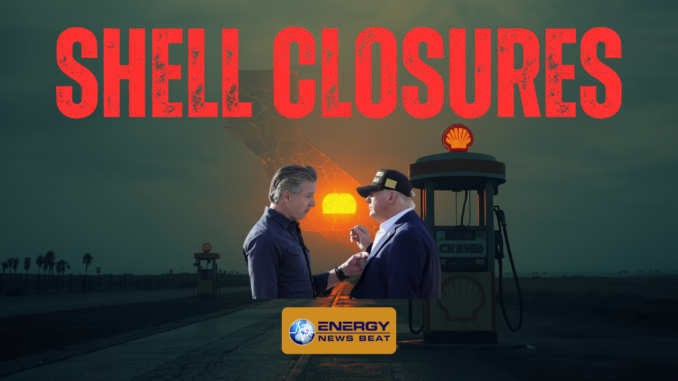
In a move that’s sending shockwaves through California’s already strained energy sector, oil giant Shell has announced plans to shutter or divest approximately 1,000 retail gas stations nationwide between 2024 and 2025, with significant impacts felt in the Golden State.
While the company frames this as a strategic shift toward electric vehicle (EV) charging infrastructure, critics are pointing fingers squarely at Governor Gavin Newsom’s aggressive energy policies, which they argue are accelerating the exodus of traditional fuel providers and imposing undue hardship on everyday citizens. This latest development comes amid warnings of skyrocketing fuel prices, potentially reaching $8 to $10 per gallon for gasoline and diesel, as previously discussed on EnergyNewsBeat.co.Shell’s Closure
Details: A Strategic Pivot or Policy-Induced Retreat?
Shell’s decision, outlined in its 2024 Energy Transition Strategy report, involves divesting around 500 retail sites annually through 2025, totaling roughly 1,000 locations.
The company cites a desire to optimize its retail network and invest in high-growth areas like EV charging, convenience retail, and business-to-business services. However, in California—where Shell operates a substantial portion of its U.S. sites—the closures are hitting hard. Reports indicate that over 1,100 stations could be affected statewide when factoring in related shutdowns and regulatory pressures.
This isn’t just about Shell; it’s part of a broader trend where energy companies are pulling back from the state due to mounting operational challenges.
Shell has already begun the process, with some locations closing doors as early as 2024.
The company’s exit from California’s hydrogen fueling stations earlier this year further underscores its retreat from alternative fuels that don’t align with the state’s mandates.
Insiders suggest that California’s unique blend of high taxes, stringent environmental regulations, and uncertainty around fossil fuel infrastructure is a key driver behind these decisions, making it increasingly unprofitable to maintain traditional gas stations.
Gavin Newsom’s Energy Policies: A Recipe for Dependency and High Costs?
Governor Newsom’s tenure has been marked by a series of energy policies that prioritize rapid decarbonization but have drawn sharp criticism for their real-world consequences on affordability and energy security.
Ban on New Fracking Permits: Since 2021, Newsom has halted new hydraulic fracturing permits and aims to phase out oil extraction by 2045, severely limiting in-state production.
2035 Gas Vehicle Ban: A mandate requiring all new passenger vehicles sold in California to be zero-emission by 2035, pushing automakers and infrastructure toward EVs while sidelining traditional fuels.
Low Carbon Fuel Standard (LCFS): Recently updated rules require refiners to reduce carbon intensity, adding compliance costs that are passed on to consumers.
Windfall Profits Cap: Although efforts to penalize oil companies for excessive profits were halted in 2025, the threat alone has chilled investment.
Refinery and Drilling Restrictions: Policies that have contributed to refinery closures, reducing California’s refining capacity by nearly one-third.
Critics, including lawmakers and industry experts, argue these measures amount to a “war on energy” that cripples local production and drives up costs.
Newsom’s recent compromises, such as approving bills to boost in-state oil production in Kern County, have been labeled as flip-flops by environmentalists and conservatives alike, highlighting the inconsistency in his approach.
These policies have tripled the state’s gas price premium since 2000, making California drivers pay far more at the pump than the national average.
California’s Heavy Reliance on Foreign Oil Imports
Despite possessing some of the largest oil reserves in the U.S., California produces less than 25% of its crude oil needs domestically, importing the majority—around 60-75%—from foreign countries.
This dependency costs the state an estimated $25 billion annually.
In 2024, top foreign suppliers included Iraq (21%), Saudi Arabia (15%), Ecuador (14%), and others like Colombia, Brazil, and Mexico.
Annual foreign imports total hundreds of millions of barrels, with figures from the California Energy Commission showing over 320 million barrels from abroad in recent years.
This reliance on geopolitically volatile sources exposes California to supply disruptions and price swings, all while Newsom’s policies discourage local drilling and increase import needs.
Consumer Impacts: Higher Prices, Fewer Options, and Economic Strain
The closure of Shell’s stations, combined with broader industry trends like the shutdown of nearly 500 independent gas stations due to mandatory underground storage tank upgrades,
will hit consumers hard. Fewer stations mean reduced competition, leading to higher prices and longer drives—especially in rural areas where families may have to travel farther for fuel.
Job losses in the retail and energy sectors are also expected, exacerbating economic hardship.
More alarmingly, these closures align with refinery shutdowns (e.g., Phillips 66 and Marathon), which could slash refining capacity and trigger fuel shortages.
Experts project gas prices could surge 75%, reaching $8.43 per gallon by the end of 2026.
As we’ve highlighted on EnergyNewsBeat.Co, Newsom’s taxes and mandates—such as the LCFS and excise taxes—are direct contributors to this trajectory, potentially pushing diesel and gasoline to $8-10 per gallon.
This isn’t just about inconvenience; it’s about affordability for working families, national security risks from import dependency, and the broader economic ripple effects.
As California grapples with this energy crunch, the question remains: Will Governor Newsom adjust course, or will citizens continue to bear the brunt of policies that prioritize ideology over practicality?
Stu Turley, Energy News Beat Podcast Host, will be interviewing Katy Grimes, Editor in Chief of the California Globe, on Tuesday to talk about Gavin Newsom and the energy policies, but we will also be covering Gavin’s recent trip to Davos and the devastation he did to his own political career. The showdown between Gavin and President Trump is heating up, and my money is on President Trump’s ability to save California if we get the elections fixed for only legal voters to vote. Otherwise, the Democrat machine will remain in power with alleged and apparent ties to China.
Stay tuned to Energy News Beat for more updates on this unfolding crisis.
Sources: energynewsbeat.co, abc10.com, cbsnews.com, Grok on X