


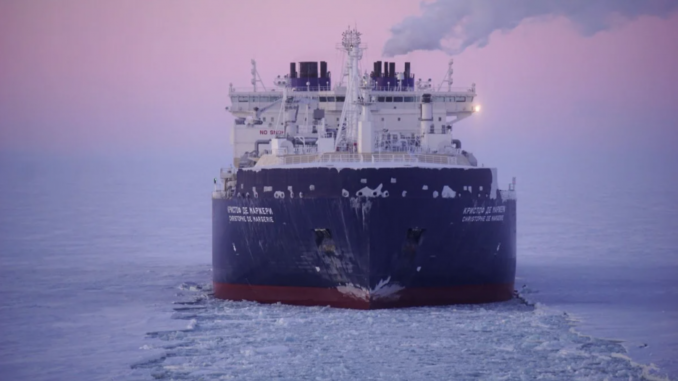
In the face of escalating Western sanctions following the 2022 invasion of Ukraine, Russia’s liquefied natural gas (LNG) sector has demonstrated remarkable resilience, particularly in its trade with China. As Europe’s demand for Russian energy waned under political pressure, Moscow pivoted eastward, deepening its energy partnership with Beijing. This shift has not only sustained Russia’s LNG exports but also bolstered its Arctic projects, even as sanctions target key infrastructure and vessels. Drawing on recent data, this article examines the trajectory of Russian LNG flows to China over the past four years (2022-2025), the status of Arctic LNG operations amid restrictions, and the role of the so-called “dark fleet” in facilitating these exports.
LNG Exports to China: A Steady Climb Amid Global Shifts
Russia’s LNG exports to China have grown consistently over the last four years, reflecting Beijing’s increasing appetite for affordable energy and Moscow’s strategic redirection away from traditional European markets. In 2022, deliveries totaled approximately 6.8 million metric tons (mt), marking a significant uptick from the pandemic-affected dip in 2021.
This growth was driven by the operational ramp-up of projects like Yamal LNG, which benefited from spot market opportunities in Asia amid high global prices triggered by the Ukraine conflict.By 2023, exports rose to around 8 mt, a roughly 18% increase year-over-year, as China sought to diversify its suppliers away from more expensive sources like Australia and the U.S.
Russia’s total LNG production that year reached 30.9 mt, with China emerging as a key buyer, accounting for about 26% of Moscow’s seaborne gas exports.
Pipeline gas via the Power of Siberia route complemented these shipments, but LNG provided flexibility for China’s coastal import terminals.
The upward trend continued into 2024, with exports climbing 3.3% to 8.3 mt.
Despite broader sanctions impacting Russia’s energy sector, Beijing’s imports of Russian LNG remained robust, supported by discounted pricing and long-term contracts. Russia’s overall LNG output increased to about 34.2 mt that year, underscoring the sector’s ability to adapt.
China’s total natural gas imports grew, with Russian supplies making up 10% of its consumption—up from just 3% in 2020—highlighting the deepening bilateral ties.
2025 marked a banner year, with exports surging amid record monthly highs. In the first eight months alone, deliveries rose 28.3% compared to the same period in 2024.
September saw a peak of 1.3 mt, pushing Russia ahead of Australia as China’s top LNG supplier for certain periods.
Full-year estimates for 2025 hover around 11 mt, despite a slight dip in Russia’s total LNG exports to 31.3 mt due to maintenance and logistical hurdles.
This growth occurred even as U.S. LNG shipments to China halted in February 2025 amid trade tensions, creating opportunities for Russian suppliers.
Overall, from 2022 to 2025, Russian LNG exports to China nearly doubled, from 6.8 mt to an estimated 11 mt, illustrating how sanctions have inadvertently accelerated Moscow’s pivot to Asia.
Arctic LNG Projects: Thriving Amid Adversity
Russia’s Arctic LNG ambitions, centered on projects like Yamal LNG and the newer Arctic LNG 2, have faced intense scrutiny and sanctions, yet they continue to operate and expand. Yamal LNG, operational since 2017 with a capacity of 16.5 mt per year, has largely evaded direct sanctions and maintained steady output, supplying much of the gas headed to China via established routes.
The flagship Arctic LNG 2 project, however, has been a focal point of Western restrictions. Sanctioned by the U.S. in November 2023, the plant struggled initially with vessel procurement and financing, delaying full operations.
Despite this, production began in late 2024, and by 2025, it achieved record outputs before scaling back in November due to winter ice buildup in the Ob Gulf.
Novatek, the project’s operator, aims to complete all three production lines by 2026, targeting 20 mt annually.
Sanctions have complicated logistics, including icebreaker access and foreign partnerships, but China has emerged as a crucial enabler.
By September 2025, multiple cargoes from Arctic LNG 2 had been discharged in China, with Beijing designating the Beihai terminal as a dedicated hub for sanctioned Russian gas to minimize secondary sanction risks.
Resumed commercial loadings in June 2025, often at discounted prices, have kept the project viable.
Analysts project that, despite challenges, Russia’s Arctic LNG sector will persist, buoyed by global demand shortages through 2025 and Beijing’s support.
This resilience underscores how geopolitical alignments can offset sanction impacts in strategic regions like the Arctic.
The Dark Fleet: Shadow Tankers Sustaining the Flow
A key factor in maintaining Russian LNG exports to China has been the emergence of a “dark fleet” or shadow fleet of tankers designed to evade sanctions. Unlike the larger oil shadow fleet, which numbers over 1,000 vessels, the LNG counterpart is smaller but highly specialized.
Bloomberg identifies 15 such LNG tankers with ultimate owners tied to Russian and Chinese firms, often operating through shell companies in Hong Kong or Shanghai.
These vessels employ tactics like falsifying Automatic Identification System (AIS) data, conducting ship-to-ship transfers in remote waters (e.g., near Malaysia), and using older, less efficient tankers to transport sanctioned cargoes.
Crews, frequently recruited from Indonesia, handle hazardous operations, including transfers from plants like Arctic LNG 2 and Portovaya.
Since August 2025, this fleet has delivered over 1 million mt of sanctioned Russian LNG to China’s Beihai terminal, valued at least $500 million.
Other estimates suggest up to 56 LNG carriers could be involved in high-risk sanction-evasion activities, though the core Russia-China fleet remains around 15.
This shadow network has been vital for Arctic projects, allowing Russia to bypass restrictions on vessel financing and insurance. However, it raises concerns about maritime safety, environmental risks, and the long-term efficacy of sanctions.
Conclusion: A Resilient Partnership in Uncertain Times
Despite stringent sanctions, Russia’s LNG exports to China have not only persisted but flourished over the past four years, supported by Arctic project advancements and innovative evasion strategies like the dark fleet. This dynamic highlights the limitations of Western measures when countered by strong bilateral alliances. As global energy markets evolve, the Russia-China axis could reshape LNG trade patterns, with implications for prices, supply security, and geopolitics. For the Energy News Beat audience, this underscores the enduring importance of monitoring Arctic developments and shadow operations in the quest for energy independence.
Get your CEO on the podcast: https://sandstoneassetmgmt.com/media/
Is oil and gas right for your portfolio? https://sandstoneassetmgmt.com/invest-in-oil-and-gas/


Be the first to comment