By Stuart Turley, Energy News Beat
As the global energy landscape continues to evolve, liquefied natural gas (LNG) remains a cornerstone of the transition toward cleaner fuels. At the LNG2026 conference in Doha, Qatar, Wael Sawan, CEO of Shell—the world’s leading LNG trader—highlighted the sector’s robust outlook, stating that the global LNG market is expanding by 3% annually, outpacing the broader natural gas market’s growth.
This projection underscores LNG’s role in meeting rising energy demands, particularly in emerging economies, while addressing environmental concerns. Sawan emphasized Shell’s bullish stance on LNG, expecting demand to surge by 60% by 2040, with the company aiming to increase its own LNG sales by 4-5% per year through the decade.
The conference, held from February 2-5, 2026, at the Qatar National Convention Centre, brought together industry leaders like ExxonMobil’s Darren Woods and TotalEnergies’ Patrick Pouyanné to discuss affordability, sustainability, and supply dynamics.
Key Players and Companies in the LNG Market
The LNG industry is dominated by a handful of major players who control production, trading, and infrastructure. Shell leads as the top trader, with a strong portfolio in liquefaction and exports.
ExxonMobil follows closely, involved in projects across Papua New Guinea, Qatar, and the U.S., producing around 23 million tons per annum (Mtpa) globally.
Chevron holds significant stakes in Australian projects like Gorgon, with a 47.3% interest, and operates numerous import and export terminals worldwide.
State-owned entities like QatarEnergy are pivotal, especially with expansions in the North Field, aiming to add 48 Mtpa by 2028.
TotalEnergies, BP, Eni, and Equinor round out the top tier, focusing on integrated operations from exploration to delivery.
In the U.S., Cheniere Energy stands out as the leading producer, operating facilities like Sabine Pass and Corpus Christi, making it the second-largest LNG operator globally with over 13 trains in operation.
|
Company
|
Key Focus Areas
|
Notable Capacity/Projects
|
|---|---|---|
|
Shell
|
Trading, liquefaction
|
4-5% annual sales growth target; Global portfolio
|
|
ExxonMobil
|
Production, exports
|
PNG LNG (8.3 Mtpa); Qatar partnerships
|
|
Chevron
|
Australian exports
|
Gorgon (47.3% stake); 118 import terminals
|
|
QatarEnergy
|
Expansions
|
North Field: 48 Mtpa by 2028
|
|
TotalEnergies
|
Integrated operations
|
Global trading; U.S. and African projects
|
|
Cheniere Energy
|
U.S. exports
|
Sabine Pass, Corpus Christi; #1 U.S. producer
|
|
BP
|
Exploration, trading
|
Various global stakes
|
|
Eni
|
African FLNG
|
Coral Sul/Norte (Mozambique); Congo LNG
|
|
Equinor
|
European focus
|
Hammerfest LNG (Norway)
|
|
ConocoPhillips
|
U.S. and Asia
|
Interests in multiple U.S. terminals
|
Main Customers: Top LNG Importers
Demand for LNG is driven by energy-hungry economies transitioning from coal and oil. China tops the list as the largest importer, bringing in $44 billion worth in 2024 (76.6 billion kg), fueled by industrial growth and emissions reduction goals.
Japan follows at $41 billion (65.9 billion kg), relying on LNG for power generation post-Fukushima.
The European Union imported $39.6 billion (72.8 billion kg), with countries like the Netherlands, France, and the UK leading due to reduced Russian pipeline supplies.
South Korea ($29 billion, 46.3 billion kg) and India ($15 billion, 27.8 billion kg) round out the top five, with Asia accounting for the bulk of growth.
Emerging importers like Germany have ramped up since 2022, averaging 0.6 Bcf/d from the U.S.
Overall, Asia-Pacific nations—Japan, South Korea, China, Singapore, and Taiwan—dominate, using LNG for power, industry, and urban heating.
Offshore LNG Installations Rolling Out in 2026
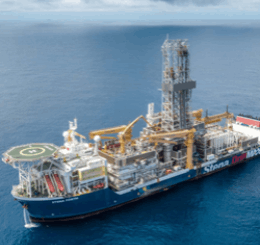
Floating LNG (FLNG) technology is gaining traction for its flexibility, lower costs, and ability to monetize remote offshore reserves. Several key projects are set to commence operations or reach milestones in 2026.
In the Republic of Congo, Eni’s Congo LNG Phase 2 features the Nguya FLNG vessel, which started up in late 2025 and will export its first cargo in early 2026, adding capacity from the Marine XII fields.
Gabon’s Perenco Cap Lopez FLNG, with 0.7 Mtpa capacity, is slated for startup in 2026, built by Dixstone.
Mozambique’s Coral Norte FLNG, approved in 2025 with a $7.2 billion investment, could see initial progress toward operations, though full rollout may extend beyond.
Other developments include upgrades to Golar LNG’s Hilli Episeyo vessel in Q3 2026 for Argentina’s Southern Energy FLNG, though deployment is targeted for 2027.
Petronas aims for a final investment decision (FID) on Suriname’s FLNG in 2026, involving subsea infrastructure in 450m water depths.
Globally, FLNG capacity is expanding rapidly, with nine units under construction adding 20.6 Mtpa, including projects in Mauritania/Senegal and Cameroon.
These offshore installations highlight Africa’s growing role, where FLNG enables quick development amid security and logistical challenges.
What Investors Should Look For
The LNG sector offers compelling opportunities for investors, with global supply projected to surge by 193 Mtpa through 2028.
Focus on companies with long-term contracts securing 95%+ of capacity, like Cheniere, which ensure stable cash flows amid price volatility.
Look for leaders in U.S. exports—ExxonMobil, Chevron, and ConocoPhillips—benefiting from low feed gas costs and capacity growth to 16 Bcf/d in 2026.
Prioritize firms with strong dividends (e.g., ExxonMobil at 2.83%, ConocoPhillips at 3.05%) and growth potential in Asia-Pacific markets.
Watch for risks like overinvestment leading to oversupply, but bullish demand drivers—rising to 627 Mtpa by 2035—favor undervalued stocks trading at 4-32% discounts to fair value.
Diversify via ETFs for broader exposure, and monitor geopolitical shifts, such as Europe’s diversification from Russia.
With LNG’s lower carbon intensity than coal, sustainable practices will increasingly attract capital.As Sawan noted, LNG is poised to be a “winner” in the energy transition. For more insights, tune into the Energy News Beat podcast.
Sources: britannica.com, etftrends.com,
Get your CEO on the podcast: https://sandstoneassetmgmt.com/media/
Is oil and gas right for your portfolio? https://sandstoneassetmgmt.com/invest-in-oil-and-gas/