


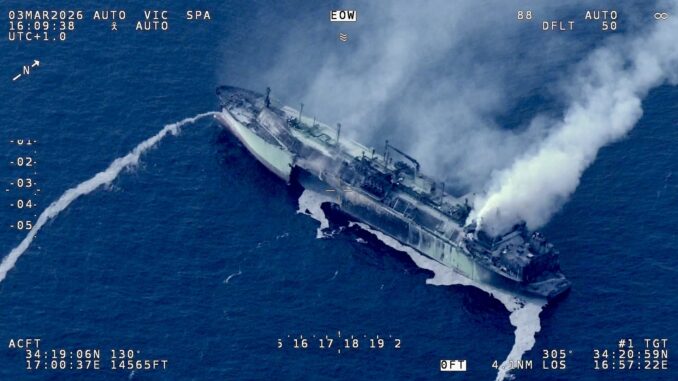
In a dramatic escalation of covert operations targeting Russia’s energy exports, the Arctic Metagaz, a sanctioned Russian LNG tanker, became the first liquefied natural gas carrier to be destroyed in a conflict-related attack on March 3, 2026.
The incident unfolded in the Mediterranean Sea between Malta and Libya, marking a new theater in the ongoing efforts to disrupt Moscow’s shadow fleet amid the broader geopolitical tensions surrounding the Ukraine conflict and sanctions on Russian energy.
Details of the Attack
The Arctic Metagaz, a 77,551 deadweight tonnage vessel built in 2003, exploded around 4:00 a.m. local time, approximately 130 nautical miles north of Sirte, Libya.
Witnesses and maritime sources reported a series of explosions followed by a massive fire that led to the ship’s sinking.
All 30 crew members escaped in a lifeboat and were rescued within Libya’s search-and-rescue zone, with Malta’s Armed Forces confirming receipt of the distress signal.
The tanker had deactivated its AIS transponder for about 300 kilometers prior to the incident, a common tactic for “gray route” operations to evade sanctions enforcement.
Maritime security firm EOS Risk Group and Greek media outlets assessed the cause as a likely drone strike, with Ukraine suspected of orchestrating the operation.
Russia’s transport ministry later accused Ukrainian naval drones, though no group has claimed responsibility.
This aligns with previous Ukrainian actions, such as the SBU’s claimed drone strike on the shadow fleet tanker Qendil in December 2025 southwest of Crete.
The vessel was fully laden with LNG loaded from Russia’s Arctic LNG 2 facility in Murmansk on February 18, after transiting around the UK and Spain.
Its last reported position was off Malta on March 2.
While some reports suggest the cargo was destined for Singapore or Asia, tracking data and industry analysis point to an ultimate destination in China via Port Said.
BREAKING:
A Russian ship, Arctic Metagaz, carrying gas was sunk off the coast of Libya by an unknown attacker.
All 30 crew members were rescued.
The tanker was under US and UK sanctions as part of Russia’s so-called “shadow fleet.” pic.twitter.com/zLh5c312LC
— Visegrád 24 (@visegrad24) March 4, 2026
Russian transport ministry has confirmed a Ukrainian naval drone hit a Russian oil tanker 100km off Malta in the Mediterranean Sea.
That is a significant strike almost 2000+ Kilometres from the Ukrainian mainland… pic.twitter.com/0OjdaKJuYn
— WarMonitor🇺🇦🇬🇧 (@WarMonitor3) March 4, 2026
Ownership and Sanctions History
The Arctic Metagaz operated under a Russian flag but had a history of false registrations, including Palau, Curacao, and Saint Maarten, all denied by the respective authorities.
Its commercial managers were listed in India, typical for shadow fleet vessels designed to obscure true ownership and evade Western sanctions.
The tanker has been under U.S., UK, and EU sanctions since August 2024, part of a broader crackdown on over 640 ships in Russia’s shadow fleet of more than 400 vessels used to bypass export restrictions.
This incident is not isolated. Recent months have seen intensified actions against the shadow fleet, including French and Belgian special forces seizures in the North Sea and Mediterranean, and U.S. interdictions of seven sanctioned tankers since December 2025.
Was It Ukraine or Iran?
Initial speculation around Iranian involvement seems unlikely, given the vessel’s Russian affiliation and the location far from the Persian Gulf tensions. Instead, evidence points squarely to Ukraine, with Reuters and other outlets citing sources attributing the strike to Kyiv’s forces.
This fits a pattern of Ukrainian operations expanding beyond the Black Sea, including the Qendil attack, described as an “unprecedented special operation” by the SBU’s Alpha unit.
The simultaneous naval campaign against Iran in the Gulf further distinguishes the two conflicts in the same ocean, reducing the plausibility of Iranian crossover.
Implications for Insurance
The destruction of the Arctic Metagaz has sent shockwaves through the marine insurance market, already strained by escalating risks in conflict zones. War-risk premiums for Black Sea voyages have tripled in recent months, reaching 0.5-0.8% of a vessel’s hull value for seven-day periods—potentially adding hundreds of thousands of dollars per trip for larger tankers.
In the Mediterranean, this incident could prompt similar hikes, as underwriters reassess exposure to shadow fleet operations.
Shadow fleet vessels like the Arctic Metagaz often rely on non-standard or Russian-backed insurers, such as Granta, which offers up to $1bn in liability cover but lacks the credibility of Western P&I clubs.
Recent UK sanctions on entities like Maritime Mutual for covering dark fleet tankers highlight the vulnerabilities: these ships are frequently underinsured for environmental spills or total losses, making them high-risk targets.
Strikes like this signal that uninsured or poorly insured dark fleet tankers may face denial of coverage in high-risk areas, deterring owners and raising overall shipping costs for sanctioned cargoes.
Trump’s New Shipping Insurance System and Its Impact on London
Amid rising global shipping risks, President Trump announced on March 3, 2026, an initiative directing the U.S. International Development Finance Corporation (DFC) to provide political risk insurance and financial guarantees for maritime trade, particularly energy shipments through the Persian Gulf.
This “new system” aims to stabilize oil markets during the Iran conflict, offering coverage at reasonable rates to ensure the free flow of energy and potentially including U.S. Navy escorts if needed.
This U.S.-backed insurance could erode London’s dominance in marine insurance, where Lloyd’s and other firms handle the majority of global policies.
By providing an alternative for high-risk routes, Trump’s plan might divert business from London, especially for U.S.-aligned trade, as part of broader efforts under the Maritime Action Plan to revive American shipping.
The plan includes fees on foreign-built vessels and investments in U.S. shipyards, potentially generating billions to compete with established markets.
A Signal for Dark Fleet Tankers?
These strikes, including the Arctic Metagaz, underscore a clear message: dark fleet tankers operating without robust, Western-recognized insurance are increasingly vulnerable and may find coverage unobtainable.
With premiums surging and sanctions tightening, such vessels—often aging and falsely flagged—face higher operational costs and seizure risks.
This could force Russia to reroute exports or absorb losses, further straining its energy revenues amid ongoing sanctions.
As the Mediterranean joins the Black Sea and Persian Gulf as active zones of energy warfare, the global LNG market faces heightened uncertainty. For energy stakeholders, this incident highlights the fragility of sanctioned supply chains and the growing role of kinetic actions in enforcing economic pressure.
Sources: oilprice.com, insurancejournal.com,whitehouse.gov, businessinsurance.com



Be the first to comment