Have you ever seen one of my favorite movies, Groundhog Day? I feel like that right now as we are trying to report on the global energy crisis, and daily it is the Strait is open, ….closed,,, open,,, closed, …. Dolphins, removing mines,,,, clear ,,, wow.
Ok, and Jeff, yes, AI thought they were creating a shot of me, and not Bill Murray, but I like the hair they added.
1. Iran-U.S. Military Escalation in the Strait of Hormuz
The podcast opens with coverage of Iran seizing an oil tanker and attacking U.S. forces in the Strait of Hormuz. Three U.S. Navy destroyers (Truxin, Rafael, and Mason) were transiting the strait when Iranian forces fired missiles, drones, and deployed small boats. The host also mentions a large oil slick near Karg Island, suggesting Iran may be deliberately releasing millions of barrels of oil into the Persian Sea—creating an ecological disaster.
2. Iran’s Rail Corridor to China
Discussion of the Xi’an to Tehran rail corridor as an alternative to maritime blockades. Cargo train frequency has surged from one per week to one every 3-4 days since April, with freight rates climbing around 40%. However, the host notes this won’t significantly replace oil exports since it would take 7,000-8,000 tankers to equal a single VLCC (very large crude carrier).
3. Venezuela’s Economic and Infrastructure Crisis
Multiple stories cover Venezuela’s failing electrical grid, which is operating well below capacity and causing widespread blackouts. The host discusses Venezuela’s exploitation by China (being forced to sell oil at deep discounts while buying overpriced goods) and rehabilitation costs estimated at $15 billion over three years.
4. Venezuela’s Stranded Natural Gas Development
Shell is exploring development of Venezuela’s offshore natural gas resources (Dragon Gas Field with 4.2-4.5 trillion cubic feet) to be routed through Trinidad and Tobago’s infrastructure, potentially under OFAC sanctions relief programs.
5. Nuclear Energy Revival
Constellation Energy is restarting the Three Mile Island nuclear plant to meet booming AI-powered electricity demand. The host advocates for restarting other nuclear facilities, particularly in California.
6. BP’s Strategic Pivot Away from Clean Energy
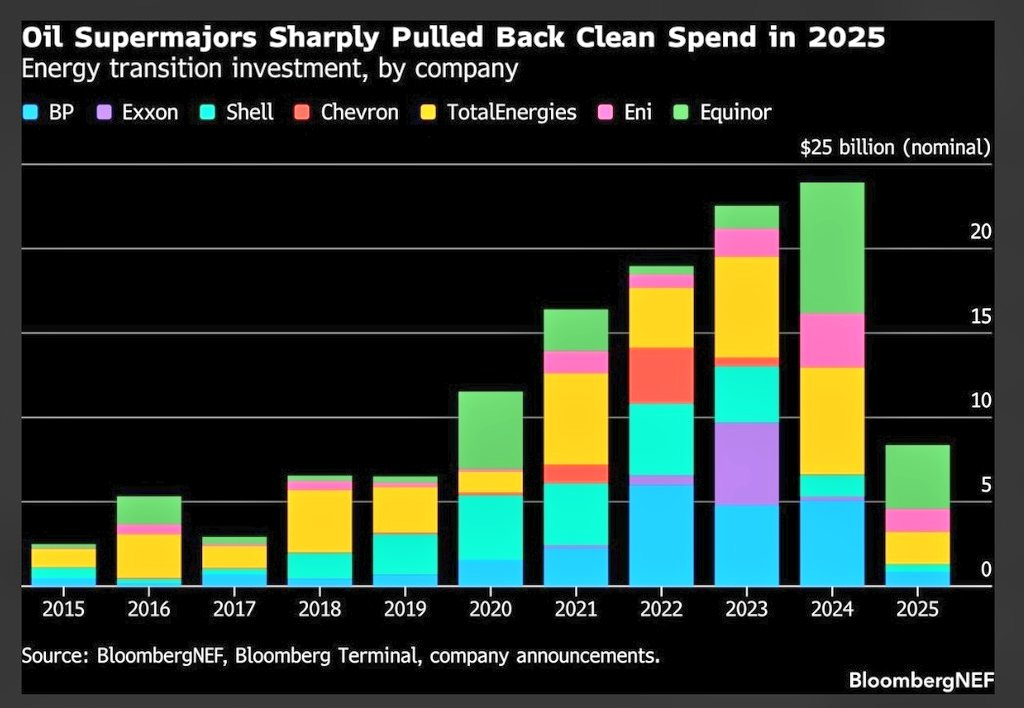
BP is selling stakes in UK carbon capture projects, signaling a return to focus on core oil and gas operations. The host notes this reflects a broader pullback by major oil companies from clean energy spending.
7. Virginia’s Carbon Market (RGGI)
Criticism of Virginia’s participation in the Regional Greenhouse Gas Initiative as a “wealth transfer” that will increase utility bills for ratepayers, comparing it unfavorably to California’s bullet train project.
8. Critical Minerals Independence from China
Crucial Metals Corp has secured approval to acquire a 70% stake in Greenland’s Tan Breeze rare earth deposit, featuring low radioactive elements and representing a significant step toward reducing U.S. dependence on Chinese critical minerals.
9. Cheniere Energy’s Financial Collapse
Cheniere Energy reported a shocking $3.5 billion net loss in Q1, swinging from a $335 million profit year-over-year, causing shares to plunge 10%.
10. Geopolitical Strategy and Controls
The host concludes with commentary on the need for “Venezuelan-style controls” on Iran to prevent funding of groups like the Houthis, arguing that without such controls, the Iranian IRGC will continue destabilizing activities.
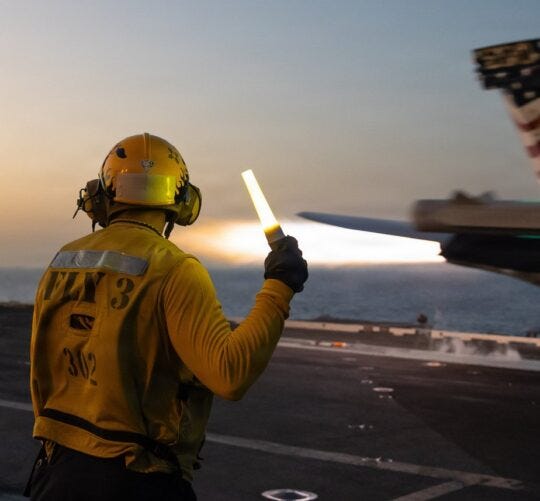
In a sharp escalation near the world’s most critical energy chokepoint, Iran and the United States clashed overnight in the Strait of Hormuz, with Tehran accusing Washington of targeting an Iranian-flagged oil tanker and then launching missile, drone, and small-boat attacks on three US Navy destroyers. The incident, which both sides described as defensive, comes as a month-long ceasefire brokered by President Donald Trump holds by a thread while negotiations for a permanent end to the 2026 Iran conflict continue.
US Central Command (CENTCOM) stated that three Arleigh Burke-class guided-missile destroyers — USS Truxtun (DDG-103), USS Rafael Peralta (DDG-115), and USS Mason (DDG-87) — were transiting the strait when Iranian forces fired multiple missiles, drones, and deployed small boats in what the US called an “unprovoked attack.” US forces intercepted all inbound threats, with no US vessels or personnel reported hit. In response, the US struck Iranian missile and drone launch sites and other military assets responsible for the assault. CENTCOM emphasized the action was purely defensive and that “no vessels were hit” during the exchange.
Iran’s military command offered a different account, claiming the US violated the ceasefire first by firing on an Iranian-flagged oil tanker (and another vessel) in or near Iranian territorial waters as it attempted to breach the ongoing US naval blockade of Iranian ports. Tehran said its forces retaliated immediately against “enemy units” in the Hormuz area, forcing the US ships to retreat toward the Gulf of Oman. Iranian state media described the US warships as having “fled” under fire.
This latest flare-up follows a pattern of maritime confrontations in recent weeks. Iran has seized or fired on multiple commercial vessels, including container ships and at least one oil tanker linked to its shadow fleet (reports mention the Barbados-flagged Ocean Koi / Jin Li as a recent target). The US, for its part, has seized several Iranian-linked tankers attempting to evade sanctions and the blockade. The Hormuz Strait, through which roughly 20% of global seaborne oil and LNG normally flows, has seen hundreds of merchant vessels stranded or rerouted since the US-imposed blockade began in mid-April.
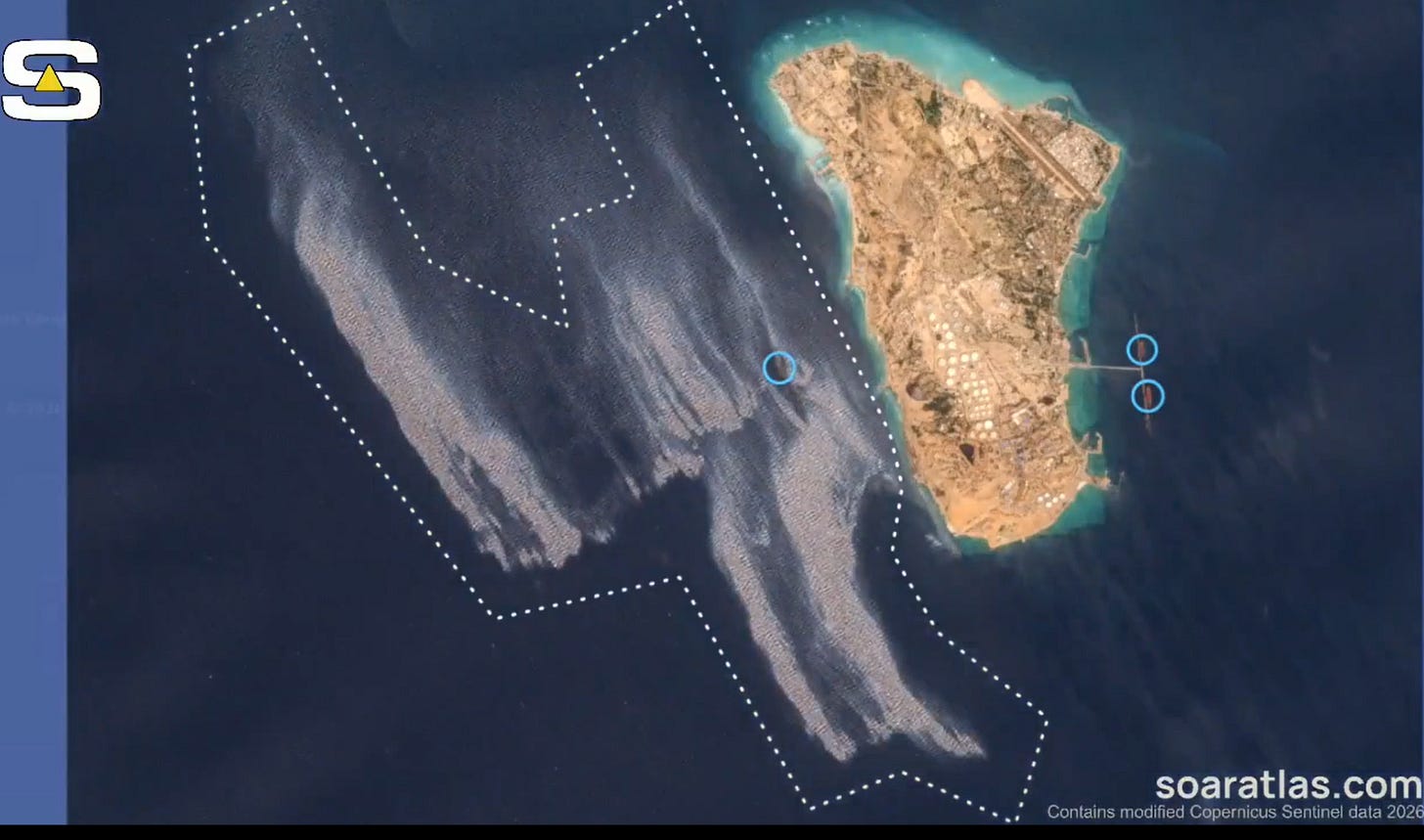
Oil Spill Concerns Mount Around Kharg Island
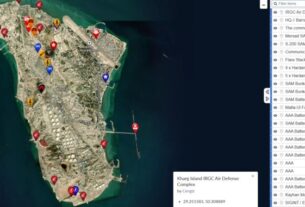
Compounding energy and environmental worries, satellite imagery released in the past 48 hours shows a large oil slick spreading across the Persian Gulf near Iran’s Kharg Island — the country’s primary crude export terminal, responsible for approximately 90% of its oil shipments. The slick, first prominently detected around May 6–7, has been drifting southwest at roughly 2 km per hour, raising fears of contamination reaching waters near Qatar and the UAE.
Analysts and maritime trackers are divided on the cause. The US blockade has severely restricted Iranian oil exports, causing onshore storage tanks at Kharg to fill rapidly (some reports indicate capacity limits could be reached within days). Iran has resorted to using aging tankers for floating storage and has reportedly slowed or adjusted production. Some opposition voices and independent observers speculate the spill could be a deliberate “bleed-off” to free up storage space so wells can continue pumping — an ecologically damaging tactic to buy time amid economic pressure. However, no verified evidence confirms intentional dumping; other explanations include routine operational leaks, transfers under strained conditions, or residual damage from earlier strikes on nearby facilities earlier in the conflict. The enclosed waters of the Persian Gulf make any major spill particularly devastating to marine ecosystems, fisheries, and regional desalination plants.
2.How Effective is the Iran Back Door Rail Line to China?
Not – it takes about 7,000 rail cars to equal 1 VLCC Tanker – but what it does do is allow weapons and supplies to come back through.
3.Venezuela’s Faulty Power Grid May Set Back Economic Comeback
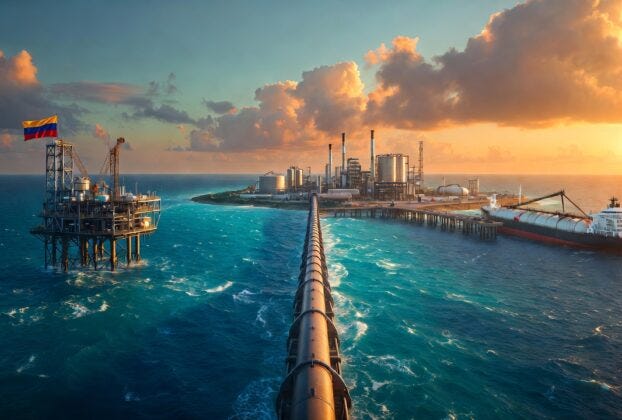
4.Will Venezuela Export Stranded Gas through Trinidad?
Shell is actively exploring the development of Venezuela’s offshore natural gas resources, with plans to route production through Trinidad and Tobago’s existing infrastructure for export as LNG. In a February 2026 earnings call and subsequent Bloomberg TV interview, Shell CEO Wael Sawan confirmed ongoing talks with Venezuela’s government to advance offshore gas projects, specifically targeting […]
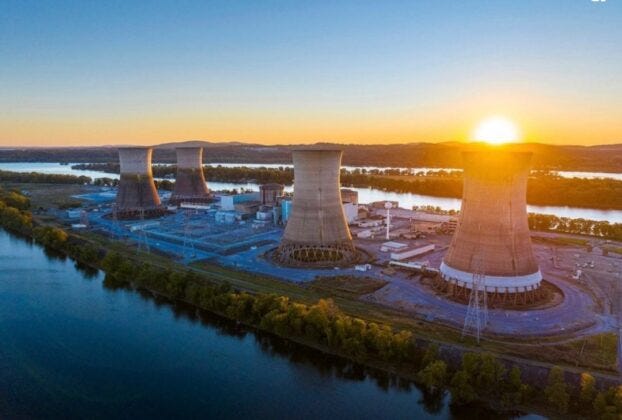
5.Three Mile Island Nuclear Plant Set to Restart Amid Booming AI Power Demand
We need all the nuclear we can get, and how about looking at the nuclear plants that were closed over the last 5 years, and see if any of those could be reopened? – I will be digging around on that.
6.BP to Sell Stakes in UK Carbon Capture Projects, Getting Back to Basics
Bookmark this one, the New CEO is looking to sell areas and trim the balance sheet to sell or move. This story also goes along with the one with Virginia that we covered in yesterday’s Substack. Carbon Capture, Carbon Credits, and Carbon Taxes are all wa wealth transfer, and a way to keep the middle class getting poorer. Oil companies like BP that are in a survival mode now are shedding the renewable energy and carbon projects to survive, and I believe this is a bigger symptom of things coming around the corner.
7.Virginia’s Carbon Market is a Wealth Transfer the Democrats are Trying to Hide
This is a great story, and I have reached out to Kim Farington to help interview her, and I will keep you posted.
8.US Secures Greenland Critical Minerals
This was a cool story.
US Secures Greenland Critical Minerals
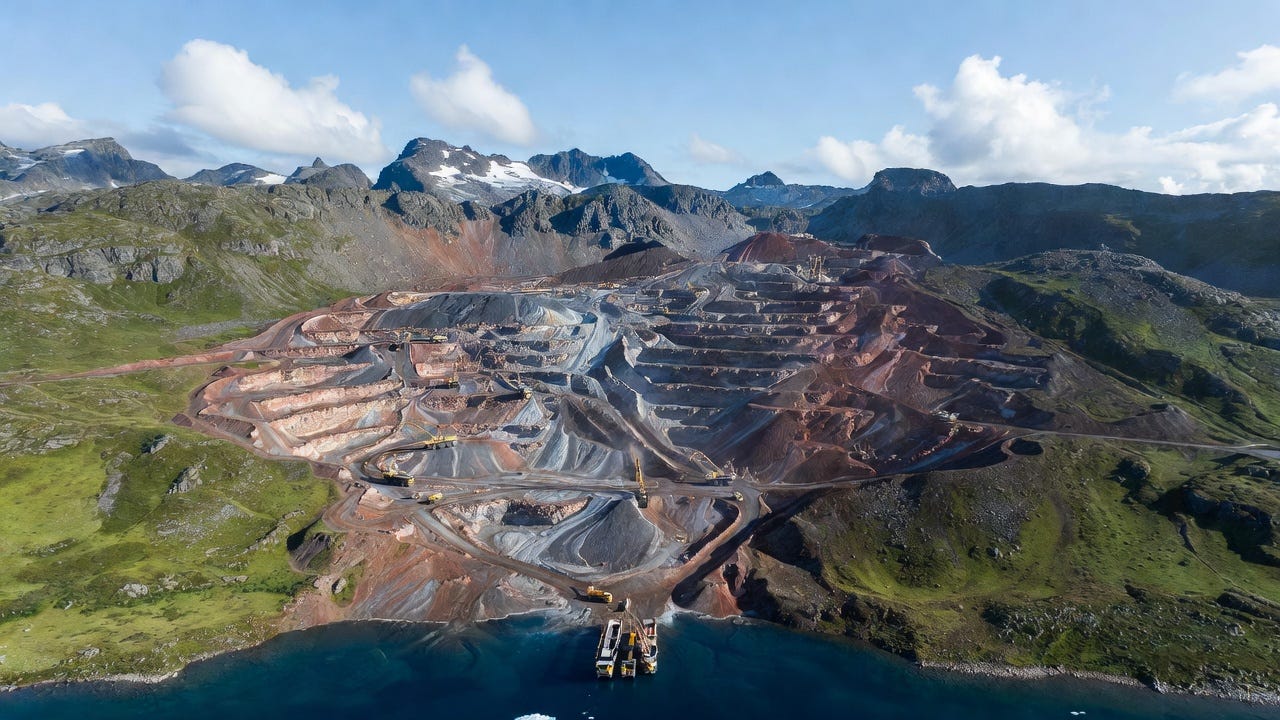
In a significant step toward reducing dependence on China for critical minerals, American mining company Critical Metals Corp. (NASDAQ: CRML) has secured formal approval from the Greenland government to acquire a 70% stake in 60° North ApS, advancing full control over the world-class Tanbreez rare earth deposit in southern Greenland. This development, announced in early May 2026, positions the United States to tap one of the largest and most strategically valuable heavy rare earth element (HREE) resources outside China, bolstering supply chain security for electric vehicles (EVs), wind turbines, advanced defense systems, and the broader clean energy transition.
The Tanbreez deposit stands out globally for its scale and quality. It contains an estimated 4.7 billion tonnes of rare earth-bearing material, with an exceptional 27% composition of heavy rare earths—primarily dysprosium, terbium, and yttrium. These elements are essential for high-performance permanent magnets used in EV motors, wind turbine generators, and military applications such as fighter jets and precision-guided munitions. For comparison, the United States’ Mountain Pass deposit in California has only about 0.49% heavy rare earths, while China’s giant Bayan Obo mine registers around 1.13%.
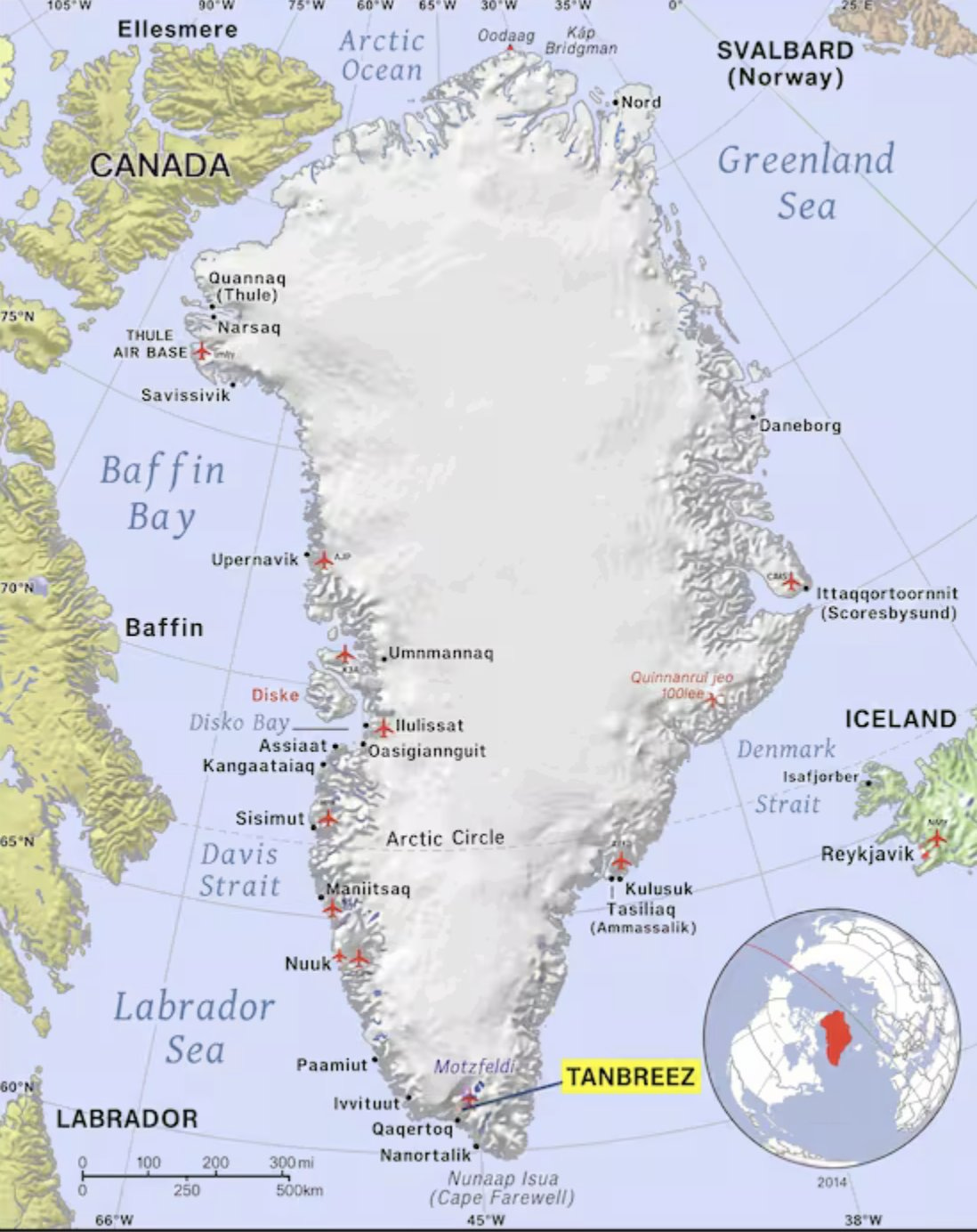
Equally important, Tanbreez features exceptionally low levels of radioactive elements—10–20 ppm uranium and under 100 ppm thorium—addressing a key environmental and permitting hurdle that has stalled other Greenland projects. The site already holds a full mining license valid until 2050, one of only two such licenses among more than 140 active exploration permits on the island.
Strategic Advantages and Timeline to Market
This acquisition aligns directly with U.S. efforts to diversify critical mineral supplies amid China’s dominance of 85% of global rare earth processing capacity and roughly 80% of U.S. imports. Heavy rare earths like dysprosium and terbium enable magnets that maintain performance at high temperatures, making them indispensable for efficient EVs, renewable energy infrastructure, and defense technologies. By extracting in Greenland and processing in the United States, the project creates a secure Western supply chain that reduces geopolitical risks from export controls or supply disruptions.
9.Cheniere Sags on Surprise $3.5 Billion Loss
This one caught a few people, including me, in the day trading group by surprise.
Check out the Energy News Beat SubStack

A shout-out to Steve Reese and the Reese Energy Consulting group for sponsoring the Podcast https://reeseenergyconsulting.com/.

Data2 if you have any business systems, can you trust A? Well, they have the patent on validation. . https://data2.zoholandingpage.com/energy

And we have WellDatabase rolling in as a new sponsor.