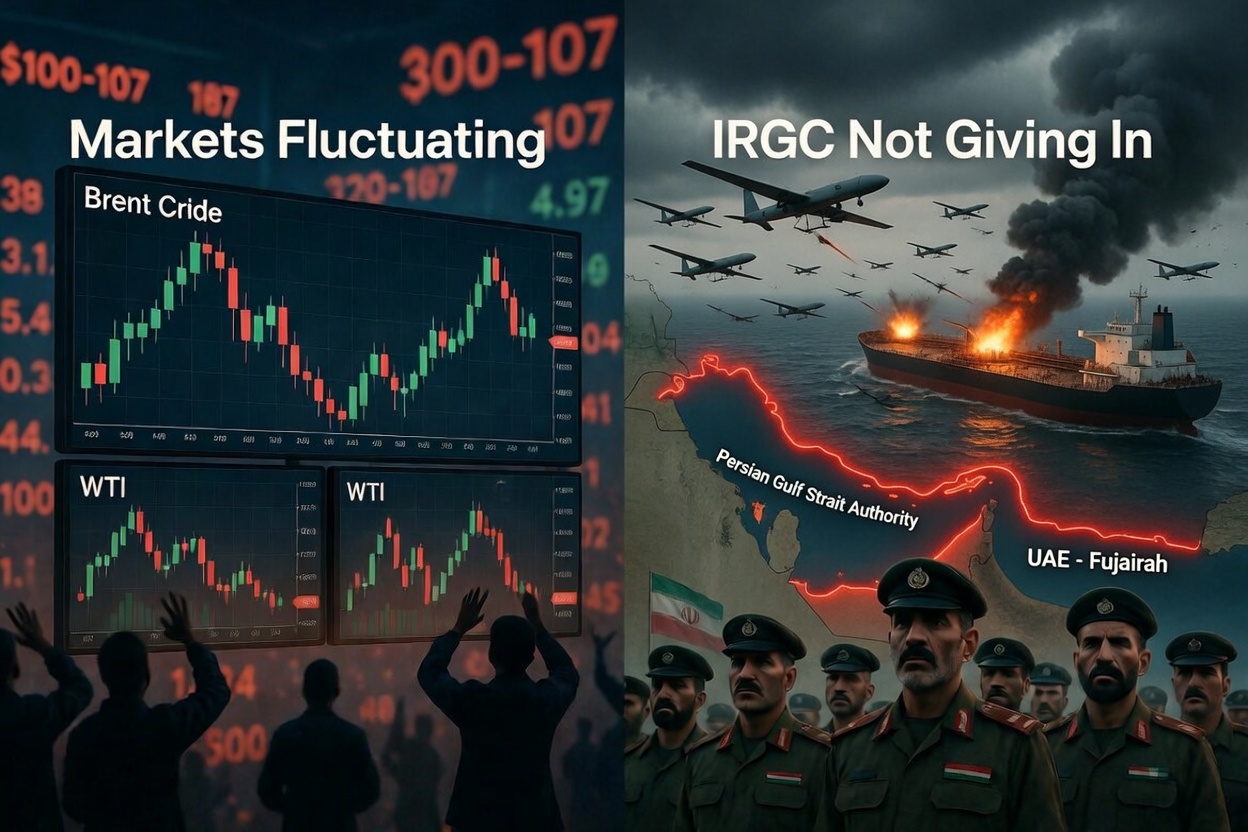
In a significant escalation of its maritime posture, Iran has formally established a “controlled maritime zone” in the Strait of Hormuz through its newly created Persian Gulf Strait Authority (PGSA). The authority—widely understood to operate under the Islamic Revolutionary Guard Corps (IRGC)—has published an official map and set up a social media presence to assert oversight over key shipping routes, including areas that extend into or near UAE territorial waters and critical export infrastructure.
The zone is defined as the area from the line connecting Kuh-e Mobarak in Iran to southern Fujairah in the UAE (eastern side) and from the tip of Qeshm Island in Iran to Umm Al Quwain in the UAE (western side). All vessels transiting the strait must now coordinate with and obtain authorization from the PGSA. This move effectively stakes a claim over Fujairah—the UAE’s vital oil export terminal at the end of the ADNOC West-East pipeline, specifically designed to bypass the Strait of Hormuz. Fujairah has already been targeted in the ongoing conflict.
Commodity trader and analyst Jack Prandelli highlighted the development in a detailed post today, noting that Iran is not only drawing lines on a map but building institutional architecture for long-term control:
“You don’t create a new military authority, publish its map, and give it a social media presence if you intend to hand back unconditional passage through the strait. The institutional architecture of Iranian control is being built in public. That’s the signal.”
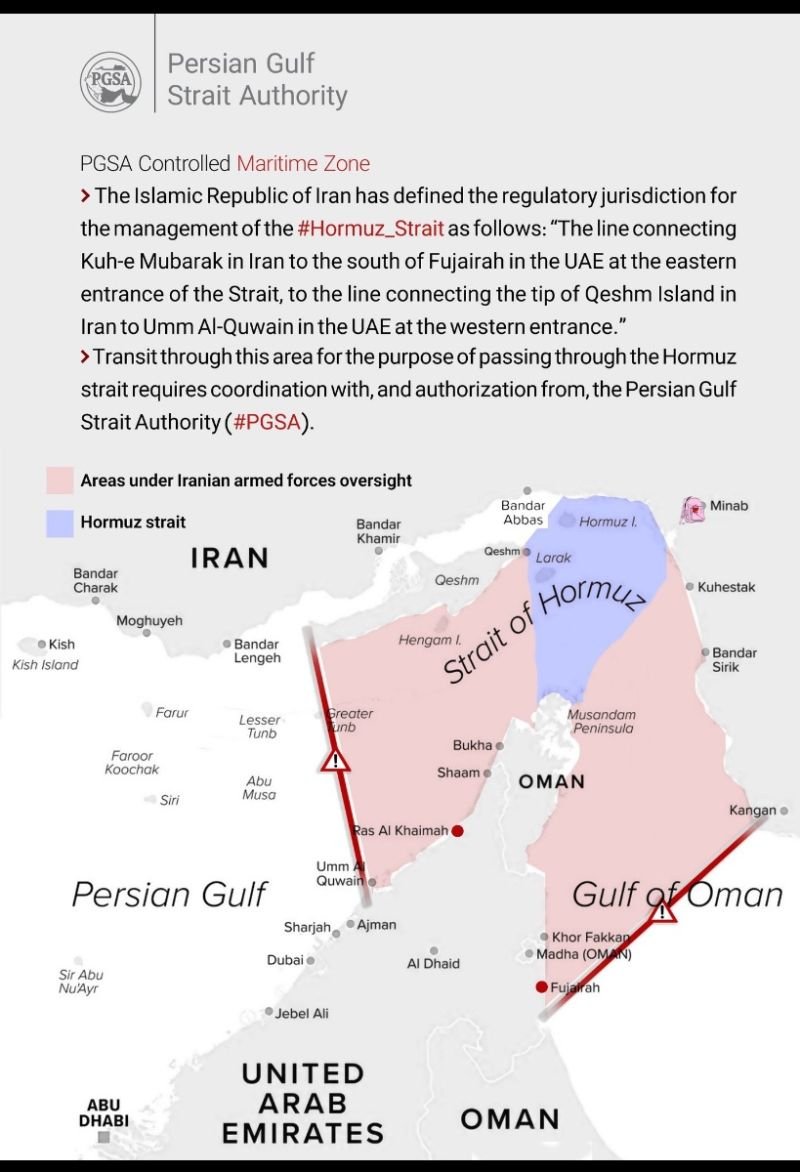
Verification of the Persian Gulf Strait Authority Announcement
Multiple independent sources confirm the PGSA’s announcement, including maps and statements published directly by the authority. The body was established earlier this month (around May 5–7, 2026) to “manage maritime transit,” collect fees, and position itself as the sole authority for passage. Gulf states, including the UAE, have rejected the claims as “fragments of dreams” or “pipe dreams,” insisting on freedom of navigation under international law. The UAE is accelerating its Hormuz-bypass pipeline expansion in response.
Talks with President Trump vs. the On-the-Ground Signal
While indirect negotiations continue—mediated by Pakistan and others—President Trump has repeatedly expressed optimism about a swift resolution, describing “very good talks” and pausing certain military actions in hopes of a memorandum to reopen the strait. Iran has acknowledged reviewing U.S. proposals but has not committed to a deal.
However, the timing of the PGSA map release—right in the middle of renewed diplomatic rumors—sends the opposite message. As Prandelli observed, the weekly cycle of “rumors of texts… Market volatility on diplomatic optimism… Then Iran responds” appears deliberate. Creating a permanent bureaucratic and military oversight structure over Hormuz (and UAE-linked ports) is not the action of a party preparing to concede control. It signals Iran is in this for the long haul.
As Energy News Beat host Stu Turley has repeatedly stated on the podcast, the only path to lasting peace in the Middle East is the imposition of Venezuelan-style controls on Iran’s oil and financial flows. Without such measures to curb the regime’s ability to fund proxies and the IRGC, destabilization will continue. Iran’s latest move shows it is nowhere near considering—or accepting—such constraints.
ADNOC CEO Sultan Al Jaber’s Stark Warning
Even if the conflict ended tomorrow, restoring normal oil flows would be a long and painful process. In remarks covered widely today, Dr. Sultan Al Jaber, CEO of ADNOC and UAE Minister of Industry and Advanced Technology, stated:
“Even if this conflict ends tomorrow it will take at least four months to get back to 80% of pre-conflict flows and full flows will not return before the first or even second quarter of 2027.”
Tankers, pipelines, storage, damaged infrastructure, and LNG cargoes all require extensive time to restart. Markets may be underestimating the duration of the supply shock.
Why Are Oil Prices Going Down? Paper vs. Physical Reality
Despite the clear signals of prolonged disruption, paper prices (futures contracts) have softened or shown volatility today. As of May 21, 2026, Brent crude futures traded around $103–107/bbl and WTI in the $96–100 range—down from earlier peaks amid negotiation optimism and ceasefire rumors.
Yet the physical market tells a different story. Dated Brent (the benchmark for actual delivered crude) and spot prices for key grades have maintained significant premiums over futures throughout the conflict, at times exceeding $20–$30/bbl or more. Physical supply remains tight due to real disruptions, attacks on infrastructure, and the slow recovery timeline outlined by Al Jaber. The paper market is pricing hope and headlines; the physical market reflects barrels that must actually move.
This disconnect—paper blinking while physical supply stays constrained—underscores why energy traders and producers must look beyond futures screens.
Bottom Line
Iran’s creation of the Persian Gulf Strait Authority and its claimed control zone—including UAE exit ports like Fujairah—is a clear declaration of intent. It contradicts short-term settlement narratives and reinforces the need for the kind of decisive economic and strategic pressure Stu Turley has long advocated. Recovery will not be quick, even in the best-case scenario. Energy markets, policymakers, and businesses must prepare for a prolonged period of elevated physical tightness and geopolitical risk.
Appendix: Sources and Links
- Jack Prandelli X post on PGSA map & control zone: https://x.com/jackprandelli/status/2057374616843063578
- Jack Prandelli X post on Sultan Al Jaber warning: https://x.com/jackprandelli/status/2057373244932428093
- BBC: “Iran steps up claim to control Strait of Hormuz” (map & analysis)
- TradeWinds: “Iran’s new Persian Gulf Authority draws lines of control around Strait of Hormuz”
- The National / ADNOC statements on Al Jaber recovery timeline
- Reuters, Times of Israel, PBS, Al Jazeera coverage of PGSA creation and zone announcement
- Energy News Beat Podcast episodes & Substack: Stu Turley on Venezuelan-style controls for Iran
- Oil price data: Trading Economics, EIA, CSIS wartime oil price analysis (paper vs. physical)
- U.S.-Iran negotiation updates: Al Jazeera, CNN, BBC reporting on Trump talks (May 2026)
Energy News Beat will continue monitoring developments in real time. This is not financial advice—consult professional advisors for trading or investment decisions.