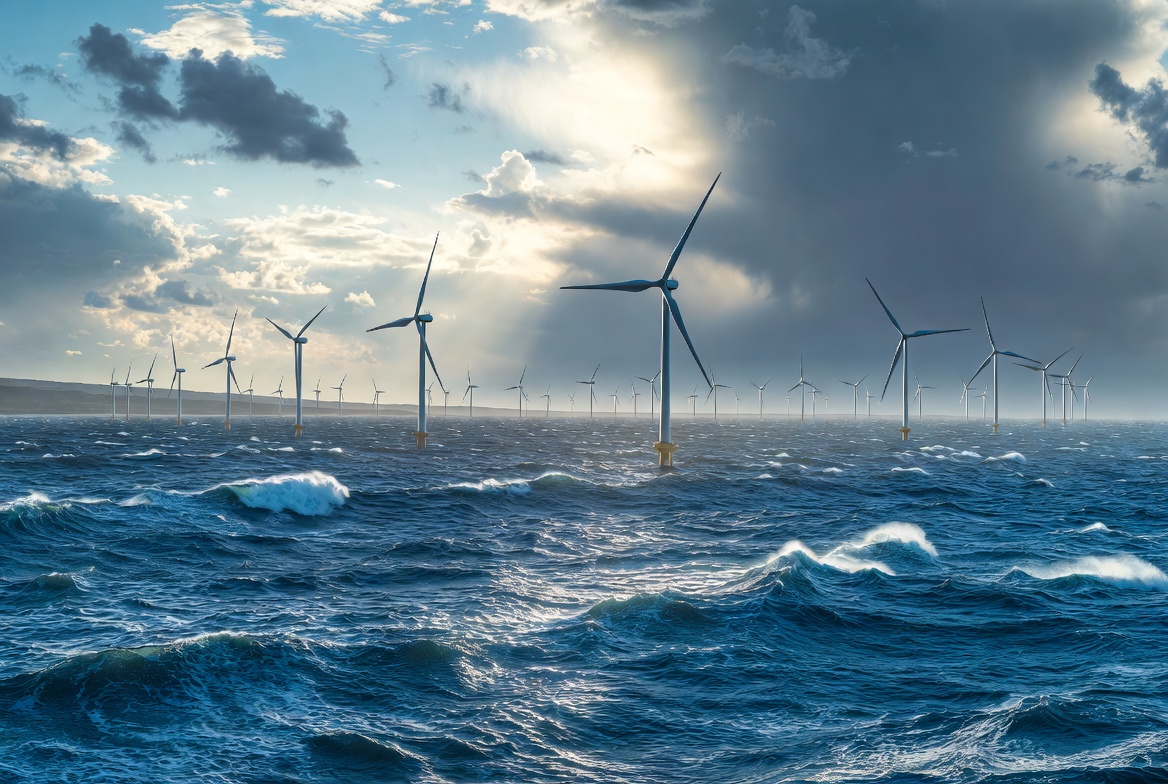
In the latest chapter of the green energy wars, a coalition of Democratic state attorneys general filed suit Tuesday against the Trump administration’s deal to wind down costly offshore wind projects. The lawsuit, led by New York Attorney General Letitia James and joined by her counterparts in Connecticut, Maine, Massachusetts, New Jersey, Rhode Island, and Vermont, challenges a March 2026 agreement between the Department of the Interior and French energy giant TotalEnergies.
Under the deal, TotalEnergies agreed to terminate its U.S. offshore wind leases—primarily the Attentive Energy project off New York and Carolina Long Bay off North Carolina—in exchange for a $928 million payment (essentially a refund of its lease acquisition costs). The company committed to redirecting that capital into U.S. oil and natural gas production and to forgo any future offshore wind development in American waters. The Trump administration framed the move as a win for American consumers: ending taxpayer-funded subsidies for unreliable, expensive offshore wind in favor of affordable, dispatchable fossil fuels that actually keep the lights on and lower energy bills.
The suing states call the arrangement a “sham deal” that unlawfully funnels taxpayer dollars to a foreign company to abandon renewable energy and invest in oil and gas. They argue it violates federal law, bypasses required public processes, and threatens jobs, grid reliability, and climate goals in the Northeast. The suit seeks to void the agreement and revive the leases.
This legal skirmish is not isolated. It follows multiple earlier lawsuits by the same coalition of blue-state AGs attempting to block President Trump’s broader energy dominance agenda, including his early 2025 directive pausing federal approvals for wind projects. Offshore wind, once hyped as the future of clean energy, has been plagued by skyrocketing costs, supply-chain issues, whale entanglement concerns, and massive subsidies—none of which delivered the promised cheap, reliable power.
The Real Story: An Ideology Built on Implausible “Doomsday” Scenarios
What makes this lawsuit particularly tone-deaf is fresh evidence that the entire net-zero rush was predicated on exaggerated, now-admitted-implausible climate models. Just one day before the suit was filed, Energy News Beat highlighted a quiet admission by the UN’s Intergovernmental Panel on Climate Change (IPCC). In technical guidelines for its upcoming Seventh Assessment Report (CMIP7), the IPCC confirmed that its most extreme “doomsday” scenarios—RCP8.5 and SSP5-8.5—were unrealistic. These pathways assumed coal use exploding far beyond recoverable reserves and projected 4–5°C of warming by 2100. They dominated climate research, media coverage, and policy for over a decade.
Climate policy expert Roger Pielke Jr. put it bluntly: “The IPCC and broader research community have now admitted that the scenarios that have dominated climate research, assessment, and policy during the past two cycles of the IPCC assessment process are implausible. They describe impossible futures.”
Yet trillions of dollars in public and private spending, mandates, subsidies, and lawsuits were justified on the back of these worst-case fantasies. Politicians and activists warned of existential threats and “12 years to act,” pushing rushed net-zero policies that ignored engineering realities, economics, and actual emissions trends.
How Much Has Climate Lawfare Cost US Consumers?
The human and economic toll is staggering—and largely hidden from ratepayers.
Globally, the energy transition binge has already consumed roughly $10 trillion over the past 20 years on green energy initiatives, subsidies, mandates, and regulations. In 2025 alone, energy transition investment hit $2.3 trillion, with clean energy spending at $2.2 trillion (including $690 billion directly into renewables like wind and solar). Net-zero pathways are projected to require an extra $3.5–9 trillion per year globally through 2050.
The U.S. has been a major driver of this spending through federal tax credits, state renewable mandates, and regulatory pressure. Offshore wind alone has been among the most expensive experiments: lease sales, construction subsidies, and power purchase agreements routinely deliver electricity at double or triple the cost of natural gas or nuclear on a reliable, dispatchable basis. When projects are canceled or delayed—as many have been under market realities and now Trump policy—consumers still foot the bill through higher rates, stranded costs, and lost grid reliability.“Climate lawfare”—the flood of lawsuits by environmental groups, states, and activists to block fossil fuel projects, force renewable buildouts, or extract damages from energy companies—adds another massive hidden tax. One analysis showed that just $100 billion in climate-related litigation damages translates to roughly 31 cents per gallon higher gasoline prices and $326 extra per household per year.
Project delays from litigation have added hundreds of millions to individual infrastructure costs (e.g., $500 million for one New England transmission line). With nearly 2,000 climate-related cases filed in the U.S. as of mid-2025, the cumulative drag on investment, permitting, and energy prices is measured in the hundreds of billions.
The result? Higher electricity bills in states with aggressive renewable mandates, grid instability when the wind doesn’t blow, forced retirements of reliable baseload power, and trillions diverted from productive uses like infrastructure, healthcare, or poverty alleviation. Renewables (including hydro) still provide only about 32% of global electricity but just 3% of primary energy, while fossil fuels continue to meet the vast majority of real-world demand. Absolute CO₂ emissions rose again in 2024.
This week’s lawsuit is more than a fight over two wind leases. It is the latest desperate attempt by ideological holdouts to defend a policy framework built on now-discredited doomsday projections. While the Trump administration redirects capital toward affordable, reliable American energy, blue-state AGs are doubling down on lawfare that has already cost consumers dearly.
The American people voted for energy dominance and lower costs. Continued climate lawfare—whether blocking pipelines or suing to revive failed wind projects—only prolongs the pain.
- WSJ Pro article (original referenced): “State Attorneys General Sue Trump Administration Over Payment Ending Offshore Wind Projects” – https://www.wsj.com/pro/sustainable-business/state-attorneys-general-sue-trump-administration-over-payment-ending-offshore-wind-projects-ee72f356
- Energy News Beat: “UN Climate Panel Quietly Admits Its Doomsday Climate Scenarios Were ‘Implausible’ – How much money has been spent on Net Zero because of lies?” (June 2, 2026) – https://energynewsbeat.co/enb-publisher-picks/un-climate-panel-quietly-admits-its-doomsday-climate-scenarios-were-implausible-how-much-money-has-been-spent-on-net-zero-because-of-lies/
- AP / OPB coverage of the lawsuit: https://www.opb.org/article/2026/06/02/new-york-oregon-offshore-wind-projects-lawsuits-trump-administration/
- E&E News / Politico: States file challenge to Trump admin’s offshore wind lease deal – https://www.eenews.net/articles/states-file-challenge-to-trump-admins-offshore-wind-lease-deal/
- DOI press release on the TotalEnergies agreement (March 2026): https://www.doi.gov/pressreleases/interior-and-totalenergies-agree-end-offshore-wind-projects-lowering-costs-american
- Additional context on lawfare costs drawn from public analyses referenced in search results (e.g., Wayne Winegarden / Pacific Research Institute, ACCF report on litigation impacts).
Energy News Beat will continue tracking these developments as the Trump administration prioritizes American energy security over green ideology.