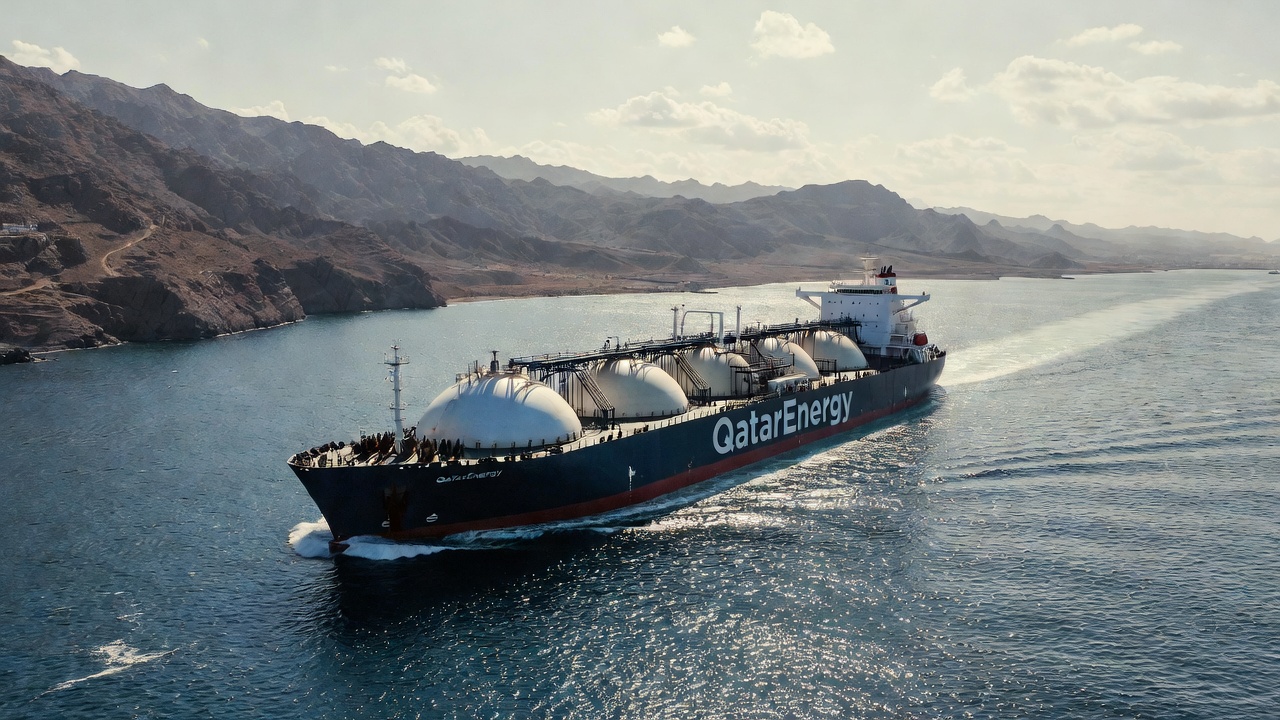
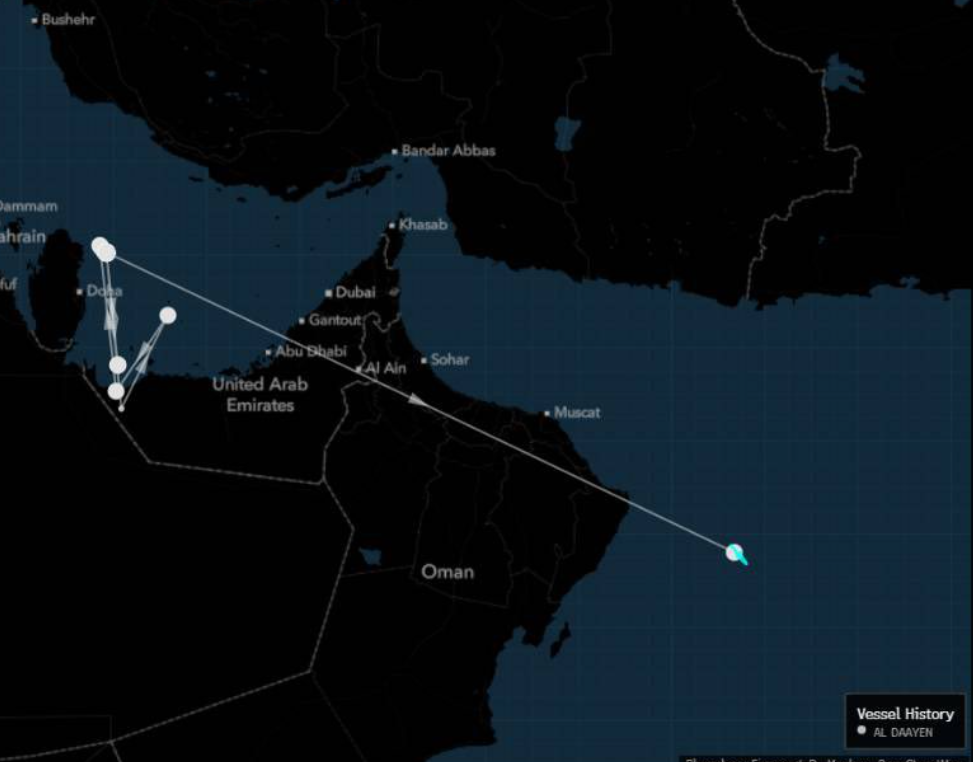
In a striking display of persistence amid one of the most volatile energy chokepoints in the world, QatarEnergy has successfully moved its ninth known LNG cargo out of the Persian Gulf since the Iran conflict erupted in late February 2026. Bloomberg energy reporter Stephen Stapczynski highlighted the latest transit on X today, noting that the tanker — identified in shipping data as the Al Daayen — went dark over the weekend before reappearing in the Arabian Sea, bound for China.
@The vessel’s track tells the story: it disappeared from public AIS (Automatic Identification System) tracking on June 5 and resurfaced east of the Strait of Hormuz, heading eastward. Pre-war, Qatar — the world’s largest LNG exporter — routinely moved roughly one cargo per day through the strait. Nine successful transits in roughly 100 days represent a mere trickle against the nameplate capacity of ~77 million tonnes per year.
This latest “sneak” raises urgent questions for energy markets, traders, and geopolitics as the post-Iran-war era unfolds. Is Iran successfully maintaining de facto control over the strait despite cease-fire attempts and U.S. naval pressure? How will global LNG and oil pricing models adapt if “going dark” becomes the new normal for bypassing strategic choke points? And what does this mean for traders who rely on transparent shipping data?
The Strait of Hormuz Crisis: A Quick Recap
The 2026 Strait of Hormuz crisis began with U.S.-Israeli strikes on Iran on February 28, triggering Iranian retaliation across the Gulf, IRGC warnings, mine-laying, and attacks on merchant vessels. QatarEnergy declared force majeure on LNG contracts on March 4 after halting production at Ras Laffan. Iranian attacks damaged ~17% of Qatar’s LNG capacity (repairs estimated at 3-5 years). Insurance markets pulled war-risk coverage, traffic plummeted, and the IRGC established the Persian Gulf Strait Authority (PGSA) to regulate — and charge tolls for — any passage.
Yet selective transits have resumed on a case-by-case basis, often tied to diplomacy. Early cargoes went to Pakistan under government-to-government deals; later ones, like the Al Sahla (QatarEnergy’s third documented transit in May), headed to China. The Al Daayen fits the pattern: a QatarEnergy-controlled Q-Max or similar vessel using the northern Iranian-approved route while minimizing visibility.
“Going Dark” vs. the Dark Fleet: Not the Same Thing
It is important to distinguish the tactic used here from the so-called “dark fleet” or shadow fleet.
Going dark refers to the temporary, deliberate disabling of a vessel’s AIS transponder. Ships normally broadcast position, identity, and course data for safety and collision avoidance. In high-risk zones — piracy, active conflict, or drone threats — operators may switch it off for security. This is the tactic QatarEnergy (and ADNOC) tankers have adopted to transit Hormuz. It is not inherently illegal when justified by safety or security concerns, though it reduces transparency.
The dark fleet (shadow fleet) is a different animal: an opaque network of aging tankers, often with shell-company ownership, flag-of-convenience changes, and non-Western insurance, used primarily to evade Western sanctions (e.g., Russian oil post-2022 Ukraine invasion, or Iranian/Venezuelan crude). These vessels frequently combine AIS manipulation with deceptive practices like ship-to-ship transfers and falsified documents. QatarEnergy’s tankers are state-controlled, fully insured where possible, and moving legitimate commercial cargoes — they are simply navigating a war zone where standard insurance has evaporated.
The convergence of the two tactics is notable. What began as a sanctions-evasion playbook is now being repurposed by major Gulf producers to keep energy flowing under fire.
Global Pricing Models Under Pressure
LNG and oil pricing have long depended on visible flows through chokepoints like Hormuz (which normally carries ~20% of global LNG and one-fifth of seaborne crude). Traders, analysts, and algorithms at firms like Kpler, Vortexa, and Bloomberg use real-time AIS data to forecast arrivals, build supply/demand balances, and price benchmarks such as the JKM (Japan-Korea Marker) for LNG or Dated Brent for oil.If “sneaking” (going dark + selective IRGC-approved routes) becomes routine:
Transparency collapses: Real-time tracking of Qatar-origin LNG to Asia becomes patchy. Spot-market participants lose the ability to count cargoes en route, widening bid-ask spreads and increasing volatility.
Risk premiums soar: War-risk insurance, already 4-6× higher, stays elevated. Freight rates for VLGCs and Q-Max vessels spike. Traders demand higher margins or shorter-term contracts.
Basis differentials distort: Asian LNG buyers (China, Japan, Korea) face greater uncertainty on Qatari volumes, pushing them toward U.S. or Australian spot cargoes and inflating regional premiums. European buyers, already short of Qatari volumes (12-14% of imports pre-crisis), see knock-on effects.
Pricing model recalibration: Forward curves, options pricing, and even ETF/derivatives strategies must incorporate new variables — diplomatic signals from Tehran, PGSA toll levels, and alternative intelligence (satellite imagery, insurer reports). Models that once treated Hormuz flows as predictable now treat them as binary events.
Oil markets face parallel pressure. While crude has more flexible routing options than LNG, the same opacity affects inventory builds in Asia and Europe, feeding into WTI/Brent spreads and crack spreads for refined products.
Will Iran Maintain Control?
The IRGC’s Persian Gulf Strait Authority, tolls reportedly reaching $1–2 million per vessel, and selective approvals demonstrate Tehran’s intent to retain leverage even if outright closure proves unsustainable. Diplomacy (Qatari teams in Tehran, Pakistani mediation, U.S. pauses in naval escorts) has enabled these nine cargoes, but each transit remains conditional. Any escalation — or breakdown in talks — could slam the door again.
For global traders, the message is clear: strategic chokepoints are no longer purely commercial arteries. They are now theaters of hybrid conflict where visibility is a luxury and “sneaking” is survival.
Outlook for Energy News Beat Listeners and TradersQatarEnergy’s ninth transit proves that some gas is still flowing — but far below pre-war levels. Northeast Asia’s structural LNG deficit is building, U.S. exporters continue to benefit, and European prices remain elevated. The longer “going dark” persists as standard operating procedure, the more pricing models will evolve from data-driven precision to scenario-based risk management.
This also highlights the problems of the oil, gas, and LNG trading markets. Paper or futures trading vs. the physical delivery of the product. The paper and physical pricing always catch up, one meeting the other. Demand destruction will bring the physical price down as it starts, but the critical point is when.
Traders who adapt fastest — by diversifying intelligence sources, hedging aggressively, and building relationships in alternative supply corridors — will thrive. Everyone else risks being caught in the fog.
- Stephen Stapczynski (@SStapczynski) X post, June 8, 2026: https://x.com/SStapczynski/status/2063920980326822208 (includes vessel track image of Al Daayen going dark June 5 and reappearing).
- Wikipedia: “2026 Strait of Hormuz crisis” (detailed timeline, force majeure, capacity loss, market impacts): https://en.wikipedia.org/wiki/2026_Strait_of_Hormuz_crisis.
- Reuters: “Oil and LNG tankers exit Hormuz, heading for Pakistan and China” (May 25, 2026): https://www.reuters.com/business/energy/vessels-carrying-middle-east-oil-lng-exit-hormuz-head-pakistan-china-2026-05-25/.
- Energy News Beat: “QatarEnergy’s Third LNG Tanker Exits the Strait of Hormuz” (May 23, 2026): https://energynewsbeat.co/exports/qatarenergys-third-lng-tanker-exits-the-strait-of-hormuz-amid-fragile-diplomacy-and-iranian-oversight/.
- Argus Media, Reuters, and other shipping trackers referenced in real-time reports (AIS data via Kpler, Vortexa, LSEG).
- Additional background on “going dark” vs. shadow fleet: European Parliament research and maritime intelligence analyses.
Energy News Beat will continue monitoring Hormuz transits, LNG pricing volatility, and diplomatic developments. Subscribe for real-time updates and Stuart Turley’s podcast analysis.