

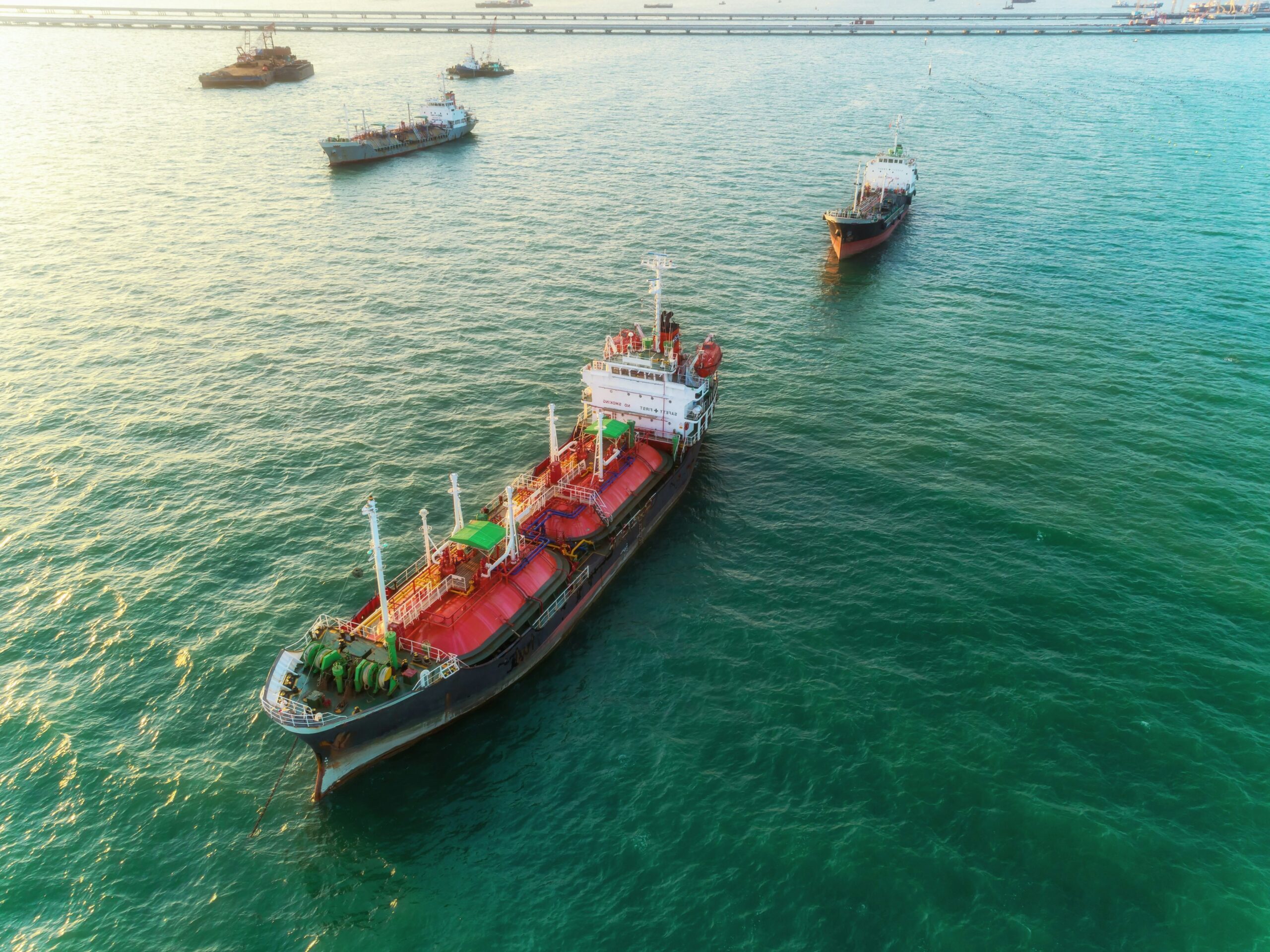
President Donald Trump has extended a temporary waiver of the Jones Act for another 90 days, allowing foreign-flagged vessels to continue transporting certain energy commodities and related products between U.S. ports amid ongoing disruptions from the war in Iran. The extension, finalized around August 10, 2026, and set to take effect after the prior waiver’s scheduled expiration on August 16, comes with significant narrowing: it shifts from a broader blanket approach to case-by-case reviews of individual voyages.
The Jones Act (Section 27 of the Merchant Marine Act of 1920) generally requires that goods moved by water between U.S. ports travel on vessels that are U.S.-built, U.S.-owned, and U.S.-crewed. Waivers are permitted in the interest of national defense when qualified U.S. vessels are unavailable. The current series began on March 17, 2026, with an initial roughly 60-day waiver (through mid-May) covering hundreds of energy-related and fertilizer product categories, requested amid Strait of Hormuz disruptions that elevated global and U.S. fuel costs. It was extended in late April 2026 for an additional 90 days through August 16. The August 2026 action represents the second extension of this waiver period, making it the longest and among the broadest suspensions of the Jones Act in its more than century-long history.
Under the narrowed terms, the Pentagon must consult the U.S. Maritime Administration on the availability of qualifying U.S.-flagged, -owned, and -operated vessels before approving individual voyages. The waiver focuses more squarely on energy movements and applies to a smaller set of commodities than the original broad list (previously around 659 categories). Covered items include gasoline, jet fuel, crude oil, naphtha, liquefied natural gas, soy oil, and fertilizers. This largely tracks the commodities that accounted for the bulk of activity under the prior phases.
Volume Increases for U.S. Energy Producers and Domestic Shipments
The waiver has enabled a substantial surge in domestic waterborne movements of U.S.-produced energy products that the Jones Act’s capacity constraints had previously limited. Data tracked by the Cato Institute (drawing on Maritime Administration and related sources) show roughly 55 million barrels of cargo moved under the waiver by early August 2026 across approximately 160 voyages (with later government figures citing around 200+ exemptions/uses by early August). Key product volumes in the first ~141 days included roughly 16.8 million barrels of crude oil and 14.5 million barrels of gasoline, alongside diesel, jet fuel, naphtha, renewable fuels, propane, ammonia, and others.
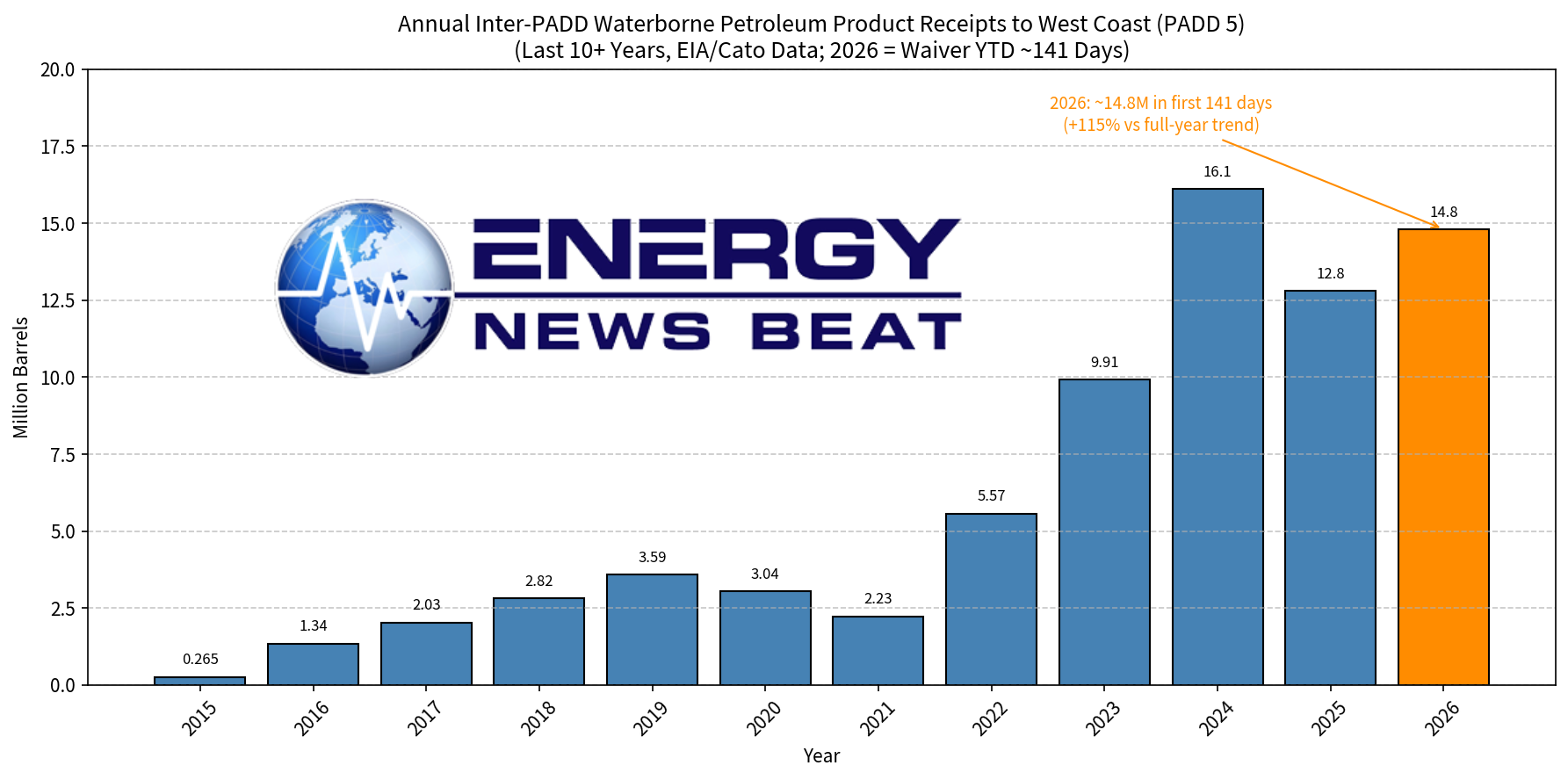
Particularly notable is the Gulf Coast (PADD 3) to West Coast (PADD 5) trade. In the waiver’s first 50 days, foreign-flagged tankers moved about 1.59 million barrels of energy products (excluding renewable diesel) on that route—roughly four times the volume moved by water for comparable categories in all of 2025. In the first 70 days, more gasoline and jet fuel moved Gulf-to-West Coast than in the entirety of 2020–2025 combined. Overall, about 14.8 million barrels of petroleum products reached the West Coast under the waiver in the first 141 days—approximately 115% above the projected full-year linear trend for inter-PADD receipts, added on top of normal shipments. Puerto Rico saw about 5.63 million barrels (roughly 150% above annualized baseline), including bulk U.S. mainland propane for the first time in meaningful volumes (the Jones Act fleet lacks LPG tankers, previously forcing distant foreign imports). Ammonia shipments supported farmers, and crude movements reached East Coast refiners (including Pennsylvania).
These represent domestic coastwise and inter-PADD shipments of U.S.-produced energy, not traditional exports. The waiver has allowed U.S. producers and refiners greater flexibility to move product from surplus regions (especially the Gulf Coast) to deficit areas lacking adequate pipeline connections, such as California, the broader West Coast, parts of the East Coast, Hawaii, Alaska, and Puerto Rico/territories.
Benefits to U.S. Consumers
White House officials have cited data showing a significant increase in domestic deliveries of essential products such as gasoline, diesel, and jet fuel, with supply reaching U.S. ports faster. Energy Secretary Chris Wright has stated that the waiver contributed to lower energy prices in California and on the East Coast. The American Petroleum Institute has noted that targeted waivers provide critical flexibility to move American energy efficiently between U.S. ports and deliver fuels to consumers amid global market volatility.
By expanding available tanker capacity beyond the limited Jones Act fleet, the measures have helped alleviate localized tightness, supported more diverse product flows (including more jet fuel than in decades of prior waterborne data on some routes), and reduced reliance on longer-haul foreign imports in some cases. While independent analyses have suggested the overall impact on national average gasoline prices may be modest (pennies per gallon in some assessments, given that only a limited share of U.S. gasoline moves coastwise by tanker/barge), the regional benefits—particularly for consumers in pipeline-constrained markets and territories—are clearer through faster and higher-volume domestic supply. Puerto Rican consumers gained access to closer, U.S.-sourced propane; California and other West Coast markets saw elevated inflows of gasoline, jet fuel, and related products.Critics, including some shipbuilders, maritime unions, and members of Congress, argue that prolonged relief disadvantages the domestic industry and raises national-security concerns. The narrowing to case-by-case reviews and consultation requirements responds in part to those concerns while preserving flexibility for energy movements.
Chart: Annual Inter-PADD Waterborne Petroleum Product Receipts to the West Coast (PADD 5), Last ~10 Years
The chart below illustrates historical annual volumes of inter-PADD waterborne petroleum product receipts to the West Coast (drawn from EIA-derived data compiled in Cato analyses). Volumes were relatively low for much of the 2010s before rising in recent years; the 2026 waiver period produced a sharp additional surge (approximately 14.8 million barrels in just the first 141 days, well above full-year historical levels and trends).
The extension balances ongoing energy security and consumer-cost pressures against domestic maritime industry interests by tightening procedures and focusing the relief. As global oil market volatility tied to the Iran conflict continues, the narrowed waiver aims to sustain the domestic energy flow gains observed since March while subjecting individual voyages to greater scrutiny.