

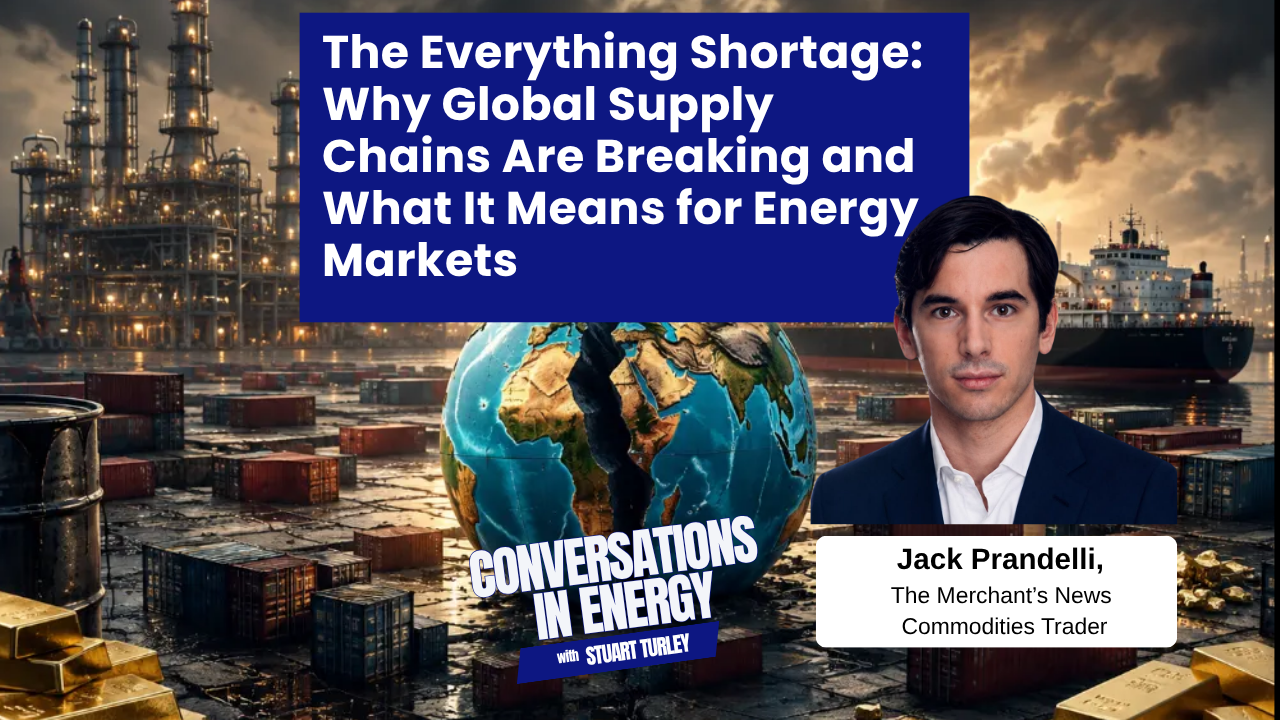
The world is short of nearly everything. Shipping routes are under attack, refineries are maxed out, and energy policies have backfired. In this episode, commodities expert Jack Prandelli breaks down the “everything shortage”—the interconnected crises in oil, gas, food, and critical minerals that are reshaping geopolitics and creating the next commodity super-cycle. Discover why diesel is more valuable than crude oil, how drone warfare changed energy markets forever, and where smart investors should be looking.
I highly recommend subscribing to Giacomo Prandelli The Merchant’s News Substack. https://themerchantsnews.substack.com/

1. Global Supply Chain Disruptions & Shipping Crises
- Strait of Hormuz – targeted by drones
- Suez Canal – Saudi vessels avoiding drone attacks
- Black Sea – ports and vessels targeted by drones
- Rhine River – water levels critically low due to heat, disrupting European logistics
- Panama Canal – reduced traffic due to El Niño and low water levels
This creates what Jack calls an “everything shortage” affecting global commerce.
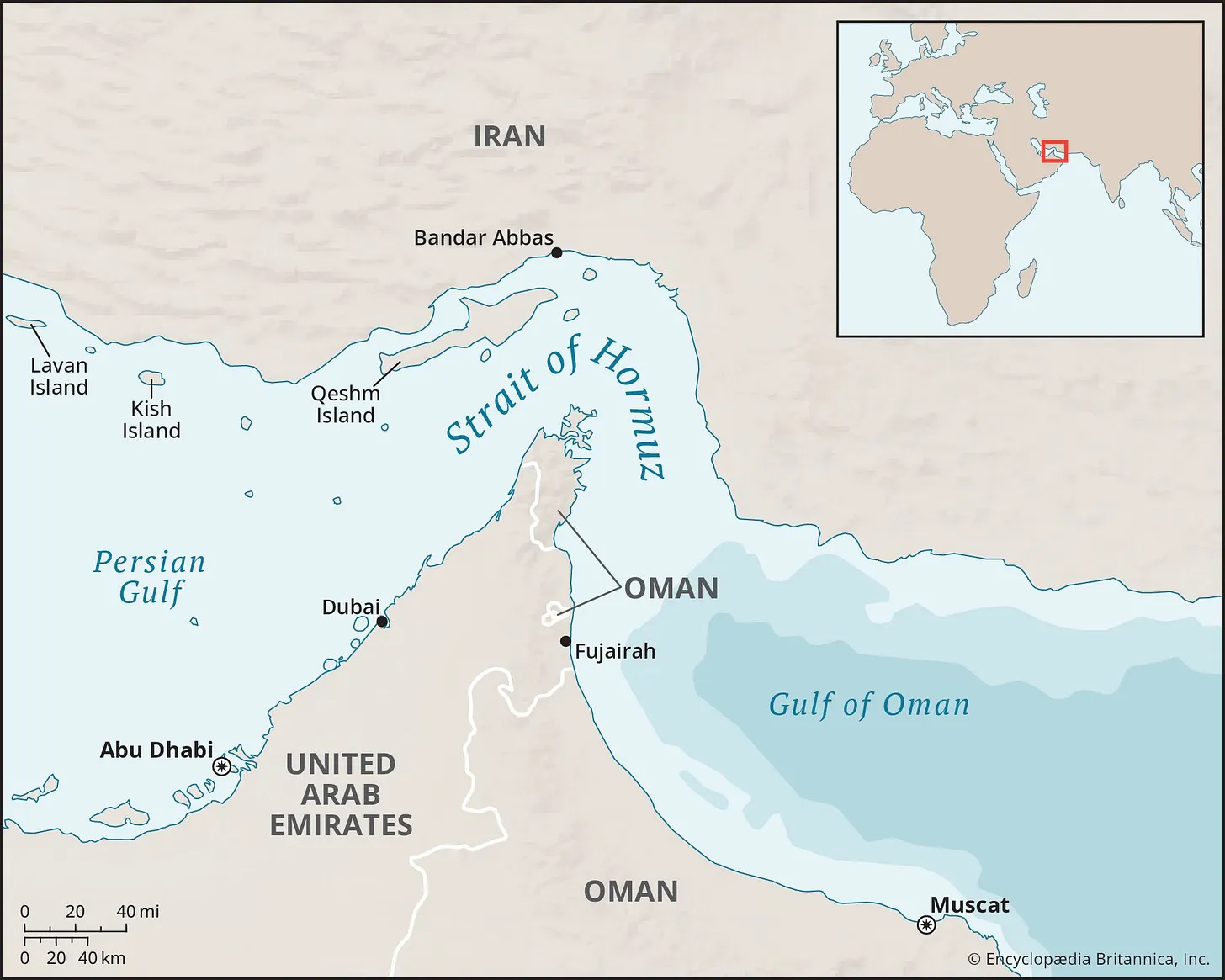
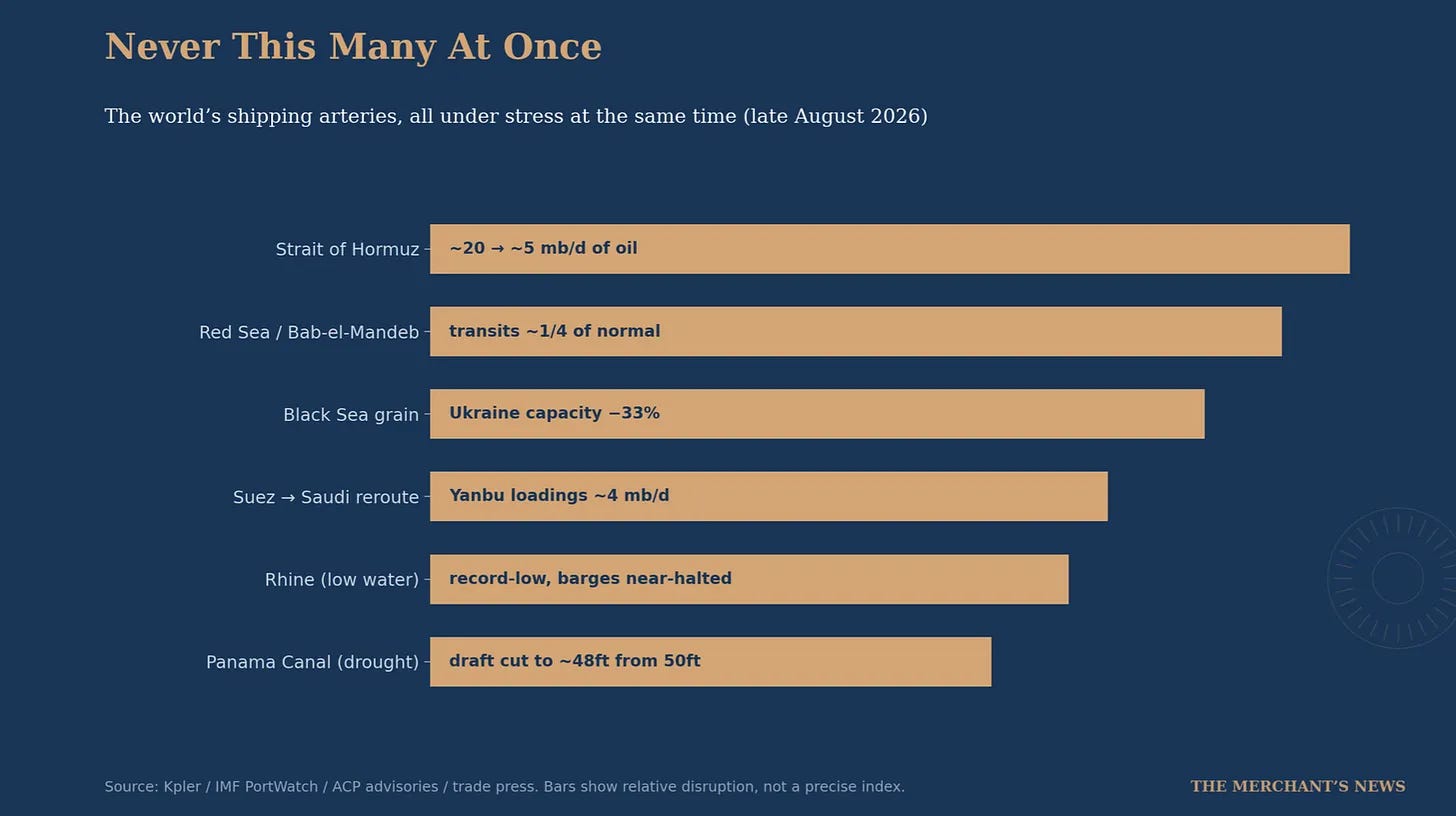
The world’s shipping arteries, all under stress at the same time, late August 2026. Bars show relative disruption, not a precise index. Sources: Kpler, IMF PortWatch, ACP, trade press. – Source: The Merchant’s News
2. Oil Market Dynamics & Refinery Bottlenecks
- Record-breaking diesel crack spreads (refining margins)
- Diesel prices now higher than crude oil prices
- Global refinery shortage (16 Russian refineries damaged, others under maintenance)
- This creates inflation pressure on the broader economy
3. Energy Transition Policy Failures
- Pushing energy transition too fast without viable alternatives
- Creating energy cost disparities (California diesel at $7.80 vs. Texas at $5.05)
- Leaving economies still dependent on fossil fuels while discouraging investment
- Europe’s particular vulnerability without Russian gas supplies
4. Geopolitical Oil & Gas Competition
- Saudi Arabia successfully pivoting to sell oil to China via alternative routes
- Iran losing market share to Saudi competition
- Qatar damaged (LNG facility attacked in February) and now a loser in the energy game
- UAE protecting infrastructure with protective cages against drone attacks
- Iraq emerging as a potential winner with US investment in pipelines
5. Canada-US Energy Relations & Tariffs
- 20% of Canadian goods hit with 50% tariffs, but oil and gas exempted
- This shows where real power lies – the US needs Canadian heavy oil for refineries
- 9 out of 10 Canadian oil barrels go to the US
- Canada now exploring Chinese markets but facing low volumes and unfavorable pricing
- Most Canadian oil/gas infrastructure is US-owned, limiting Canadian control
6. Commodity Inflation & Investment Opportunities
- Copper shortage – data centers need metals; demand exceeds production
- Diesel scarcity – affects mining, farming, and all transportation
- Food crisis – Ukraine/Russia supply disruptions + El Niño in South America
- Investment thesis: Companies at supply chain bottlenecks (refineries, pipeline builders, copper producers) will see gains
7. Defense & AI Sector Demand
- Defense spending increasing due to fragmented global conflicts
- AI data centers requiring massive energy (US focusing on gas, not renewables)
- Both sectors driving metals and energy demand simultaneously
8. Europe’s Declining Position
- De-industrialization and closer ties to China
- Weak energy independence without Russian gas
- Slower reshoring of critical minerals compared to the US
- Political instability preventing coherent energy policy
Bottom Line: The podcast paints a picture of a world facing simultaneous supply chain breakdowns, geopolitical energy competition, policy-driven energy shortages, and emerging commodity super-cycles—all creating both risks and investment opportunities for those who understand the interconnected nature of global energy and commodities markets.
With the changes to the Deal Structure in Venezuela, you will see more money rolling in, and we are reviewing the details. The socialists ruined the oil infrastructure, and it will take billions to get the oil out of the ground. Canada’s is paid for, but we would rather not deal with socialist policies in Ottawa. Carney won’t show the Canadians the deal, and it will bite them in the long run.
One of the biggest stories in the world is the decades-long lack of investment to meet normal decline curves in oil and gas.
Jack addressed this in his article:
The bill for a decade of not investing
This is where the scarcity really comes from, and it makes me genuinely angry, because it was a choice.
For a many years, politics told the oil and mining industries to stop.
Told to quit drilling and quit digging and stop building refineries, all in the name of a cleaner future, and the money that should have gone into new supply was shamed and starved out of the sector.
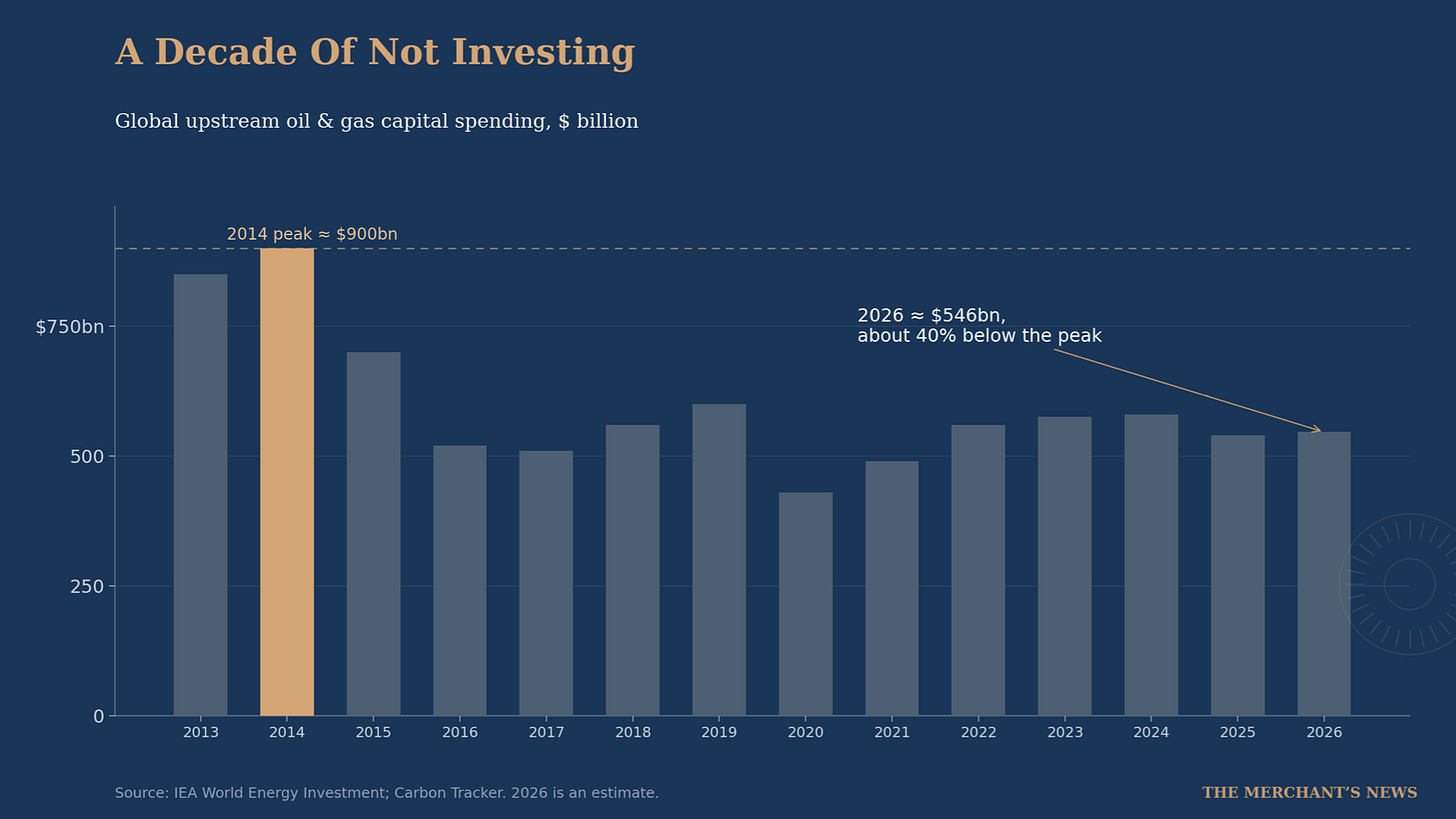
Global spending on finding and producing oil and gas is running around $546 billion this year, roughly 40% below where it stood at the 2014 peak.
The industry’s pipeline of big new projects has thinned to almost nothing.
(we will focus later but a new copper mine takes the better part of almost 15+ years to build)
The U-turn (not the one that the vessels are doing in the SOH) has already begun, which tells you the honest people can see it.
BP, which spent years remaking itself into a green energy company, has reset hard and pointed its money straight back at oil and gas. It is the clearest admission you will find that the world still runs on molecules and will for a long time yet.
The strange part that explains the market’s long sleep is this.
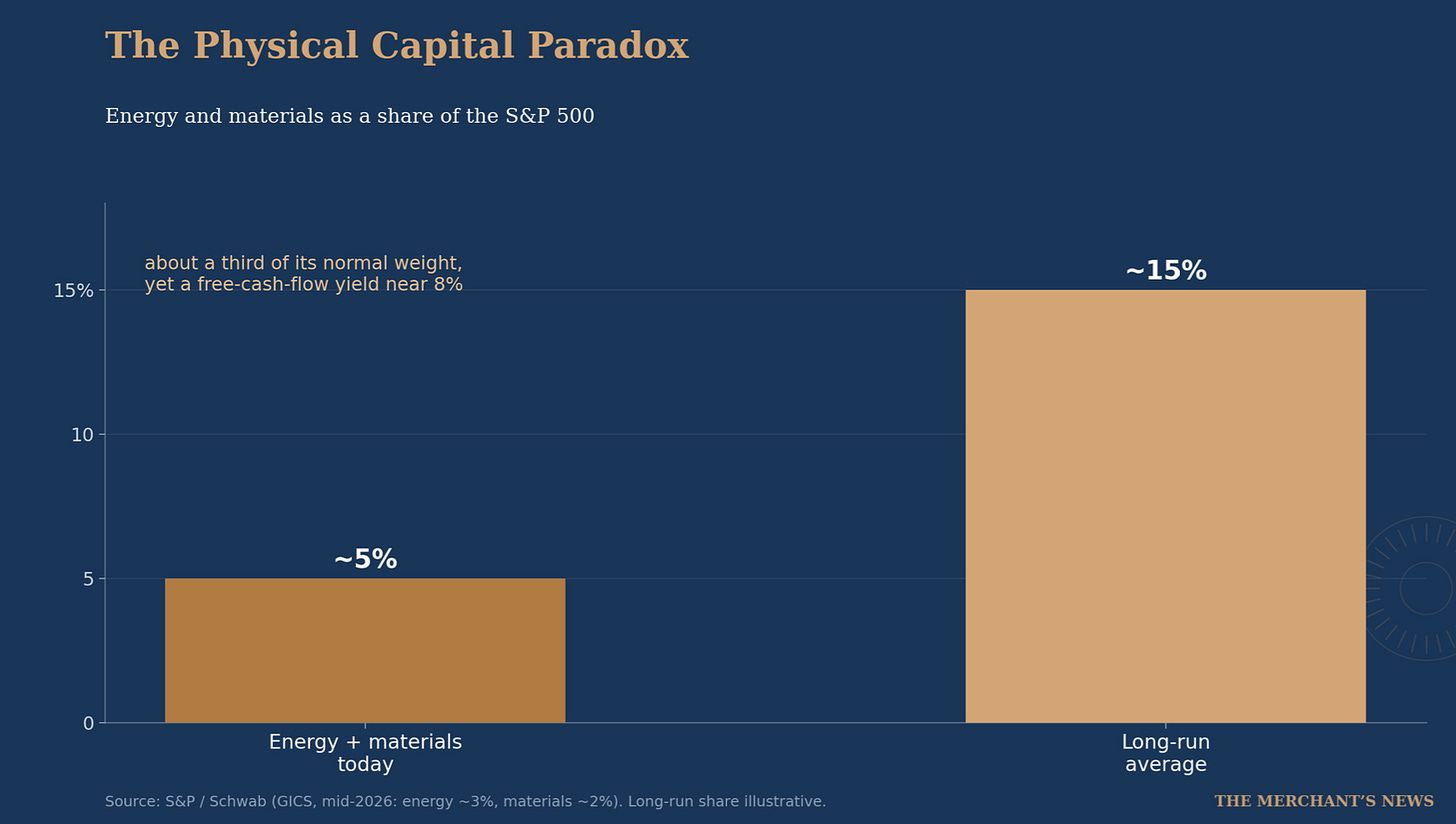
Energy and materials together have shrunk to about 5% of the whole US stock market, roughly 1/3 of their normal long run weight.
Run the sum a fund manager runs, like i’m pretenting to to for The Merchant’s book.
If energy is 3% of your book and it doubles, you make 3%.
Technology is 1/3 of your book, so it barely has to twitch to beat that.
So nobody bothers with the small, unloved, volatile corner of the market, even though those energy companies are handing back free cash at a yield near 8%, well above the market as a whole.
The neglect is the opportunity.
It is also why, when this finally turns, the crowd that ignored it watches its returns get wrecked, exactly as it did in 2022.
We have a great podcast on AI and data centers with Jon Brewton, CEO of Data2, and Kyle Koss, President of ATCO Ventures, who are rolling out data centers that locals want to hear about.
Also have the CEO of Jackery and Doomberg rolling – getting the dates and will let you know. The Executive Order on the Grid Crisis makes clear that the Trump Administration knows there are issues, and that is a great thing for Consumers.
Also, more nuclear CEOs and some other fun guests!
We are working on some fun International topics on the Energy Realities Podcast at 9:00 Central US, and tomorrow, with David Blackmon and Dr. Tammy Nemeth, we will have a huge list of topics on Canada, Venezuela, the UK, and the EU. Buckle Up.
Here is tomorrow morning’s link on the Energy News Beat YouTube Channel. https://youtube.com/live/yGsx-2e9BV4
You can also watch on David Blackmon’s Energy Additions YouTube or LinkedIn, or you can watch on Dr. Tammy Nemeth’s YouTube or her Substack The Nemeth Report
Thank you to all of our great Subscribers, Patrons, and Paid Subscribers – We appreciate each and every one of you.
A shout-out to Steve Reese and the Reese Energy Consulting group for sponsoring the Podcast
https://reeseenergyconsulting.com/.
Data2 if you have any business systems, can you trust A? Well, they have the patent on validation. . https://data2.zoholandingpage.com/energy
And we have WellDatabase rolling, and we use their tools for the Energy News Beat weekly Rig Reports: https://welldatabase.com/
Also entering Sponsor Rey Trevino, Pecos Operating https://pecos.energy/